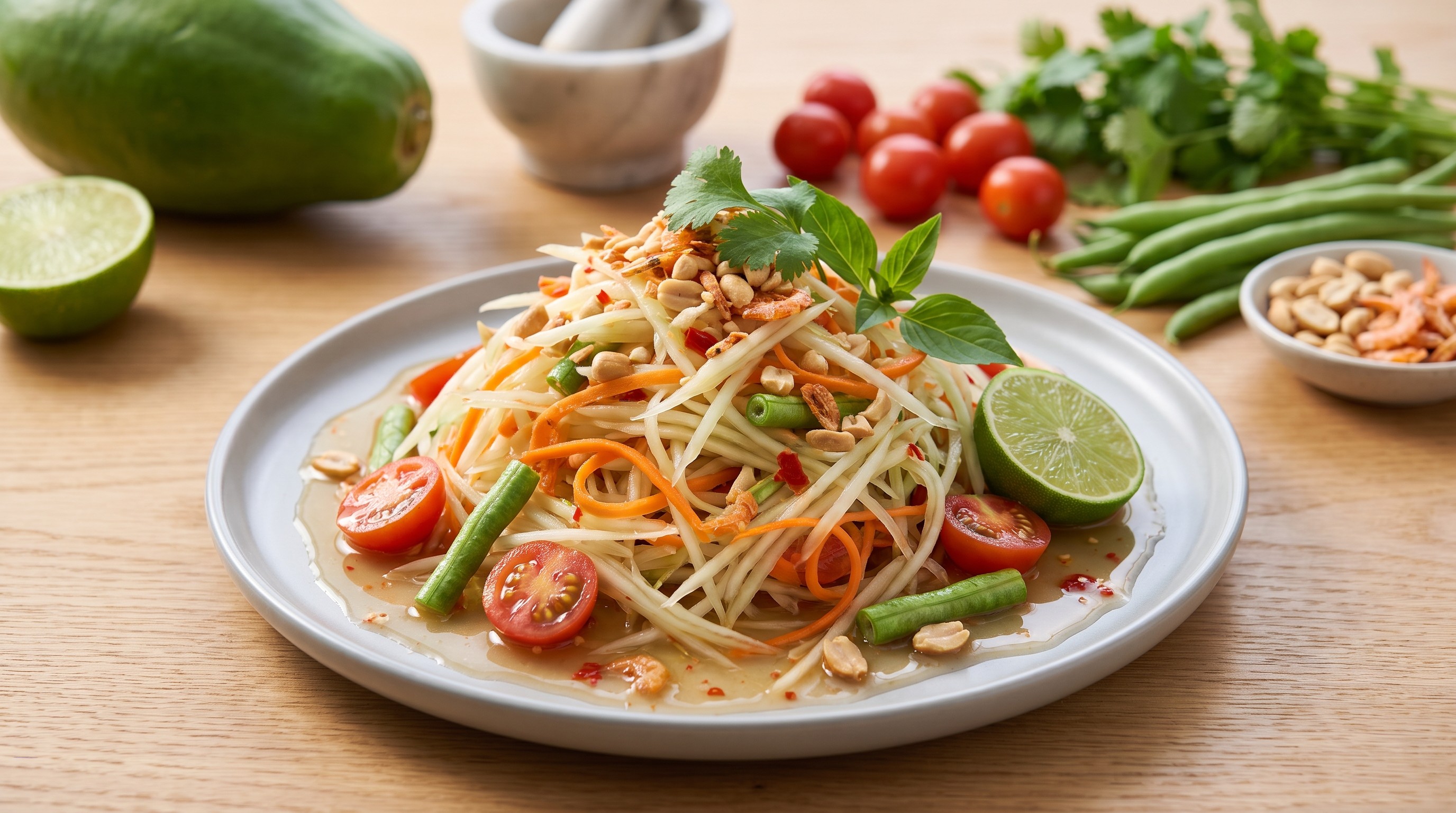
Som Tam — Green Papaya Salad
Pounded Thai salad bursting with fibre-rich green papaya, crunchy peanuts, and dried shrimp — barely any sugar yet all the bright, spicy flavour you crave.
Som tam is the street salad that defines Thai cuisine — a mortar-pounded tangle of shredded green papaya dressed in a tart, savoury, and fiery dressing that hits every taste bud at once. For anyone watching their blood sugar, it is one of the most naturally low-glycemic dishes you can eat. Green papaya is almost entirely water and insoluble fibre, which means it digests slowly and produces virtually no glucose spike. The protein from dried shrimp and the healthy monounsaturated fat from roasted peanuts further blunt any glycemic response, making this salad a textbook example of smart blood-sugar-friendly eating.
This version uses just two teaspoons of palm sugar — roughly four grams per serving — which is one of the lowest-GI sweeteners available (estimated GI 35–54). The extra lime juice and bird's-eye chili more than compensate for the reduced sweetness, delivering the classic som tam balance of sour, salty, sweet, and hot. Green beans and cherry tomatoes contribute additional fibre and micronutrients, while the carrot adds a touch of natural sweetness and beta-carotene without meaningfully raising the glycemic load.
For the best blood-sugar outcome, serve som tam at the start of a meal: the fibre and acid from the lime create a gentle buffer that slows glucose absorption from anything you eat afterward. Pair it with grilled protein — chicken thigh, prawns, or tofu — for a complete, satisfying plate that keeps you full for hours without a spike.
Blood Sugar Impact
Moderate-low impact — the low GI (41) and fiber-rich raw vegetables (green papaya, green beans, carrots) will produce a gentle, gradual blood sugar rise, though the moderate glycemic load (15.1) driven mainly by palm sugar means some elevation is expected before leveling off.
Blood Sugar Tips
- ✓ Ask for less palm sugar or substitute with a squeeze of extra lime — palm sugar is the primary glycemic driver in this dish and reducing it can meaningfully lower the GL.
- ✓ Pair the salad with a protein-rich side such as grilled chicken, tofu, or extra shrimp to slow gastric emptying and flatten the glucose curve.
- ✓ Take advantage of the lime juice already in the dish by adding more if available — its acidity slows carbohydrate digestion and has been shown to reduce postprandial glucose spikes by up to 20–30%.
🥗 Ingredients
- 2 pcs Garlic
- 3 pcs Thai bird's-eye chili
- 2 tsp Palm sugar
- 1.5 tbsp Fish sauce
- 60 ml Lime juice
- 100 g Green bean
- 100 g Cherry tomato
- 350 g Green papaya
- 1 pcs Carrot
- 2 tbsp Dried shrimp
- 40 g Roasted peanut
- 2 pcs Garlic
- 3 pcs Thai bird's-eye chili
- 2 tsp Palm sugar
- 1.5 tbsp Fish sauce
- 4 tbsp Lime juice
- 3.5 oz Green bean
- 3.5 oz Cherry tomato
- 12.3 oz Green papaya
- 1 pcs Carrot
- 2 tbsp Dried shrimp
- 1.4 oz Roasted peanut
👨🍳 Instructions
- 1
Place the garlic cloves and bird's-eye chilies into a large mortar. Pound with the pestle using firm, short strikes until you have a coarse, chunky paste — stop before it becomes smooth so the aromatic pieces stay visible in the finished salad.
- 2
Scrape the grated palm sugar into the mortar, then pour in the fish sauce and lime juice. Pound and stir briefly until the sugar dissolves completely into the liquid to form the dressing.
- 3
Add the green bean pieces and halved cherry tomatoes to the mortar. Give them several gentle but firm strikes — just enough to crack the beans open and split the tomato skins so they release their juices and begin absorbing the dressing.
- 4
Add half of the shredded green papaya and carrot. Using a spoon in one hand and the pestle in the other, press, turn, and toss the shreds through the dressing for about a minute until they soften slightly and are evenly coated.
- 5
Add the remaining green papaya and carrot and continue the press-and-toss motion for another minute. The shreds should be pliable and glistening with dressing but still retain a satisfying crunch.
- 6
Scatter the dried shrimp over the salad and fold them through with a few light tosses so they distribute evenly among the papaya shreds.
- 7
Transfer the salad to serving plates, scraping every drop of dressing from the mortar over the top. Finish by scattering the crushed roasted peanuts generously over each portion and serve immediately while the textures are at their crunchiest.
📊 Nutrition Per Serving
| Per Serving | Whole Dish | |
|---|---|---|
| Calories | 272 | 543 |
| Carbs | 37g | 74g |
| Sugars | 20g | 40g |
| Natural Sugars | 20g | 40g |
| Protein | 12g | 24g |
| Fat | 11g | 21g |
| Saturated Fat | 2g | 3g |
| Unsaturated Fat | 9g | 17g |
| Fiber | 8g | 16g |
| Soluble Fiber | 2g | 5g |
| Insoluble Fiber | 6g | 12g |
| Sodium | 1055mg | 2110mg |
Predicted Glucose Response
What if you...
Estimated model — individual responses vary. Not medical advice.
🔄 Lower GI Swaps
Palm sugar has an estimated GI of 35–54. While the quantity used here is very small (roughly 4 g per serving), switching to monk fruit or a stevia-erythritol blend drops the sweetener's glycemic contribution to virtually zero, which can be helpful for anyone aiming for the tightest possible blood sugar control.
Carrot has a moderate GI (around 39 raw) and is used here in a small amount, so the impact is minimal. Green mango adds a traditional sour crunch but does carry a little more sugar than carrot, so use sparingly. Kohlrabi is an ultra-low-GI alternative that provides a similar crisp texture.
🔬 The Science Behind This Recipe
Why This Salad Loves Your Blood Sugar
Green papaya is the star here, and it is almost entirely insoluble fibre and water. Unlike ripe papaya (GI ≈ 60), the unripe fruit has very little available sugar, so it passes through the digestive tract slowly without triggering a meaningful insulin response. That fibre also forms a physical gel-like matrix in the stomach, which delays gastric emptying and slows the absorption of any glucose from other ingredients in the meal.
The dressing uses only two teaspoons of palm sugar for the entire recipe — roughly four grams per serving. Palm sugar has one of the lowest glycemic indices among natural sweeteners (estimated GI 35–54), largely because it retains inulin, a type of soluble fibre that resists digestion. Even so, the quantity here is small enough that swapping to monk fruit sweetener or a stevia-erythritol blend would reduce the glycemic load to near zero if tighter control is needed.
Lime juice contributes more than flavour. Citric acid has been shown in clinical studies to lower the glycemic response of a meal by up to 20–30 percent. It works by slowing starch digestion and moderating the speed at which glucose enters the bloodstream. Pairing acid with fibre — as this salad naturally does — compounds the effect.
Finally, the roasted peanuts and dried shrimp deliver protein and fat, both of which slow gastric emptying further and promote satiety. Fat in particular triggers the release of cholecystokinin (CCK), a hormone that signals fullness and slows the movement of food from the stomach into the small intestine, flattening the post-meal glucose curve.
Related recipes
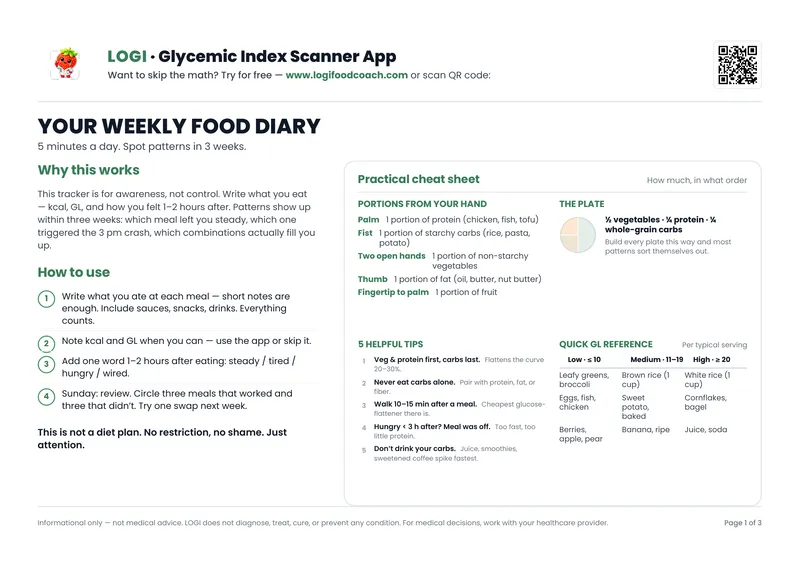
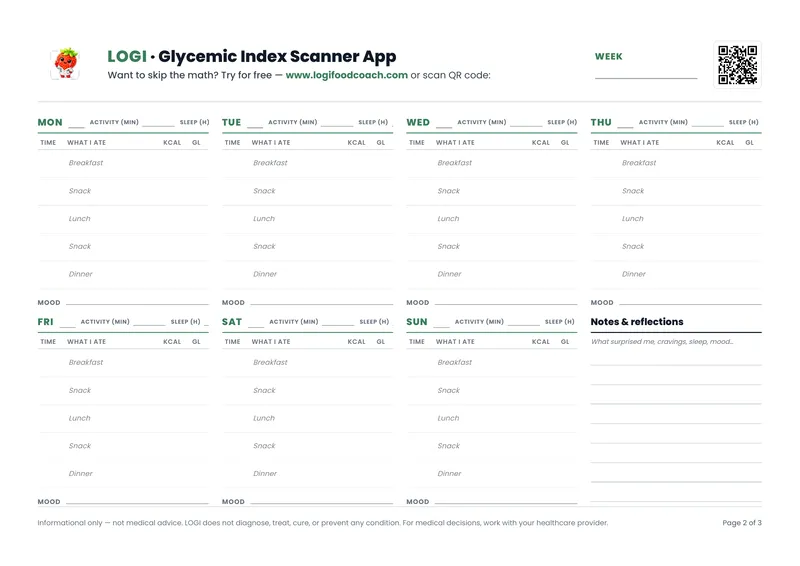
Free PDF — 3 pages
Your Weekly Food Journal
Track meals, glycemic load & mood. Spot patterns in 3 weeks.
No spam. Unsubscribe anytime.