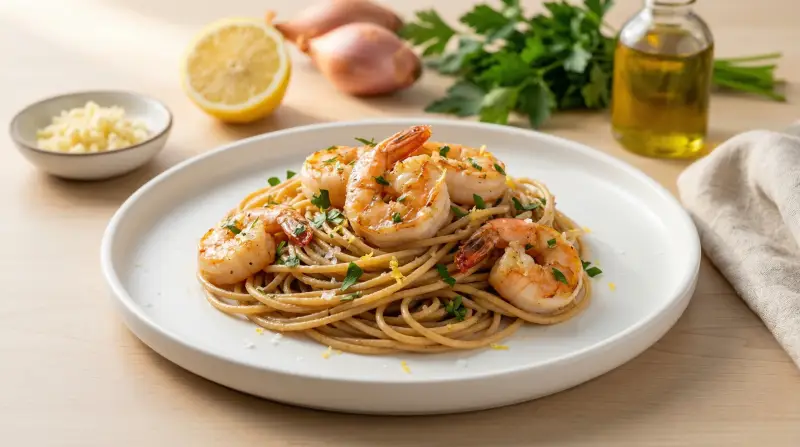
Mediterranean Shrimp Scampi with Whole Wheat Pasta
A blood sugar-friendly twist on classic scampi using whole wheat pasta, heart-healthy olive oil, and protein-rich shrimp for steady energy without the spike.
This reimagined shrimp scampi transforms a restaurant favorite into a low-glycemic powerhouse that won't send your blood sugar soaring. By swapping traditional refined pasta for whole wheat spaghetti (8 oz serving 4 people), we've dramatically lowered the glycemic impact while adding fiber that slows glucose absorption. The generous portion of protein-rich shrimp (1 pound total) further stabilizes blood sugar response, making this dish ideal for anyone managing their glucose levels.
The recipe emphasizes heart-healthy fats from olive oil while using minimal butter for flavor, creating a Mediterranean-inspired sauce that's both indulgent and nutritious. Garlic and shallots provide anti-inflammatory compounds, while fresh lemon juice adds brightness without added sugars. The combination of protein, healthy fats, and complex carbohydrates creates a balanced meal that provides sustained energy for 3-4 hours without blood sugar spikes.
For optimal blood sugar management, start your meal with a small side salad before enjoying this dish. The fiber from vegetables eaten first creates a protective barrier in your digestive system, further slowing carbohydrate absorption. Pair with steamed broccoli or asparagus for additional fiber and nutrients. This scampi proves that managing your glycemic response doesn't mean sacrificing flavor or satisfaction - each serving delivers approximately 2 oz of pasta with 4 oz of shrimp for perfect macronutrient balance.
Blood Sugar Impact
Low to moderate impact with gradual, sustained energy release over 3-4 hours. The whole wheat pasta provides complex carbohydrates while the protein from shrimp and healthy fats from olive oil help slow glucose absorption, resulting in stable blood sugar levels.
Blood Sugar Tips
- ✓ Eat the shrimp first before the pasta to leverage the protein's blood sugar-stabilizing effect and increase satiety
- ✓ Add a side of non-starchy vegetables like spinach, arugula, or roasted zucchini to further lower the overall glycemic impact of the meal
- ✓ Take a 10-15 minute walk after eating to help muscles absorb glucose and prevent post-meal blood sugar spikes
🥗 Ingredients
- 8 oz whole wheat spaghetti
- 3 tbsp extra virgin olive oil, divided
- 2 oz large shrimp, peeled and deveined
- 1 tbsp fresh garlic, minced
- 0.25 cup shallots, finely chopped
- 2 tbsp fresh lemon juice
- 0.25 cup fresh Italian parsley, chopped
- 0.25 tsp sea salt
- 0.25 tsp freshly ground black pepper
- 2 tbsp dry sherry or brandy, optional
- 2 tbsp unsalted butter
- 8 oz whole wheat spaghetti
- 3 tbsp extra virgin olive oil, divided
- 2 oz large shrimp, peeled and deveined
- 1 tbsp fresh garlic, minced
- 0.25 cup shallots, finely chopped
- 2 tbsp fresh lemon juice
- 0.25 cup fresh Italian parsley, chopped
- 0.25 tsp sea salt
- 0.25 tsp freshly ground black pepper
- 2 tbsp dry sherry or brandy, optional
- 2 tbsp unsalted butter
👨🍳 Instructions
- 1
Bring a large pot of salted water to a rolling boil over high heat. Add the whole wheat spaghetti and cook according to package directions until al dente, typically 9-11 minutes. Reserve 1/2 cup pasta cooking water before draining. Drain pasta thoroughly in a colander and set aside.
- 2
While the pasta cooks, pat the shrimp completely dry with paper towels to ensure proper browning. Season lightly with a pinch of salt and pepper on both sides.
- 3
Heat 1 tablespoon of olive oil in a large skillet or sauté pan over medium-high heat until shimmering. Add the shrimp in a single layer, working in batches if necessary to avoid crowding. Cook undisturbed for 2-3 minutes until the bottoms turn pink and golden, then flip and cook another 2 minutes until just cooked through. Transfer shrimp to a clean bowl and tent with foil to keep warm.
- 4
Reduce heat to medium and add the remaining 2 tablespoons of olive oil to the same skillet. Add the minced garlic and chopped shallots, stirring constantly for 30-45 seconds until fragrant but not browned. The aromatics should release their oils without burning, creating the flavor foundation for your sauce.
- 5
Add the fresh lemon juice, chopped parsley, salt, and pepper to the skillet. Stir to combine and let the sauce simmer gently for 1 minute to meld the flavors. The lemon juice will deglaze the pan, picking up all the flavorful browned bits from cooking the shrimp.
- 6
Return the cooked shrimp to the skillet along with any accumulated juices. Toss gently to coat the shrimp evenly with the aromatic sauce. If the sauce seems too thick, add a splash of the reserved pasta water (1-2 tablespoons at a time) to loosen it to your desired consistency.
- 7
Add the drained whole wheat pasta directly to the skillet with the shrimp and sauce. Toss everything together using tongs until the pasta is well coated and heated through, about 1-2 minutes. Taste and adjust seasoning with additional salt, pepper, or lemon juice if needed. Divide among 4 warmed shallow bowls and serve immediately, garnished with extra parsley if desired.
📊 Nutrition Per Serving
| Per Serving | Whole Dish | |
|---|---|---|
| Calories | 589 | 2355 |
| Carbs | 45g | 180g |
| Sugars | 3g | 13g |
| Natural Sugars | 3g | 13g |
| Protein | 62g | 250g |
| Fat | 18g | 73g |
| Saturated Fat | 6g | 22g |
| Unsaturated Fat | 13g | 51g |
| Fiber | 5g | 20g |
| Soluble Fiber | 0g | 1g |
| Insoluble Fiber | 0g | 1g |
| Sodium | 405mg | 1620mg |
Predicted Glucose Response
What if you...
Estimated model — individual responses vary. Not medical advice.
🔄 Lower GI Swaps
While whole wheat pasta has a moderate GI of ~50, these alternatives offer even lower glycemic impact. Legume-based pastas provide additional protein and fiber, while mixing in vegetable noodles reduces the overall carbohydrate load without sacrificing volume or satisfaction.
Reducing the pasta portion by 25% significantly lowers glycemic load while the increased shrimp-to-pasta ratio maintains satiety through higher protein content. Edamame pasta offers dramatically lower blood sugar impact with nearly double the protein of wheat pasta.
While cooking burns off most alcohol, sherry and brandy contain residual sugars that can add 2-4g carbohydrates. These alternatives provide acidity and depth without any sugar content, keeping the glycemic load minimal.
While butter adds minimal glycemic impact, replacing it with olive oil increases the monounsaturated fat content, which has been shown to improve insulin sensitivity and provide additional blood sugar stabilization. Tahini adds healthy fats plus a subtle nutty flavor and extra fiber.
🔬 The Science Behind This Recipe
This recipe leverages three key mechanisms to minimize blood sugar impact. First, whole wheat pasta has a lower glycemic index (approximately 50) compared to refined pasta (GI 36+) due to its intact bran and germ layers, which contain fiber that slows starch digestion. Second, the substantial protein content from shrimp (approximately 24g per serving) triggers the release of incretin hormones that slow gastric emptying and improve insulin sensitivity. Third, the monounsaturated fats in olive oil further delay carbohydrate absorption by slowing the rate at which food leaves your stomach. When combined, these three factors create a synergistic effect that keeps your blood sugar stable for 3-4 hours after eating. The moderate glycemic load of 12.5 per serving means this meal will raise blood glucose gradually rather than causing a sharp spike, making it suitable for people with diabetes or insulin resistance when consumed as part of a balanced meal plan. Starting with vegetables before the pasta creates an additional fiber barrier that can reduce the glucose response by up to 30% according to recent research on food sequencing.
Related recipes
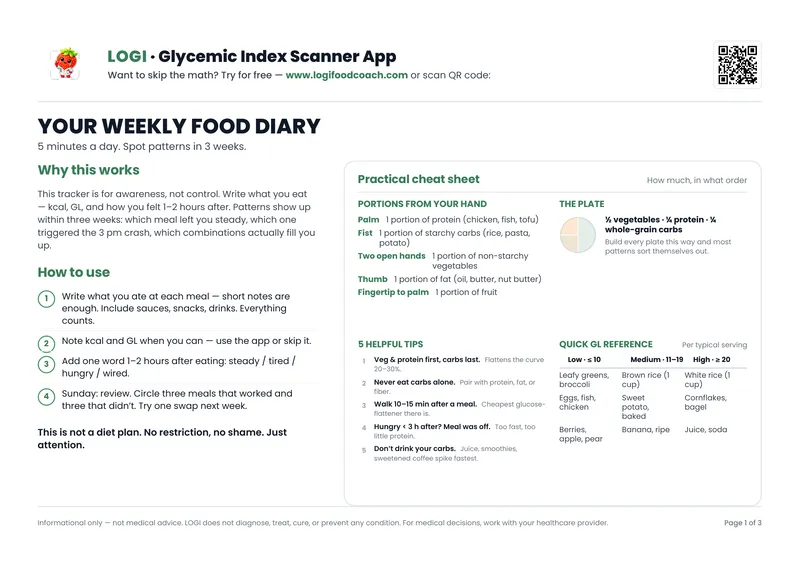
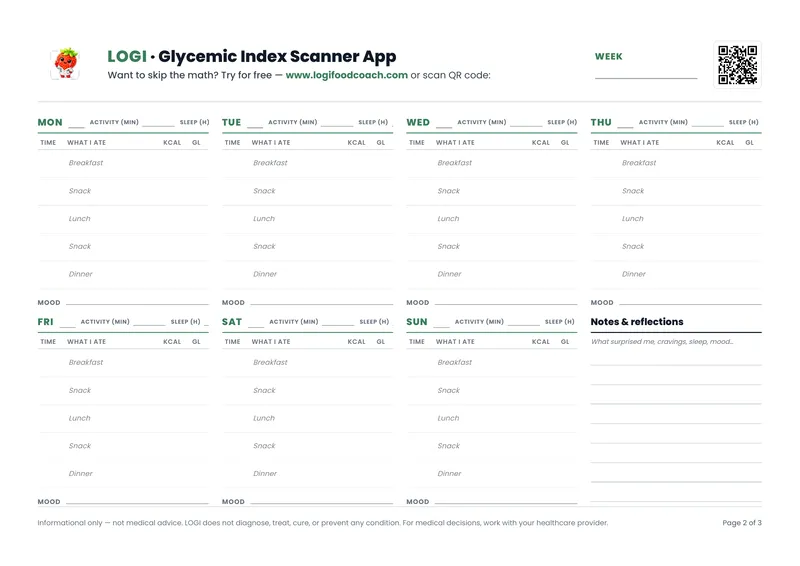
Free PDF — 3 pages
Your Weekly Food Journal
Track meals, glycemic load & mood. Spot patterns in 3 weeks.
No spam. Unsubscribe anytime.