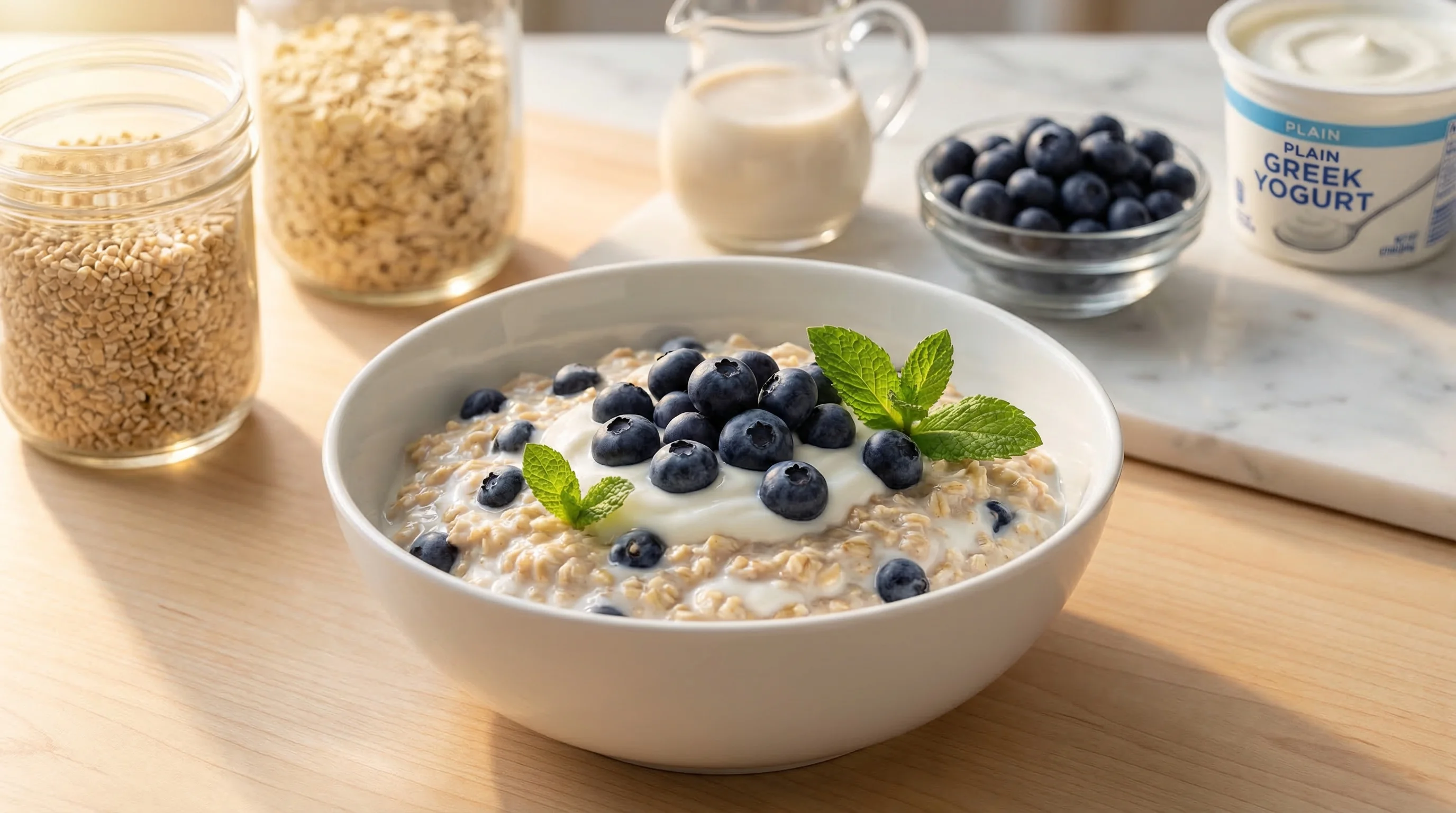
Low-Glycemic Overnight Oats with Berries
A blood sugar-friendly breakfast that combines steel-cut oats with protein-rich Greek yogurt and antioxidant-packed blueberries for sustained energy.
This overnight oats recipe is specifically designed to support stable blood sugar levels throughout your morning. By using steel-cut oats instead of instant varieties, we're working with a lower glycemic index grain that digests slowly, preventing the blood sugar spikes associated with quick-cooking oats. The addition of full-fat Greek yogurt provides protein and healthy fats that further slow glucose absorption, while the live cultures support gut health—an important factor in metabolic wellness.
Blueberries are among the best fruit choices for glycemic control, with a GI of just 53 and packed with anthocyanins that may improve insulin sensitivity. The overnight soaking process breaks down some of the oat starches, making them easier to digest while maintaining their beneficial resistant starch content. This recipe is perfect for busy mornings when you need sustained energy without the mid-morning crash.
For optimal blood sugar management, eat this breakfast within an hour of waking and consider adding a tablespoon of ground flaxseed or chia seeds for extra fiber and omega-3 fatty acids. The combination of complex carbohydrates, protein, and healthy fats creates a balanced meal that keeps you satisfied for 3-4 hours while supporting steady glucose levels.
Blood Sugar Impact
This meal should have a minimal to moderate blood sugar impact with a slow, steady rise due to its low GI of 27 and moderate glycemic load of 12.1. The combination of fiber-rich oats, protein from Greek yogurt, and fat from milk creates sustained energy release over 3-4 hours.
Blood Sugar Tips
- ✓ Add a tablespoon of chia seeds or ground flaxseed to further slow digestion and reduce the glycemic response
- ✓ Eat this meal as breakfast after an overnight fast rather than as a snack to optimize insulin sensitivity
- ✓ Take a 10-15 minute walk after eating to help muscles absorb glucose and blunt any blood sugar spike
🥗 Ingredients
- 40 g steel-cut oats or rolled oats
- 120 g plain full-fat Greek yogurt
- 80 ml unsweetened almond milk or whole milk
- 75 g fresh or frozen blueberries
- 1.4 oz steel-cut oats or rolled oats
- 4.2 oz plain full-fat Greek yogurt
- 5 tbsp unsweetened almond milk or whole milk
- 2.6 oz fresh or frozen blueberries
👨🍳 Instructions
- 1
In a glass jar or airtight container, combine the steel-cut or rolled oats with the Greek yogurt, stirring until the oats are evenly coated.
- 2
Pour in the unsweetened almond milk or whole milk, stirring thoroughly to ensure all oats are submerged and the mixture is well combined.
- 3
Seal the container tightly with a lid and refrigerate for at least 8 hours or overnight, allowing the oats to soften and absorb the liquid.
- 4
The next morning, remove the container from the refrigerator and give the oats a good stir to redistribute any settled ingredients.
- 5
Top the oats with fresh or frozen blueberries just before eating. If using frozen berries, they will thaw quickly at room temperature.
- 6
For optimal blood sugar control, eat this breakfast within one hour of waking and consider adding optional toppings like ground cinnamon, chopped walnuts, or chia seeds for additional fiber and healthy fats.
- 7
Store any leftovers in the refrigerator for up to 3 days. The oats will continue to soften over time, creating an even creamier texture.
📊 Nutrition Per Serving
| Per Serving | Whole Dish | |
|---|---|---|
| Calories | 319 | 319 |
| Carbs | 46g | 46g |
| Sugars | 15g | 15g |
| Natural Sugars | 15g | 15g |
| Protein | 22g | 22g |
| Fat | 6g | 6g |
| Saturated Fat | 2g | 2g |
| Unsaturated Fat | 4g | 4g |
| Fiber | 6g | 6g |
| Soluble Fiber | 2g | 2g |
| Insoluble Fiber | 4g | 4g |
| Sodium | 80mg | 80mg |
Predicted Glucose Response
What if you...
Estimated model — individual responses vary. Not medical advice.
🔄 Lower GI Swaps
Steel-cut oats have a lower glycemic index (55) compared to rolled oats (79), oat bran is high in soluble fiber which slows glucose absorption, and chia seeds have virtually no impact on blood sugar while adding protein and healthy fats that further stabilize glucose response
Raspberries and blackberries have lower glycemic loads (2-3 per serving) compared to blueberries (5 per serving) due to higher fiber content and lower sugar concentration, while strawberries also rank lower on the glycemic index at 41 versus blueberries at 53
Unsweetened plant-based milks contain minimal carbohydrates (1-2g per cup versus 12g in dairy milk), resulting in negligible glycemic impact and preventing blood sugar spikes while maintaining creamy texture
Unsweetened coconut yogurt has lower carbohydrates, while kefir and skyr contain higher protein levels (11-15g per serving) which slows carbohydrate absorption and reduces the overall glycemic response of the meal
🔬 The Science Behind This Recipe
# Why This Recipe Works for Blood Sugar Balance
This overnight oats recipe achieves its impressively low glycemic index of 27 through a powerful combination of fiber, protein, and healthy fats working together. Steel-cut or rolled oats contain beta-glucan, a soluble fiber that forms a gel-like substance in your digestive system, physically slowing down the breakdown of carbohydrates into glucose. When you soak oats overnight, you're actually making this fiber even more effective—the extended soaking time allows the starches to become more resistant to quick digestion, further moderating the glucose release into your bloodstream.
The Greek yogurt is the metabolic hero here, contributing 15-20 grams of protein per serving. Protein triggers the release of hormones that slow stomach emptying, meaning the carbohydrates from the oats enter your bloodstream gradually rather than all at once. The fat content in both the yogurt and milk (even low-fat versions contain some) adds another layer of glucose control by further slowing digestion. This protein-fat-fiber trinity is why this recipe has a glycemic load of just 12.1—well into the "low" category (under 10 is low, 11-19 is medium).
Blueberries add natural sweetness with minimal impact on blood sugar thanks to their high anthocyanin content, compounds that may actually improve insulin sensitivity over time. To maximize the blood sugar benefits, try eating this breakfast after a short morning walk, or pair it with a handful of nuts for extra protein and healthy fats. Remember: the glycemic load accounts for portion size, so this carefully balanced serving gives you sustained energy without the crash.
Related recipes
Free PDF — 3 pages
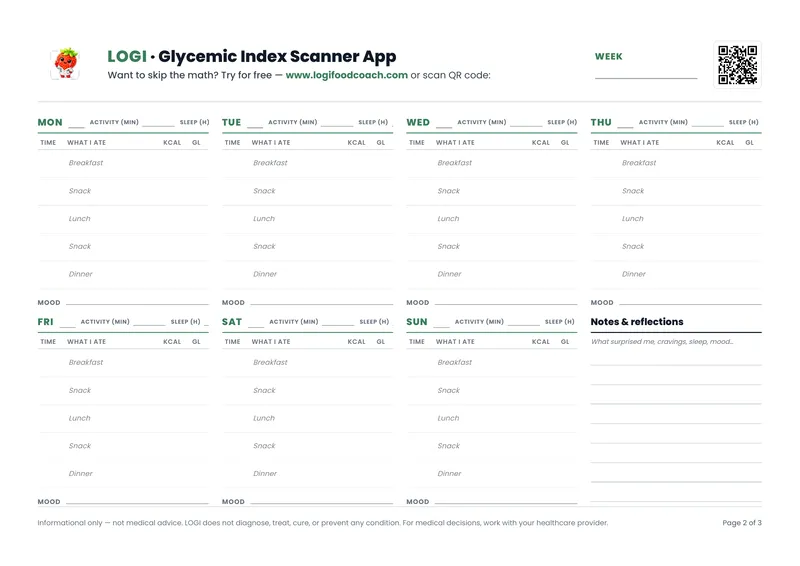
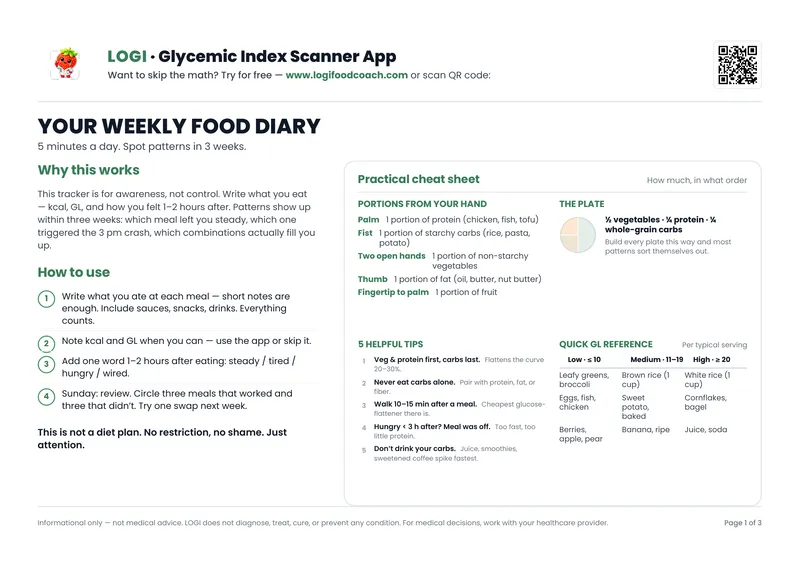
Your Weekly Food Journal
Track meals, glycemic load & mood. Spot patterns in 3 weeks.
No spam. Unsubscribe anytime.