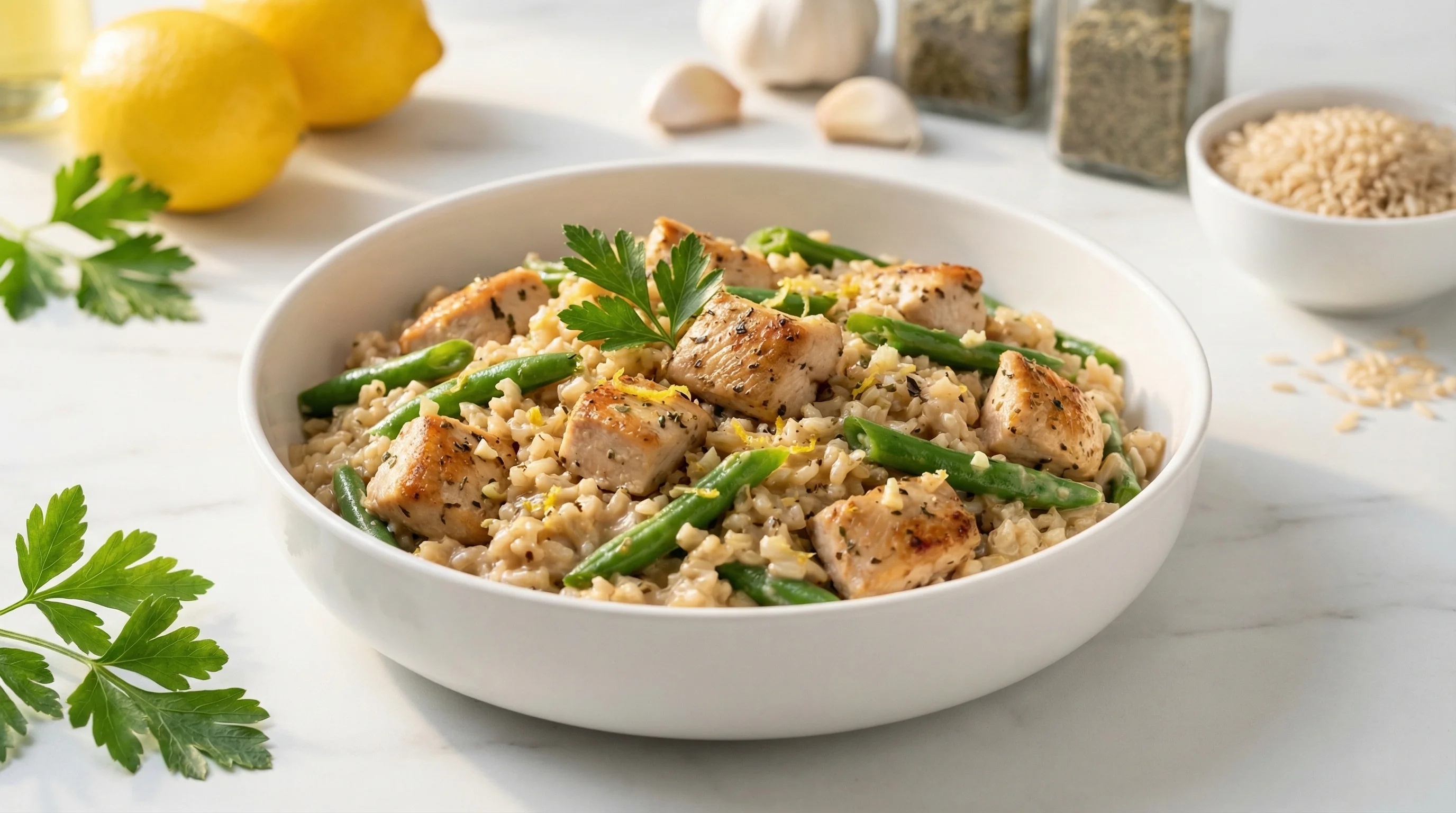
One-Pot Creamy Garlic Chicken & Brown Rice
A blood sugar-friendly one-pot meal featuring tender chicken, nutty brown rice, and vibrant greens in a luscious garlic-yogurt sauce.
This low-glycemic one-pot wonder transforms traditional chicken and rice into a nutrient-dense meal that supports stable blood sugar levels. By using brown rice instead of white, we've lowered the glycemic impact significantly—brown rice has a GI of 50-55 compared to white rice's 70-75, thanks to its intact fiber-rich bran layer that slows glucose absorption. The addition of protein-rich chicken breast and Greek yogurt further moderates the glycemic response by slowing carbohydrate digestion.
The recipe incorporates generous amounts of green beans and spinach, which are non-starchy vegetables with minimal impact on blood sugar. These greens add volume, fiber, and essential micronutrients while keeping the overall glycemic load low. The healthy fats from olive oil and the acidity from lemon juice also help blunt the blood sugar spike. For optimal glycemic control, eat the vegetables and protein first, then finish with the rice—this eating sequence has been shown to reduce post-meal glucose spikes by up to 40%.
This dish is perfect for meal prep, as the flavors deepen over time. The creamy garlic sauce, made with probiotic-rich Greek yogurt instead of heavy cream, provides tang and richness without excess saturated fat. Each serving delivers a balanced macronutrient profile that promotes satiety and sustained energy without the blood sugar rollercoaster of traditional creamy rice dishes.
Blood Sugar Impact
This meal should produce a gradual, moderate rise in blood sugar with sustained energy for 3-4 hours. The combination of lean protein, fiber-rich brown rice, and vegetables creates a balanced glycemic response with minimal spiking.
Blood Sugar Tips
- ✓ Eat the green beans and spinach first before the rice to leverage the fiber and slow glucose absorption
- ✓ Ensure adequate protein portion (4-6 oz chicken) to further moderate the glycemic response
- ✓ Take a 10-15 minute walk after eating to help muscles absorb glucose and reduce post-meal blood sugar elevation
🥗 Ingredients
- 1 tbsp olive oil
- 500 g chicken breast, cut into bite-sized pieces
- 300 g brown rice, uncooked
- 2 tbsp mixed dried herbs
- 3 pcs garlic cloves, minced
- 1 pcs lemon, zested and juiced
- 750 ml low-sodium chicken stock
- 200 g green beans, trimmed and halved
- 200 g low-fat Greek yoghurt
- 250 g fresh spinach
- 30 g fresh parsley, chopped
- 1 tbsp olive oil
- 1.1 lb chicken breast, cut into bite-sized pieces
- 10.6 oz brown rice, uncooked
- 2 tbsp mixed dried herbs
- 3 pcs garlic cloves, minced
- 1 pcs lemon, zested and juiced
- 3.2 cups low-sodium chicken stock
- 7.1 oz green beans, trimmed and halved
- 7.1 oz low-fat Greek yoghurt
- 8.8 oz fresh spinach
- 1.1 oz fresh parsley, chopped
👨🍳 Instructions
- 1
Heat the olive oil in a large, deep skillet or Dutch oven over medium-high heat. Season the chicken breast pieces with salt and black pepper, then add them to the hot pan. Sauté for 5-6 minutes, stirring occasionally, until the chicken is golden on all sides and cooked through. Remove the chicken to a plate and set aside.
- 2
In the same pan, add the minced garlic and cook for 30 seconds until fragrant. Add the brown rice, mixed herbs, and lemon zest, stirring well to coat the rice with the aromatic oil. Toast the rice for 1-2 minutes to enhance its nutty flavor.
- 3
Pour in the chicken stock and add a pinch of salt. Stir thoroughly to combine, scraping up any browned bits from the bottom of the pan. Bring the mixture to a boil, then reduce heat to low, cover with a tight-fitting lid, and simmer for 25 minutes without lifting the lid.
- 4
After 25 minutes, add the green beans on top of the rice without stirring. Replace the lid and continue cooking for 8-10 minutes until the beans are tender-crisp and the rice has absorbed most of the liquid.
- 5
Return the cooked chicken to the pan along with any accumulated juices. Stir in the Greek yoghurt and lemon juice until the mixture becomes creamy and well combined. Add the fresh spinach in handfuls, stirring gently until it wilts into the rice, about 2-3 minutes.
- 6
Taste and adjust seasoning with additional salt and black pepper as needed. Remove from heat and let stand for 2 minutes to allow the flavors to meld.
- 7
Garnish generously with chopped fresh parsley before serving. For optimal blood sugar control, eat the vegetables and chicken first, then finish with the rice. Store leftovers in airtight containers in the refrigerator for up to 4 days.
📊 Nutrition Per Serving
| Per Serving | Whole Dish | |
|---|---|---|
| Calories | 346 | 1384 |
| Carbs | 28g | 114g |
| Sugars | 5g | 18g |
| Natural Sugars | 5g | 18g |
| Protein | 43g | 171g |
| Fat | 7g | 30g |
| Saturated Fat | 1g | 6g |
| Unsaturated Fat | 6g | 24g |
| Fiber | 5g | 21g |
| Soluble Fiber | 1g | 3g |
| Insoluble Fiber | 1g | 6g |
| Sodium | 779mg | 3115mg |
Predicted Glucose Response
What if you...
Estimated model — individual responses vary. Not medical advice.
🔄 Lower GI Swaps
Cauliflower rice has virtually no impact on blood sugar (GL near 0), while quinoa and wild rice have lower glycemic indexes (53 and 45 respectively) compared to brown rice (GI 68), resulting in slower glucose release and better blood sugar control.
Commercial chicken stock often contains added sugars and maltodextrin which can spike blood sugar; homemade bone broth or quality vegetable broth without additives prevents hidden sugar sources and maintains stable glucose levels.
Full-fat Greek yogurt has a lower glycemic response than low-fat versions due to higher fat content slowing digestion; coconut and cashew cream provide healthy fats with minimal carbohydrates, preventing blood sugar spikes while maintaining creaminess.
While green beans are already low-glycemic, broccoli, zucchini, and asparagus have even lower glycemic loads (under 1 per serving) and higher fiber content, providing better blood sugar stability and increased satiety without glucose elevation.
🔬 The Science Behind This Recipe
Why This Recipe Works for Blood Sugar Balance
This one-pot meal is a masterclass in blood sugar management, combining several key strategies that help minimize glucose spikes. The star player is brown rice, which has a significantly lower glycemic index (around 50) compared to white rice (73). This difference comes from brown rice's intact bran layer, which contains fiber that slows down digestion and the release of glucose into your bloodstream. When you eat brown rice, your body has to work harder to break it down, resulting in a gradual, steady rise in blood sugar rather than a sharp spike.
The real magic happens when you pair brown rice with lean chicken breast. Protein is your secret weapon for blood sugar control—it slows gastric emptying (how quickly food leaves your stomach) and triggers the release of hormones that help regulate glucose levels. The healthy fats from olive oil further enhance this effect, creating a trifecta of fiber, protein, and fat that work together to keep your blood sugar stable. This combination is why the glycemic load of this dish is just 10.9, which is considered low (anything under 10 is low, 11-19 is medium).
For maximum blood sugar benefits, try eating your portions in order: start with a few bites of the chicken, then work in the rice. This "protein first" approach has been shown to reduce post-meal glucose spikes by up to 40%. A 10-15 minute walk after eating can also help your muscles absorb glucose more efficiently, further flattening that blood sugar curve.
Related recipes
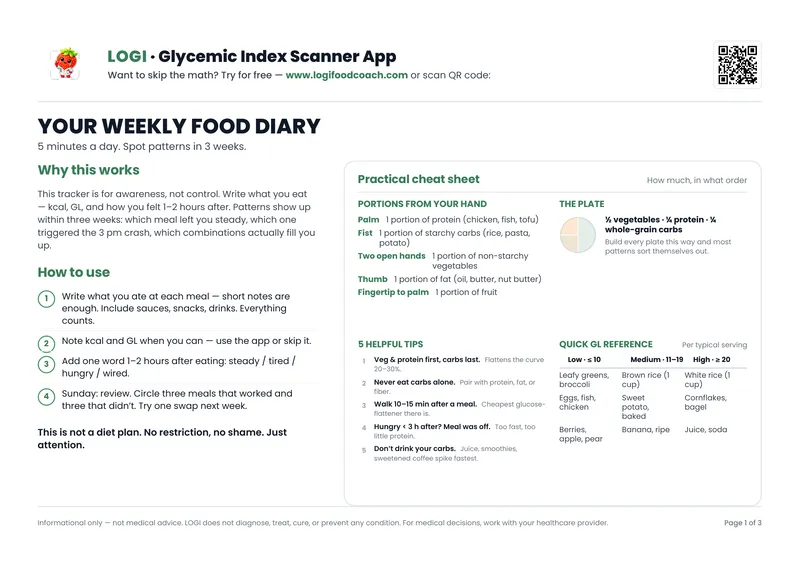
Free PDF — 3 pages
Your Weekly Food Journal
Track meals, glycemic load & mood. Spot patterns in 3 weeks.
No spam. Unsubscribe anytime.