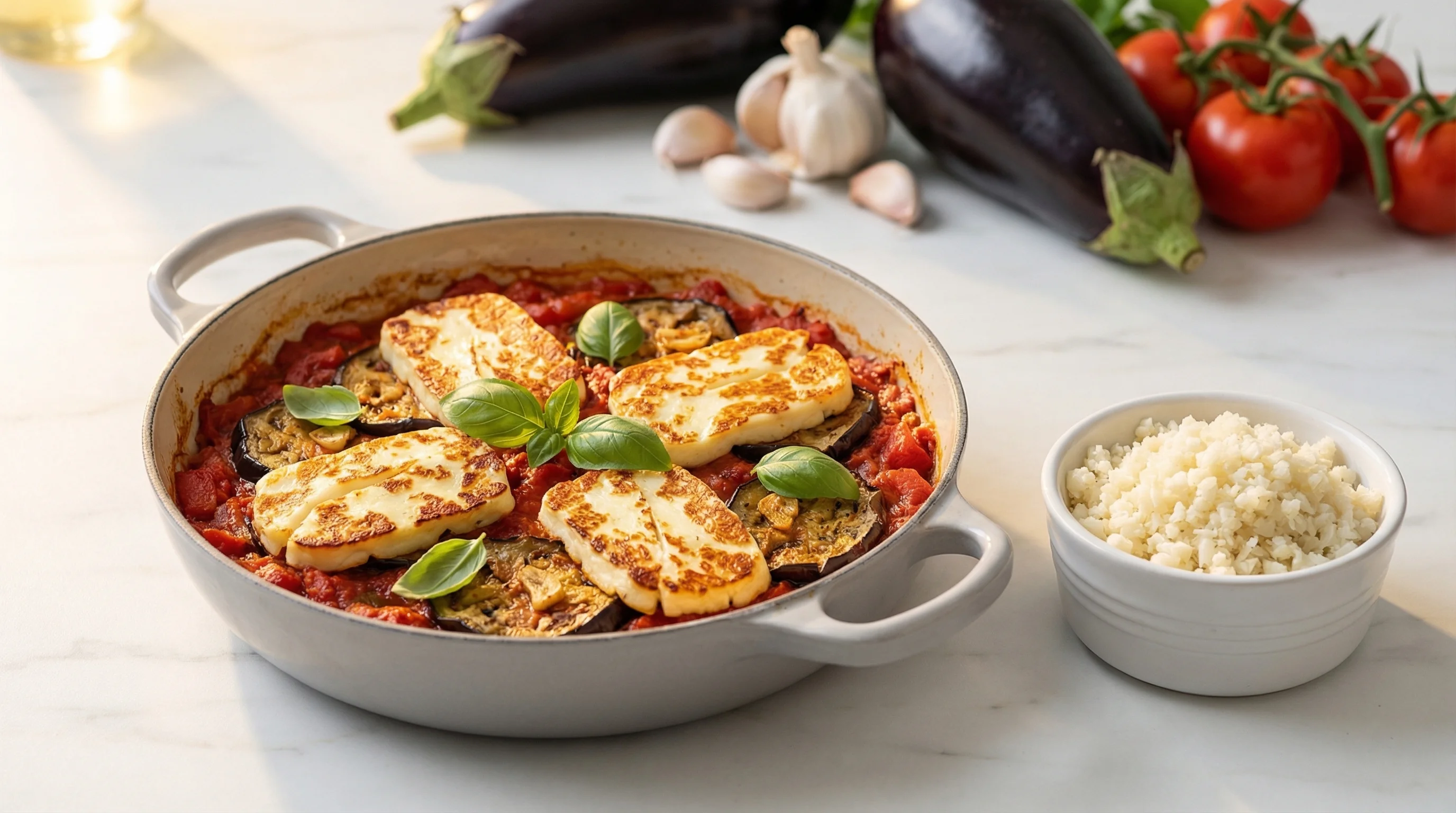
One-Pan Halloumi & Harissa Bake
A vibrant Mediterranean bake featuring layers of roasted aubergine and halloumi in spiced tomato sauce—simple, satisfying, and naturally blood sugar friendly.
This stunning one-pan dish combines the meaty texture of aubergine with golden halloumi cheese, all nestled in a fragrant harissa-spiced tomato base. It's a perfect example of how Mediterranean cooking naturally supports stable blood sugar levels through its emphasis on vegetables, healthy fats, and protein-rich cheese.
The aubergine provides substantial fiber and volume with minimal carbohydrates, while halloumi delivers satisfying protein and fat that slow glucose absorption. The olive oil contributes heart-healthy monounsaturated fats that further moderate the glycemic response. Fresh garlic and harissa paste add anti-inflammatory compounds and metabolism-boosting capsaicin without any added sugars.
For optimal blood sugar management, serve this bake with cauliflower rice or quinoa instead of traditional couscous, and consider eating a small green salad first to prime your digestive system with fiber. The combination of protein, fat, and fiber makes this dish naturally low-glycemic, with an estimated glycemic load well under 10 per serving. This recipe proves that eating for stable blood sugar doesn't mean sacrificing flavor or satisfaction.
Blood Sugar Impact
Minimal blood sugar impact expected due to very low glycemic load (4.4) and low GI (25). This meal should provide stable, sustained energy for 3-4 hours without significant glucose spikes, thanks to high fiber from vegetables and protein/fat from halloumi cheese.
Blood Sugar Tips
- ✓ Eat the vegetables (eggplant and cauliflower rice) first before the halloumi to further slow glucose absorption through increased fiber intake
- ✓ Pair this meal with a 10-15 minute walk after eating to enhance insulin sensitivity and glucose uptake by muscles
- ✓ Add extra olive oil or a small handful of nuts on the side to increase healthy fats, which will further slow digestion and minimize any blood sugar response
🥗 Ingredients
- 2 tbsp olive oil
- 1 pcs aubergine, sliced
- 2 pcs garlic cloves, crushed
- 400 g canned chopped tomatoes
- 1 tbsp harissa paste
- 225 g halloumi cheese block, sliced
- 10 g fresh basil for garnish
- 400 g cauliflower rice for serving
- 2 tbsp olive oil
- 1 pcs aubergine, sliced
- 2 pcs garlic cloves, crushed
- 14.1 oz canned chopped tomatoes
- 1 tbsp harissa paste
- 7.9 oz halloumi cheese block, sliced
- 0.4 oz fresh basil for garnish
- 14.1 oz cauliflower rice for serving
👨🍳 Instructions
- 1
Preheat your oven to 180°C (350°F). Prepare the aubergine by slicing it into rounds approximately 1cm thick. Pat the slices dry with paper towels to remove excess moisture.
- 2
Heat 1 tablespoon of olive oil in a large oven-safe skillet over medium-high heat. Working in batches if necessary, add the aubergine slices in a single layer and cook for 3-4 minutes per side until golden brown and softened. Transfer the cooked aubergine to a plate and set aside.
- 3
Add the remaining tablespoon of olive oil to the same skillet and reduce heat to medium. Add the crushed garlic and sauté for about 2 minutes, stirring frequently, until fragrant but not browned.
- 4
Pour the canned chopped tomatoes into the skillet with the garlic. Stir well and let the mixture simmer gently for 8-10 minutes, stirring occasionally, until the sauce has thickened and reduced slightly.
- 5
Stir the harissa paste thoroughly into the tomato sauce, mixing until fully incorporated. Taste and adjust seasoning if desired. Remove the skillet from the heat.
- 6
Slice the halloumi into pieces similar in size to your aubergine slices. Arrange alternating layers of aubergine and halloumi slices in a spiral or overlapping pattern on top of the tomato base, covering the entire surface.
- 7
Transfer the skillet to the preheated oven and bake for 10-12 minutes, until the halloumi edges turn golden brown and slightly crispy. The cheese should be heated through but still hold its shape.
- 8
Remove from the oven and garnish with fresh basil leaves. Serve immediately alongside cauliflower rice or a large green salad. For best blood sugar control, eat your vegetables or salad first, then enjoy the bake. Leftovers store well in airtight containers for up to 4 days.
📊 Nutrition Per Serving
| Per Serving | Whole Dish | |
|---|---|---|
| Calories | 325 | 1298 |
| Carbs | 18g | 71g |
| Sugars | 9g | 38g |
| Natural Sugars | 9g | 38g |
| Protein | 17g | 67g |
| Fat | 22g | 88g |
| Saturated Fat | 10g | 41g |
| Unsaturated Fat | 12g | 48g |
| Fiber | 7g | 27g |
| Soluble Fiber | 2g | 9g |
| Insoluble Fiber | 5g | 18g |
| Sodium | 648mg | 2591mg |
Predicted Glucose Response
What if you...
Estimated model — individual responses vary. Not medical advice.
🔄 Lower GI Swaps
These alternatives have virtually zero glycemic impact compared to cauliflower rice, which already has minimal carbohydrates but these options contain even fewer digestible carbs and more fiber
Fresh tomatoes have a slightly lower glycemic load than canned versions due to less processing and no added sugars, while sun-dried tomatoes in oil provide concentrated flavor with minimal quantity needed
Commercial harissa pastes often contain added sugars or high-GI thickeners; making your own or using pure spice blends eliminates hidden carbohydrates that can affect blood sugar
While halloumi is already low-glycemic, paneer and firm tofu have slightly higher protein content relative to any trace carbohydrates, and tempeh adds fermented benefits with more fiber to further slow glucose absorption
🔬 The Science Behind This Recipe
Why This Recipe Works for Blood Sugar Balance
This One-Pan Halloumi & Harissa Bake is a masterclass in blood sugar-friendly eating, with an impressively low glycemic load of just 4.4 per serving. The secret lies in its smart combination of fiber-rich vegetables, healthy fats, and protein-rich cheese. Eggplant, the star vegetable here, is packed with soluble fiber that slows down digestion and creates a gel-like substance in your gut, which means glucose is released into your bloodstream gradually rather than all at once. The generous use of olive oil adds healthy monounsaturated fats that further slow stomach emptying, giving your body more time to process the meal without causing dramatic blood sugar swings.
The halloumi cheese brings another crucial element to the table: protein. When you eat protein alongside any carbohydrates (even the modest amount in tomatoes and eggplant), it triggers a slower, more controlled insulin response. Think of protein as a brake pedal for your blood sugar—it helps prevent those sharp spikes and crashes that leave you feeling tired and hungry an hour later. The harissa paste, while adding bold flavor, contains capsaicin from chili peppers, which research suggests may improve insulin sensitivity over time.
Here's a practical tip to maximize this meal's benefits: start your plate with the eggplant and vegetables, then move to the halloumi. Eating fiber and protein first creates a protective barrier in your digestive system that blunts the impact of any carbohydrates. Consider taking a 10-15 minute walk after eating—even gentle movement helps your muscles absorb glucose more efficiently, keeping your blood sugar stable for hours.
Related recipes
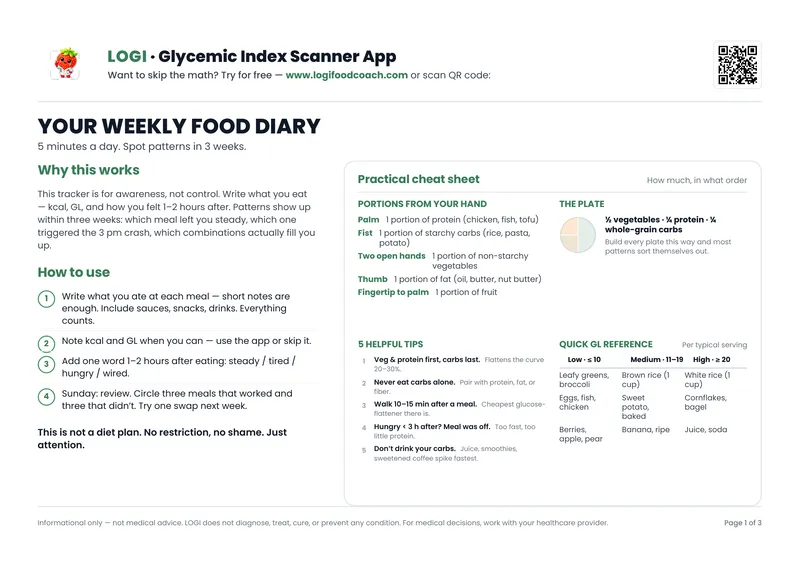
Free PDF — 3 pages
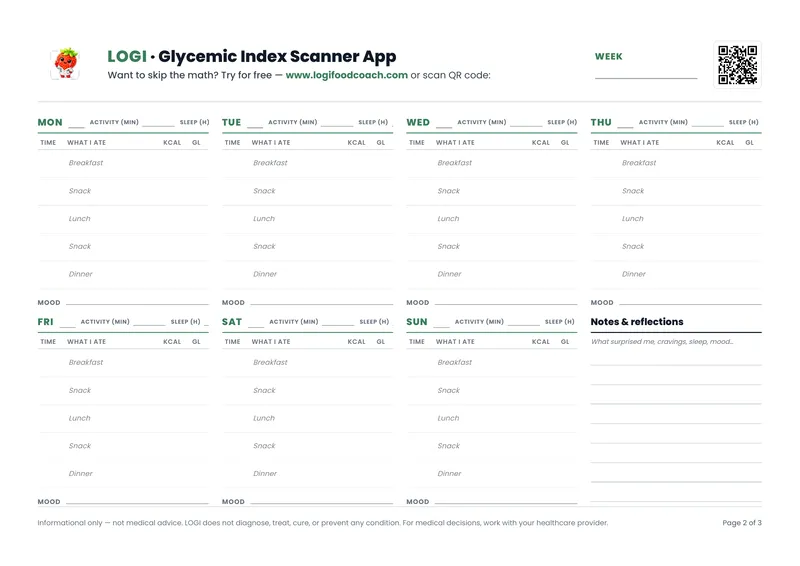
Your Weekly Food Journal
Track meals, glycemic load & mood. Spot patterns in 3 weeks.
No spam. Unsubscribe anytime.