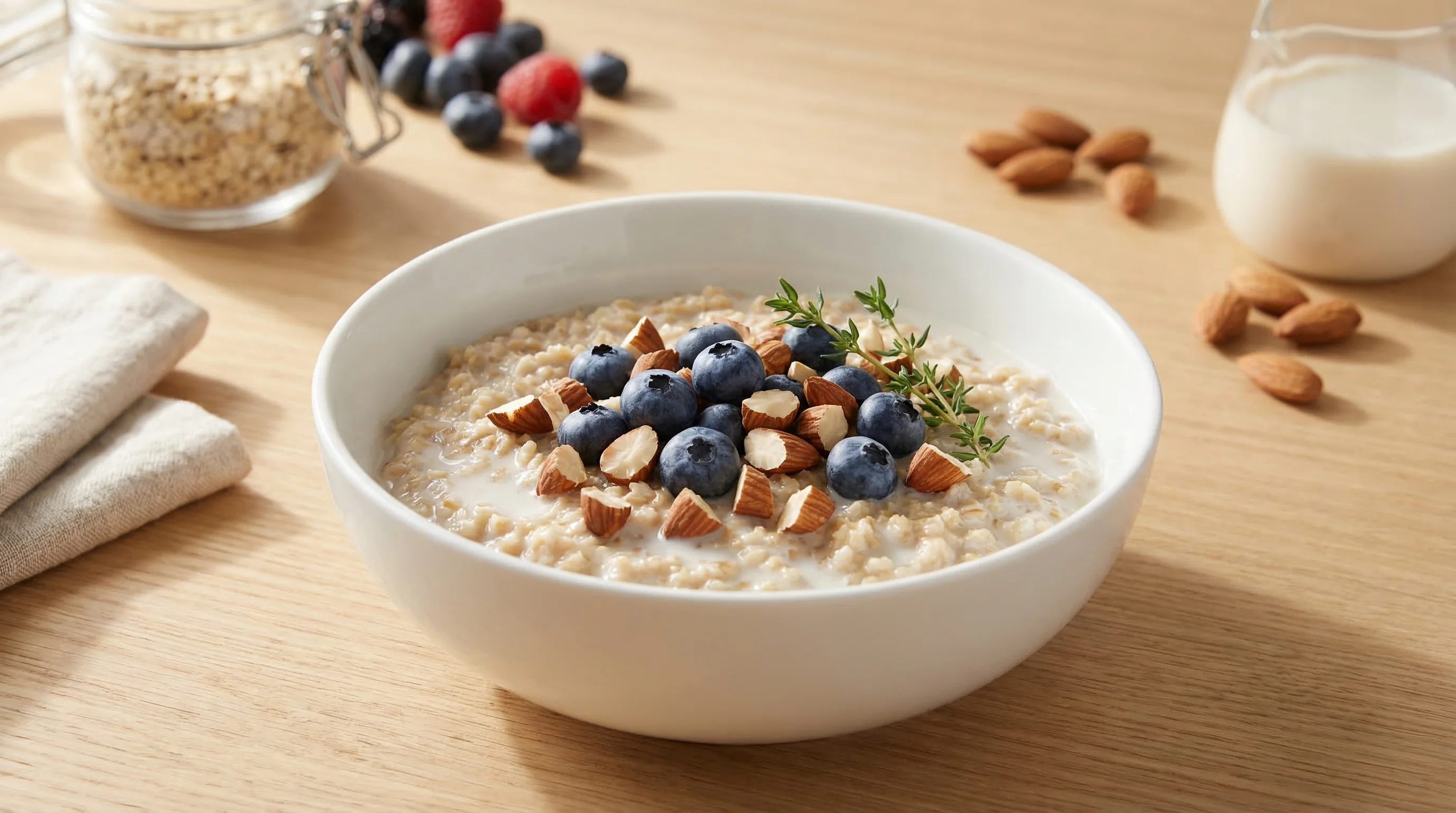
Steel-Cut Oatmeal with Blueberries & Almonds
A blood sugar-friendly breakfast combining slow-digesting oats with protein-rich almonds and antioxidant blueberries for sustained morning energy.
This thoughtfully crafted low-glycemic breakfast harnesses the power of steel-cut oats to provide steady, sustained energy throughout your morning. Unlike instant oatmeal, steel-cut oats have a lower glycemic index due to their minimal processing, allowing for gradual glucose release that helps maintain stable blood sugar levels. The addition of almonds provides healthy fats and protein that further slow carbohydrate absorption, while blueberries offer antioxidants and fiber with minimal glycemic impact.
The combination of these ingredients creates a synergistic effect for blood sugar management. The soluble fiber in oats, particularly beta-glucan, forms a gel-like substance in your digestive tract that slows glucose absorption. Almonds contribute both protein and monounsaturated fats, which help blunt the glycemic response and keep you satisfied for hours. Fresh blueberries, with their low glycemic load and high polyphenol content, may even improve insulin sensitivity over time.
For optimal blood sugar control, consider eating this breakfast within an hour of waking and pair it with a source of additional protein if needed. The milk provides calcium and protein, but you can substitute unsweetened almond milk or other plant-based alternatives if preferred. This recipe proves that managing blood sugar doesn't mean sacrificing flavor or satisfaction—it's about choosing whole, minimally processed ingredients that nourish your body while keeping glucose levels steady.
Blood Sugar Impact
Low to moderate impact with gradual, sustained blood sugar rise. The combination of low GI steel-cut oats, fiber, protein from almonds, and fat from milk creates stable energy for 3-4 hours without sharp spikes.
Blood Sugar Tips
- ✓ Add a tablespoon of chia seeds or ground flaxseed to increase fiber and healthy fats, further slowing glucose absorption
- ✓ Eat the almonds first or mix them thoroughly throughout to ensure fat and protein are consumed with the carbohydrates
- ✓ Consider a 10-15 minute walk after eating to help muscles absorb glucose and blunt any blood sugar rise
🥗 Ingredients
- 40 g steel-cut oats
- 75 g fresh blueberries
- 20 g raw almonds, roughly chopped
- 240 ml unsweetened milk or plant-based milk
- 1.4 oz steel-cut oats
- 2.6 oz fresh blueberries
- 0.7 oz raw almonds, roughly chopped
- 1.0 cups unsweetened milk or plant-based milk
👨🍳 Instructions
- 1
Measure out the steel-cut oats and set aside. Pour the milk into a small saucepan and place over medium heat.
- 2
Once the milk begins to simmer gently, add the steel-cut oats and stir well to combine. Reduce heat to medium-low to maintain a gentle simmer.
- 3
Cook the oats uncovered for 18-20 minutes, stirring occasionally to prevent sticking. The oats should absorb most of the liquid and become tender with a slightly chewy texture.
- 4
While the oats cook, rinse the blueberries if using fresh, and roughly chop the almonds into smaller pieces for better distribution and easier eating.
- 5
Once the oats reach your desired consistency, remove from heat and let stand for 1-2 minutes to thicken slightly. The oatmeal should be creamy but not soupy.
- 6
Transfer the cooked oatmeal to a serving bowl. Top with the fresh blueberries and sprinkle the chopped almonds evenly over the surface.
- 7
Serve immediately while warm. For additional blood sugar control, eat the almonds and blueberries first, then the oatmeal, or stir everything together and eat slowly to allow satiety signals to register.
📊 Nutrition Per Serving
| Per Serving | Whole Dish | |
|---|---|---|
| Calories | 458 | 458 |
| Carbs | 54g | 54g |
| Sugars | 20g | 20g |
| Natural Sugars | 20g | 20g |
| Protein | 18g | 18g |
| Fat | 21g | 21g |
| Saturated Fat | 6g | 6g |
| Unsaturated Fat | 15g | 15g |
| Fiber | 8g | 8g |
| Soluble Fiber | 3g | 3g |
| Insoluble Fiber | 5g | 5g |
| Sodium | 108mg | 108mg |
Predicted Glucose Response
What if you...
Estimated model — individual responses vary. Not medical advice.
🔄 Lower GI Swaps
Quinoa flakes, chia seeds, and hemp hearts have lower glycemic indexes than steel-cut oats and provide more protein and healthy fats, which further slow glucose absorption and reduce blood sugar spikes.
Raspberries and blackberries have lower sugar content and glycemic load than blueberries while providing more fiber, resulting in a gentler impact on blood glucose levels.
Unsweetened nut and coconut milks contain virtually no carbohydrates compared to dairy milk, eliminating the lactose sugar and significantly lowering the overall glycemic load of the meal.
While almonds are already excellent, walnuts and pecans have slightly higher omega-3 content and healthy fats with minimal carbohydrates, providing even better blood sugar stability and sustained energy.
🔬 The Science Behind This Recipe
Why This Recipe Works for Blood Sugar Balance
This steel-cut oatmeal delivers sustained energy without the glucose rollercoaster thanks to its powerful trio of fiber, healthy fats, and protein. Unlike instant oats, steel-cut oats are minimally processed whole grains that retain their dense, chewy structure. This means your digestive system has to work harder to break them down, resulting in a gradual, steady release of glucose into your bloodstream rather than a sharp spike. The soluble fiber in steel-cut oats—particularly beta-glucan—actually forms a gel-like substance in your gut that slows carbohydrate absorption, which is why this breakfast clocks in at a low GI of 29 despite being grain-based.
The blueberries and almonds aren't just flavor boosters—they're metabolic allies. Blueberries contain anthocyanins, natural compounds that may improve insulin sensitivity, while their fiber content further moderates sugar absorption. Almonds bring healthy monounsaturated fats and protein to the bowl, two nutrients that significantly slow gastric emptying. This means food stays in your stomach longer, preventing the rapid glucose surge you'd get from eating oats alone. The combination creates what nutritionists call the "second meal effect"—stabilizing your blood sugar not just after breakfast, but potentially improving your response to lunch as well.
To maximize these benefits, consider eating the almonds and a few blueberries first, then the oatmeal. This "fiber and fat first" approach primes your digestive system for better glucose control. Adding a splash of whole milk instead of water provides additional protein and fat, further flattening your glucose curve. A 10-minute walk after eating can help your muscles absorb glucose more efficiently, enhancing the already-impressive glycemic load of just 15.5.
Related recipes
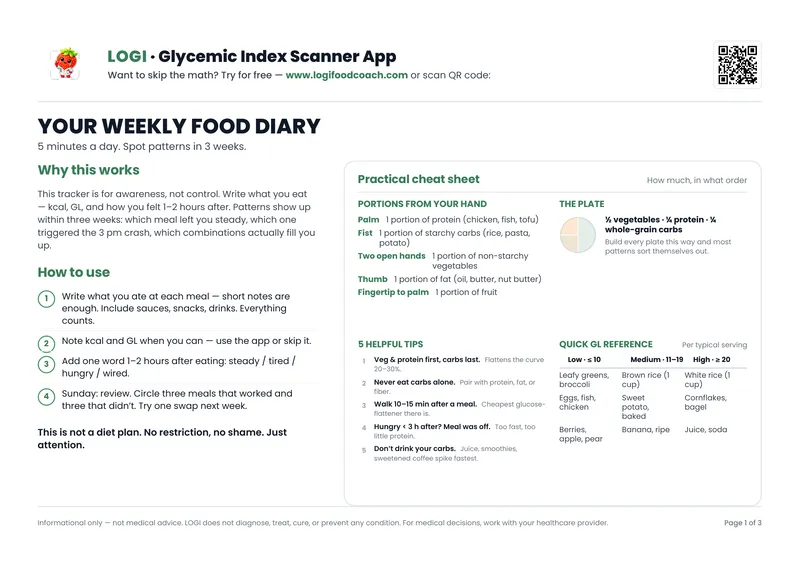
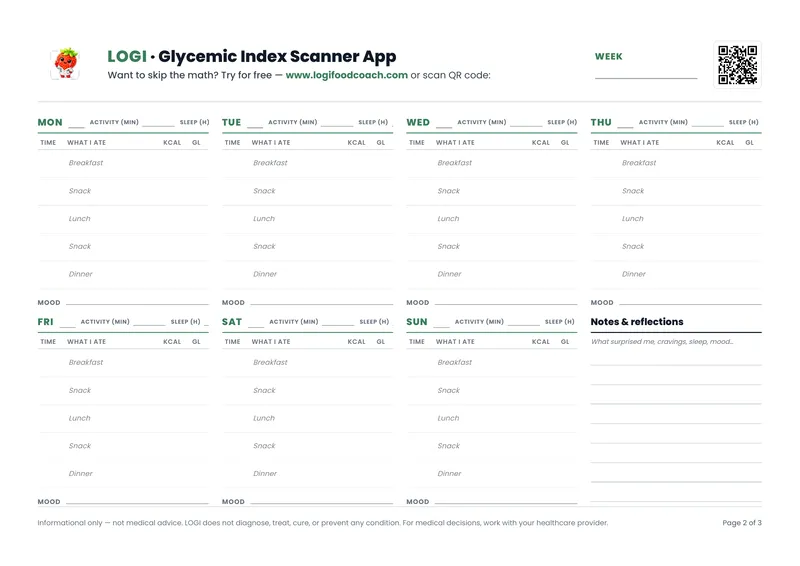
Free PDF — 3 pages
Your Weekly Food Journal
Track meals, glycemic load & mood. Spot patterns in 3 weeks.
No spam. Unsubscribe anytime.