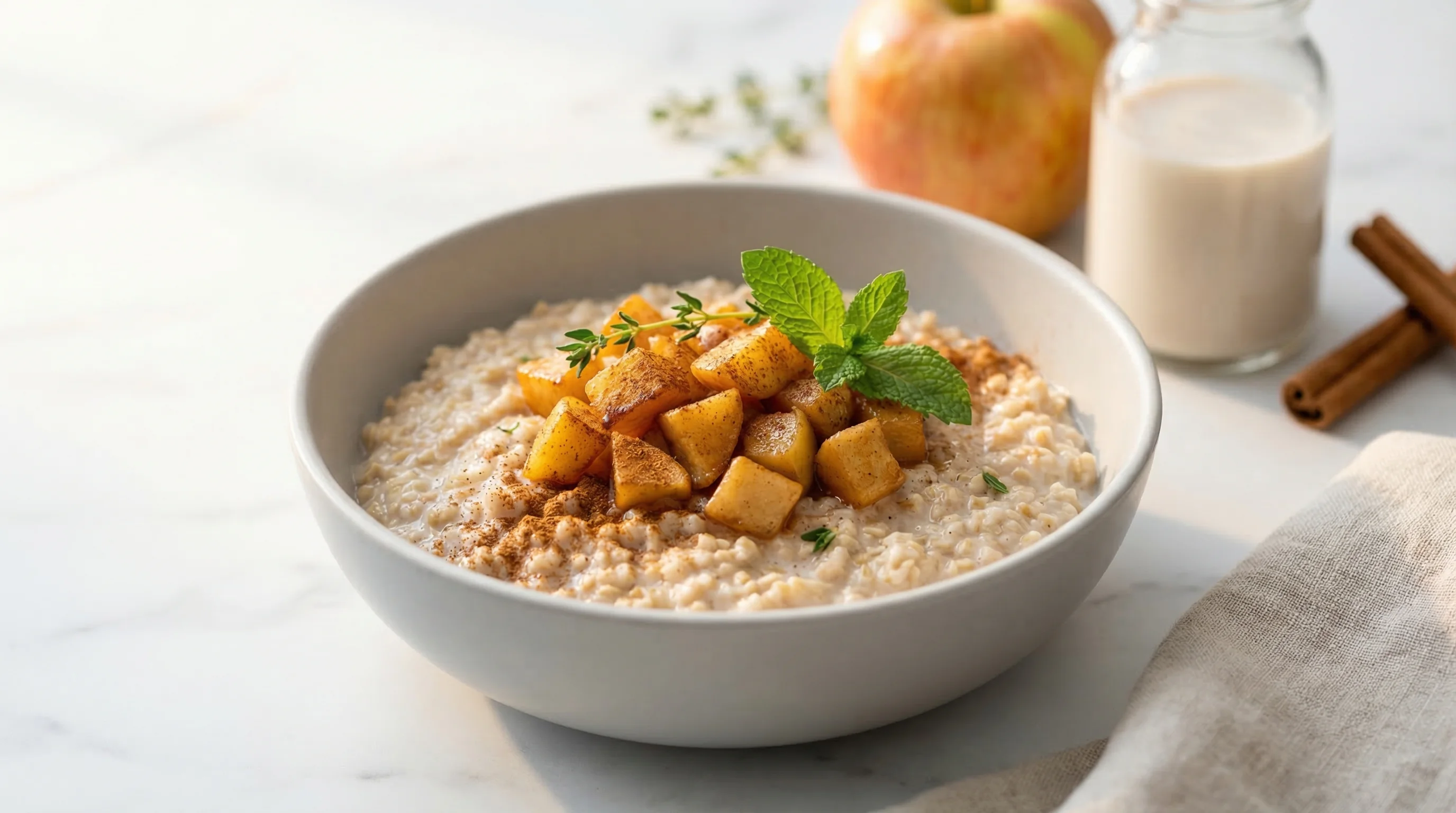
Low-Glycemic Oatmeal with Apple & Cinnamon
A blood sugar-friendly breakfast that combines steel-cut oats with fresh apple and warming cinnamon to start your day with sustained energy and stable glucose.
This thoughtfully crafted low-glycemic breakfast transforms traditional oatmeal into a blood sugar-balancing powerhouse. By using steel-cut oats instead of instant varieties, we significantly lower the glycemic impact while maximizing fiber content and nutritional density. Steel-cut oats have a GI of approximately 55 compared to instant oats at 79, making them an excellent choice for stable morning glucose levels.
The addition of fresh apple provides natural sweetness along with soluble fiber, particularly pectin, which slows sugar absorption. Cinnamon isn't just for flavor—studies suggest it may improve insulin sensitivity and help moderate post-meal blood sugar spikes. Using unsweetened milk adds protein and healthy fats that further blunt the glycemic response, creating a balanced macronutrient profile that keeps you satisfied for hours.
For optimal blood sugar management, consider eating this oatmeal after consuming a small handful of nuts or a few bites of Greek yogurt. This "protein first" approach can reduce glucose spikes by up to 40%. The soluble fiber in oats forms a gel-like substance in your digestive tract, slowing carbohydrate absorption and promoting steady energy release throughout your morning.
Blood Sugar Impact
This meal will have a low to moderate blood sugar impact due to the steel-cut oats' intact fiber structure and low GI of 30. Expect steady, sustained energy release over 3-4 hours without sharp spikes.
Blood Sugar Tips
- ✓ Add a protein source like Greek yogurt, nuts, or a boiled egg to further slow digestion and stabilize blood sugar
- ✓ Eat the oatmeal while it's still warm and thick rather than letting it become thin and soupy, as texture affects glycemic response
- ✓ Take a 10-15 minute walk after eating to help muscles absorb glucose and blunt any post-meal blood sugar rise
🥗 Ingredients
- 40 g steel-cut oats
- 1 pcs medium apple, diced
- 240 ml unsweetened milk
- 1 tsp ground cinnamon
- 1.4 oz steel-cut oats
- 1 pcs medium apple, diced
- 1.0 cups unsweetened milk
- 1 tsp ground cinnamon
👨🍳 Instructions
- 1
Measure 40g steel-cut oats and rinse them briefly under cold water in a fine-mesh strainer to remove excess starch.
- 2
In a small saucepan, bring 240ml unsweetened milk to a gentle simmer over medium heat, stirring occasionally to prevent scorching on the bottom.
- 3
Add the rinsed steel-cut oats to the simmering milk, reduce heat to low, and stir well to combine.
- 4
Cook the oats uncovered for 12-15 minutes, stirring every 2-3 minutes, until the oats are tender but still retain a pleasant chewy texture and most of the liquid has been absorbed.
- 5
While the oats cook, wash the apple thoroughly, leave the skin on for maximum fiber, and dice it into small 1/2-inch cubes.
- 6
When the oats reach your desired consistency, remove from heat and immediately stir in the diced apple, allowing the residual heat to slightly soften the fruit.
- 7
Transfer the oatmeal to a serving bowl and sprinkle 1 teaspoon of ground cinnamon evenly over the top.
- 8
Let the oatmeal rest for 1-2 minutes before eating to allow flavors to meld and temperature to become comfortable, which also gives the fiber time to begin forming its beneficial gel structure for optimal blood sugar control.
📊 Nutrition Per Serving
| Per Serving | Whole Dish | |
|---|---|---|
| Calories | 379 | 379 |
| Carbs | 61g | 61g |
| Sugars | 27g | 27g |
| Natural Sugars | 27g | 27g |
| Protein | 13g | 13g |
| Fat | 11g | 11g |
| Saturated Fat | 5g | 5g |
| Unsaturated Fat | 6g | 6g |
| Fiber | 9g | 9g |
| Soluble Fiber | 3g | 3g |
| Insoluble Fiber | 6g | 6g |
| Sodium | 106mg | 106mg |
Predicted Glucose Response
What if you...
Estimated model — individual responses vary. Not medical advice.
🔄 Lower GI Swaps
Quinoa flakes have a lower glycemic index (53 vs 55) and higher protein content which slows glucose absorption. Chia seeds create a gel that significantly reduces the glycemic response, while hemp hearts are very low-carb with minimal blood sugar impact.
Berries have a much lower glycemic index (25-40) compared to regular apples (36-40) and contain more fiber per gram of carbohydrate. Using half a green apple reduces total sugar load while maintaining flavor, as green apples have slightly lower sugar content than red varieties.
Unsweetened plant milks contain virtually no natural sugars compared to dairy milk (which has 12g lactose per cup), dramatically reducing the glycemic load. Soy milk also provides protein to further stabilize blood sugar response.
🔬 The Science Behind This Recipe
Why This Oatmeal Keeps Your Blood Sugar Steady
This breakfast bowl is a masterclass in blood sugar management, starting with steel-cut oats instead of instant varieties. Steel-cut oats retain their outer bran layer and require more digestion time, which means glucose enters your bloodstream gradually rather than spiking quickly. With a glycemic index of just 30 (compared to instant oats at 65+), these oats provide sustained energy for hours. The soluble fiber called beta-glucan forms a gel-like substance in your digestive tract, physically slowing down carbohydrate absorption and helping you feel fuller longer.
The supporting ingredients work synergistically to further minimize glucose response. Cinnamon contains compounds that may improve insulin sensitivity, helping your cells use glucose more efficiently. The milk adds protein and fat, which significantly slow digestion—this is why eating carbohydrates with protein or fat always produces a gentler blood sugar curve than eating them alone. Even the apple contributes: while fruit contains natural sugars, the pectin fiber in apples (especially when eaten with the skin) helps moderate absorption. The glycemic load of 18.3 tells us that despite containing carbohydrates, the actual amount per serving creates only a modest blood sugar impact.
For optimal results, consider eating this oatmeal after a short morning walk or light activity, when your muscles are primed to absorb glucose without requiring as much insulin. You can further reduce the glycemic impact by adding a tablespoon of nuts or seeds, which contribute healthy fats and additional protein. The key takeaway: it's not just about choosing low-GI foods, but combining ingredients strategically to create meals that support stable energy and metabolic health throughout your day.
Related recipes
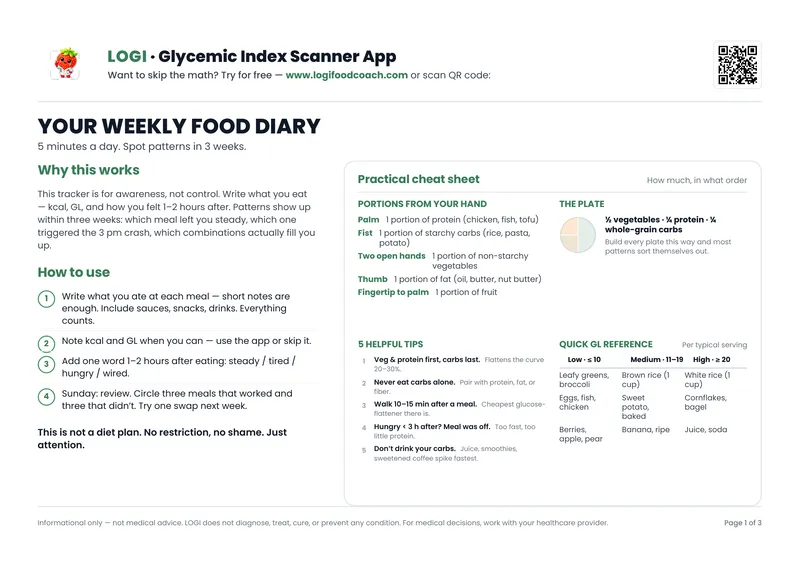
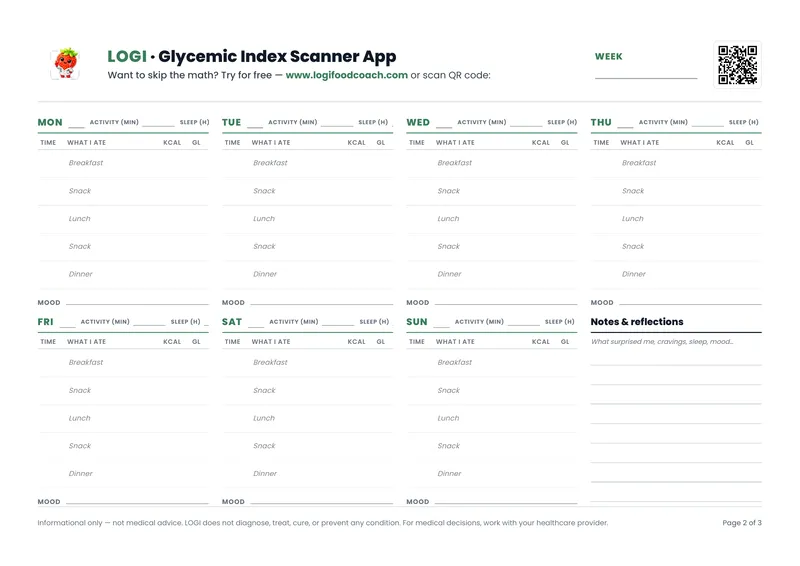
Free PDF — 3 pages
Your Weekly Food Journal
Track meals, glycemic load & mood. Spot patterns in 3 weeks.
No spam. Unsubscribe anytime.