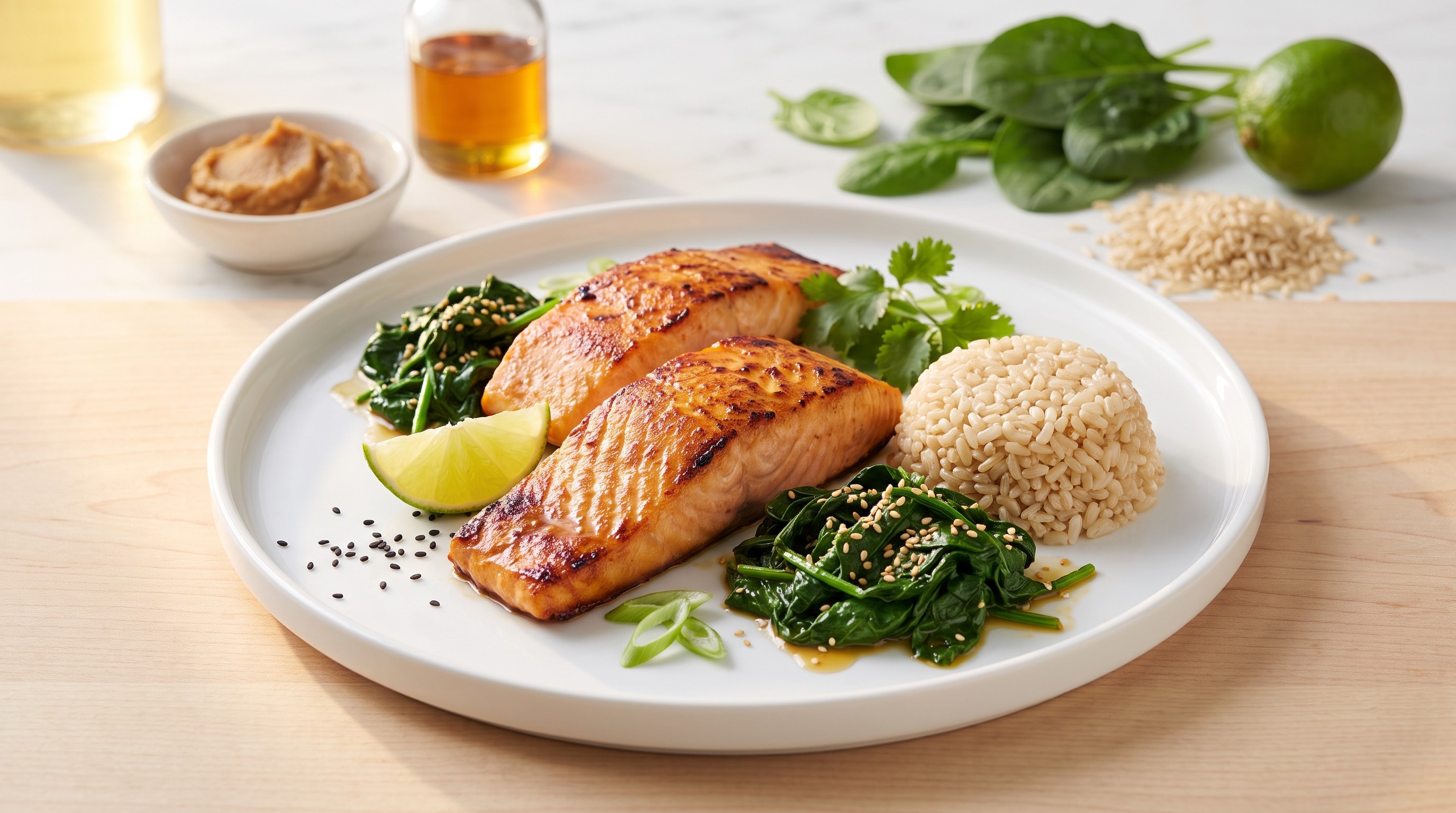
Miso-Glazed Salmon with Sesame Spinach and Brown Rice
Caramelized miso salmon over fibre-rich brown rice with sesame spinach — a balanced, low-GI plate packed with omega-3s and steady-energy whole grains.
This miso-glazed salmon delivers a stunning balance of umami richness and blood-sugar-friendly nutrition. Short-grain brown rice forms the foundation — its intact bran layer and higher amylose content give it a low glycemic index of around 50, meaning glucose enters your bloodstream gradually rather than in a sharp spike. The salmon itself contributes zero carbohydrates and is one of the best dietary sources of omega-3 fatty acids, which research links to improved insulin sensitivity.
The miso glaze is where the magic happens: white miso paste, rice vinegar, and toasted sesame oil are whisked together, then brushed onto the fillets before pan-searing and a quick pass under the broiler. The sugars in the miso caramelize into a golden, slightly crispy crust that contrasts beautifully with the tender, flaky fish beneath. Because the glaze uses naturally fermented miso rather than added sugar, you get deep savoury flavour without a glycemic penalty.
Alongside the salmon sits a mound of quick-wilted spinach, flash-cooked with soy sauce and finished with toasted sesame seeds. Spinach is extremely low in carbohydrates and rich in magnesium — a mineral that supports healthy glucose metabolism. For the best blood-sugar response, eat the spinach and a few bites of salmon before starting on the rice; the fibre, fat, and protein create a buffer that slows gastric emptying and blunts the glucose curve from the grain. A squeeze of fresh lime ties every element together with bright acidity.
Blood Sugar Impact
Low to moderate impact — the combination of protein-rich salmon, healthy fats from sesame oil, and fiber from brown rice and spinach will promote a gradual, steady rise in blood sugar. With a glycemic load of 11.6 and estimated GI of 43, expect stable energy for 3-4 hours.
Blood Sugar Tips
- ✓ Eat the miso-glazed salmon and sesame spinach before starting the brown rice to slow glucose absorption with protein, fat, and fiber.
- ✓ Keep the brown rice portion moderate (about ¾ cup cooked) since it is the primary carbohydrate source driving the glycemic load.
- ✓ Take a 10-15 minute walk after the meal to help your muscles absorb glucose and further blunt any blood sugar rise.
🥗 Ingredients
- 150 g Brown rice
- 300 ml Water
- 2 pcs Salmon fillet
- 30 g White miso paste
- 10 ml Rice vinegar
- 5 ml Sesame oil
- 200 g Spinach
- 10 g Sesame seeds
- 5 ml Soy sauce
- 1 pcs Lime
- 5.3 oz Brown rice
- 1.3 cups Water
- 2 pcs Salmon fillet
- 1.1 oz White miso paste
- 2 tsp Rice vinegar
- 1 tsp Sesame oil
- 7.1 oz Spinach
- 0.4 oz Sesame seeds
- 1 tsp Soy sauce
- 1 pcs Lime
👨🍳 Instructions
- 1
Rinse the brown rice in a fine-mesh sieve under cold running water until the water runs mostly clear. Transfer to a small saucepan, add 300 ml of water, and bring to a boil over high heat. As soon as it boils, reduce the heat to the lowest setting, cover tightly, and let it simmer undisturbed for 18 minutes.
- 2
While the rice cooks, prepare the miso glaze. In a small bowl, combine the white miso paste, rice vinegar, and half of the sesame oil (about 2.5 ml). Whisk until completely smooth and uniform — there should be no lumps of miso remaining.
- 3
Toast the sesame seeds in a dry pan over medium heat, shaking frequently, for 1–2 minutes until they turn golden and fragrant. Remove immediately to a small dish and set aside so they do not burn.
- 4
Pat both salmon fillets thoroughly dry with paper towel — this is essential for a good sear. Brush the miso glaze generously over the top and sides of each fillet, reserving a thin layer for the second glazing. Place the fillets skin-side down in a cold non-stick or oven-safe pan, then turn the heat to medium.
- 5
Cook the salmon without moving it for about 4 minutes until the skin is crisp and the flesh is opaque roughly halfway up the side. Flip the fillets carefully, brush the skin side with the remaining glaze, then transfer the pan directly under a high broiler (grill). Broil for 3 minutes until the glaze caramelizes into a golden crust and the internal temperature reaches 60 °C (140 °F).
- 6
Remove the salmon from the oven and let it rest loosely covered while you prepare the spinach. Resting allows the residual heat to finish cooking the centre gently without drying out the fish.
- 7
Heat the remaining sesame oil (about 2.5 ml) in a wide pan or wok over high heat until it shimmers. Add all the spinach at once along with the soy sauce and toss vigorously with tongs for about 2 minutes until just wilted but still vibrant green. Remove from heat and scatter the toasted sesame seeds over the top.
- 8
Fluff the rice with a fork and divide it between two plates. Place a salmon fillet on each bed of rice and arrange the sesame spinach alongside. Serve immediately with a lime wedge on the side — squeeze the juice over the salmon and spinach just before eating for brightness and an extra blood-sugar-friendly boost from the citric acid.
📊 Nutrition Per Serving
| Per Serving | Whole Dish | |
|---|---|---|
| Calories | 500 | 1000 |
| Carbs | 27g | 54g |
| Sugars | 2g | 4g |
| Natural Sugars | 2g | 4g |
| Protein | 41g | 82g |
| Fat | 26g | 53g |
| Saturated Fat | 6g | 11g |
| Unsaturated Fat | 21g | 41g |
| Fiber | 5g | 10g |
| Soluble Fiber | 2g | 3g |
| Insoluble Fiber | 4g | 7g |
| Sodium | 873mg | 1747mg |
Predicted Glucose Response
What if you...
Estimated model — individual responses vary. Not medical advice.
🔄 Lower GI Swaps
Long grain brown rice has a moderate GI (around 68). Cauliflower rice has a near-zero glycemic load, quinoa has a lower GI (around 53) with more protein to slow glucose absorption, and konjac rice is virtually zero-carb, dramatically reducing the meal's overall glycemic load.
White miso contains more rice koji and residual sugars, giving it a slightly higher glycemic impact. Red miso and hatcho (pure soybean) miso are fermented longer with less added grain, resulting in lower sugar content and a reduced blood sugar response.
Rice vinegar can contain small amounts of residual sugars. Apple cider vinegar has been shown in studies to improve post-meal insulin sensitivity and lower blood sugar spikes by up to 20-30%. White wine vinegar offers similar acetic acid benefits with negligible sugar content.
🔬 The Science Behind This Recipe
Here's the science explainer section:
---
Why This Meal Works for Your Blood Sugar
This dish is a textbook example of how smart ingredient pairing can keep your blood sugar steady. Brown rice, while still a grain, behaves very differently from its white counterpart. Its outer bran layer is packed with fiber, which acts like a speed bump in your digestive system — slowing the breakdown of starches into sugar and releasing glucose into your bloodstream gradually rather than all at once. That's a big reason this recipe lands at a glycemic index of just 43, well within the low-GI range. And here's where the concept of glycemic load comes in: it's not just about *how fast* a food raises blood sugar, but *how much* carbohydrate you're actually eating. With a glycemic load of 11.6 per serving, this meal sits comfortably in the low category, meaning the total blood sugar impact is modest.
Now, the real magic happens when the salmon enters the picture. This fillet delivers a generous dose of both protein and healthy fats, and research consistently shows that eating protein and fat alongside carbohydrates significantly flattens the post-meal glucose curve. The protein triggers a slow, sustained digestive process, while the fat further delays gastric emptying — essentially giving your body more time to process the incoming sugars without overwhelming it.
Want to maximize these benefits? Try eating your sesame spinach first, then the salmon, and finish with the brown rice. This "vegetables-protein-carbs" order has been shown in studies to reduce post-meal glucose spikes by up to 30–40% compared to eating carbs first. A short 10–15 minute walk after your meal can help even further, as your muscles actively pull glucose from the bloodstream for energy. Small habits, big difference.
Related recipes
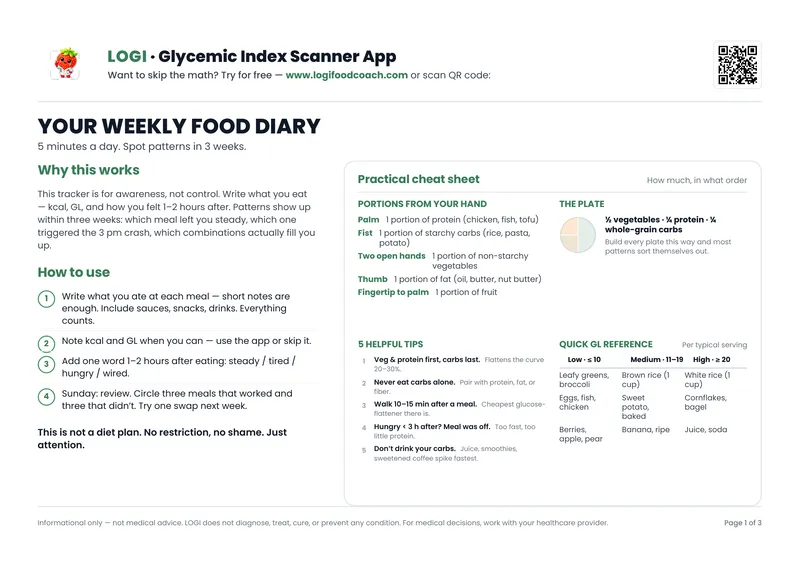
Free PDF — 3 pages
Your Weekly Food Journal
Track meals, glycemic load & mood. Spot patterns in 3 weeks.
No spam. Unsubscribe anytime.