Mercimek Çorbası (Turkish Red Lentil Soup)
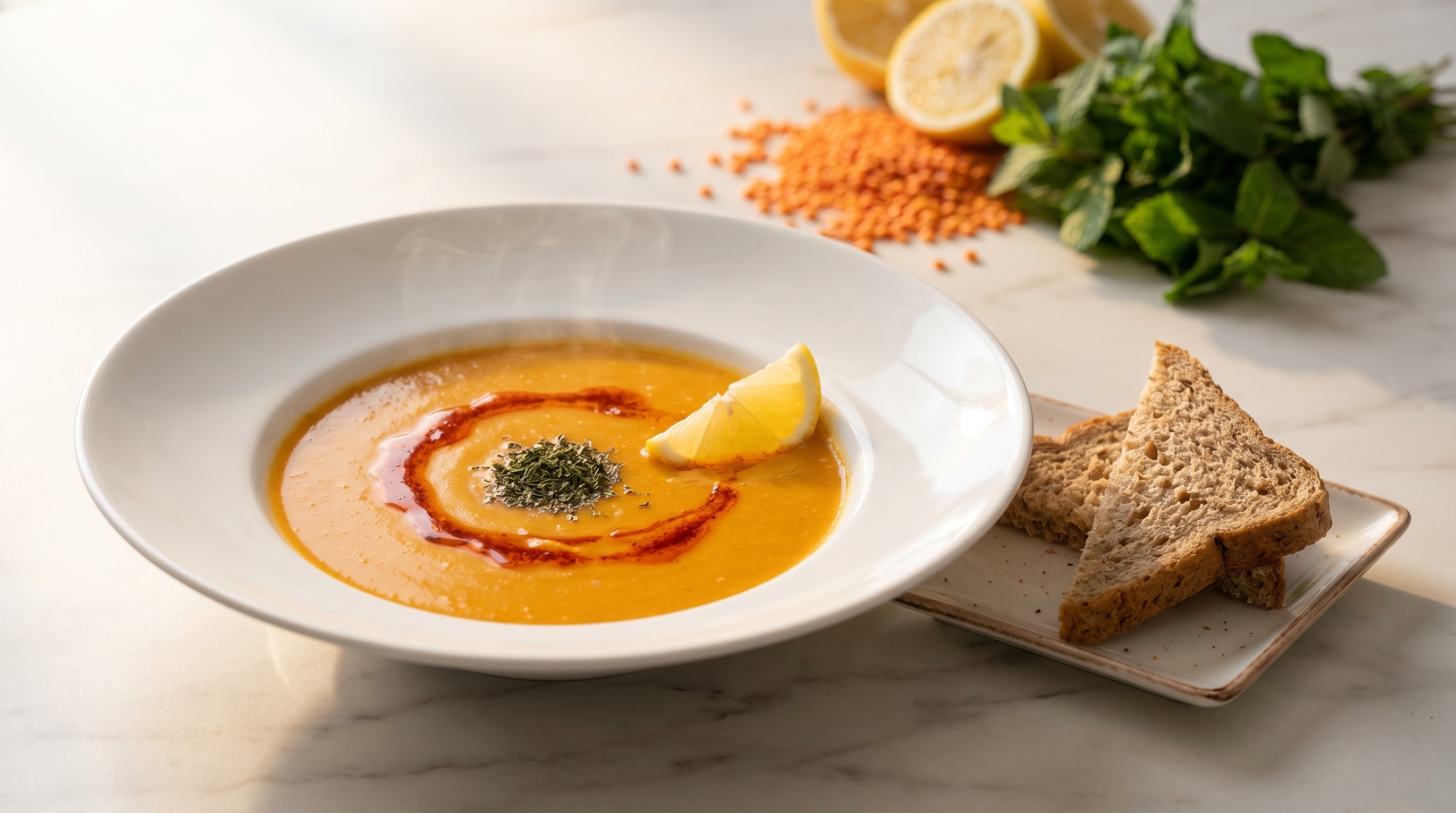
Velvety Turkish red lentil soup with a smoky paprika drizzle — naturally low-GI (≈26), high in fiber, and ideal for steady blood sugar.
Mercimek çorbası is Turkey's most beloved everyday soup, and it also happens to be one of the most blood-sugar-friendly meals you can make. Red lentils have a glycemic index of roughly 26, placing them firmly in the low-GI category. Their high soluble-fiber content forms a gel-like matrix during digestion that slows glucose absorption, helping you avoid the sharp spikes and crashes associated with refined-carbohydrate meals. Combined with healthy fats from olive oil and the anti-inflammatory properties of turmeric and cumin, this soup delivers sustained energy for hours.
The recipe comes together in about 40 minutes with minimal prep. Onion, carrot, and garlic build an aromatic base, while cumin, paprika, and turmeric add warmth and golden color. Once the lentils dissolve into a silky purée, the soup is finished with a traditional terbiye — a quick sizzle of olive oil (or butter), paprika, and dried mint that adds a smoky, fragrant top note to every bowl. A generous squeeze of fresh lemon at the table brightens the flavors and adds vitamin C, which can further support blood-sugar regulation.
For optimal glycemic response, serve this soup as a starter before a main course — eating fiber-rich foods first primes your digestive system to handle subsequent carbohydrates more smoothly. It also pairs beautifully with a side salad dressed in vinegar, which has been shown to reduce post-meal glucose spikes. Make a double batch for meal prep; the soup stores well for up to four days in the refrigerator and freezes perfectly for up to three months.
Blood Sugar Impact
Very low blood sugar impact due to the low glycemic load (7.4) and high soluble fiber content of red lentils, which slows glucose absorption. Expect stable, sustained energy for 3-4 hours with minimal postprandial spike.
Blood Sugar Tips
- ✓ Pair with a slice of whole-grain sourdough bread or a side salad to add bulk and further slow gastric emptying.
- ✓ Add a generous squeeze of lemon juice before eating — the acidity can reduce the glycemic response by up to 20-30%.
- ✓ Drizzle extra virgin olive oil on top when serving, as the added fat further blunts any glucose rise from the lentils.
🥗 Ingredients
- 300 g Red lentil
- 1 pcs Onion
- 1 pcs Carrot
- 3 pcs Garlic
- 1500 ml Vegetable broth
- 2 tbsp Olive oil
- 1.5 tsp Ground cumin
- 1 tsp Sweet paprika
- 0.5 tsp Turmeric
- 1 tsp Salt
- 0.5 tsp Black pepper
- 1 tbsp Olive oil
- 1 tsp Sweet paprika
- 0.5 tsp Dried mint
- 1 pcs Lemon
- 10.6 oz Red lentil
- 1 pcs Onion
- 1 pcs Carrot
- 3 pcs Garlic
- 6.3 cups Vegetable broth
- 2 tbsp Olive oil
- 1.5 tsp Ground cumin
- 1 tsp Sweet paprika
- 0.5 tsp Turmeric
- 1 tsp Salt
- 0.5 tsp Black pepper
- 1 tbsp Olive oil
- 1 tsp Sweet paprika
- 0.5 tsp Dried mint
- 1 pcs Lemon
👨🍳 Instructions
- 1
Rinse the red lentils in a fine-mesh sieve under cold running water until the water runs clear. Dice the onion and carrot into roughly 1 cm pieces and roughly chop the garlic cloves.
- 2
Place a large pot over medium heat and add 2 tablespoons of olive oil. Once the oil is shimmering, add the diced onion and carrot. Cook for 6–7 minutes, stirring occasionally, until the vegetables have softened and turned lightly golden.
- 3
Add the chopped garlic, ground cumin, 1 teaspoon of sweet paprika, and turmeric to the pot. Stir everything together and cook for about 1 minute until the spices are fragrant and have coated the vegetables evenly.
- 4
Tip in the rinsed red lentils and pour in the vegetable broth. Raise the heat to bring the mixture to a boil, then lower the heat to a gentle simmer. Cook uncovered for 20–22 minutes, stirring a few times, until the lentils are completely soft and beginning to break apart on their own.
- 5
Remove the pot from the heat and use an immersion blender to purée the soup until completely smooth and velvety. If the consistency is too thick, stir in 100–200 ml of water and return the pot to a low simmer for a couple of minutes. Season generously with salt and black pepper.
- 6
Prepare the terbiye: warm 1 tablespoon of olive oil in a small saucepan over medium heat for about 1 minute. Add 1 teaspoon of paprika and the dried mint, swirling the pan gently for 30 seconds until the mixture is deeply fragrant and the oil has turned a rich red. Remove from heat immediately to prevent burning.
- 7
Ladle the soup into serving bowls and drizzle each portion with the warm terbiye. Serve with a lemon wedge on the side.
- 8
Squeeze fresh lemon juice over the soup at the table just before eating — the acidity brightens the earthy lentil flavour and may help moderate the glycemic response of your overall meal.
📊 Nutrition Per Serving
| Per Serving | Whole Dish | |
|---|---|---|
| Calories | 426 | 1705 |
| Carbs | 61g | 242g |
| Sugars | 7g | 28g |
| Natural Sugars | 7g | 28g |
| Protein | 22g | 87g |
| Fat | 12g | 47g |
| Saturated Fat | 2g | 7g |
| Unsaturated Fat | 10g | 41g |
| Fiber | 27g | 107g |
| Soluble Fiber | 8g | 31g |
| Insoluble Fiber | 18g | 73g |
| Sodium | 1923mg | 7691mg |
Predicted Glucose Response
What if you...
Estimated model — individual responses vary. Not medical advice.
🔄 Lower GI Swaps
Red lentils have a moderate GI (~26–30) and break down quickly into a purée, causing a faster glucose response. Black beluga and green/Puy lentils hold their structure better, have more resistant starch, and produce a slower, lower glycemic response (GI ~20–22). Split mung beans are another low-GI legume alternative.
Carrots have a moderate GI (~39–47, higher when cooked soft in soup). Zucchini and cauliflower have very low GI values (~15) and add body to the soup without raising blood sugar. Celery root in small amounts also has a lower glycemic impact than cooked carrot.
Many commercial vegetable broths contain added sugars or maltodextrin that can raise glycemic load. Bone broth has virtually zero glycemic impact and adds protein, which helps blunt blood sugar spikes. A homemade broth lets you control ingredients and avoid hidden sugars.
Increasing the healthy fat content of the soup slows gastric emptying and reduces the overall glycemic response of the meal. Using a generous amount of extra-virgin olive oil or avocado oil helps lower the effective GL of the entire dish.
Acidity from vinegar or increased lemon juice has been shown to lower the glycemic response of a meal by slowing starch digestion. Adding a splash of apple cider vinegar or extra lemon juice can reduce the effective GI of the lentils by up to 20–30%.
🔬 The Science Behind This Recipe
🔬 The Science Behind This Recipe
Red lentils are one of nature's best-kept secrets for steady blood sugar. Unlike many other starchy foods, lentils come packed with both soluble fiber and plant-based protein — a powerful combination that slows down how quickly your body converts food into glucose. The soluble fiber forms a gel-like substance in your digestive tract, acting as a natural speed bump that prevents sugar from rushing into your bloodstream all at once. Meanwhile, the protein in lentils (about 9 grams per serving in this soup) triggers a slower, more gradual digestion process, keeping you fuller longer and avoiding that familiar energy crash after a meal.
The supporting cast of onion, carrot, and garlic does more than add flavor — these vegetables contribute additional fiber and beneficial compounds that complement the lentils beautifully. Carrots, often feared for their moderate glycemic index when eaten alone, behave very differently when cooked into a fiber-rich, protein-dense soup like this one. That's the magic of food synergy: ingredients eaten together behave differently than when eaten in isolation. The fat from any olive oil used in sautéing further slows gastric emptying, giving your body even more time to process the meal gradually.
Here's what really matters: this soup has a glycemic load of just 7.4 per serving, which falls squarely in the "low" category. Remember, glycemic load accounts for both the *type* and *amount* of carbohydrates you're actually eating — it's the number that reflects real-world impact on your blood sugar, not just theoretical rankings. To maximize the benefits, try eating a small salad or vegetable side before your soup, and consider a short 10-15 minute walk afterward. These simple habits can further smooth out your blood sugar response, turning an already excellent meal into an even smarter one.
Related recipes
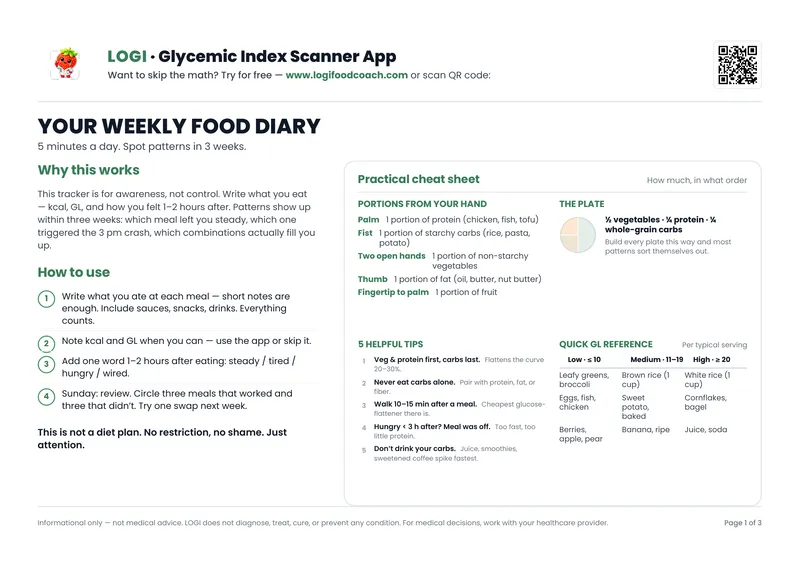
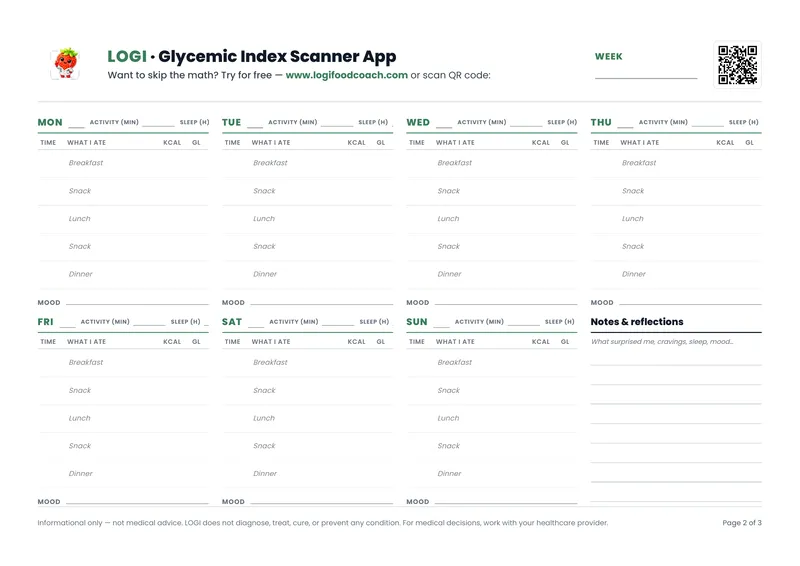
Free PDF — 3 pages
Your Weekly Food Journal
Track meals, glycemic load & mood. Spot patterns in 3 weeks.
No spam. Unsubscribe anytime.