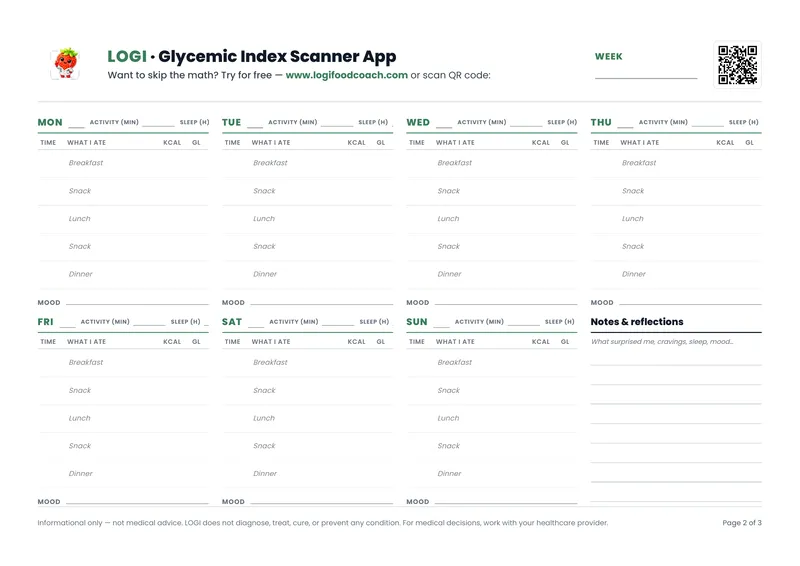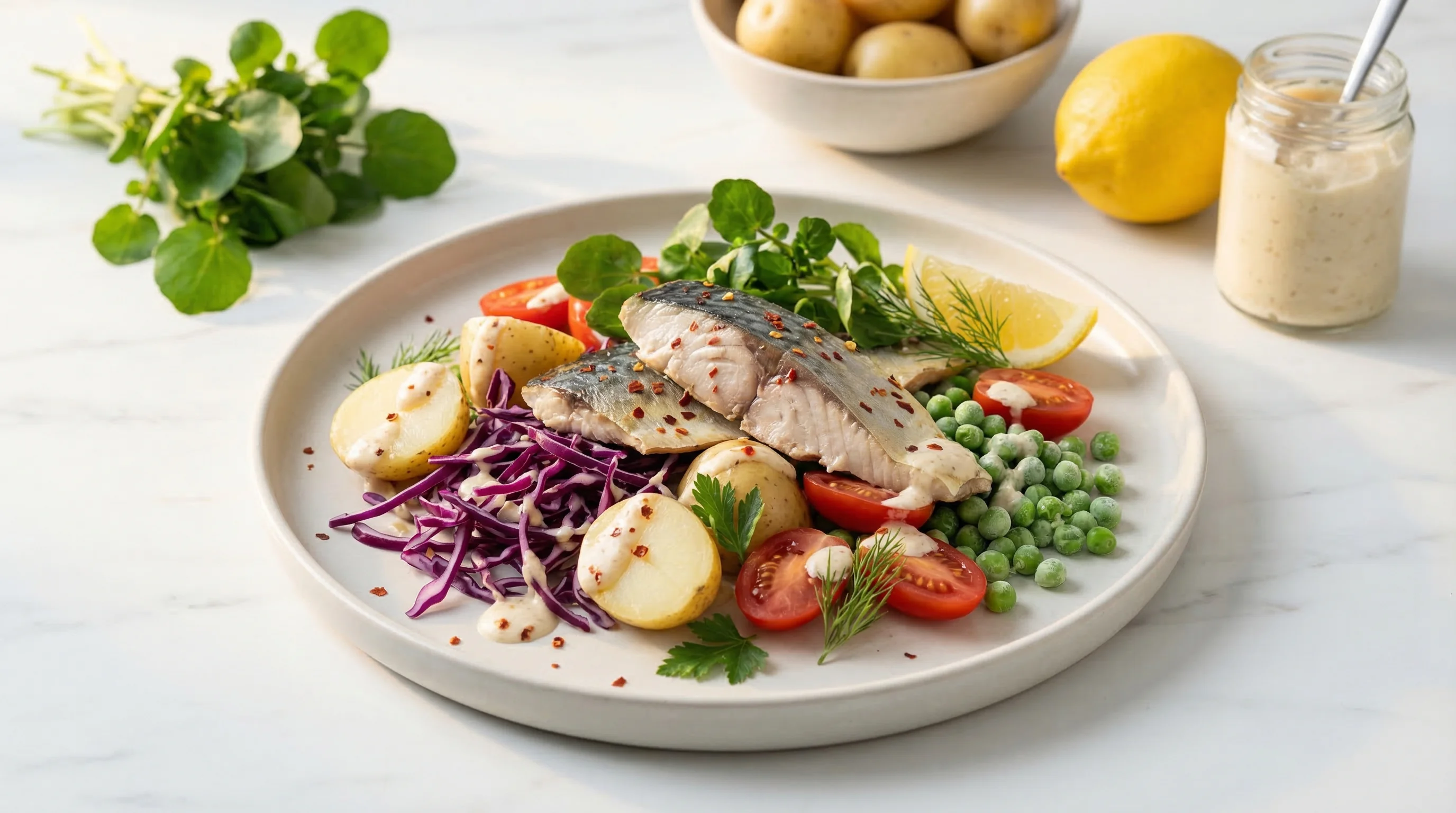
Mackerel, New Potato & Watercress Salad with Horseradish
A vibrant, protein-rich salad featuring omega-3 packed mackerel, tender new potatoes, and peppery watercress with a zesty horseradish dressing for balanced blood sugar.
This nutrient-dense salad is a blood sugar-friendly powerhouse that combines heart-healthy mackerel with carefully portioned new potatoes for sustained energy. Mackerel provides exceptional omega-3 fatty acids and high-quality protein, which help slow glucose absorption and promote metabolic health. The combination of fiber-rich vegetables including watercress, red cabbage, and peas creates a substantial meal that keeps you satisfied without spiking blood sugar.
New potatoes have a lower glycemic impact than regular potatoes, especially when cooled after cooking, as they develop resistant starch that benefits gut health and glucose control. The tangy horseradish dressing adds bold flavor without added sugars, while the fat-free yogurt provides protein and probiotics. Red cabbage contributes anthocyanins, powerful antioxidants that support insulin sensitivity.
For optimal glycemic control, eat the vegetables and protein first before the potatoes, allowing the fiber and protein to create a protective buffer. This salad works beautifully as a complete meal for lunch or dinner, providing balanced macronutrients that prevent energy crashes. The lemon juice and chili flakes not only enhance flavor but may also help moderate post-meal glucose response. Pair with a glass of water and enjoy this satisfying dish that proves healthy eating can be absolutely delicious.
Blood Sugar Impact
This meal should produce a moderate, gradual blood sugar rise due to its medium glycemic load (20.4) and low-medium GI (48). The combination of protein from mackerel, fiber from vegetables, and healthy fats should provide steady energy for 3-4 hours without sharp spikes.
Blood Sugar Tips
- ✓ Eat the watercress, cabbage, and other vegetables first to create a fiber buffer that slows carbohydrate absorption from the potatoes
- ✓ Keep portion size of new potatoes moderate (about 1/2 to 3/4 cup) as they are the primary carbohydrate source
- ✓ Take a 10-15 minute walk after eating to help muscles absorb glucose and blunt the post-meal blood sugar rise
🥗 Ingredients
- 600 g new baby potatoes
- 450 g fresh mackerel fillets
- 2 pcs lemons, juiced
- 0.5 tsp dried red chilli flakes
- 200 g frozen peas
- 150 g red cabbage, thinly shredded
- 175 g baby plum tomatoes, halved
- 100 g watercress
- 0.5 pcs red onion, finely chopped
- 75 g fat-free natural unsweetened yoghurt
- 1 tbsp hot horseradish sauce
- 1 tsp black pepper
- 1.3 lb new baby potatoes
- 15.9 oz fresh mackerel fillets
- 2 pcs lemons, juiced
- 0.5 tsp dried red chilli flakes
- 7.1 oz frozen peas
- 5.3 oz red cabbage, thinly shredded
- 6.2 oz baby plum tomatoes, halved
- 3.5 oz watercress
- 0.5 pcs red onion, finely chopped
- 2.6 oz fat-free natural unsweetened yoghurt
- 1 tbsp hot horseradish sauce
- 1 tsp black pepper
👨🍳 Instructions
- 1
Preheat your oven to 220°C (200°C fan/gas mark 7). Prepare a baking tray by lining it with parchment paper and set aside.
- 2
Bring a large pot of water to a boil and add the new potatoes. Cook for 20 minutes until tender when pierced with a fork. Drain thoroughly, then slice the potatoes into thick rounds. Return them to the pot, cover with a lid, and set aside to cool slightly, which helps develop resistant starch for better blood sugar control.
- 3
While the potatoes cook, arrange the mackerel fillets skin-side down on the prepared baking tray. Drizzle half of the fresh lemon juice over the fish, season generously with black pepper, and sprinkle the chili flakes evenly across the fillets. Place in the preheated oven and bake for 15 minutes until the fish is cooked through and flakes easily.
- 4
Remove the mackerel from the oven and allow to cool for 5-10 minutes. Once cool enough to handle, carefully peel away and discard the skin, then gently flake the fish into large chunks, removing any small bones you encounter.
- 5
Prepare the horseradish dressing by combining the finely chopped red onion, fat-free yogurt, horseradish sauce, and remaining lemon juice in a small bowl. Whisk together until smooth and well combined, then season with black pepper to taste. Set aside.
- 6
Cook the frozen peas in boiling water for 1-2 minutes until just tender but still bright green. Drain immediately and transfer to a large mixing bowl. Add the shredded red cabbage and halved tomatoes, tossing gently to combine.
- 7
Add the sliced potatoes and watercress to the bowl with the vegetables and toss everything together gently but thoroughly. Divide the salad mixture among 4 serving plates, top each portion with the flaked mackerel, and serve with the horseradish dressing on the side. For optimal blood sugar control, encourage diners to eat the vegetables and fish first before the potatoes.
📊 Nutrition Per Serving
| Per Serving | Whole Dish | |
|---|---|---|
| Calories | 437 | 1746 |
| Carbs | 43g | 171g |
| Sugars | 10g | 38g |
| Natural Sugars | 10g | 38g |
| Protein | 31g | 123g |
| Fat | 16g | 64g |
| Saturated Fat | 4g | 16g |
| Unsaturated Fat | 12g | 48g |
| Fiber | 7g | 29g |
| Soluble Fiber | 1g | 4g |
| Insoluble Fiber | 2g | 8g |
| Sodium | 108mg | 432mg |
Predicted Glucose Response
What if you...
Estimated model — individual responses vary. Not medical advice.
🔄 Lower GI Swaps
New potatoes have a high GI of 57-70. Cauliflower, celeriac, and radishes are non-starchy vegetables with minimal impact on blood sugar (GI <15), dramatically reducing the glycemic load while maintaining a satisfying texture in the salad.
Peas have a moderate GI of 48-51 due to their starch content. Green beans, asparagus, and broccoli are low-starch vegetables with GI values under 15, providing similar color and crunch with virtually no blood sugar impact.
While cherry tomatoes are relatively low-GI, cucumbers, bell peppers, and celery have even lower glycemic impact (GI <10) and higher water content, further reducing the overall glycemic load of the salad.
Regular yogurt can contain 12-17g carbs per serving. Greek yogurt has half the carbs and higher protein, which slows glucose absorption. Sour cream and crème fraîche have even fewer carbs (3-4g per serving), minimizing blood sugar response in the dressing.
🔬 The Science Behind This Recipe
The Science Behind This Blood Sugar-Friendly Salad
This mackerel and potato salad is a masterclass in blood sugar management, with a glycemic load of 20.4 and GI of 48—both solidly in the low range. The secret lies in how these ingredients work together to slow glucose absorption. While new potatoes contain carbohydrates, they're balanced by mackerel's impressive protein and omega-3 fat content. These healthy fats act like a metabolic brake, slowing down how quickly your digestive system breaks down the potatoes into glucose. The result? A gradual, gentle rise in blood sugar rather than a spike.
The watercress and peas add another layer of protection through fiber, which forms a gel-like substance in your digestive tract that further delays carbohydrate absorption. Peas are particularly clever—they're a carbohydrate source themselves, but their protein and fiber content give them a low glycemic impact. The lemon juice contributes acidity, which research shows can reduce the glycemic response of a meal by up to 30%. Even the chili flakes play a role: capsaicin may improve insulin sensitivity and glucose metabolism.
To maximize this meal's benefits, try eating the watercress and vegetables first, then the mackerel, saving the potatoes for last. This "food sequencing" can lower post-meal glucose spikes by 40% compared to eating carbs first. A 10-15 minute walk after eating will help your muscles absorb glucose from your bloodstream, further smoothing out your blood sugar curve. Remember, glycemic load considers portion size—so this recipe's moderate serving of potatoes, combined with protein and healthy fats, keeps the overall impact low.
Related recipes
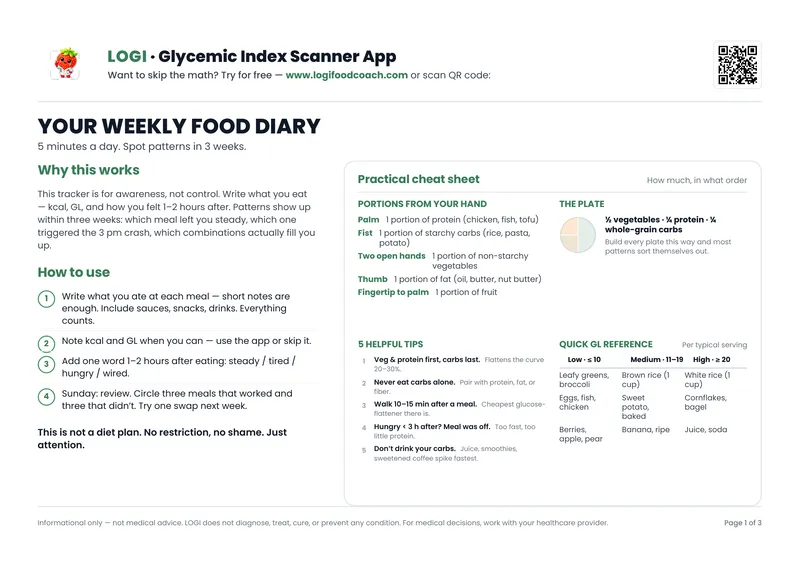
Free PDF — 3 pages
Your Weekly Food Journal
Track meals, glycemic load & mood. Spot patterns in 3 weeks.
No spam. Unsubscribe anytime.