Low-GI Lohikeitto: Finnish Creamy Salmon Soup
A velvety Finnish salmon soup with cauliflower swapped in for half the potatoes, keeping blood sugar steady while delivering pure Nordic comfort.
Lohikeitto is Finland's national comfort food — a creamy salmon soup built on a foundation of gently sweated leeks, sweet onion, and tender root vegetables. This low-glycemic adaptation stays faithful to the original by using waxy potatoes (which have a naturally lower GI than floury varieties) and adding cauliflower florets to displace extra starch without losing the satisfying, chunky texture that makes this soup a meal in itself.
The glycemic magic here comes from smart layering. The generous amount of salmon delivers high-quality protein and omega-3 fatty acids, both of which slow gastric emptying and blunt post-meal glucose spikes. Heavy cream and full-fat Greek yogurt add richness while contributing fat that further flattens the blood sugar curve. The cauliflower, nearly invisible once simmered in the creamy broth, adds fiber and volume with minimal carbohydrate impact. Together, these elements create a soup with an estimated low-to-moderate glycemic load per serving.
For optimal blood sugar management, serve this soup as a complete meal rather than a starter. The combination of protein, healthy fats, and fiber-rich vegetables makes it naturally satiating. If you want to add bread on the side, choose a dense sourdough rye — its fermented starches are digested more slowly than conventional bread. A squeeze of lemon at the end brightens the flavors and adds a touch of acidity, which research suggests may further reduce the glycemic response of a meal.
Blood Sugar Impact
With a low GI of 30 and a moderate glycemic load of 9.7, this soup should cause a gentle, slow rise in blood sugar. The salmon's protein and fat, combined with fiber from leeks, carrots, and cauliflower, will help sustain stable energy for 3-4 hours.
Blood Sugar Tips
- ✓ Eat the solid chunks of salmon, vegetables, and potato first before drinking the broth to slow gastric emptying and reduce the glucose spike.
- ✓ Ensure generous portions of cauliflower relative to potato — cauliflower adds bulk and fiber without raising blood sugar.
- ✓ Pair the soup with a slice of dense, seeded sourdough bread rather than white bread to keep the overall meal GI low.
🥗 Ingredients
- 25 g Unsalted butter
- 300 g Leek
- 1 pcs Yellow onion
- 100 g Carrot
- 2 pcs Bay leaf
- 1 tsp White peppercorn
- 1200 ml Fish stock
- 250 g Waxy potato
- 350 g Cauliflower floret
- 500 g Salmon fillet
- 100 ml Heavy cream
- 150 g Greek yogurt
- 1 tsp Salt
- 30 g Dill
- 0.5 tsp Black pepper
- 1 pcs Lemon
- 0.9 oz Unsalted butter
- 10.6 oz Leek
- 1 pcs Yellow onion
- 3.5 oz Carrot
- 2 pcs Bay leaf
- 1 tsp White peppercorn
- 5.1 cups Fish stock
- 8.8 oz Waxy potato
- 12.3 oz Cauliflower floret
- 1.1 lb Salmon fillet
- 7 tbsp Heavy cream
- 5.3 oz Greek yogurt
- 1 tsp Salt
- 1.1 oz Dill
- 0.5 tsp Black pepper
- 1 pcs Lemon
👨🍳 Instructions
- 1
Place a heavy-bottomed pot over medium-low heat and melt the butter. Add the sliced leek, diced onion, and diced carrot along with a pinch of salt. Stir frequently and cook for about 8 minutes until the vegetables turn soft and translucent. Keep the heat gentle — the aim is to coax out sweetness without any browning.
- 2
Drop in the bay leaves and cracked white peppercorns, stirring them through for about 30 seconds until fragrant. Pour in the fish stock and bring the liquid to a gentle simmer.
- 3
Add the cubed waxy potatoes to the simmering stock. Cook uncovered for 6 minutes. Using waxy varieties like Charlotte or Nicola is important — they hold their shape better and have a lower glycemic index than floury potatoes.
- 4
Add the cauliflower florets and continue simmering for another 6 to 8 minutes. Both the potatoes and cauliflower should be tender but still hold their shape — this is a chunky soup, not a purée. The cauliflower adds body and fiber while keeping the overall carbohydrate load low.
- 5
Lay the salmon pieces gently on top of the vegetables. Lower the heat so the broth barely trembles, then cover the pot. Let the salmon poach undisturbed for 4 to 5 minutes until the flesh is just opaque and flakes with light pressure. Remove the pot from the heat immediately — salmon turns dry and chalky very quickly in hot liquid.
- 6
With the pot off the heat, stir in the heavy cream and season with salt to taste. In a separate small bowl, whisk the Greek yogurt with a ladleful of hot broth until smooth, then fold this tempered mixture back into the soup. Adding the yogurt off the heat prevents it from splitting and preserves its tangy flavour.
- 7
Stir in the majority of the chopped dill, reserving a handful for garnish. Crack black pepper generously over the surface and add a small squeeze of lemon juice if desired — the acidity brightens the soup and may help moderate glycemic response.
- 8
Ladle the soup into deep bowls, making sure each serving gets plenty of salmon, vegetables, and creamy broth. Top with the reserved fresh dill and serve immediately. For the best blood sugar response, enjoy this as a complete meal — the protein, fat, and fiber work together to promote slow, steady digestion.
📊 Nutrition Per Serving
| Per Serving | Whole Dish | |
|---|---|---|
| Calories | 566 | 2266 |
| Carbs | 32g | 129g |
| Sugars | 10g | 40g |
| Natural Sugars | 10g | 40g |
| Protein | 41g | 166g |
| Fat | 32g | 127g |
| Saturated Fat | 13g | 53g |
| Unsaturated Fat | 18g | 73g |
| Fiber | 7g | 27g |
| Soluble Fiber | 2g | 8g |
| Insoluble Fiber | 5g | 18g |
| Sodium | 1948mg | 7793mg |
Predicted Glucose Response
What if you...
Estimated model — individual responses vary. Not medical advice.
🔄 Lower GI Swaps
Waxy potatoes have a moderate-to-high GI (around 56–70). Turnip (GI ~30), celeriac (GI ~35), and cauliflower (GI ~15) all provide a similar hearty texture with a dramatically lower glycemic impact.
While heavy cream is already low-GI, replacing part of it with higher-protein or higher-fat alternatives like Greek yogurt or crème fraîche slightly lowers the overall glycemic load by increasing the protein-to-carb ratio of the soup.
Cooked carrots have a moderate GI (around 39–49) that rises further with prolonged cooking in soup. Zucchini (GI ~15), celery (GI ~15), and cauliflower (GI ~15) keep the vegetable bulk while contributing minimal blood sugar impact.
While butter has negligible GI, replacing it with olive oil or avocado oil adds monounsaturated fats that have been shown to improve postprandial glucose response and slow gastric emptying, further flattening the blood sugar curve of the entire meal.
Lower glycemic impact alternative with better blood sugar response for this recipe context.
🔬 The Science Behind This Recipe
Why This Soup Loves Your Blood Sugar
This Finnish salmon soup is a naturally blood sugar-friendly meal, and the science behind it starts with what's *not* on the ingredient list — refined carbs. Instead, you're working with a base of leeks, onion, and carrots, all vegetables rich in fiber. Fiber acts like a slow-release valve in your digestive system, gradually releasing glucose into your bloodstream rather than flooding it all at once. The leeks deserve special attention here — they contain inulin, a type of soluble fiber that not only slows digestion but also feeds beneficial gut bacteria, which research suggests plays a role in how our bodies handle glucose over time.
The butter and salmon in this recipe are doing quiet but powerful work behind the scenes. Dietary fat slows gastric emptying — the rate at which food leaves your stomach — which means the small amount of natural sugars from the vegetables enters your bloodstream at a gentle pace. The salmon adds a generous dose of protein, which triggers a modest insulin response that helps your cells absorb glucose efficiently without the dramatic spike-and-crash cycle. Together, fat and protein act as natural buffers against rapid blood sugar changes.
With a glycemic load of just 9.7 per serving, this soup falls firmly in the "low" category. Remember, glycemic load accounts for both the *type* and *amount* of carbohydrate in a realistic portion — it's a much more useful measure than GI alone. A GI of 30 tells you the carbs present are slow-releasing, while the low glycemic load confirms there simply aren't many of them to begin with. To get even more from this meal, try eating the broth and vegetables first before the denser components, and consider a gentle 10-15 minute walk after eating — both strategies are shown to further smooth out your post-meal glucose response.
Related recipes
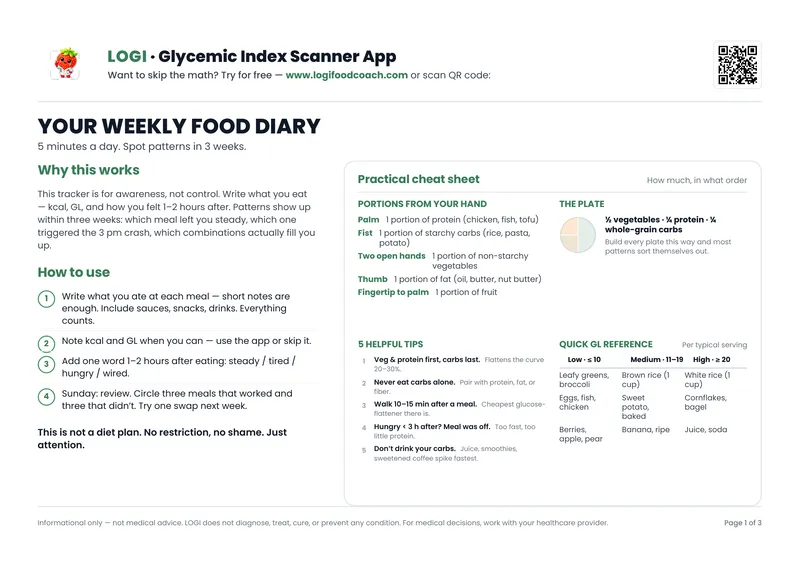
Free PDF — 3 pages
Your Weekly Food Journal
Track meals, glycemic load & mood. Spot patterns in 3 weeks.
No spam. Unsubscribe anytime.