Low-GI Fårikål: The Norwegian National Dish, Rebuilt for Steady Blood Sugar
Norway's beloved lamb-and-cabbage stew paired with waxy potatoes and a tangy lingonberry pickle — protein-rich, naturally low-GI, and deeply comforting.
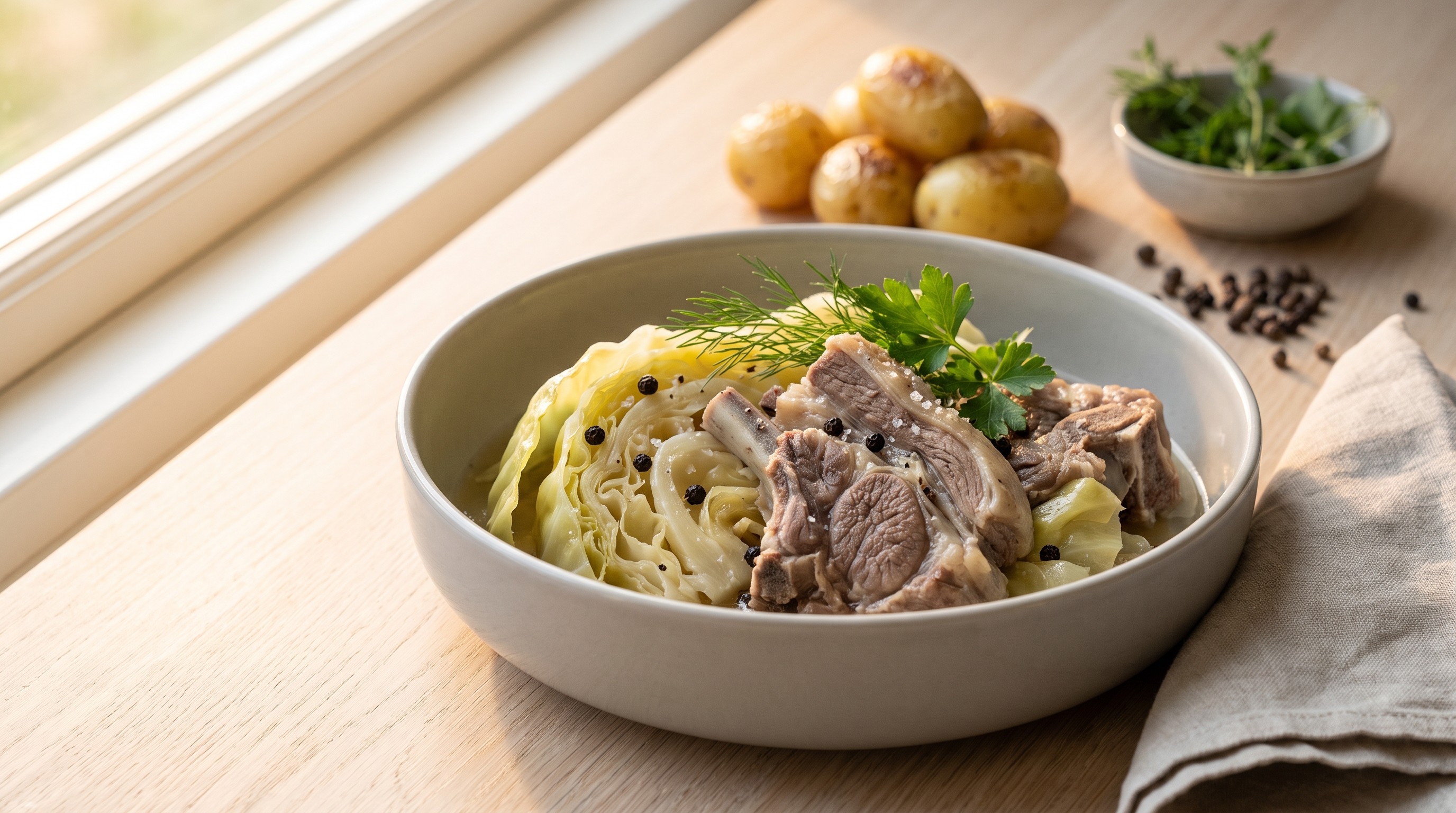
Fårikål is Norway's national dish for good reason: it is humble, nourishing, and impossibly satisfying. Bone-in lamb simmers with thick wedges of white cabbage and crushed peppercorns until the meat falls apart and the cabbage melts into something silky and sweet. The long, gentle braise renders fat, builds collagen-rich broth, and fills the kitchen with the kind of aroma that makes people set the table early. This is slow food at its finest — and it happens to be naturally friendly to blood sugar.
From a glycemic standpoint, this dish is a winner. The protein and fat in bone-in lamb slow gastric emptying dramatically, blunting any glucose response from the potatoes served alongside. Cabbage is extremely low-GI and rich in fibre, adding bulk and micronutrients without raising blood sugar. By choosing waxy potato varieties — Pimpernel, Nicola, or Annabelle — rather than floury types like Russet or King Edward, you keep the glycemic index in the low-to-medium range (roughly GI 55–60 versus 80+ for floury potatoes). Leaving the skins on adds extra fibre, which further moderates glucose absorption.
The cucumber-lingonberry pickle is more than a garnish — its vinegar base is a proven blood-sugar moderator. Studies consistently show that a tablespoon of vinegar consumed with a starchy meal can reduce the postprandial glucose spike by up to 30 percent. Pair this with the strategy of eating the cabbage and pickle first, then the lamb, and finishing with the potatoes, and you have a meal designed for steady, sustained energy rather than a spike-and-crash cycle.
Blood Sugar Impact
Moderate blood sugar impact despite the low GI of 44, due to a glycemic load of 20.5 driven by the potatoes and wheat flour. The substantial protein and fat from lamb and butter will slow glucose absorption, producing a gradual, moderate rise over 2-3 hours.
Blood Sugar Tips
- ✓ Eat the lamb and cabbage first before the potatoes to slow gastric emptying and blunt the glucose response.
- ✓ Reduce the potato portion slightly or swap in waxy new potatoes served cold/reheated to benefit from increased resistant starch.
- ✓ Take a 15-20 minute walk after the meal to help muscles absorb glucose and flatten the post-meal curve.
🥗 Ingredients
- 1800 g Bone-in lamb
- 1500 g White cabbage
- 2 tbsp Black peppercorn
- 1.5 tsp Fine sea salt
- 500 ml Water
- 2 tbsp Wheat flour
- 900 g Waxy potato
- 1 tbsp Butter
- 0.5 tsp Flaky sea salt
- 3 tbsp Parsley
- 1 pcs English cucumber
- 2 tbsp Lingonberry
- 1 tbsp Apple cider vinegar
- 1 tsp Dijon mustard
- 0.25 tsp Black pepper
- 4.0 lb Bone-in lamb
- 3.3 lb White cabbage
- 2 tbsp Black peppercorn
- 1.5 tsp Fine sea salt
- 2.1 cups Water
- 2 tbsp Wheat flour
- 2.0 lb Waxy potato
- 1 tbsp Butter
- 0.5 tsp Flaky sea salt
- 3 tbsp Parsley
- 1 pcs English cucumber
- 2 tbsp Lingonberry
- 1 tbsp Apple cider vinegar
- 1 tsp Dijon mustard
- 0.25 tsp Black pepper
👨🍳 Instructions
- 1
Build the stew in layers inside a heavy cast-iron or enamelled pot. Place a layer of cabbage wedges on the bottom, cut sides facing up so they catch the rendered fat. Arrange a layer of lamb pieces on top, fat-side down, and scatter over some of the crushed peppercorns and a pinch of the fine sea salt. Continue layering — cabbage, lamb, peppercorns, salt — until everything is used, finishing with a layer of cabbage on top.
- 2
Pour the water or lamb stock down the side of the pot so it reaches the bottom without disturbing the layers. Set the pot over medium heat and bring to a gentle simmer. As soon as you see lazy bubbles breaking the surface, cover the pot tightly and reduce the heat to low.
- 3
Let the stew braise undisturbed for 2 to 2½ hours. Do not stir — the layered structure is essential to fårikål. The lamb is ready when a fork slides through the thickest piece with no resistance and the cabbage has turned soft and translucent, enriched by the lamb fat and broth.
- 4
While the lamb simmers, make the cucumber-lingonberry pickle. Whisk the apple cider vinegar, Dijon mustard, and a pinch each of salt and pepper in a small bowl. Drop in the lingonberries and press them lightly with the back of a spoon to burst a few and release their juice. Add the thinly sliced cucumber and toss to coat. Set aside at room temperature for at least 30 minutes, or up to 2 hours, to let the flavours meld.
- 5
About 30 minutes before the stew is ready, place the unpeeled waxy potatoes in a pot and cover with cold salted water. Bring to a boil over high heat, then reduce to a steady simmer and cook for 18 to 20 minutes, until a knife tip meets just a touch of resistance at the centre — they will carry over slightly as they rest.
- 6
Drain the potatoes thoroughly and return them to the warm pot off the heat. Add the butter and flaky sea salt and toss gently until each potato is glossed. Scatter over the chopped parsley, toss once more, and cover the pot to keep warm until serving.
- 7
Taste the braising broth and adjust the seasoning if needed — it should be deeply savoury with a peppery warmth. If it tastes thin, remove the lid and simmer uncovered for a few minutes to concentrate the flavour.
- 8
Serve in wide, shallow bowls. Ladle lamb and cabbage directly from the pot, pour over a generous spoonful of the cooking broth, and place about 150 g of buttered potatoes alongside. Top with a heaping spoonful of the cucumber-lingonberry pickle. For the best blood-sugar response, eat the cabbage and pickle first, then the lamb, and finish with the potatoes.
📊 Nutrition Per Serving
| Per Serving | Whole Dish | |
|---|---|---|
| Calories | 975 | 5850 |
| Carbs | 47g | 281g |
| Sugars | 11g | 69g |
| Added Sugars | 1g | 6g |
| Natural Sugars | 10g | 63g |
| Protein | 61g | 367g |
| Fat | 62g | 375g |
| Saturated Fat | 28g | 170g |
| Unsaturated Fat | 34g | 204g |
| Fiber | 11g | 63g |
| Soluble Fiber | 3g | 20g |
| Insoluble Fiber | 7g | 44g |
| Sodium | 1038mg | 6227mg |
Predicted Glucose Response
What if you...
Estimated model — individual responses vary. Not medical advice.
🔄 Lower GI Swaps
Waxy potatoes have a moderate-to-high GI (around 70). Turnip (GI ~30), celeriac (GI ~35), and cauliflower (GI ~15) all provide a similar hearty texture with dramatically lower glycemic impact, significantly reducing the dish's overall GL.
Wheat flour has a high GI (~70) and adds refined carbohydrates. Almond flour (GI ~15) and coconut flour (GI ~45) are much lower-GI alternatives that still thicken the sauce effectively, while oat fiber adds body with virtually no blood sugar impact.
Commercial lingonberry sauce is typically high in added sugar, raising its GI significantly. Fresh lingonberries have a low GI (~25) and using them with a non-caloric sweetener preserves the traditional flavor while nearly eliminating the glycemic load contribution.
While butter has a negligible GI, replacing it with extra-virgin olive oil provides oleic acid and polyphenols that have been shown to improve postprandial blood sugar response. Ghee is another option with a similar benefit profile and suits the rich flavor of fårikål.
Lower glycemic impact alternative with better blood sugar response for this recipe context.
🔬 The Science Behind This Recipe
Here's the science explainer section:
---
Why This Works for Your Blood Sugar
Fårikål might just be one of the most naturally blood sugar-friendly dishes you'll ever eat. The star here is lamb shoulder — a protein-and-fat-rich ingredient that contains virtually no carbohydrates, meaning it has zero direct impact on your blood sugar. But it does something even more valuable: the combination of protein and fat from the lamb significantly slows down your stomach's emptying rate, which means any carbohydrates you eat alongside it get absorbed much more gradually. Think of it as a natural speed bump for glucose entering your bloodstream. The bone-in cut adds another layer of benefit — as the bones slowly release collagen and gelatin during cooking, they create a rich broth that further supports slower digestion.
Cabbage is the unsung hero of this dish. Despite being the main volume ingredient, it's remarkably low in carbohydrates and packed with fiber. That fiber acts like a sponge in your digestive system, forming a gel-like barrier that slows the absorption of sugars. This is a big reason the recipe lands at an estimated GI of just 44 — well within the "low" category. And here's where glycemic load matters: while GI tells you how fast a food raises blood sugar, glycemic load accounts for how much carbohydrate you're actually eating. At 20.5 per serving, this dish sits at the lower end of moderate, largely because cabbage delivers satisfying volume without a heavy carb load.
To get the most from this meal, try eating the cabbage first before moving to any side dishes, and consider a 10-15 minute walk after eating. These simple habits can further smooth out your blood sugar response. Pairing Fårikål with a small portion of whole-grain flatbread rather than white potatoes keeps the entire meal in the steady-energy zone — filling, traditional, and remarkably gentle on your metabolism.
Related recipes
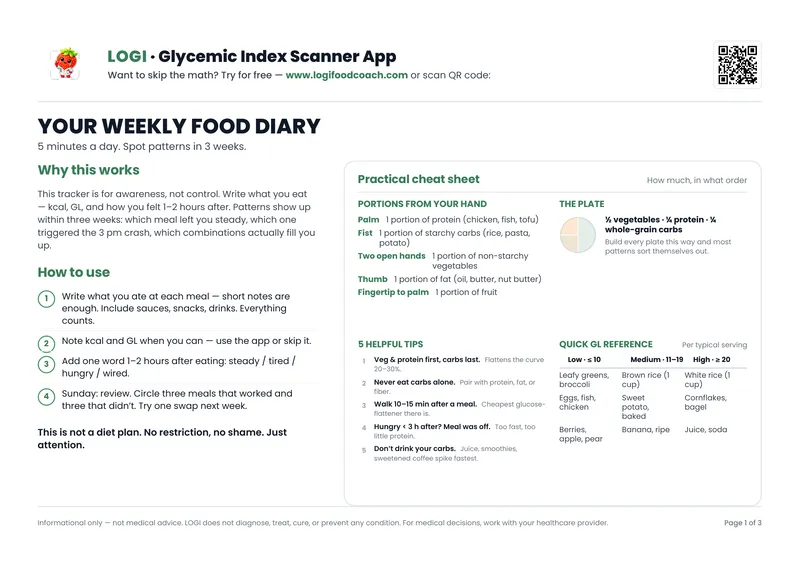
Free PDF — 3 pages
Your Weekly Food Journal
Track meals, glycemic load & mood. Spot patterns in 3 weeks.
No spam. Unsubscribe anytime.