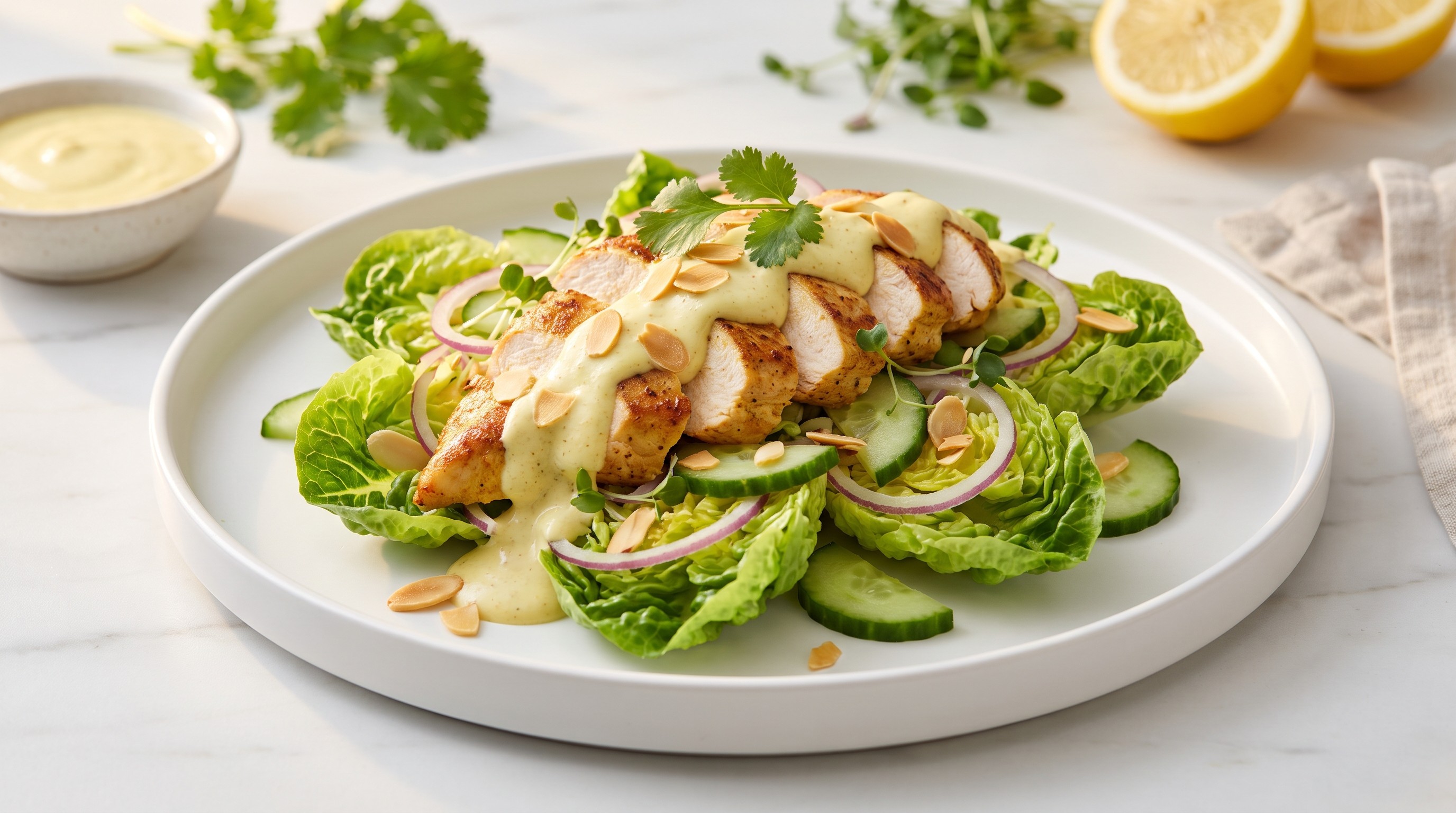
Low-GI Coronation Chicken Salad
Curry-spiced chicken over crisp little gem lettuce with a tangy Greek yogurt coronation dressing — high-protein, naturally low GI, ready in 25 minutes.
This lighter take on coronation chicken replaces the traditional heavy mayonnaise-and-cream dressing with full-fat Greek yogurt, delivering the same luxurious texture with far less impact on blood sugar. Greek yogurt scores around 14 on the glycemic index and brings a protein boost that further blunts any glucose response, while its natural tang pairs beautifully with warm curry spices and a modest spoonful of mango chutney.
The salad sits on a bed of little gem lettuce and cool cucumber — both virtually zero-GI vegetables rich in fibre and water — so you eat the vegetables first and let the fibre slow digestion before the protein arrives. Flaked almonds toasted until golden add healthy monounsaturated fats and a satisfying crunch; studies consistently show that pairing nuts with a meal lowers the overall glycemic response by up to 30 percent.
With roughly 45 g of lean protein per serving and almost no refined carbohydrates, this is an ideal midday meal for steady energy. Serve it as an open salad or wrap the filling in a low-carb tortilla for a portable lunch. For the gentlest blood-sugar curve, eat the lettuce leaves and cucumber first, follow with the dressed chicken, and finish with a handful of almonds — fibre, then protein, then fat.
Blood Sugar Impact
Very low blood sugar impact expected. The high protein from chicken breast combined with healthy fats from olive oil and Greek yogurt will slow glucose absorption, while the low GL of 5.8 and GI of 38 indicate stable blood sugar levels with sustained energy for 3-4 hours.
Blood Sugar Tips
- ✓ Eat the lettuce and cucumber first to create a fiber buffer that slows carbohydrate absorption from the mango chutney.
- ✓ Choose a mango chutney with no added sugar or reduced sugar to keep the already-low glycemic load even lower.
- ✓ Follow the meal with a 10-15 minute walk to enhance glucose uptake by muscles and further blunt any minor post-meal rise.
🥗 Ingredients
- 2 pcs Chicken breast
- 1 tbsp Olive oil
- 0.5 tsp Salt
- 0.25 tsp Black pepper
- 2 tsp Curry powder
- 150 g Greek yogurt
- 1 tbsp Mango chutney
- 1 tbsp Lemon juice
- 2 pcs Little gem lettuce
- 0.5 pcs Cucumber
- 0.25 pcs Red onion
- 2 tbsp Flaked almonds
- 2 pcs Chicken breast
- 1 tbsp Olive oil
- 0.5 tsp Salt
- 0.25 tsp Black pepper
- 2 tsp Curry powder
- 5.3 oz Greek yogurt
- 1 tbsp Mango chutney
- 1 tbsp Lemon juice
- 2 pcs Little gem lettuce
- 0.5 pcs Cucumber
- 0.25 pcs Red onion
- 2 tbsp Flaked almonds
👨🍳 Instructions
- 1
Pat the chicken breasts dry with kitchen paper and season both sides generously with the salt and black pepper.
- 2
Place a frying pan over medium-high heat and add the olive oil. Once the oil is shimmering, lay the chicken breasts in the pan and cook undisturbed for 5–6 minutes until the underside is deeply golden.
- 3
Flip the chicken and cook for another 5–6 minutes on the second side until cooked through — an instant-read thermometer should register 75 °C (165 °F) at the thickest point. Transfer to a cutting board and let the chicken rest for 5 minutes, then slice across the grain into 1 cm strips.
- 4
While the chicken rests, return the same pan to medium heat. Scatter in the flaked almonds and stir constantly for 2–3 minutes until they turn an even golden colour. Tip them onto a cool plate straight away to stop the toasting — residual heat will burn them quickly.
- 5
In a small bowl, combine the Greek yogurt, curry powder, mango chutney, and lemon juice. Stir until the dressing is smooth and uniformly golden from the curry spices. Taste and adjust the lemon juice if you prefer a sharper dressing.
- 6
Separate the little gem lettuce into individual leaves and divide them between two serving plates, fanning the leaves out to create a bed. Halve the cucumber lengthwise, then slice into thin half-moons and scatter over the lettuce.
- 7
Peel and thinly slice the red onion quarter into rings, then separate and distribute the rings over the cucumber and lettuce.
- 8
Arrange the sliced chicken over the salad beds, spoon the coronation dressing generously over the top, and finish by scattering the toasted almond flakes across each plate. Serve immediately.
📊 Nutrition Per Serving
| Per Serving | Whole Dish | |
|---|---|---|
| Calories | 348 | 696 |
| Carbs | 15g | 30g |
| Sugars | 10g | 19g |
| Added Sugars | 4g | 7g |
| Natural Sugars | 6g | 12g |
| Protein | 44g | 89g |
| Fat | 12g | 25g |
| Saturated Fat | 2g | 4g |
| Unsaturated Fat | 11g | 21g |
| Fiber | 2g | 5g |
| Soluble Fiber | 1g | 1g |
| Insoluble Fiber | 2g | 3g |
| Sodium | 719mg | 1439mg |
Predicted Glucose Response
What if you...
Estimated model — individual responses vary. Not medical advice.
🔄 Lower GI Swaps
Mango chutney is the highest glycemic contributor in this recipe due to its added sugars (GI ~50–65). Replacing it with a sugar-free version or a fresh mango puree cut with vinegar dramatically reduces the glycemic load while preserving the sweet-tangy flavor profile.
While almond flakes are already low-GI, walnuts and pecans have stronger evidence for improving insulin sensitivity and slowing postprandial glucose response due to their higher omega-3 content and favorable fat profile, further blunting any blood sugar rise from the meal.
Chicken breast is very lean; replacing it with fattier dark meat adds healthy fats that slow gastric emptying and reduce the overall glycemic response of the meal, helping to flatten the blood sugar curve after eating.
If the current Greek yogurt is low-fat, upgrading to full-fat Greek yogurt, labneh, or an avocado-yogurt blend increases the fat and protein density of the dressing, which slows carbohydrate absorption and produces a flatter postprandial glucose curve.
🔬 The Science Behind This Recipe
Why This Recipe Works for Blood Sugar
This Coronation Chicken Salad is a naturally blood-sugar-friendly meal, and the reason starts with its star ingredient: chicken breast. As a pure protein source with virtually no carbohydrates, chicken doesn't trigger a glucose response on its own. But it does something even more valuable — when you eat protein alongside any carbs in your meal (like from a side of bread or fruit), it slows down digestion and helps your body absorb glucose more gradually. Think of protein as a speed bump on the road to your bloodstream.
Olive oil plays a similarly powerful supporting role. Healthy fats slow gastric emptying — the rate at which food leaves your stomach — which means glucose trickles into your blood steadily rather than flooding in all at once. This one-two combination of protein and fat is exactly why this recipe earns a glycemic load of just 5.8 per serving, which falls firmly in the "low" category. Remember, glycemic load accounts for both the *type* and *amount* of carbohydrates you're actually eating, making it a much more practical measure than glycemic index alone. A GL under 10 is considered low, so this dish gives you plenty of room.
To get the most from this meal, try a simple trick: if you're serving it with bread, crackers, or rice, eat the chicken salad first and the starchy side last. This "food order" approach has been shown to blunt post-meal glucose rises. Even a short 10–15 minute walk after eating can help your muscles soak up circulating glucose. Small habits, big difference — and with a recipe this naturally balanced, you're already starting from an excellent place.
Related recipes
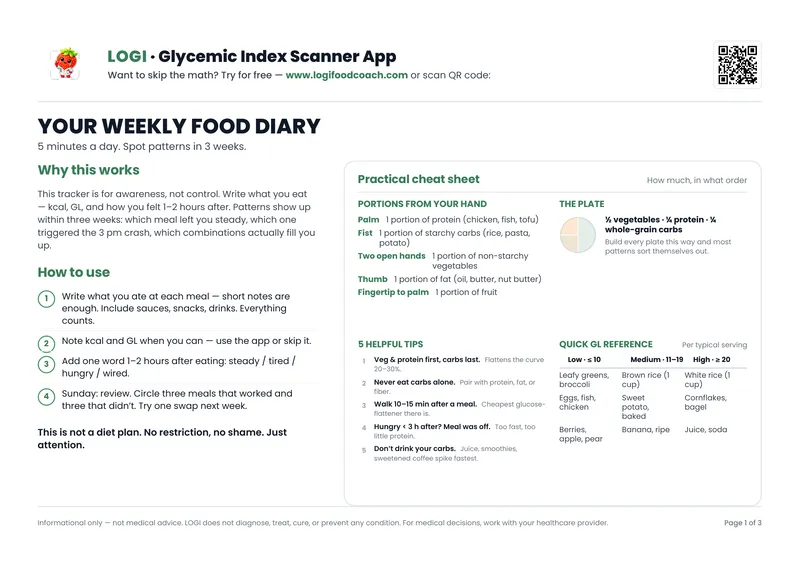
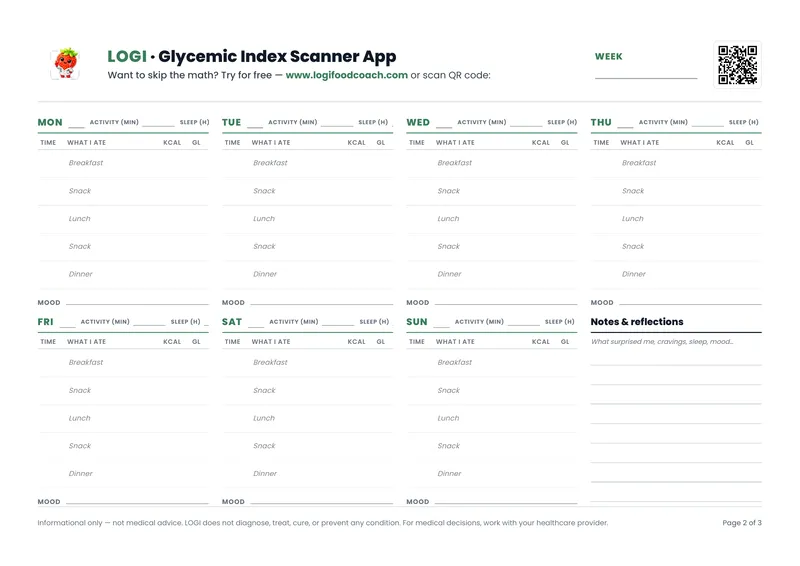
Free PDF — 3 pages
Your Weekly Food Journal
Track meals, glycemic load & mood. Spot patterns in 3 weeks.
No spam. Unsubscribe anytime.