Low-GI Beef Gulyás with Celeriac
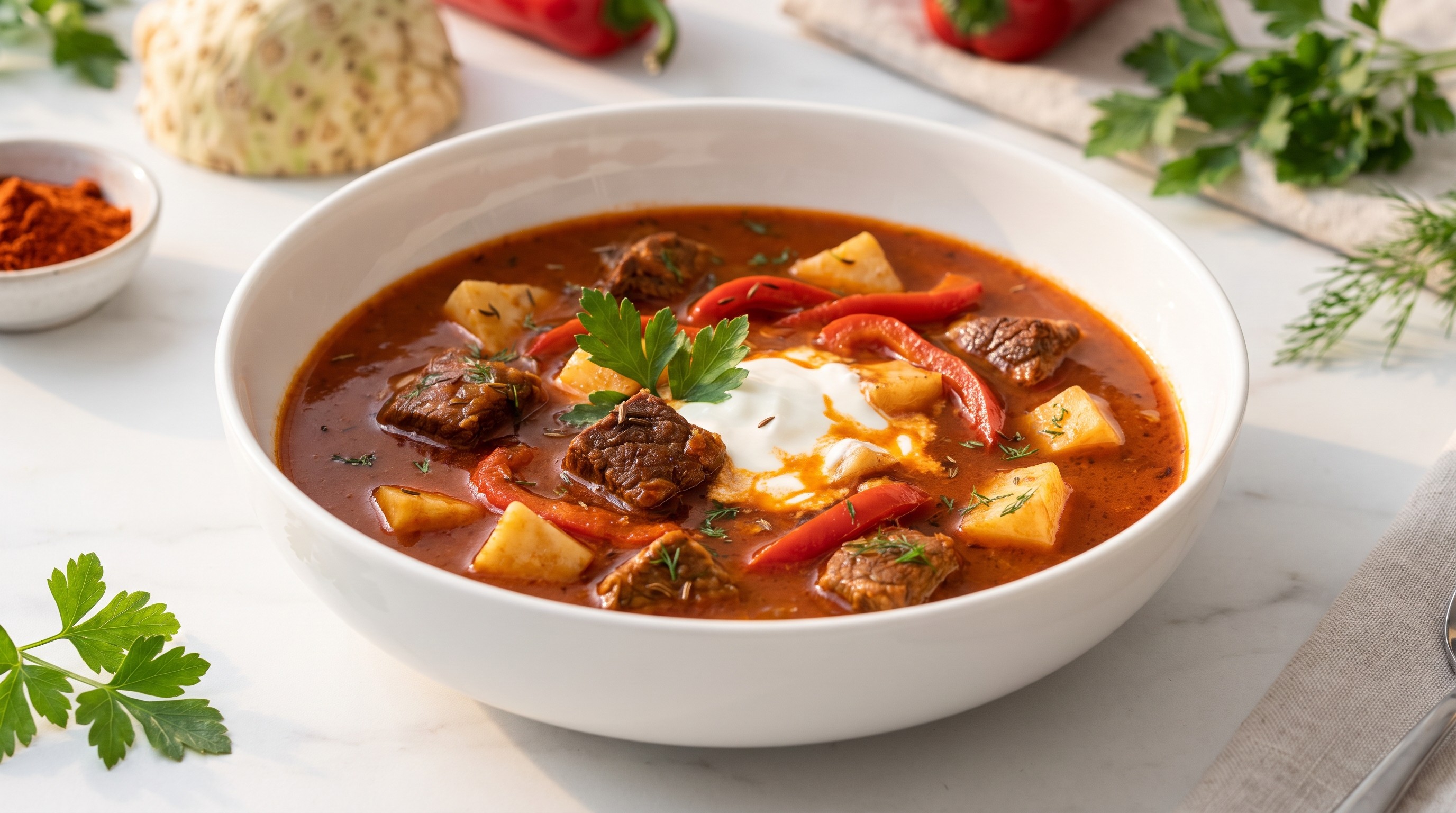
A hearty Hungarian-inspired beef stew with celeriac instead of potato, delivering deep paprika flavor and fork-tender meat while keeping blood sugar beautifully steady.
This low-glycemic take on Hungary's beloved gulyás proves that blood sugar–friendly cooking doesn't mean sacrificing depth or satisfaction. Beef chuck, slowly braised in a paprika-rich broth with caraway and sweet bell pepper, becomes meltingly tender while celeriac cubes absorb every layer of smoky flavor — standing in brilliantly for the traditional high-GI potato. The result is a bowl that feels deeply comforting yet keeps your glucose response remarkably flat.
The glycemic genius here starts with the ingredient list. Celeriac has a GI of around 35, compared to boiled potato's 78, making it an ideal swap that barely changes the texture or experience of the dish. The generous amount of protein from the beef chuck further blunts any glucose spike, while the healthy fats in olive oil and sour cream slow digestion. Onions, garlic, and bell pepper add fiber, vitamins, and anti-inflammatory compounds without adding meaningful glycemic load.
For the best blood sugar outcome, serve this gulyás on its own or alongside a simple green salad dressed with vinegar — the acetic acid can further reduce postprandial glucose. Avoid the temptation to add bread or dumplings on the side; the stew is substantial enough to stand alone. If you want to extend the meal, start with a few bites of raw vegetables before the hot bowl arrives at the table, giving your body a fiber head start before the main course.
Blood Sugar Impact
Very low blood sugar impact expected. The combination of protein-rich beef chuck, low-GI celeriac replacing traditional potatoes, and fiber from vegetables results in a slow, gentle rise in blood glucose with stable energy for 4-5 hours.
Blood Sugar Tips
- ✓ Start with the celeriac and bell pepper portions before eating the beef to front-load fiber and slow gastric emptying.
- ✓ Avoid pairing with high-GI sides like white bread or regular potatoes — choose a small portion of sourdough or a green salad instead.
- ✓ A gentle 10-15 minute walk after eating will further blunt any modest glucose rise from the celeriac and onion.
🥗 Ingredients
- 400 g Beef chuck
- 2 pcs Onion
- 1 pcs Red bell pepper
- 150 g Celeriac
- 2 tbsp Sweet paprika
- 1 tbsp Tomato paste
- 3 pcs Garlic
- 1 tsp Caraway seeds
- 400 ml Beef broth
- 1 tbsp Olive oil
- 0.5 tsp Fine salt
- 2 tbsp Sour cream
- 14.1 oz Beef chuck
- 2 pcs Onion
- 1 pcs Red bell pepper
- 5.3 oz Celeriac
- 2 tbsp Sweet paprika
- 1 tbsp Tomato paste
- 3 pcs Garlic
- 1 tsp Caraway seeds
- 1.7 cups Beef broth
- 1 tbsp Olive oil
- 0.5 tsp Fine salt
- 2 tbsp Sour cream
👨🍳 Instructions
- 1
Pat the beef cubes dry with paper towel and season evenly with the salt. Place a heavy-bottomed pot or Dutch oven over high heat and add the olive oil. Once the oil shimmers, sear half the beef cubes without moving them for about 90 seconds per side until a deep brown crust forms. Transfer to a plate and repeat with the remaining beef.
- 2
Lower the heat to medium. Add the diced onions to the pot, scraping up any browned bits from the bottom. Cook for 8 to 10 minutes, stirring now and then, until the onions turn soft, golden, and almost jammy. This slow caramelisation builds the flavour backbone of the stew — resist the urge to rush it.
- 3
Stir in the minced garlic and cook for about 1 minute until fragrant. Remove the pot from the heat entirely, then add the sweet paprika, caraway seeds, and tomato paste. Stir everything together — the residual heat is enough to bloom the spices and deepen their aroma without scorching the delicate paprika.
- 4
Return the pot to medium heat. Add the seared beef along with any juices that collected on the plate, followed by the bell pepper strips, celeriac cubes, and beef broth. Stir well to combine, making sure the paprika mixture dissolves fully into the liquid.
- 5
Bring the stew to a gentle boil, then reduce the heat to low and cover with a lid. Let it simmer quietly for 40 minutes, stirring once at the halfway mark. The beef should become fork-tender and the celeriac soft but still holding its shape.
- 6
Remove the lid and taste the broth. Adjust the seasoning with a little more salt if needed. If the liquid seems thin, simmer uncovered for an additional 3 to 5 minutes to concentrate the flavours slightly.
- 7
Ladle the gulyás into deep warmed bowls. Drop a generous spoonful of sour cream into the centre of each serving and let it slowly melt into the paprika-red broth. Serve straight away.
📊 Nutrition Per Serving
| Per Serving | Whole Dish | |
|---|---|---|
| Calories | 696 | 1392 |
| Carbs | 34g | 68g |
| Sugars | 14g | 27g |
| Natural Sugars | 14g | 27g |
| Protein | 47g | 93g |
| Fat | 44g | 88g |
| Saturated Fat | 17g | 34g |
| Unsaturated Fat | 25g | 49g |
| Fiber | 11g | 22g |
| Soluble Fiber | 3g | 7g |
| Insoluble Fiber | 8g | 15g |
| Sodium | 1535mg | 3069mg |
Predicted Glucose Response
What if you...
Estimated model — individual responses vary. Not medical advice.
🔄 Lower GI Swaps
Tomato paste is concentrated, packing more sugar per tablespoon (GI ~35-40). Fresh or minimally processed tomatoes have a lower GI (~15) and provide more fiber and water volume, which slows glucose absorption.
Full-fat Greek yogurt and skyr have a higher protein-to-carbohydrate ratio than sour cream, and protein significantly slows gastric emptying and blunts postprandial glucose spikes. Greek yogurt has a GI of roughly 11 compared to sour cream's ~14.
Many commercial beef broths contain added sugars, maltodextrin, or corn syrup solids that raise glycemic load. Homemade bone broth or a clean-label stock has virtually zero glycemic impact and adds collagen protein that helps moderate blood sugar response.
Cooking breaks down onion starches and caramelizes natural sugars, increasing their glycemic availability. Shallots contain less sugar per gram, and leek or spring onion greens contribute savory depth with significantly fewer digestible carbohydrates, lowering the overall glycemic load.
🔬 The Science Behind This Recipe
The Science Behind This Recipe
This gulyás is a fantastic example of how traditional comfort food can also be incredibly kind to your blood sugar. The star swap here is celeriac in place of the usual potatoes. While potatoes have a glycemic index (GI) around 78, celeriac comes in at roughly 35 — meaning it releases its sugars into your bloodstream much more slowly and steadily. Celeriac is also packed with fiber, which acts like a natural speed bump for digestion, giving your body more time to process glucose without overwhelming it. The result is a hearty, satisfying stew that keeps your energy stable for hours rather than sending it on a rollercoaster.
Then there's the beef chuck, which brings a powerful combination of protein and fat to the table. Both of these macronutrients significantly slow gastric emptying — the rate at which food leaves your stomach. When protein and fat are eaten alongside any carbohydrates, they essentially create a buffer, flattening the glucose curve that follows a meal. This is why pairing strategies matter so much: a bowl of plain rice will spike your blood sugar far more than that same rice eaten with meat and vegetables.
It's also worth noting the difference between glycemic index and glycemic load. GI tells you how fast a food raises blood sugar, but glycemic load factors in how much carbohydrate you're actually eating per serving. This recipe's GL of 8.3 falls firmly in the "low" category (under 10), meaning not only are the carbs slow-releasing, but there simply aren't that many of them per bowl. For an easy win, try eating the peppers and onions first before the celeriac, and consider a short 10–15 minute walk after your meal — both are simple, evidence-backed ways to further smooth out your glucose response.
Related recipes
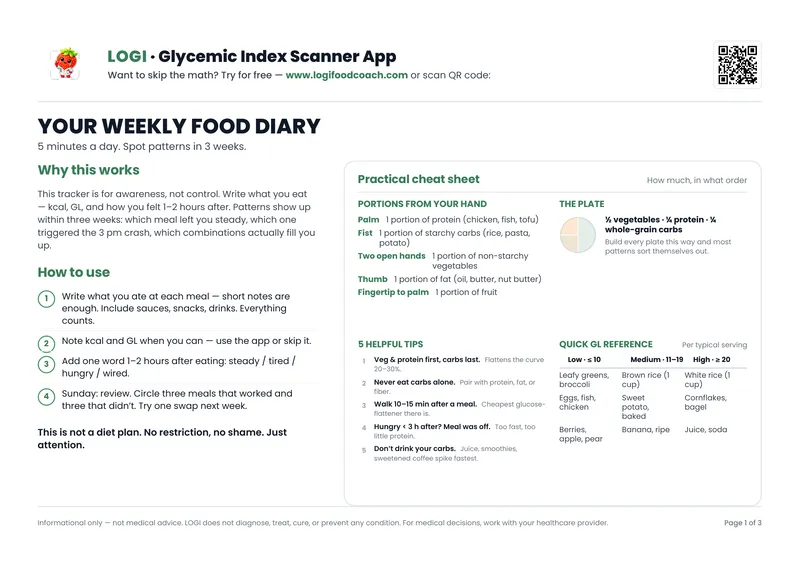
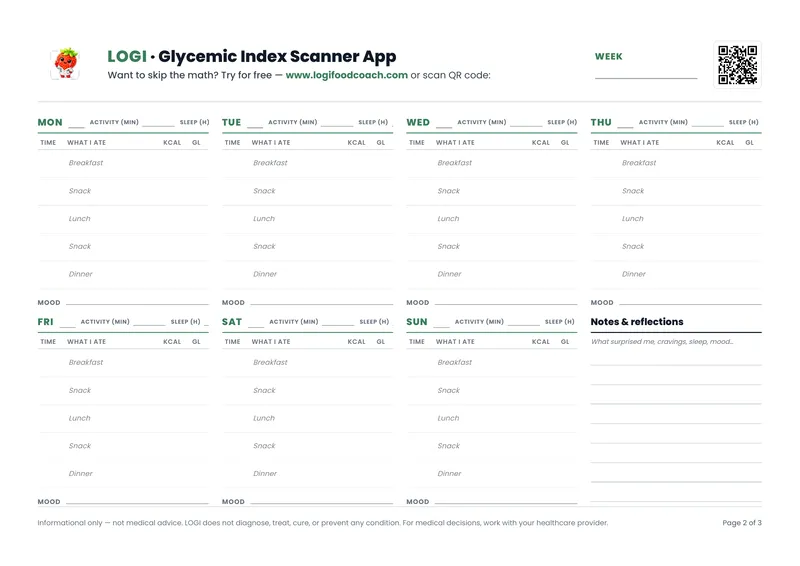
Free PDF — 3 pages
Your Weekly Food Journal
Track meals, glycemic load & mood. Spot patterns in 3 weeks.
No spam. Unsubscribe anytime.