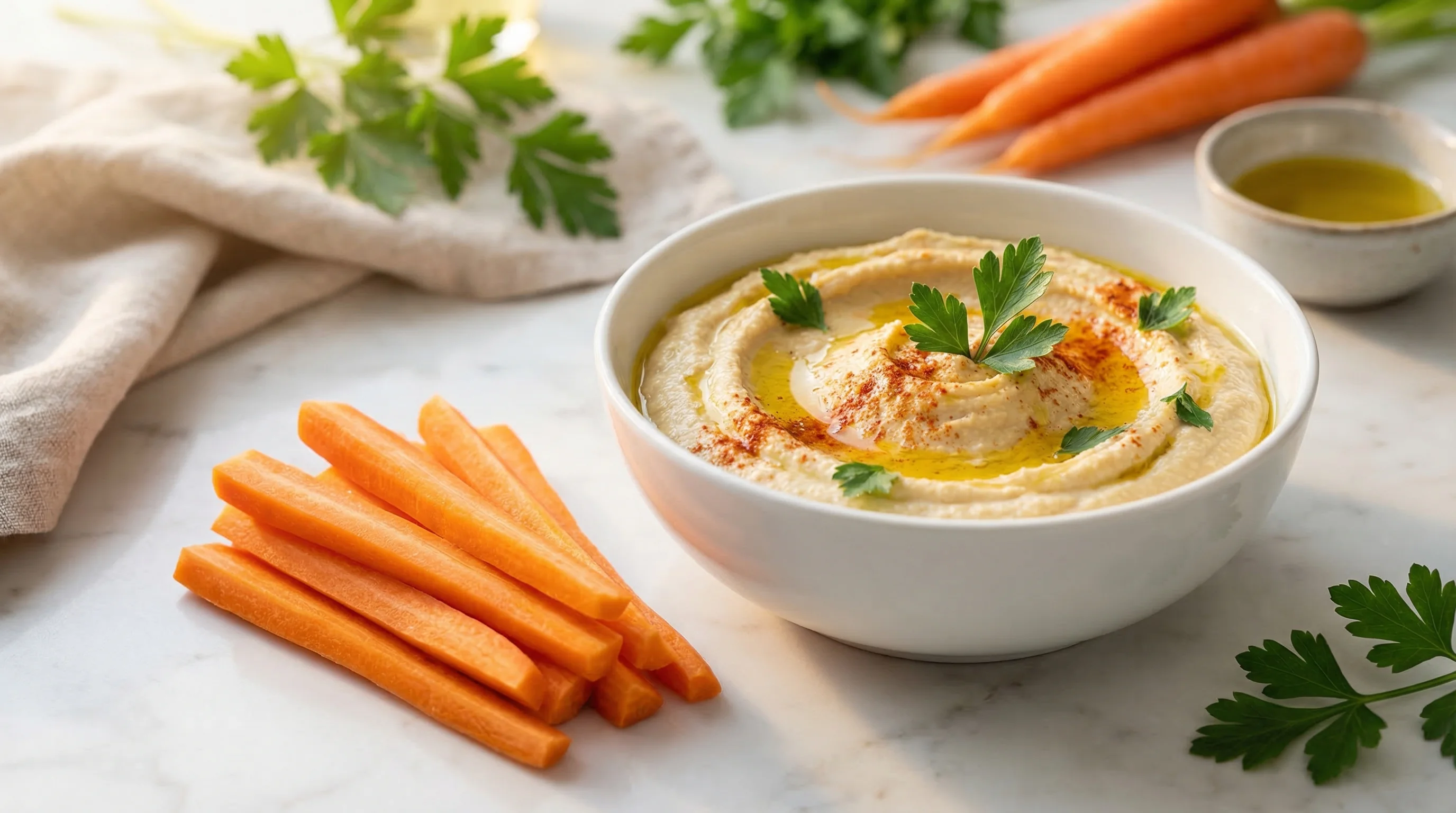
Hummus with Carrot Sticks
A perfectly balanced low-glycemic snack combining protein-rich hummus with fiber-packed carrots for sustained energy without blood sugar spikes.
This simple yet powerful snack is a blood sugar champion, combining the protein and fiber of chickpea-based hummus with the low-glycemic crunch of fresh carrots. Hummus provides a satisfying blend of complex carbohydrates, plant-based protein, and healthy fats from tahini and olive oil, which work together to slow glucose absorption and keep you feeling full longer. The chickpeas in hummus have a glycemic index of just 28, making them an excellent choice for stable blood sugar levels.
Carrots, despite their natural sweetness, have a low glycemic index of around 35-40 when raw, thanks to their high fiber content and cellular structure. The fiber in carrots slows down sugar absorption, while the act of chewing raw vegetables triggers satiety signals and promotes better digestion. The combination of protein and fat from hummus paired with the fiber in carrots creates an ideal macronutrient balance that prevents rapid glucose spikes.
This snack is perfect for mid-morning or afternoon energy maintenance. The protein in hummus helps stabilize blood sugar for 2-3 hours, while the satisfying crunch of carrots provides volume and hydration. For optimal glycemic control, enjoy this snack between meals rather than immediately after a carbohydrate-heavy meal, allowing the protein and fiber to work their magic on your metabolism.
Blood Sugar Impact
Minimal blood sugar impact due to the very low glycemic load and GI. This combination provides stable, sustained energy for 3-4 hours with virtually no spike, thanks to the fiber in carrots and protein/fat in hummus.
Blood Sugar Tips
- ✓ Eat the carrot sticks first to maximize fiber intake before the hummus, which will further slow digestion
- ✓ Pair this snack with a source of additional protein like a hard-boiled egg if using as a meal replacement to enhance satiety
- ✓ Consider a brief 10-minute walk after eating to support glucose uptake and maintain stable blood sugar levels
🥗 Ingredients
- 100 g hummus
- 2 pcs medium carrots
- 3.5 oz hummus
- 2 pcs medium carrots
👨🍳 Instructions
- 1
Select 2 medium-sized fresh carrots and rinse them thoroughly under cold running water to remove any dirt or debris.
- 2
Peel the carrots using a vegetable peeler if desired, though leaving the skin on provides additional fiber and nutrients.
- 3
Trim off the green tops and the thin end of each carrot using a sharp knife.
- 4
Cut each carrot in half crosswise, then slice each half lengthwise into 3-4 even sticks, creating uniform pieces about 3-4 inches long and 1/2 inch thick for easy dipping.
- 5
Measure out 100 grams (about 1/2 cup) of your favorite hummus and transfer it to a small serving bowl.
- 6
Arrange the carrot sticks on a plate around the bowl of hummus, or place them standing upright in a small glass for an attractive presentation.
- 7
Serve immediately for the crispest texture, or cover and refrigerate for up to 2 hours if preparing ahead.
- 8
For optimal blood sugar control, eat the carrot sticks first to prime your digestive system with fiber, then enjoy with the protein-rich hummus for sustained energy.
📊 Nutrition Per Serving
| Per Serving | Whole Dish | |
|---|---|---|
| Calories | 215 | 215 |
| Carbs | 26g | 26g |
| Sugars | 6g | 6g |
| Natural Sugars | 6g | 6g |
| Protein | 9g | 9g |
| Fat | 10g | 10g |
| Saturated Fat | 1g | 1g |
| Unsaturated Fat | 8g | 8g |
| Fiber | 9g | 9g |
| Soluble Fiber | 3g | 3g |
| Insoluble Fiber | 7g | 7g |
| Sodium | 323mg | 323mg |
Predicted Glucose Response
What if you...
Estimated model — individual responses vary. Not medical advice.
🔄 Lower GI Swaps
Raw celery, cucumber, and bell peppers have a lower glycemic index than carrots (GI 15-15 vs 35-40 for raw carrots), resulting in an even more minimal blood sugar impact and keeping the overall GL extremely low
Guacamole (made from avocados) has virtually no carbohydrates and a GI near zero, while baba ganoush and tahini-based dips have slightly lower carbohydrate content than chickpea-based hummus, further reducing glycemic load
🔬 The Science Behind This Recipe
The Science Behind This Blood Sugar-Friendly Snack
Hummus with carrot sticks is a glycemic superstar, earning its impressively low glycemic index of 19 and glycemic load of just 4.8. This combination works so well because it pairs fiber-rich vegetables with protein and healthy fats from chickpeas and tahini. Carrots, while containing natural sugars, are packed with soluble fiber that slows digestion and prevents rapid glucose absorption. The chickpeas in hummus provide both protein (about 8 grams per half cup) and resistant starch, which your body digests slowly, leading to a gradual, steady rise in blood sugar rather than a sharp spike. Meanwhile, the tahini (ground sesame seeds) adds healthy fats that further slow gastric emptying, meaning food moves through your digestive system at a measured pace.
The concept of Glycemic Load is crucial here—it accounts for both the quality of carbohydrates (GI) and the quantity you're actually eating. While carrots have a moderate GI on their own, the small amount of carbohydrates in a typical serving keeps the overall impact minimal. When you dip those carrots in hummus, you're creating an even more balanced snack by adding protein and fat to every bite, which dramatically reduces the blood sugar response compared to eating carrots alone.
To maximize the blood sugar benefits of this snack, try eating it mid-afternoon when your insulin sensitivity is naturally higher. If you're having it alongside a meal, eat the vegetables and hummus first before any higher-carb foods—this "food sequencing" strategy can reduce post-meal glucose spikes by up to 73% according to recent studies. A short 10-minute walk after snacking can also help your muscles absorb glucose more efficiently, keeping blood sugar levels stable.
Related recipes
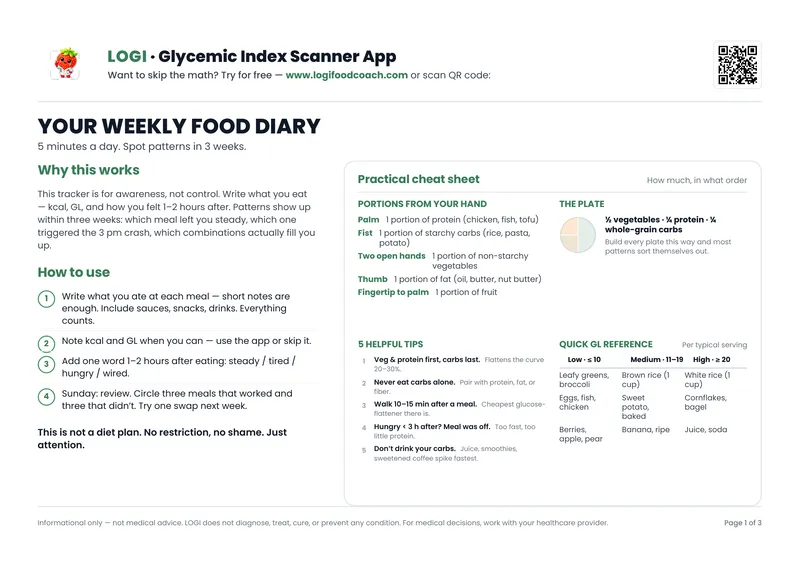
Free PDF — 3 pages
Your Weekly Food Journal
Track meals, glycemic load & mood. Spot patterns in 3 weeks.
No spam. Unsubscribe anytime.