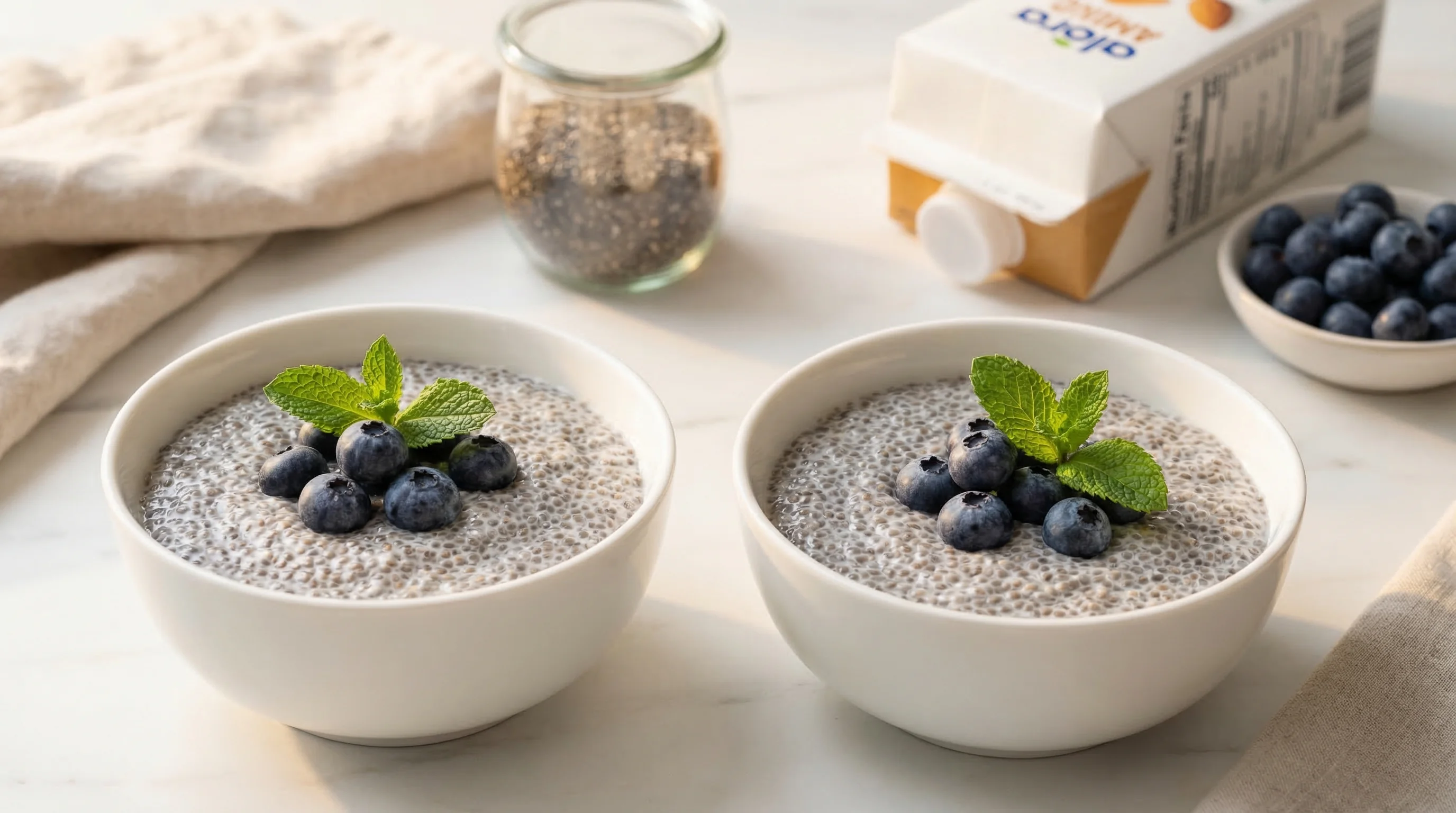
Low-Glycemic Chia Seed Pudding with Blueberries
A blood sugar-friendly breakfast pudding that combines omega-3 rich chia seeds with creamy milk and antioxidant-packed blueberries for sustained energy.
This chia seed pudding is a nutritional powerhouse perfectly designed for stable blood sugar levels throughout your morning. Chia seeds have an exceptionally low glycemic index and are loaded with soluble fiber that slows glucose absorption, preventing blood sugar spikes. When combined with milk, the protein and fat content further moderates the glycemic response, making this an ideal breakfast for anyone managing their blood sugar.
The magic happens as chia seeds absorb liquid and form a gel-like consistency, creating a satisfying pudding texture without any cooking required. This gel formation is the same mechanism that helps slow digestion and glucose release in your body. Blueberries add natural sweetness with a low glycemic load, plus they're rich in anthocyanins that may improve insulin sensitivity. For best results, use unsweetened almond milk or full-fat dairy milk to keep the glycemic impact minimal.
This make-ahead recipe is perfect for busy mornings when you need sustained energy without the blood sugar rollercoaster. The combination of fiber, protein, and healthy fats keeps you satisfied for hours, while the minimal prep time makes it accessible even on your busiest days. Prepare it the night before and wake up to a ready-to-eat breakfast that supports your metabolic health.
Blood Sugar Impact
Minimal blood sugar impact due to the very low GI of 29 and low glycemic load of 9.4. The high fiber content from chia seeds will provide slow, sustained energy release over 3-4 hours with minimal glucose spike.
Blood Sugar Tips
- ✓ Consume this pudding as part of breakfast rather than alone to maximize satiety and blood sugar stability throughout the morning
- ✓ Add a handful of nuts or a tablespoon of almond butter for additional protein and healthy fats to further slow digestion
- ✓ Prepare the night before to allow chia seeds to fully gel, which enhances their blood sugar-stabilizing fiber content
🥗 Ingredients
- 3 tbsp chia seeds
- 240 ml unsweetened almond milk or whole milk
- 60 g fresh blueberries
- 3 tbsp chia seeds
- 1.0 cups unsweetened almond milk or whole milk
- 2.1 oz fresh blueberries
👨🍳 Instructions
- 1
Measure 3 tablespoons of chia seeds and place them in a glass jar, bowl, or container with a tight-fitting lid.
- 2
Pour 240ml (1 cup) of unsweetened almond milk or whole milk over the chia seeds. For the lowest glycemic impact, choose unsweetened almond milk or full-fat dairy milk rather than low-fat or sweetened varieties.
- 3
Stir the mixture vigorously with a spoon or whisk for 30-60 seconds, making sure to break up any clumps and distribute the chia seeds evenly throughout the liquid.
- 4
Let the mixture sit for 5 minutes, then stir again thoroughly to prevent the chia seeds from settling and clumping at the bottom. This second stir ensures an even, creamy texture.
- 5
Cover the container and refrigerate for at least 4 hours or overnight. The chia seeds will absorb the liquid and expand, creating a thick, pudding-like consistency. Overnight refrigeration yields the best texture.
- 6
Before serving, give the pudding a good stir to restore creaminess. If it's too thick for your preference, add a splash of milk and stir until you reach the desired consistency.
- 7
Top with 60g of fresh blueberries just before eating. For optimal blood sugar management, eat the pudding slowly and consider pairing it with a handful of nuts for additional protein and healthy fats.
📊 Nutrition Per Serving
| Per Serving | Whole Dish | |
|---|---|---|
| Calories | 326 | 326 |
| Carbs | 33g | 33g |
| Sugars | 17g | 17g |
| Natural Sugars | 17g | 17g |
| Protein | 13g | 13g |
| Fat | 17g | 17g |
| Saturated Fat | 6g | 6g |
| Unsaturated Fat | 12g | 12g |
| Fiber | 12g | 12g |
| Soluble Fiber | 3g | 3g |
| Insoluble Fiber | 8g | 8g |
| Sodium | 109mg | 109mg |
Predicted Glucose Response
What if you...
Estimated model — individual responses vary. Not medical advice.
🔄 Lower GI Swaps
Unsweetened plant-based milks have virtually no carbohydrates and a negligible glycemic impact compared to dairy milk, which contains lactose (a natural sugar) that raises blood sugar levels.
Raspberries and blackberries have lower glycemic loads than blueberries due to higher fiber content and lower sugar concentration, while strawberries have a similar GL but provide variety and are slightly lower in total carbohydrates per serving.
🔬 The Science Behind This Recipe
Why This Recipe Works for Blood Sugar
This chia seed pudding is a blood sugar superstar, thanks to its powerful combination of soluble fiber, protein, and healthy fats. Chia seeds are packed with about 10 grams of fiber per ounce—mostly soluble fiber that forms a gel-like substance in your digestive system. This gel literally slows down how quickly your body breaks down and absorbs carbohydrates, resulting in a gradual, gentle rise in blood sugar rather than a sharp spike. The pudding's low glycemic index of 29 means it releases glucose into your bloodstream at a snail's pace compared to typical breakfast foods like white toast or sugary cereals.
The magic really happens when you look at how these ingredients work together. Chia seeds provide both fiber and omega-3 fatty acids, while milk adds protein and additional fat—all of which work synergistically to slow digestion. When you eat carbohydrates alongside protein and fat, your stomach empties more slowly, giving your body time to process the sugars gradually. The blueberries, while naturally sweet, are also fiber-rich and loaded with polyphenols that may actually improve insulin sensitivity over time. With a glycemic load of just 9.4 per serving, this means the actual amount of carbohydrate that will affect your blood sugar is quite small, even though the pudding feels satisfying and filling.
For best results, enjoy this pudding as part of a balanced breakfast rather than on an empty stomach, and consider adding a handful of nuts for extra protein and healthy fats. A 10-minute walk after eating can further help your muscles absorb glucose, keeping blood sugar levels even more stable throughout your morning.
Related recipes
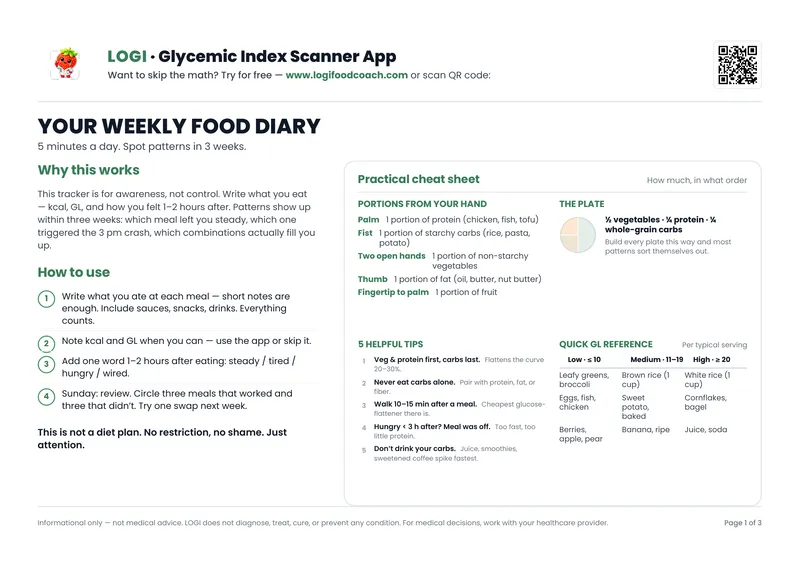
Free PDF — 3 pages
Your Weekly Food Journal
Track meals, glycemic load & mood. Spot patterns in 3 weeks.
No spam. Unsubscribe anytime.