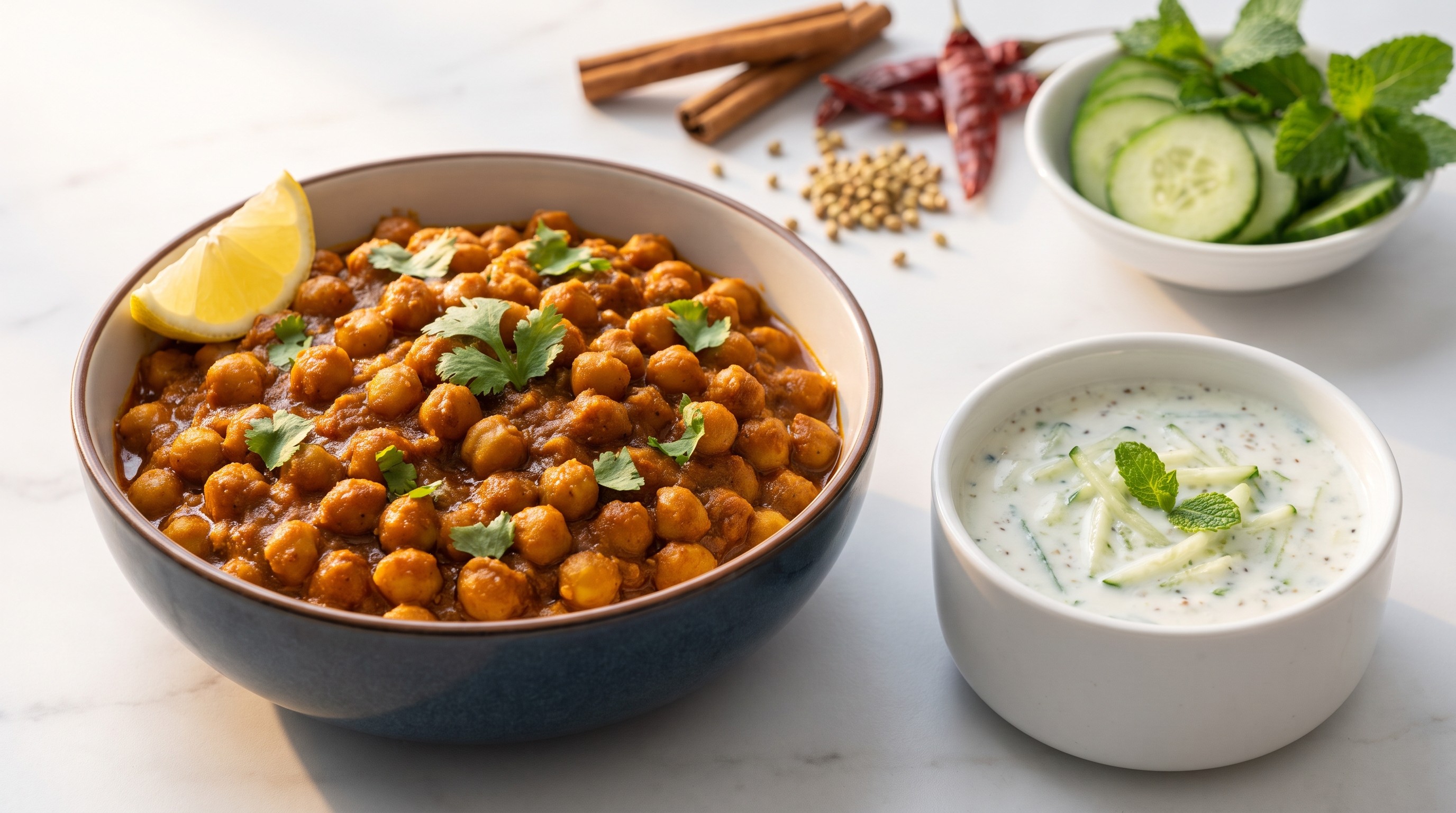
Chana Masala with Cucumber Raita
Protein-rich chickpeas braised in a fragrant ginger-tomato masala with cooling cucumber-mint raita — a naturally low-GI Indian classic that keeps blood sugar steady.
Chana masala is one of north India's most beloved everyday dishes, and it happens to be a perfect fit for blood sugar management. Chickpeas simmered in a warmly spiced ginger-tomato sauce deliver deep, satisfying flavor without any refined carbohydrates. Paired here with a cool cucumber-mint raita — whose yogurt protein and fat further blunt the postprandial glucose response — this meal is complete on its own.
Chickpeas rank among the lowest-GI legumes at roughly 28 on the glycemic index, thanks to their high content of resistant starch and soluble fiber. These slow-digesting carbohydrates create a gradual, gentle rise in blood glucose rather than the sharp spike you get from grains. The generous dose of protein — around 15 grams per serving from the chickpeas and yogurt combined — further blunts the glycemic response. Turmeric and the warm spice trio of cumin, coriander, and garam masala have each shown promise in research for supporting healthy insulin sensitivity.
For the best blood sugar outcome, start with a few spoonfuls of the raita before the masala. The protein and fat from the Greek yogurt slow gastric emptying, creating a buffer that flattens the glucose curve. This dish pairs beautifully with a small leafy side salad dressed in olive oil and lemon to add extra fiber and healthy fats at the start of your meal. Enjoy it at lunch or dinner — the high fiber and protein content will keep you feeling full for hours.
Important: this recipe is designed to be eaten without rice, naan, or other refined-grain sides. Adding white rice or bread would significantly raise the glycemic load of the meal and undermine its blood-sugar-friendly profile. If you want a starchy accompaniment, choose a small portion of cauliflower rice or a side of roasted vegetables instead.
Blood Sugar Impact
Low blood sugar impact expected. Chickpeas are rich in protein and fiber with a low GI of 28 and moderate glycemic load of 15.3, promoting a slow, steady glucose rise and stable energy for 3-4 hours.
Blood Sugar Tips
- ✓ Pair with the cucumber raita and eat it first — the yogurt's protein and fat slow gastric emptying, blunting the glucose curve from the chickpeas.
- ✓ Add a generous portion of non-starchy vegetables or a leafy side salad to increase fiber and further flatten the post-meal blood sugar response.
- ✓ Take a 10-15 minute walk after eating to enhance glucose uptake by muscles and reduce the post-meal spike.
🥗 Ingredients
- 1 tbsp Olive oil
- 1 pcs Onion
- 3 pcs Garlic
- 1 pcs Fresh ginger
- 1 tsp Ground cumin
- 1 tsp Ground coriander
- 0.5 tsp Ground turmeric
- 200 g Canned chopped tomatoes
- 400 g Chickpeas
- 1 tsp Garam masala
- 0.5 tsp Salt
- 0.5 pcs Cucumber
- 150 g Greek yogurt
- 5 pcs Mint leaves
- 5 g Cilantro
- 1 pcs Lemon
- 1 tbsp Olive oil
- 1 pcs Onion
- 3 pcs Garlic
- 1 pcs Fresh ginger
- 1 tsp Ground cumin
- 1 tsp Ground coriander
- 0.5 tsp Ground turmeric
- 7.1 oz Canned chopped tomatoes
- 8.5 oz Chickpeas
- 1 tsp Garam masala
- 0.5 tsp Salt
- 0.5 pcs Cucumber
- 5.3 oz Greek yogurt
- 5 pcs Mint leaves
- 0.2 oz Cilantro
- 1 pcs Lemon
👨🍳 Instructions
- 1
Warm the olive oil in a deep skillet or saucepan over medium heat. Add the diced onion and sauté for five to six minutes, stirring now and then, until the pieces soften and pick up light golden color at the edges.
- 2
Stir in the minced garlic and grated ginger, cooking for about one minute until the kitchen fills with fragrance. Sprinkle in the cumin, coriander, and turmeric, stirring for thirty seconds so the ground spices toast gently in the oil and release their full aroma.
- 3
Pour in the chopped tomatoes and cook for four to five minutes, pressing them with the back of your spoon until the mixture reduces to a thick, jammy sauce that clings to the pan.
- 4
Fold in the drained chickpeas along with 80 ml of water. Bring to a gentle simmer and cook for ten minutes, stirring occasionally, until the sauce thickens and coats each chickpea evenly.
- 5
While the chickpeas simmer, prepare the raita. Grate the cucumber coarsely and squeeze it firmly in a clean tea towel to wring out as much excess moisture as possible.
- 6
Combine the squeezed cucumber with the Greek yogurt, torn mint leaves, and a small pinch of salt. Stir gently until everything is evenly mixed, then set aside in the fridge to stay cool.
- 7
Stir the garam masala and the remaining salt into the chickpea mixture. Let it cook for another thirty seconds so the warm spice blooms in the residual heat, then remove the pan from the burner.
- 8
Ladle the chana masala into serving bowls. Scatter the chopped cilantro generously over the top and finish with a squeeze of fresh lemon juice. Serve the cool cucumber raita alongside — start with a few spoonfuls of raita before the masala to help buffer your blood sugar response.
📊 Nutrition Per Serving
| Per Serving | Whole Dish | |
|---|---|---|
| Calories | 386 | 771 |
| Carbs | 54g | 109g |
| Sugars | 16g | 32g |
| Natural Sugars | 16g | 32g |
| Protein | 21g | 43g |
| Fat | 11g | 21g |
| Saturated Fat | 1g | 3g |
| Unsaturated Fat | 9g | 18g |
| Fiber | 13g | 26g |
| Soluble Fiber | 4g | 8g |
| Insoluble Fiber | 9g | 18g |
| Sodium | 768mg | 1537mg |
Predicted Glucose Response
What if you...
Estimated model — individual responses vary. Not medical advice.
🔄 Lower GI Swaps
All are low-GI, high-protein legumes. Canned lentils (GI ~30) are the most accessible swap and cook in the same time. Black soybeans have the lowest GI of any bean at around 15, while lupini beans and edamame offer exceptionally high protein with minimal impact on blood sugar.
Labneh is strained even further than Greek yogurt, yielding higher protein and lower lactose per spoonful — excellent for blood sugar stability. Unsweetened coconut yogurt is a dairy-free option with healthy fats and negligible sugar. Full-fat natural yogurt works well too; the higher fat content slows digestion and helps moderate glucose response.
Fresh tomatoes have a GI of around 15, similar to canned, but avoid any added sugars sometimes found in canned varieties. Passata provides the same thick consistency — just check the label for no added sugar.
🔬 The Science Behind This Recipe
Chickpeas have a glycemic index of approximately 28, placing them firmly in the low-GI category. This is largely due to their high content of amylose starch and soluble fiber, both of which slow enzymatic digestion in the small intestine and produce a gradual, modest rise in blood glucose. A single serving of this dish delivers around 15 grams of protein from the chickpeas and yogurt combined, and protein is well established as a macronutrient that slows gastric emptying and reduces the overall glycemic response of a meal.
The spice blend here is more than flavor. Curcumin, the active compound in turmeric, has been studied for its potential to improve insulin sensitivity and reduce fasting blood glucose in clinical trials. Cumin and coriander contain polyphenols that may support glucose metabolism, though the evidence is still emerging.
Starting the meal with the raita is a deliberate sequencing strategy. Research shows that consuming protein and fat before carbohydrates can reduce postprandial glucose spikes by up to 30–40 percent. The Greek yogurt in the raita provides both, creating a physiological buffer that slows the arrival of glucose into the bloodstream. The cucumber adds negligible carbohydrate but contributes extra water and fiber to support satiety.
Related recipes
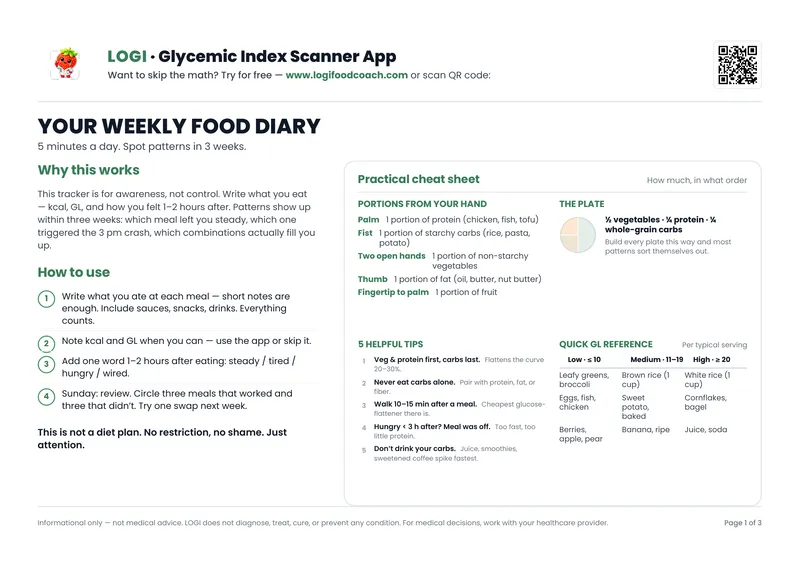
Free PDF — 3 pages
Your Weekly Food Journal
Track meals, glycemic load & mood. Spot patterns in 3 weeks.
No spam. Unsubscribe anytime.