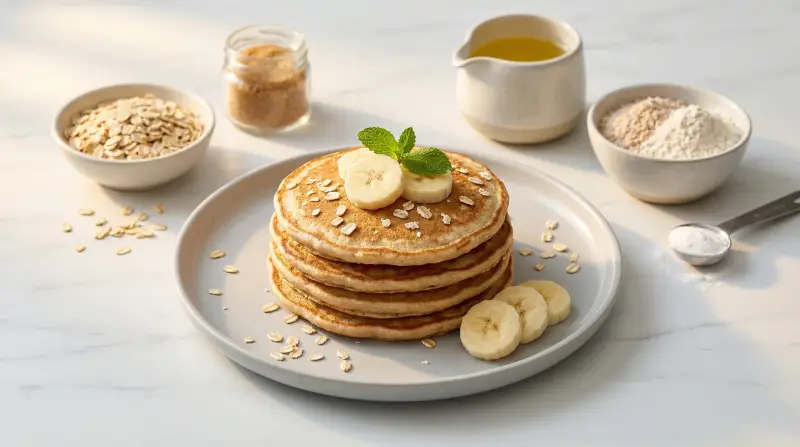
Blood Sugar-Friendly Banana Oat Pancakes
Wholesome whole-grain pancakes naturally sweetened with banana. High fiber content and protein help maintain steady blood sugar levels throughout your morning.
These nutrient-dense pancakes combine the power of whole grains with natural sweetness to create a breakfast that supports stable blood sugar levels. The old-fashioned oats provide soluble fiber that slows glucose absorption, while the whole-wheat flour adds additional fiber and nutrients that white flour lacks. The banana contributes natural sweetness, allowing us to minimize added sugars.
What makes these pancakes particularly blood sugar-friendly is the combination of complex carbohydrates, protein from the egg and yogurt, and healthy fats from canola oil. This macronutrient balance helps prevent the rapid glucose spikes associated with traditional pancakes made from refined flour. The cinnamon adds more than just flavor—studies suggest it may help improve insulin sensitivity.
IMPORTANT GLYCEMIC NOTE: This recipe includes small amounts of brown sugar (GI ~65-68) and all-purpose flour (GI ~75) for texture and taste. For optimal blood sugar control, use slightly underripe bananas (more yellow than brown-spotted, GI ~51 vs. ~62 for very ripe), and strongly consider the lower-glycemic swaps provided below. The combination of oats, whole-wheat flour, protein, and fat helps moderate the overall glycemic response, but portion control remains essential.
For optimal glycemic control, pair these pancakes with a protein source like Greek yogurt or eggs, and consider eating a small handful of nuts first. The fiber-rich oats have a low glycemic index of around 55, making them an excellent choice for sustained energy without the blood sugar rollercoaster. Each serving is 3 medium pancakes (approximately 4 inches diameter).
Blood Sugar Impact
Moderate blood sugar impact with a glycemic load of 28.1 and GI of 52. Expect a gradual rise in blood sugar over 1-2 hours with energy lasting 2-3 hours, though the combination of refined flours and brown sugar will cause a more pronounced spike than whole food alternatives.
Blood Sugar Tips
- ✓ Add a protein source like Greek yogurt, eggs, or nut butter on the side to slow glucose absorption and extend satiety
- ✓ Eat a small handful of nuts or seeds before the pancakes to provide fat and fiber that will blunt the blood sugar response
- ✓ Take a 10-15 minute walk after eating to help muscles absorb glucose and reduce the post-meal spike
🥗 Ingredients
- 0.5 cup old-fashioned rolled oats
- 1 cup hot water
- 2 tbsp canola oil
- 2 tbsp brown sugar
- 0.5 cup whole-wheat flour
- 0.5 cup all-purpose flour
- 1.5 tsp baking powder
- 0.25 tsp baking soda
- 0.25 tsp salt
- 0.25 tsp ground cinnamon
- 0.5 cup skim milk
- 0.25 cup fat-free plain yogurt
- 1 pcs ripe banana, mashed
- 1 pcs large egg
- 0.5 cup old-fashioned rolled oats
- 1 cup hot water
- 2 tbsp canola oil
- 2 tbsp brown sugar
- 0.5 cup whole-wheat flour
- 0.5 cup all-purpose flour
- 1.5 tsp baking powder
- 0.25 tsp baking soda
- 0.25 tsp salt
- 0.25 tsp ground cinnamon
- 0.5 cup skim milk
- 0.25 cup fat-free plain yogurt
- 1 pcs ripe banana, mashed
- 1 pcs large egg
👨🍳 Instructions
- 1
Pour hot water over the rolled oats in a large mixing bowl and allow them to soak for 2 minutes until they become soft and creamy. Stir in the canola oil and brown sugar, then set the mixture aside to cool for a few minutes while you prepare the dry ingredients.
- 2
Whisk together both flours, baking powder, baking soda, salt, and ground cinnamon in a separate medium bowl until evenly combined. This ensures the leavening agents are distributed throughout the flour mixture.
- 3
Add the skim milk, yogurt, and mashed banana to the cooled oat mixture, stirring until everything is well incorporated. Crack in the egg and beat it thoroughly into the wet ingredients until no streaks remain.
- 4
Pour the flour mixture into the wet oat mixture and gently fold together using a spatula or wooden spoon. Mix only until the dry ingredients are just moistened—some small lumps are fine and overmixing will create tough pancakes.
- 5
Heat a nonstick griddle or large skillet over medium heat. Once the surface is hot, lightly coat with cooking spray if needed. Pour approximately 1/4 cup of batter onto the griddle for each pancake, spacing them about 2 inches apart.
- 6
Cook the pancakes undisturbed for 2 to 2.5 minutes until small bubbles form across the entire surface and the edges appear set and lightly golden. This is your signal that they're ready to flip.
- 7
Use a wide spatula to flip each pancake carefully and cook for an additional 2 to 3 minutes on the second side until golden brown and cooked through. Transfer finished pancakes to a warm plate and repeat with the remaining batter, adjusting heat as needed to prevent burning.
- 8
Serve the pancakes warm, ideally with a protein-rich topping like Greek yogurt or a small amount of nut butter. For best blood sugar control, eat these alongside eggs or after consuming some vegetables or nuts to further slow glucose absorption. Each serving is 3 medium pancakes.
📊 Nutrition Per Serving
| Per Serving | Whole Dish | |
|---|---|---|
| Calories | 299 | 1194 |
| Carbs | 45g | 182g |
| Sugars | 12g | 49g |
| Added Sugars | 6g | 24g |
| Natural Sugars | 6g | 24g |
| Protein | 9g | 35g |
| Fat | 10g | 40g |
| Saturated Fat | 1g | 6g |
| Unsaturated Fat | 9g | 34g |
| Fiber | 4g | 16g |
| Soluble Fiber | 1g | 5g |
| Insoluble Fiber | 3g | 11g |
| Sodium | 447mg | 1788mg |
Predicted Glucose Response
What if you...
Estimated model — individual responses vary. Not medical advice.
🔄 Lower GI Swaps
Brown sugar has a moderate-to-high glycemic index that can cause blood sugar elevation. Erythritol and monk fruit provide sweetness without affecting blood glucose, making them ideal for blood sugar management. Pure maple syrup, while still a sugar, has a lower GI than brown sugar and contains beneficial minerals, though it should be used sparingly. Relying solely on the natural banana sweetness is the lowest-impact option.
All-purpose flour is a refined grain with a high glycemic index that causes rapid blood sugar spikes. Almond flour is virtually zero-GI and adds protein and healthy fats that further stabilize blood sugar. Using additional whole-wheat flour maintains the texture while lowering the overall GI. The coconut-oat flour combination provides maximum fiber and the lowest glycemic impact, though it may slightly alter texture.
Banana ripeness significantly affects glycemic impact—underripe bananas contain more resistant starch and have a GI around 51 versus 60-62 for very ripe bananas. Unsweetened applesauce provides similar moisture and natural sweetness with a lower GI. Mashed sweet potato offers comparable texture and sweetness with additional nutrients and a lower glycemic response, making it an excellent blood sugar-friendly alternative.
While skim milk has a moderate GI around 32, unsweetened plant-based milks like almond milk have virtually no glycemic impact due to minimal carbohydrate content. Unsweetened soy milk provides additional protein that helps stabilize blood sugar while maintaining a low GI. These swaps reduce the overall carbohydrate load of the recipe without compromising texture.
Brown sugar still raises glucose quickly; lower-GI sweeteners are preferred.
🔬 The Science Behind This Recipe
The blood sugar-friendly nature of these pancakes comes from their strategic combination of macronutrients and fiber. Old-fashioned rolled oats contain beta-glucan, a soluble fiber that forms a gel-like substance in your digestive tract, physically slowing the absorption of glucose into your bloodstream. This results in a more gradual blood sugar rise compared to refined grain pancakes. The whole-wheat flour contributes additional fiber and has a lower glycemic index (around 69) than all-purpose flour (around 75), though both are still moderate-GI ingredients. The protein from the egg and Greek yogurt further slows digestion and helps stabilize blood sugar by triggering a more measured insulin response. Healthy fats from canola oil also contribute to this slowing effect. Cinnamon contains bioactive compounds that may improve insulin sensitivity by helping cells respond more effectively to insulin signals. However, it's important to note that this recipe does include brown sugar (GI ~65-68) and all-purpose flour, which will elevate the overall glycemic response. Using the suggested swaps—erythritol or monk fruit sweetener instead of brown sugar, and almond flour instead of all-purpose flour—can significantly lower the glycemic impact. Banana ripeness matters considerably: a slightly underripe banana has a GI around 51, while an overripe banana can reach 62 or higher as resistant starch converts to simple sugars during ripening. The combination of these ingredients creates a more balanced glycemic response than traditional pancakes, but portion control and pairing with additional protein remain important strategies for optimal blood sugar management.
Related recipes
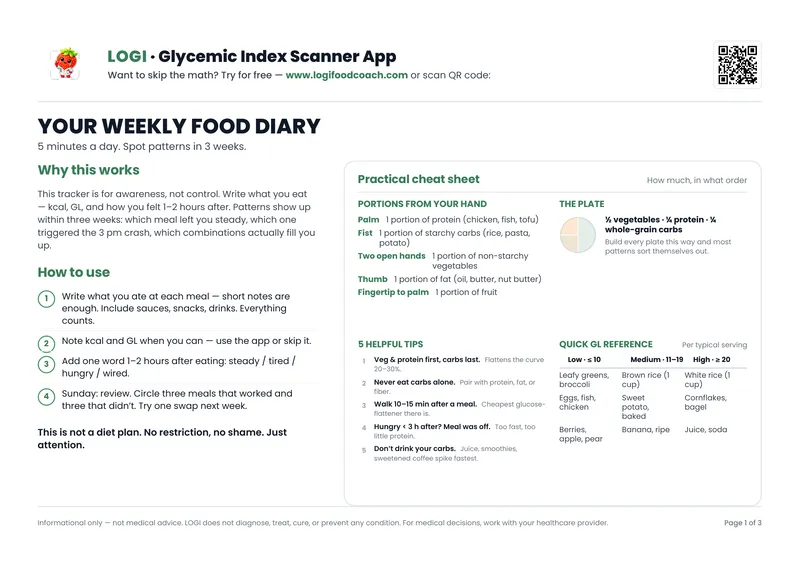
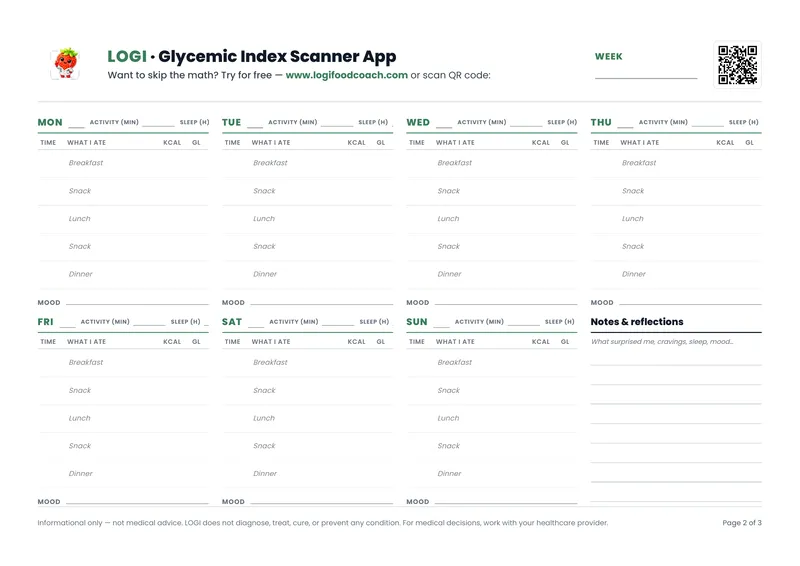
Free PDF — 3 pages
Your Weekly Food Journal
Track meals, glycemic load & mood. Spot patterns in 3 weeks.
No spam. Unsubscribe anytime.