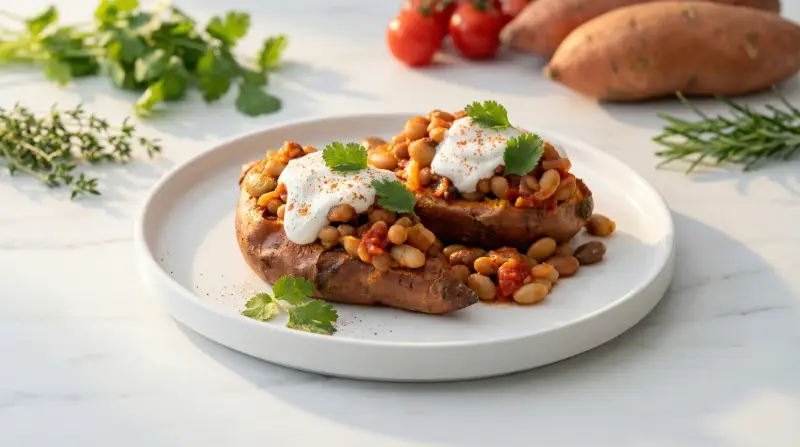
Roasted Sweet Potatoes with Smoky Bean Ragout
Blood sugar-friendly comfort food featuring fiber-rich sweet potatoes and protein-packed beans in a smoky paprika sauce—ready in just 35 minutes.
This nourishing weeknight dinner combines the natural sweetness of roasted sweet potatoes with a hearty, protein-rich bean ragout that helps stabilize blood sugar levels. Sweet potatoes, despite their name, have a lower glycemic impact than regular potatoes thanks to their high fiber content and resistant starch, though their GI can vary from 44-96 depending on variety and cooking method—roasting typically yields a moderate GI around 63. When paired with mixed beans—an excellent source of plant-based protein and soluble fiber—this meal creates a balanced glycemic response that keeps you satisfied for hours. The smoky paprika and caramelized onions add depth without relying on added sugars. This recipe includes a small amount of brown sugar in the sauce for traditional flavor, but this can and should be omitted entirely or replaced with erythritol or allulose for optimal blood sugar control, especially for those managing diabetes or prediabetes. The beans provide sustained energy through their complex carbohydrates and protein content, which slows glucose absorption. For optimal glycemic management, eat the bean mixture first before the sweet potato, as starting with protein and fiber helps blunt the glucose spike from starches. This recipe is perfect for meal prep—make a double batch of the bean ragout and freeze portions for quick, blood sugar-friendly meals throughout the week. The combination of fiber, protein, and healthy fats from the olive oil and soured cream creates a complete, satisfying meal that supports stable blood sugar levels. Portion control is important with sweet potatoes; this recipe uses small sweet potatoes (approximately 150g each) to keep carbohydrate content moderate per serving. The glycemic load of 71.0 for the full recipe means each serving has a GL of approximately 18, which is moderate. For stricter blood sugar management, consider serving one small sweet potato with 1 cup of ragout and pairing with additional non-starchy vegetables or a side salad.
Blood Sugar Impact
This meal will cause a moderate to high blood sugar rise due to the high glycemic load of 71, despite the medium GI of 49. The combination of sweet potatoes and beans provides sustained energy but the total carbohydrate content is substantial, likely causing blood sugar elevation for 2-3 hours before stabilizing.
Blood Sugar Tips
- ✓ Reduce portion size by half and add non-starchy vegetables like a large side salad or roasted broccoli to increase fiber and volume without adding carbohydrates
- ✓ Eat a protein-rich food first such as grilled chicken, fish, or a handful of nuts 10-15 minutes before the meal to slow carbohydrate absorption
- ✓ Take a 15-20 minute walk after eating to help muscles absorb glucose and blunt the blood sugar spike
🥗 Ingredients
- 4 pcs small sweet potatoes
- 1 tbsp smoked paprika, plus extra for serving
- 1 tbsp olive oil
- 1 pcs large onion, chopped
- 2 pcs garlic cloves, crushed
- 1 tbsp brown sugar
- 1 tbsp red wine vinegar
- 1 tbsp Worcestershire sauce
- 800 g mixed beans in water, drained
- 400 g chopped tomatoes
- 4 tbsp light soured cream, to serve
- 4 pcs small sweet potatoes
- 1 tbsp smoked paprika, plus extra for serving
- 1 tbsp olive oil
- 1 pcs large onion, chopped
- 2 pcs garlic cloves, crushed
- 1 tbsp brown sugar
- 1 tbsp red wine vinegar
- 1 tbsp Worcestershire sauce
- 1.8 lb mixed beans in water, drained
- 14.1 oz chopped tomatoes
- 4 tbsp light soured cream, to serve
👨🍳 Instructions
- 1
Preheat your oven to 200°C (180°C fan/gas mark 6). Using a fork, pierce each sweet potato several times all over to allow steam to escape during cooking.
- 2
Place the pierced sweet potatoes on a microwave-safe plate and cook on high power for 8 minutes, or until they yield to gentle pressure but are still firm. This pre-cooking step reduces oven time while maintaining texture.
- 3
In a small bowl, combine 1 teaspoon of smoked paprika with 1 teaspoon of olive oil and a pinch of salt and pepper. Rub this mixture evenly over the warm sweet potatoes, then transfer them to a baking tray. Roast in the preheated oven for 10-15 minutes until the skins are crispy and caramelized.
- 4
While the sweet potatoes roast, heat the remaining olive oil in a large skillet or saucepan over medium heat. Add the chopped onion and cook for 5-6 minutes, stirring occasionally, until softened and beginning to turn golden at the edges.
- 5
Add the crushed garlic, remaining smoked paprika, red wine vinegar, and Worcestershire sauce to the onions. Stir continuously for 1-2 minutes until the mixture becomes fragrant and slightly sticky, coating the onions in the flavorful glaze. Note: Omit the brown sugar entirely for optimal blood sugar control, or use erythritol or allulose as a substitute if desired for traditional flavor.
- 6
Add the drained mixed beans and no-sugar-added chopped tomatoes, along with 50ml water to create a sauce consistency. Stir well to combine, then reduce heat to medium-low and simmer for 8-10 minutes, stirring occasionally, until the sauce thickens and the flavors meld together. Season with salt and pepper to taste.
- 7
To serve, split each roasted sweet potato lengthwise and gently press the ends to open. Spoon the smoky bean ragout generously over each potato (approximately 1 cup per serving), top with a tablespoon of light soured cream, and finish with an extra pinch of smoked paprika for color and flavor.
- 8
For optimal blood sugar management, eat the bean mixture first before the sweet potato flesh, as the protein and fiber will help moderate the glycemic response from the starch. Store any leftover bean ragout in an airtight container in the refrigerator for up to 4 days or freeze for up to 3 months. Each serving provides approximately 18g glycemic load, which is moderate—pair with non-starchy vegetables for a more balanced meal.
📊 Nutrition Per Serving
| Per Serving | Whole Dish | |
|---|---|---|
| Calories | 472 | 1888 |
| Carbs | 85g | 339g |
| Sugars | 17g | 66g |
| Added Sugars | 4g | 14g |
| Natural Sugars | 13g | 52g |
| Protein | 20g | 79g |
| Fat | 8g | 32g |
| Saturated Fat | 2g | 9g |
| Unsaturated Fat | 5g | 21g |
| Fiber | 19g | 77g |
| Soluble Fiber | 1g | 3g |
| Insoluble Fiber | 1g | 6g |
| Sodium | 267mg | 1066mg |
Predicted Glucose Response
What if you...
Estimated model — individual responses vary. Not medical advice.
🔄 Lower GI Swaps
Brown sugar has a high GI of approximately 64 and will cause a rapid blood sugar spike. Erythritol and allulose provide sweetness without affecting blood glucose levels. For optimal glycemic control, omitting sweetener entirely is recommended as the caramelized onions and natural sweetness of the sweet potatoes provide sufficient flavor.
Purple sweet potatoes contain anthocyanins that may improve insulin sensitivity and have a lower GI than orange varieties. Reducing the portion of sweet potatoes and adding non-starchy vegetables like cauliflower dramatically lowers the glycemic load while maintaining volume and satisfaction. Butternut squash has a GI around 51, slightly lower than orange sweet potatoes.
Traditional Worcestershire sauce contains added sugars and corn syrup that can impact blood glucose. Sugar-free versions provide the same umami flavor without the glycemic impact. Coconut aminos with a touch of molasses offers similar depth with minimal sugar, while tamari and balsamic vinegar create comparable savory-tangy notes.
Specifying lower-GI bean varieties ensures optimal blood sugar control. Black beans, kidney beans, and chickpeas all have GI values below 35, making them excellent choices for glycemic management. Their high protein (7-8g per half cup) and fiber content (6-8g per half cup) further slow glucose absorption and promote satiety.
Light soured cream often contains added sugars, stabilizers, and modified starches that can affect blood sugar. Full-fat versions have fewer additives and the fat content helps slow glucose absorption. Greek yogurt provides additional protein (approximately 10g per serving) which further moderates glycemic response. Cashew cream offers a dairy-free alternative with healthy fats.
Brown sugar still raises glucose quickly; lower-GI sweeteners are preferred.
🔬 The Science Behind This Recipe
Sweet potatoes contain resistant starch and soluble fiber that slow glucose absorption, resulting in a more gradual blood sugar rise compared to regular potatoes. Their GI varies significantly (44-96) based on variety, cooking method, and temperature—roasting at 200°C typically produces a moderate GI around 63. The fiber content (approximately 3-4g per 150g serving) helps moderate the glycemic response. When combined with beans, which provide both soluble fiber and protein (approximately 7-8g per half-cup serving), the overall glycemic impact is further reduced. The protein and fiber in beans slow gastric emptying and glucose absorption, creating a more stable blood sugar curve. Eating the protein-rich bean ragout before the starchy sweet potato leverages the second-meal effect, where protein and fiber consumed first can reduce the glucose spike from carbohydrates eaten afterward. The addition of vinegar in the ragout may also improve insulin sensitivity and reduce postprandial glucose levels. For optimal blood sugar control, use smaller sweet potatoes (150g each), omit added sugars entirely, and pair with additional non-starchy vegetables to increase fiber content and reduce the overall glycemic load of the meal.
Related recipes
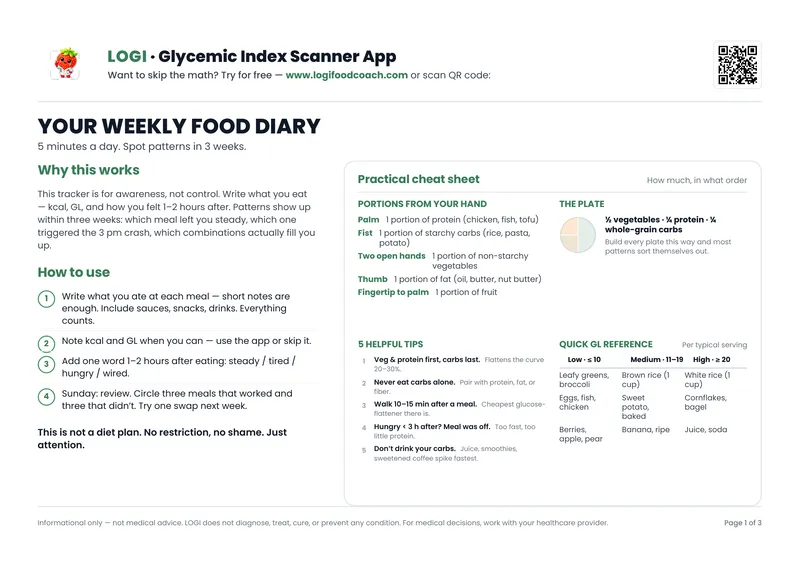
Free PDF — 3 pages
Your Weekly Food Journal
Track meals, glycemic load & mood. Spot patterns in 3 weeks.
No spam. Unsubscribe anytime.