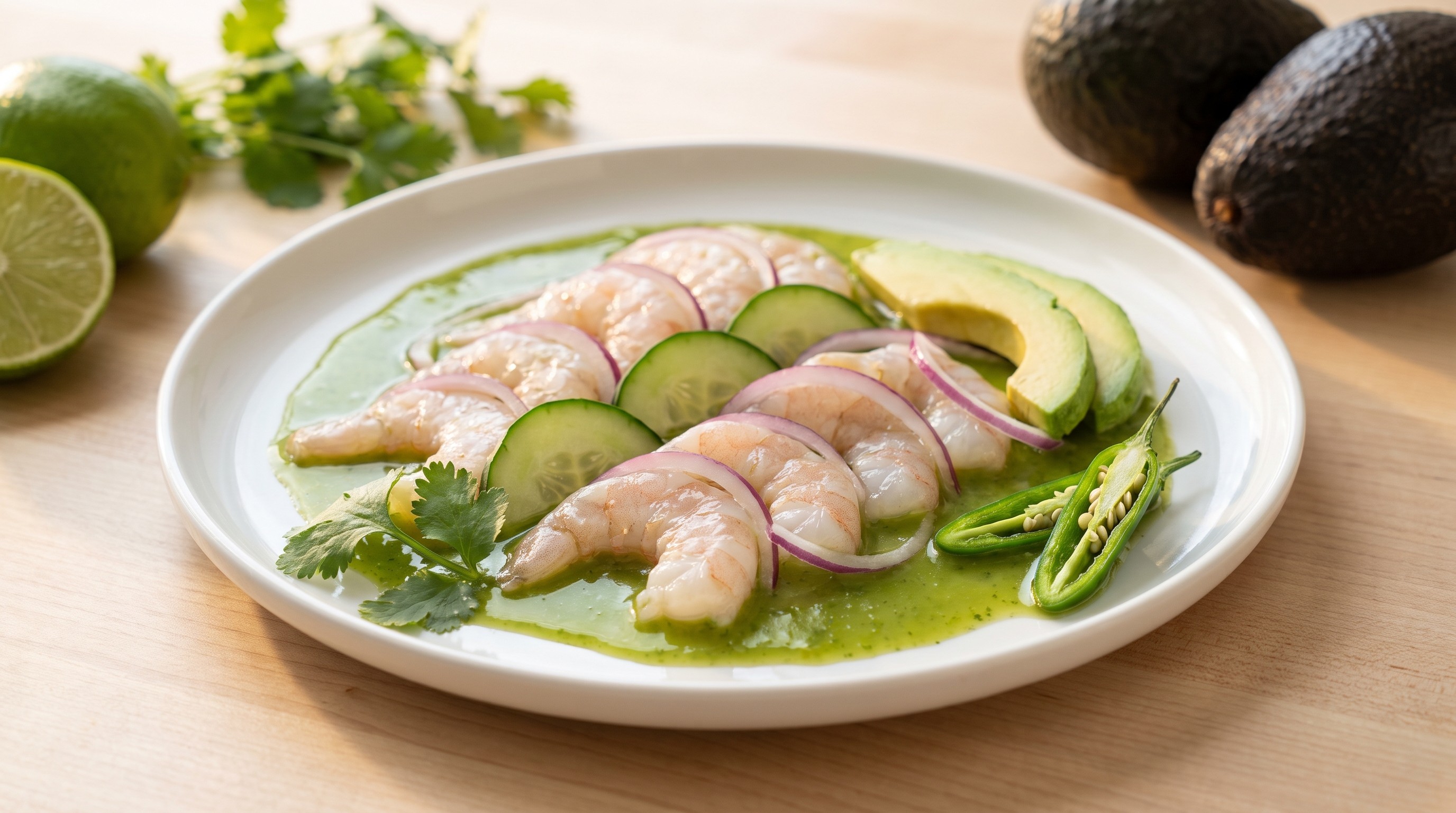
Aguachile Verde
Pacific-coast Mexican shrimp cured in a fiery lime-serrano green sauce — naturally low-glycemic with zero starch, high protein, and ready in twenty minutes.
Aguachile verde is one of the Pacific coast of Mexico’s most electrifying dishes: thinly sliced raw shrimp bathed in a blisteringly bright sauce of lime juice and serrano chili. Unlike many Mexican preparations that rely on tortillas, rice, or beans as a base, aguachile is naturally free of starchy accompaniments. The shrimp provides clean, lean protein while the acid from fresh limes does the ‘cooking,’ denaturing the proteins without any heat — and without any spike in blood sugar. Every component of this dish sits firmly in the low-glycemic category, making it an ideal centerpiece for anyone managing their glucose response.
The supporting cast is equally blood-sugar-friendly. Cucumber contributes volume and hydration with virtually no glycemic load. Red onion adds sharp contrast and contains quercetin, a flavonoid associated with improved insulin sensitivity. Avocado rounds out the plate with heart-healthy monounsaturated fats and soluble fiber, both of which slow gastric emptying and help blunt any modest glucose response from the lime juice and vegetables. The serrano chilies bring capsaicin, which research has linked to improved post-meal glucose metabolism.
For optimal blood sugar management, serve this dish as a starter before any carbohydrate-containing course — the protein and healthy fat will prime your digestive system to handle glucose more gradually. If pairing with a side, choose jicama sticks or a small portion of black beans rather than tostadas or fried tortilla chips. The entire plate comes together in under twenty minutes with zero cooking, making it a perfect warm-weather meal that supports steady energy without the post-meal crash.
Blood Sugar Impact
Very minimal blood sugar impact due to the extremely low glycemic load (3.2) and GI (18). The high protein from shrimp, healthy fats from avocado, and fiber from vegetables will promote stable blood sugar with no meaningful spike.
Blood Sugar Tips
- ✓ Enjoy the avocado fully — its monounsaturated fats and fiber further slow any minimal glucose absorption from the lime juice and onion.
- ✓ If served with tostadas or tortilla chips on the side, eat the aguachile protein and vegetables first before any starchy accompaniments to blunt their glycemic effect.
- ✓ Pair with a short 10-15 minute walk afterward if you add tortillas or chips, though the aguachile itself requires no mitigation.
🥗 Ingredients
- 300 g Shrimp
- 100 ml Lime juice
- 2 pcs Serrano chili
- 15 g Cilantro
- 200 g Cucumber
- 60 g Red onion
- 1 pcs Avocado
- 3 g Sea salt
- 10.6 oz Shrimp
- 7 tbsp Lime juice
- 2 pcs Serrano chili
- 0.5 oz Cilantro
- 7.1 oz Cucumber
- 2.1 oz Red onion
- 1 pcs Avocado
- 0.1 oz Sea salt
👨🍳 Instructions
- 1
Butterfly each shrimp by slicing along the back curve, then cut crosswise into thin pieces roughly 3 to 4 millimetres thick. The thinner you slice, the faster and more evenly the acid will cure them. Spread the pieces in a single layer on a well-chilled plate and return it to the refrigerator while you prepare the remaining components.
- 2
Place the paper-thin red onion rings in a small bowl of ice water and set aside for about 5 minutes. This quick soak tempers their raw sharpness while keeping their crunch intact.
- 3
Squeeze the limes to yield approximately 100 ml of fresh juice, straining out any seeds. Freshly squeezed juice is essential here — bottled lime juice lacks the acidity needed to properly cure the shrimp.
- 4
Combine the lime juice, serrano chilies, cilantro (both stems and leaves), and sea salt in a blender. Process on high speed for about 30 seconds until the mixture is uniformly smooth and vivid green with no visible herb fragments remaining.
- 5
Remove the chilled shrimp plate from the refrigerator and pour the green sauce evenly over the sliced shrimp. Tilt the plate gently in all directions so every piece is fully coated and submerged. Let the shrimp cure at room temperature for exactly 5 minutes — the edges of each piece will turn opaque while the centres remain slightly translucent, which indicates a perfect cure.
- 6
While the shrimp cures, halve the cucumber lengthwise and cut it into thin half-moon slices. Drain the red onion rings thoroughly and pat them dry.
- 7
Once the shrimp is cured, scatter the cucumber slices and drained red onion rings over and around the shrimp, distributing them evenly across the plate.
- 8
Halve the avocado, remove the pit, and cut the flesh into thin slices. Fan the avocado along one side of the plate, spoon any pooled green sauce over the entire arrangement, and serve immediately. Aguachile is best eaten right away while the cure is still fresh and the textures are at their peak.
📊 Nutrition Per Serving
| Per Serving | Whole Dish | |
|---|---|---|
| Calories | 313 | 625 |
| Carbs | 18g | 36g |
| Sugars | 5g | 10g |
| Natural Sugars | 5g | 10g |
| Protein | 39g | 78g |
| Fat | 12g | 24g |
| Saturated Fat | 2g | 4g |
| Unsaturated Fat | 10g | 20g |
| Fiber | 6g | 13g |
| Soluble Fiber | 2g | 4g |
| Insoluble Fiber | 4g | 9g |
| Sodium | 750mg | 1500mg |
Predicted Glucose Response
What if you...
Estimated model — individual responses vary. Not medical advice.
🔄 Lower GI Swaps
Red onion contains more natural sugars than scallion greens or chives, which have a lower carbohydrate density and therefore contribute less to glycemic load per serving.
While cucumber is already low-GI, chayote and zucchini have slightly fewer digestible carbohydrates per serving and higher fiber content, further reducing the glycemic load contribution.
Adding apple cider vinegar to the lime juice base has been shown in studies to help reduce postprandial blood glucose spikes by slowing gastric emptying, enhancing the already low glycemic impact of this dish.
🔬 The Science Behind This Recipe
The Science Behind This Recipe
Aguachile Verde is a standout when it comes to blood sugar-friendly eating, and the reasons start with its star ingredient: shrimp. As a pure protein source with virtually zero carbohydrates, shrimp doesn't raise blood sugar on its own — and it does something even more useful when eaten alongside other foods. Protein slows the rate at which your stomach empties, which means any carbohydrates in the meal get absorbed more gradually. Think of it as a natural speed bump for glucose entering your bloodstream. Paired with the healthy fats from any avocado or olive oil you serve alongside, you've got a powerful combination that keeps your blood sugar on a smooth, steady curve rather than a sharp spike.
Then there's the lime juice, which brings more to the table than bright flavor. Research shows that acidic foods — vinegar, citrus, fermented ingredients — can meaningfully reduce the blood sugar impact of a meal. The acidity appears to slow down starch digestion and improve how your body responds to glucose. Meanwhile, cucumber adds volume and hydration with almost no sugar, plus a gentle dose of fiber that further eases digestion. Serrano peppers contribute capsaicin, a compound studied for its potential to support healthy insulin response.
What ties it all together is the concept of glycemic load, which considers both the type and the *amount* of carbohydrates you're actually eating. With a glycemic load of just 3.2 per serving, this dish lands firmly in the "low" category — anything under 10 is considered gentle on blood sugar. To get even more from this meal, try eating any vegetable sides first, saving starchier accompaniments like tortilla chips for last, and taking a 10-15 minute walk afterward. Small habits like these can make a real difference in how your body handles glucose over time.
Related recipes
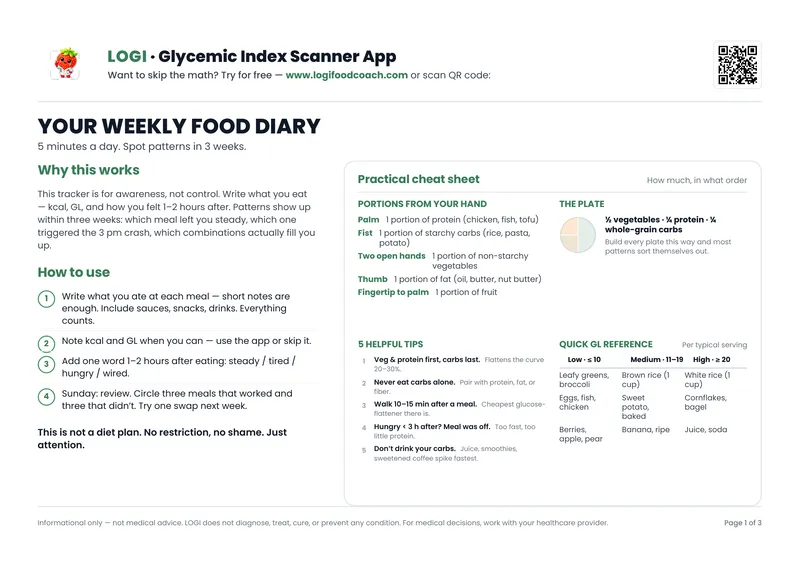
Free PDF — 3 pages
Your Weekly Food Journal
Track meals, glycemic load & mood. Spot patterns in 3 weeks.
No spam. Unsubscribe anytime.