Low-Glycemic Breakfast Foods for Insulin Resistance: 7 Science-Backed Options
If you have insulin resistance or PCOS, what you eat for breakfast matters more than any other meal of the day.
Here’s why: after an overnight fast, your liver is in glucose-output mode. The first meal you eat sets the hormonal tone for the next 4–6 hours. A high-glycemic breakfast — even a “healthy” one like fruit juice and toast — drives a fast glucose spike, a sharp insulin release, and then a crash that leaves you craving more carbs by 10am.
The fix isn’t skipping breakfast. It’s choosing foods with a low glycemic index (GI) and a low glycemic load (GL) — two numbers that tell you not just how fast a food raises blood sugar, but how much total glucose load it delivers per serving.
This article covers 7 breakfasts that are low-GL, satisfying, and specifically beneficial if you’re managing insulin resistance.
What Makes a Breakfast Truly “Low Glycemic”?
Glycemic index alone is misleading. Watermelon has a GI of 72 (high), but a typical serving has very little carbohydrate — so its glycemic load per serving is only 4 (low).
Glycemic load = GI × grams of carbs per serving ÷ 100
For breakfast, aim for a total GL under 10 per meal. This keeps your blood glucose response modest, your insulin response proportionate, and your energy stable until lunch.
Three nutrients slow glucose absorption and lower the effective GL of any meal:
- Protein — triggers satiety hormones, slows gastric emptying
- Fiber — forms a gel in the gut that traps glucose
- Fat — delays absorption of carbohydrates eaten at the same meal
The 7 breakfasts below optimize all three.
1. Greek Yogurt with Berries and Nuts
GL per serving: ~5 | Protein: 20g | Fiber: 3g
Full-fat Greek yogurt has a GI of around 11 — one of the lowest of any food with meaningful protein. It’s rich in casein, a slow-digesting protein that blunts post-meal insulin response. Berries (blueberries, raspberries, strawberries) add antioxidants and fiber with minimal glucose impact. A tablespoon of walnuts or almonds adds fat to further flatten the glucose curve.
Practical build: 150g full-fat Greek yogurt + 80g mixed berries + 15g walnuts. Total GL: approximately 4–6.
Why this is particularly good for IR/PCOS: Greek yogurt’s combination of protein and fermented dairy has been associated with improved insulin sensitivity in observational studies. The probiotics may also influence gut microbiome composition in ways that affect metabolic health.
2. Egg-Based Scramble with Leafy Greens
GL per serving: ~1 | Protein: 18g | Fiber: 2g
Eggs have a GI of zero — they contain no carbohydrates. The entire glucose impact of an egg breakfast comes from what you pair with them. A scramble with spinach, mushrooms, and a small amount of feta is essentially GL-neutral.
Why eggs work for insulin resistance: eggs are rich in leucine (the amino acid most responsible for muscle protein synthesis) and choline (which supports liver fat metabolism — directly relevant if you have fatty liver alongside IR). They also increase levels of satiety hormones GLP-1 and PYY, keeping hunger suppressed until lunch.
Practical build: 2 eggs scrambled with 60g spinach, 50g mushrooms, olive oil. Optional: 20g feta. Total GL: 1–2.
Avoid: adding toast or hash browns to an egg breakfast increases the total GL significantly, even if the eggs themselves are neutral.
3. Steel-Cut Oats with Berries and Cinnamon
GL per serving: ~9 | Protein: 7g | Fiber: 4g
Steel-cut oats and rolled oats have dramatically different glycemic responses despite being the same grain. Steel-cut oats are minimally processed — the grain is simply cut, not rolled or flattened. This structural density means they take longer to digest and produce a much lower blood glucose peak than instant or rolled oats (GI: steel-cut ~42 vs instant ~83).
Adding half a cup of berries and half a teaspoon of cinnamon reduces the effective GL further. Cinnamon has been shown in multiple trials to improve insulin sensitivity and slow gastric emptying.
Practical build: 40g dry steel-cut oats cooked in water or unsweetened almond milk + 60g blueberries + ½ tsp cinnamon. Total GL: approximately 8–10.
Key note: Do not substitute with quick oats or instant oats. They are processed differently and have a much higher glycemic response. Check labels — many “flavored oatmeal” products contain 20–30g added sugar per packet.
4. Chia Seed Pudding
GL per serving: ~3 | Protein: 8g | Fiber: 10g
Chia seeds are exceptional for insulin resistance for one specific reason: they form a thick gel when mixed with liquid. This gel physically slows the movement of glucose from your intestine into your bloodstream, effectively acting as a glucose buffer for everything you eat in the same meal.
Chia seeds have virtually no net carbohydrates (most of their carbs are fiber), a GI close to zero, and 10g of fiber per 2-tablespoon serving. They’re also a source of alpha-linolenic acid (ALA omega-3s), which has anti-inflammatory properties relevant to metabolic syndrome.
Practical build: 40g chia seeds + 250ml unsweetened almond milk, mix and refrigerate overnight. Add 70g mixed berries and a few walnuts in the morning. Total GL: 2–4.
Preparation note: chia pudding must be prepared the night before. 15–20 minutes is not enough; the full gel structure requires 6–8 hours of soaking.
5. Avocado Toast on Sourdough with a Poached Egg
GL per serving: ~8 | Protein: 14g | Fiber: 7g
This only works as a low-glycemic breakfast if you choose the right bread. Standard white bread: GI 75. Pumpernickel rye: GI 41. Authentic sourdough (made with starter, not just vinegar): GI approximately 48–54, because the fermentation process produces lactic acid, which slows starch digestion.
Avocado contributes fiber (7g per 100g) and monounsaturated fat — both of which further flatten the glucose curve. The egg adds protein and satiety.
Practical build: 1 slice sourdough rye or pumpernickel + 80g mashed avocado + 1 poached egg + lemon juice + chili flakes. Total GL: approximately 7–9.
What to watch: toasting bread further lowers its GI slightly (it creates resistant starch). Avoid products labeled “sourdough flavor” — these are regular bread with vinegar added and have the same GI as standard white bread.
6. Overnight Oats with Seeds
GL per serving: ~9 | Protein: 10g | Fiber: 5g
Like chia pudding, overnight oats are prepared in advance. The cold soaking process allows some of the starch to convert to resistant starch — a form that gut bacteria ferment rather than breaking it down to glucose. Resistant starch has been consistently linked to improved insulin sensitivity and lower postprandial blood sugar responses.
The base is rolled oats soaked in unsweetened almond or soy milk. Adding a tablespoon of chia seeds, a tablespoon of hemp seeds, and topping with berries rather than honey or jam keeps the GL in an acceptable range.
Practical build: 40g rolled oats + 200ml unsweetened almond milk + 10g chia seeds + 10g hemp seeds, refrigerate overnight. Top with 80g berries. Total GL: approximately 8–10.
Important distinction: overnight oats soaked in milk (even unsweetened) have a lower GL than the same oats cooked hot. The cold preparation and resistant starch formation make a meaningful difference.
7. High-Protein Green Smoothie
GL per serving: ~6 | Protein: 20g | Fiber: 5g
Most smoothies are blood sugar disasters — banana, orange juice, honey, and oat milk in a blender is essentially liquid candy regardless of the vegetables added. But a well-constructed smoothie can be low-GL, high-protein, and actually satiating.
The key: use leafy greens as the base (not juice), use unsweetened liquid, add protein powder or Greek yogurt, and keep fruit to half a serving maximum.
Practical build: 100g spinach + 200ml unsweetened almond milk + 20g vanilla whey protein powder + 50g frozen berries + 1 tablespoon almond butter. Total GL: approximately 5–7.
What breaks a smoothie: adding banana (GL ~11 per medium banana), fruit juice (GL 15–20), honey (GI 58), sweetened yogurt, or too much fruit in general. Green smoothies that are mostly fruit juice with a token handful of spinach do not qualify as low-glycemic.
Breakfasts to Avoid If You Have Insulin Resistance
These are common “healthy” breakfast choices that produce a high glycemic response:
Granola: typical granola GI 55–70, GL per 50g serving 20–30. Even “low-sugar” versions are often high-GL due to the density of fast carbs from puffed grains and dried fruit.
Commercial fruit yogurt: often contains 15–25g added sugar per serving. The protein in yogurt is offset by the glucose load of the fruit syrup base.
Orange juice or fruit juice of any kind: juice removes the fiber from fruit, leaving pure fructose and glucose in liquid form. GI of OJ: 50. GL per 250ml glass: ~12–15. Blood sugar impact arrives within 15 minutes.
Bagel or large muffin: GL of a plain bagel is ~24–33 depending on size. Corn muffins can reach GL 30. These are among the highest-GL single-food items you can eat.
“Whole grain” cereal: most commercial cereals labeled “whole grain” or “multigrain” have GI values of 65–85. The processing (extrusion, puffing, flaking) destroys the intact grain structure that slows digestion. Check the label for added sugars and total carbohydrates.
Practical Notes on Meal Timing
For insulin resistance, the timing of breakfast also matters:
Eat within 2 hours of waking. Prolonged fasting in the morning elevates cortisol, which drives gluconeogenesis (liver glucose production) and can raise fasting blood sugar. For most people with IR, intermittent fasting that skips breakfast makes insulin resistance worse, not better.
Eat protein first. When protein is eaten before carbohydrates in the same meal, it blunts the subsequent blood sugar peak by triggering GLP-1 release and slowing gastric emptying. In practice: eat your egg or yogurt before the oats or fruit.
Avoid coffee before food. Caffeine elevates cortisol and raises fasting glucose for 2–3 hours post-consumption. If you drink coffee, have breakfast first.
Tracking Your Glycemic Response
Individual blood sugar responses vary. The same oatmeal can produce a 40 mg/dL rise in one person and a 90 mg/dL rise in another, depending on gut microbiome, sleep quality, stress levels, and activity.
The most reliable way to optimize your breakfast for your own physiology is to track it — log what you eat, note your energy and hunger levels 2–3 hours later, and over time identify patterns.
Logi tracks glycemic load per meal, gives you a predicted blood sugar response curve, and lets you compare breakfasts over time. All seven breakfasts above are in Logi’s food database with full GL and nutritional data.
Logi — AI metabolic health assistant. Available on iOS and Android. logifoodcoach.com
Related recipes

Açaí Breakfast Bowl, Low-Glycemic Style
A thick, creamy açaí bowl loaded with healthy fats, protein and fiber — designed to deliver steady energy without the blood sugar roller coaster.

Low-Glycemic Hemp & Chia Overnight Breakfast Bowl
A blood sugar-friendly breakfast that replaces traditional oats with hemp hearts and chia seeds for sustained energy without the glucose spike.

Low-GI Bircher Muesli with Grated Apple and Walnuts
Creamy Swiss-inspired overnight oats with Greek yogurt, grated apple, and walnuts — a no-added-sugar breakfast designed for steady energy. GI 42, GL 18.
Take control of your blood sugar
Scan your meals, track glycemic load, and see your patterns — all in one app.
Start Free Trial →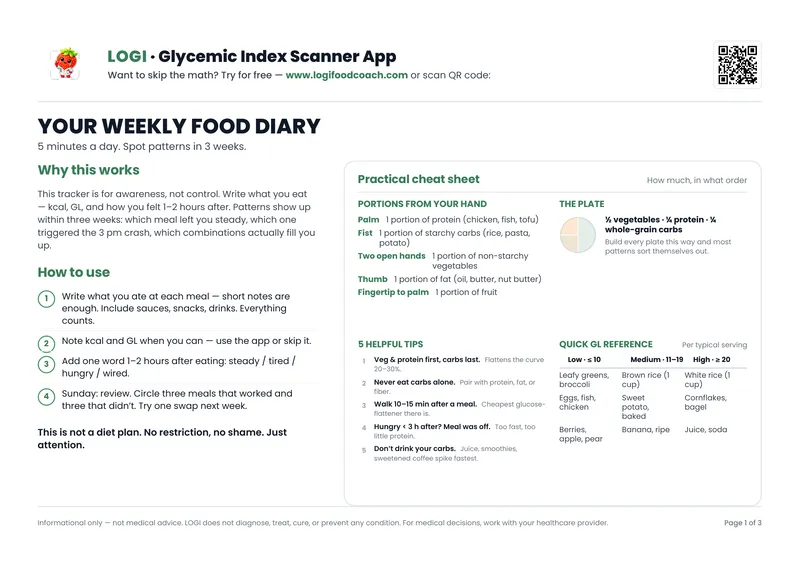
Free PDF — 3 pages
Your Weekly Food Journal
Track meals, glycemic load & mood. Spot patterns in 3 weeks.
No spam. Unsubscribe anytime.