Keto vs Low-GI for Blood Sugar: An Honest Comparison of Two Approaches
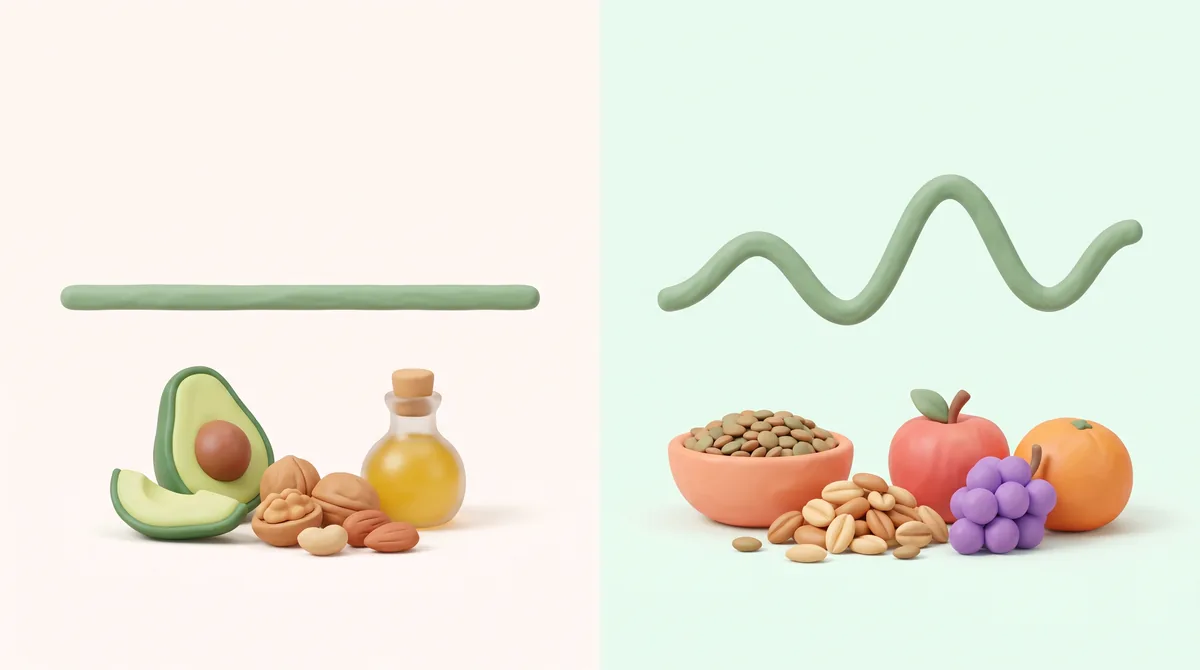
The ketogenic diet and the low-glycemic-index diet are often positioned as competing answers to the same question: how do I keep my blood sugar stable? Both work — the trials are clear on that — and both fail some people, which is also clear. What is less commonly stated is that they solve the same problem through almost opposite mechanisms, and each has honest advantages that the other cannot claim.
This piece walks through what each diet actually does at the level of the glucose curve, where they agree, where they differ, and how to think about which one is likely to fit a specific situation. There is no winner declared at the end because there is not one.
The mechanism — same outcome, opposite routes
The ketogenic diet manages blood sugar by removing most of the input. Carbohydrate intake typically drops to 20-50 grams per day (versus the 200-300 grams of a normal Western diet), which means there is very little glucose entering the bloodstream from food. Fasting glucose falls; postmeal peaks become minimal because most meals contain almost no carbohydrate at all. The body shifts to burning fat and producing ketones for the brain’s energy needs. This is why the diet works — you cannot spike on what you do not eat.
The low-glycemic-index diet takes the opposite approach. Carbohydrate intake stays at a normal level (150-250 grams per day is common), but the form of the carbohydrate changes. Refined starches and sugars are replaced with slower-digesting alternatives: whole grains instead of white flour, legumes instead of potato, whole fruit instead of juice, minimally processed everything. The result is the same glucose intake spread out over a longer, flatter curve rather than concentrated in sharp peaks.
Both approaches lower postprandial glucose peaks, both improve HbA1c over months, and both improve markers of insulin sensitivity. The trials that pit them against each other typically show broadly similar outcomes, with different failure modes.
The framing that helps most people is: keto avoids the glucose event; low-GI reshapes it. Which one is easier depends on you.
What keto actually does over months
The ketogenic diet does more than lower blood sugar. Over weeks to months of consistent adherence, it produces several effects worth knowing about, some helpful and some worth accounting for.
The first weeks bring rapid initial weight loss, mostly water and glycogen loss rather than fat. The scale moves quickly, which is motivating but should not be read as fat loss at that rate.
Fasting glucose typically drops meaningfully, and HbA1c follows over 8-12 weeks. Some people on medication for type 2 diabetes reduce or stop medication under medical supervision — this is one of the reasons keto is taken seriously as a therapeutic intervention, not just a weight loss diet.
Cholesterol changes are variable. Most people see triglycerides drop and HDL rise (both good); LDL can rise, fall, or stay the same depending on the specific fat sources in the diet and individual genetics. A subset of people — the “lean mass hyper-responders” — see LDL rise dramatically. This is real and needs monitoring rather than dismissal.
Energy and mental state improve for many people once they adapt (~2-4 weeks) and stay unpleasant for a smaller group throughout. Adaptation is not universal.
The failure modes are: social difficulty (most restaurants, most meals with family, most travel involve carbohydrate), the “keto flu” (electrolyte imbalance during the first weeks that can be genuinely unpleasant), long-term sustainability (most people who try keto do not sustain it beyond a year), and the risk of a large rebound spike when carbohydrate is reintroduced without careful reintroduction.
What low-GI actually does over months
The low-glycemic-index diet works less dramatically in the short term and often more sustainably in the long term. Fasting glucose improves slowly rather than sharply; HbA1c drops over 3-6 months in most people, less dramatically than on strict keto but from a normal-carbohydrate baseline.
Weight loss is slower and more modest, and does not include the initial water-loss drop. This can feel like less progress in the first month.
Cholesterol changes are usually favorable across the board — triglycerides drop, HDL improves, and LDL usually stays stable or improves.
The main advantage is sustainability. Because the pattern allows a normal range of foods (bread, pasta, rice, fruit, dessert occasionally) with restrictions on the form and portion, most people can maintain it socially and long-term. There is no equivalent of the “keto flu” and no strict reintroduction protocol needed.
The failure modes are less obvious than keto’s but real. Low-GI is genuinely a normal-food diet, which means it requires attention at each meal rather than a single decision at the start. It also has less dramatic short-term feedback, which can be demotivating when the number on the scale moves slowly. And the low-GI label on packaged foods is loosely regulated in most countries — many “low-GI” products are only marginally lower than their standard version.
Where they agree
Cut through the tribalism and there is more agreement than either camp usually admits.
Both diets eliminate or dramatically reduce sugar-sweetened beverages. Sodas, sweetened teas, juices, and specialty coffee drinks are the fastest-glucose category in a typical diet and neither approach tolerates them.
Both diets eliminate or reduce refined starches — white bread, white rice, white pasta, and highly processed cereal products. Keto removes them entirely; low-GI restricts them substantially.
Both diets emphasize non-starchy vegetables and lean protein.
Both diets discourage industrial ultra-processed foods — pre-packaged snacks, fast food, sweetened baked goods.
Both diets, done well, improve insulin sensitivity, reduce postprandial glucose peaks, lower triglycerides, and usually improve HbA1c over months.
If the goal is stable blood sugar and better metabolic health, a lot of the effect comes from not eating the same list of foods, regardless of which approach you name.
Where they honestly differ
The real differences show up in what happens after the common list is off the plate.
Fruit. Keto restricts fruit substantially — only small servings of berries in strict versions, none in the strictest ones. Low-GI includes whole fruit generously — berries, apples, pears, stone fruit, citrus, small portions of tropical fruit. If losing everyday fruit feels like a hardship, low-GI is the friendlier fit.
Legumes. Keto restricts legumes because of their carbohydrate content. Low-GI features them heavily — lentils, chickpeas, beans — because they are among the lowest-glucose starchy foods available. If beans, lentils, and hummus are staples of your kitchen, low-GI keeps them.
Whole grains. Keto excludes them; low-GI includes them in slower-digesting forms — oats, barley, quinoa, whole-grain sourdough, bulgur, farro, brown rice, wild rice. If grain-based meals are part of your food culture, low-GI accommodates that.
Dairy. Keto usually keeps full-fat dairy (cheese, cream, butter, whole yogurt) and restricts milk. Low-GI keeps most dairy at reasonable portion, with a mild preference for yogurt and cheese over sweetened dairy products.
Fat targets. Keto is high-fat by design (60-75% of calories); low-GI is fat-neutral (whatever the meal composition happens to be). This is why the two feel very different at the plate — a keto meal is often a small protein with a large amount of fat and non-starchy vegetable; a low-GI meal is often a normal-sized protein, a large vegetable portion, and a moderate portion of a slower-digesting starch.
Alcohol. Both allow occasional alcohol, with keto specifically restricting sugary drinks and beer while permitting spirits and dry wine, and low-GI allowing all forms in moderation.
Social flexibility. Low-GI is easier to eat at restaurants, at family gatherings, on travel, and at social events without special-ordering. Keto often requires special orders and often means eating differently from everyone else at the table.
Which fits which situation
The honest answer to “which is better” is: the one you will actually maintain, applied consistently, for months to years.
Keto tends to fit better when:
- Blood sugar is severely and consistently high and the goal is rapid, medically-monitored reduction (often under a doctor’s supervision, especially if adjusting medication).
- A person genuinely does not enjoy or crave carbohydrate-heavy foods and finds it easier to remove them entirely than to eat smaller portions.
- Short-term weight loss is a primary goal and the person is prepared for the plateau and slow-down after the initial water-weight drop.
- The person cooks most of their own meals and has social flexibility to eat differently at gatherings.
Low-GI tends to fit better when:
- Blood sugar is elevated but not severe and the person wants long-term management rather than intervention.
- Fruit, whole grains, and legumes are foods the person actively enjoys and does not want to give up.
- Sustainability over years is the priority and short-term dramatic feedback is not needed.
- Eating at restaurants, with family, or in cultural food traditions is a regular part of life.
- The person is not sure they will be able to maintain a strict diet and wants a middle path that still moves the numbers.
Both approaches fail people who cannot maintain them. The pattern in the trials is consistent: adherent groups on either diet do well; non-adherent groups on either diet do not. The most useful question is not which is theoretically superior but which is more likely to be followed at week 30.
The practical shortlist
If you are choosing between the two:
- Try low-GI first if you have not tried either — it is the smaller lifestyle change, and it gets most of the metabolic benefit for most people.
- Try keto if low-GI has not moved your numbers enough, or if you have severe insulin resistance and a doctor who can supervise medication adjustments.
- Consider a hybrid — a low-carbohydrate but not ketogenic pattern (100-150g/day, whole-food, low-GI carbohydrates) captures much of keto’s blood-sugar benefit with more social flexibility. This is roughly what the Mediterranean diet does by default.
- Whichever you choose, judge it at month three, not week one. Both approaches feel different early; the useful signal is what your HbA1c and fasting glucose look like after 12-16 weeks of consistent adherence.
The single most useful move for most people who are undecided is to start with the changes both approaches agree on: cut sugar-sweetened beverages, cut refined starches, add vegetables and lean protein to every meal. That alone captures most of the effect for most people. The choice between keto and low-GI becomes meaningful mainly after those common changes are in place.
The bigger picture
The keto-versus-low-GI framing is a real question, but the tribalism around it is not particularly useful. Both diets converge on the same physiological outcome (stable blood sugar, improved insulin sensitivity, lower HbA1c) through different mechanisms, and each has failure modes the other does not have.
The failure of a diet is almost never that it did not work when followed. The failure is almost always that it was not followed. That reframes the choice: not “which is the better diet” but “which am I more likely to actually eat every day for a year”. Answered that way, low-GI wins for most people most of the time, and keto wins for a smaller group of people who genuinely prefer the pattern or need its more aggressive glucose control.
The durable move is to pick one, apply it consistently for three months, judge it on the numbers rather than the scale, and switch or adjust if the numbers say to. Both diets do what they claim to do; the choice between them is a fit-to-life question, not a research question.
If you want to see how a specific meal fits either pattern — the carbohydrate load, the glycemic index of the meal as plated, and the likely glucose curve — Logi can scan a photo, a menu, or a recipe and estimate the glycemic load in seconds, which makes calibrating a new dietary pattern much less guesswork.
This article is educational. It is not medical advice. Individual responses to any food vary widely; if you have diabetes, insulin resistance, or another metabolic condition, discuss dietary choices with your doctor or a registered dietitian before making major dietary changes, especially if you are on medication.
Related recipes

Mediterranean Green Bean Salad with Toasted Almonds and Feta
A vibrant low-glycemic salad featuring crisp-tender green beans, crunchy almonds, and tangy feta in a bright lemon dressing—perfect for stable blood sugar.

Mediterranean Rainbow Tuna Salad with Mustard Dressing
A vibrant, protein-packed salad featuring colorful vegetables and lean tuna, dressed with tangy mustard vinaigrette—perfect for stable blood sugar levels.

Mediterranean Roasted Cauliflower Bowl with Tahini Drizzle
A vibrant low-glycemic salad featuring roasted cauliflower and chickpeas with creamy tahini dressing—perfect for stable blood sugar and lasting energy.
Take control of your blood sugar
Scan your meals, track glycemic load, and see your patterns — all in one app.
Start Free Trial →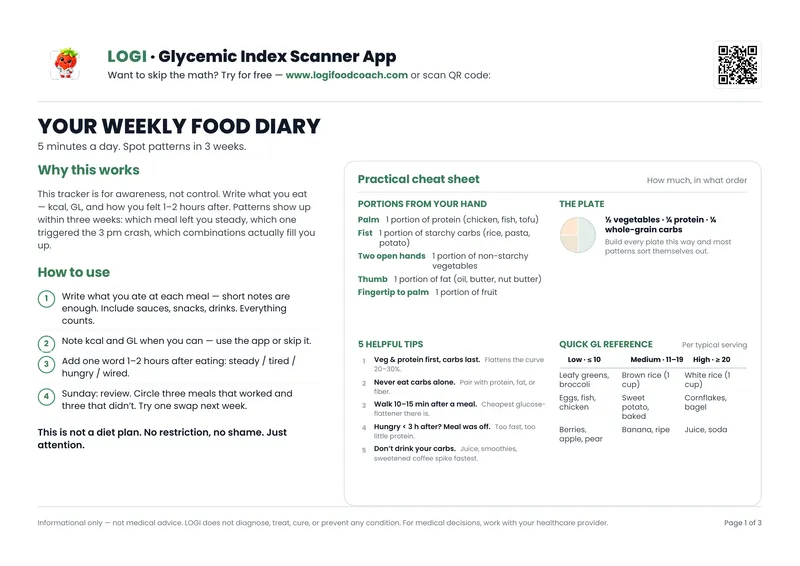
Free PDF — 3 pages
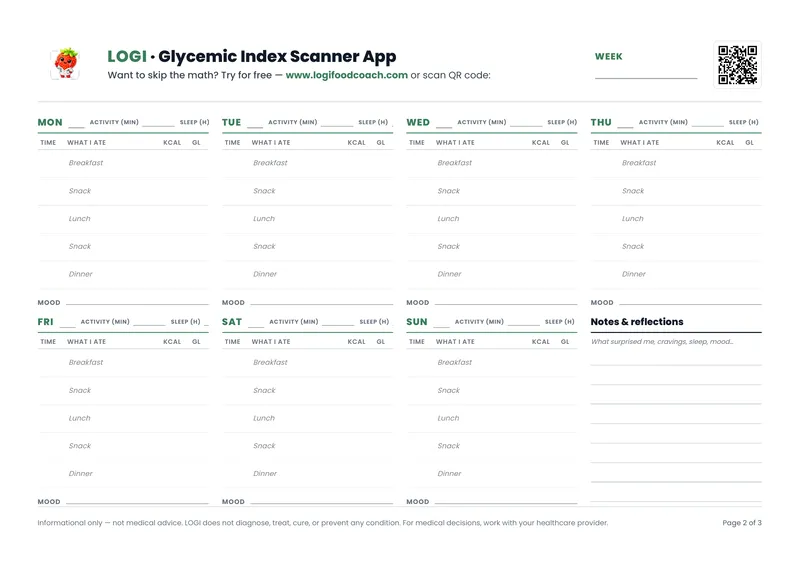
Your Weekly Food Journal
Track meals, glycemic load & mood. Spot patterns in 3 weeks.
No spam. Unsubscribe anytime.