Insulin Resistance Diet: What to Eat and What to Avoid in 2026
Insulin resistance affects how your body processes glucose — and what you eat is the single biggest lever you have to manage it. But most dietary advice is vague: “eat healthy,” “avoid sugar,” “choose whole grains.” That’s not enough when you’re trying to make real decisions at the grocery store or in a restaurant.
This guide is specific. It covers what to eat, what to avoid, and why — based on glycemic load, not just glycemic index. Because a food’s GI number means nothing without portion context.
Why Glycemic Load Matters More Than Glycemic Index
Glycemic index (GI) ranks foods from 0 to 100 based on how quickly they raise blood sugar. But it doesn’t account for how much you actually eat.
Watermelon has a GI of around 76 — technically “high.” But a typical serving contains only about 11g of available carbs, giving it a glycemic load (GL) of about 5 — which is low.
White rice has a GI of around 73 and a GL of roughly 20–24 for a standard 150g cooked serving — a significantly different metabolic impact.
Glycemic load = (GI × grams of carbs per serving) / 100. A GL of 10 or under is low. Between 11–19 is medium. 20 and above is high. When managing insulin resistance, GL is the number that matters for your actual blood sugar response.
Foods That Help: What to Build Your Meals Around
Non-Starchy Vegetables (GL: 1–3)
The foundation of an insulin-friendly diet. Eat freely:
- Leafy greens (spinach, kale, arugula, Swiss chard)
- Cruciferous vegetables (broccoli, cauliflower, Brussels sprouts, cabbage)
- Zucchini, bell peppers, mushrooms, asparagus, green beans
- Tomatoes, cucumbers, celery, radishes
These have minimal impact on blood sugar and are rich in fiber, which slows glucose absorption.
Healthy Fats (GL: 0)
Fats don’t raise blood sugar directly and help slow the glycemic response of a whole meal:
- Avocado
- Extra virgin olive oil
- Nuts (almonds, walnuts, macadamia — about 30g/serving)
- Seeds (chia, flax, pumpkin, hemp)
- Fatty fish (salmon, sardines, mackerel — also provide omega-3s, which have anti-inflammatory properties that may support insulin sensitivity)
Protein Sources (GL: 0–2)
Protein stabilizes blood sugar and increases satiety:
- Eggs
- Chicken, turkey
- Fish and seafood
- Legumes (lentils GL ~5, chickpeas GL ~6 — low to moderate but high in fiber)
- Greek yogurt (unsweetened, plain)
- Tofu and tempeh
Low-GL Whole Grains and Starches
Not all grains are equal. These have lower glycemic loads:
- Steel-cut oats (GL ~9 per 40g dry) — avoid instant oats (GL ~17+)
- Quinoa (GL ~13 for a moderate cooked serving)
- Barley (GL ~11)
- Sweet potato, boiled (GL ~11 for 150g) — boiled sweet potato has a lower GL than baked; white potato cooked the same way has a GL of ~17
- Basmati rice (GL ~14) — lower than jasmine rice (GL ~22+)
Fruits (Choose Wisely)
- Berries: strawberries, blueberries, raspberries (GL 3–6) — best choice
- Cherries (GL ~6)
- Apple with skin (GL ~6)
- Grapefruit (GL ~3)
- Pear (GL ~4)
Eat fruit whole, not juiced. The fiber in whole fruit slows sugar absorption significantly.
Foods That Hurt: What to Minimize or Avoid
High-GL Staples
These cause rapid blood sugar spikes:
- White bread (GL ~10 per slice — but portion sizes in practice are typically much larger)
- White rice, jasmine rice (GL ~20–26+ per serving depending on variety and portion)
- Regular pasta in large portions (GL ~20+ for 180g cooked)
- Potatoes, especially mashed or baked (GL ~20–26 depending on cooking method)
- Cornflakes and most puffed breakfast cereals (GL ~20 per serving)
- Instant oatmeal with added sugar (GL ~17+)
Sugar and Sweetened Foods
- Soft drinks (a 500ml cola contains approximately 53g of sugar — a very high glycemic load)
- Fruit juices (even “100% juice” — orange juice GL ~12–15 per 250ml glass, with virtually no fiber)
- Candy, cookies, cakes, pastries
- Sweetened yogurt (can have 20g+ sugar per serving)
- Honey, maple syrup, agave (still sugar, despite marketing)
Processed Foods
Many processed foods combine refined carbs with fats — a problematic combination for insulin resistance:
- Chips, crackers, pretzels
- Fast food (burgers, fries, pizza from chains)
- Processed meats with added sugars (some sausages, BBQ-glazed items)
- Granola bars and “energy” bars (often 15–25g sugar)
“Health” Foods That Aren’t Helpful
Marketing creates confusion. These are commonly perceived as healthy but are problematic for insulin resistance:
- Smoothie bowls (often 50–70g sugar from fruit + toppings)
- Acai bowls (same issue)
- Dried fruit in large quantities (dates and raisins have concentrated sugar; while their GI per standard serving is moderate, it is easy to overconsume them — 30g of raisins delivers ~20g of carbohydrates with a GL of ~13)
- Rice cakes (GI of 82–85 — very high, and low in protein or fiber to slow digestion; pair only with protein and fat)
- Gluten-free bread (studies show the majority of commercial gluten-free breads have a high GI due to reliance on refined rice flour and tapioca starch — often comparable to or worse than white bread)
- “Sugar-free” products with maltodextrin or dextrose (still spike blood sugar)
How to Structure Your Meals
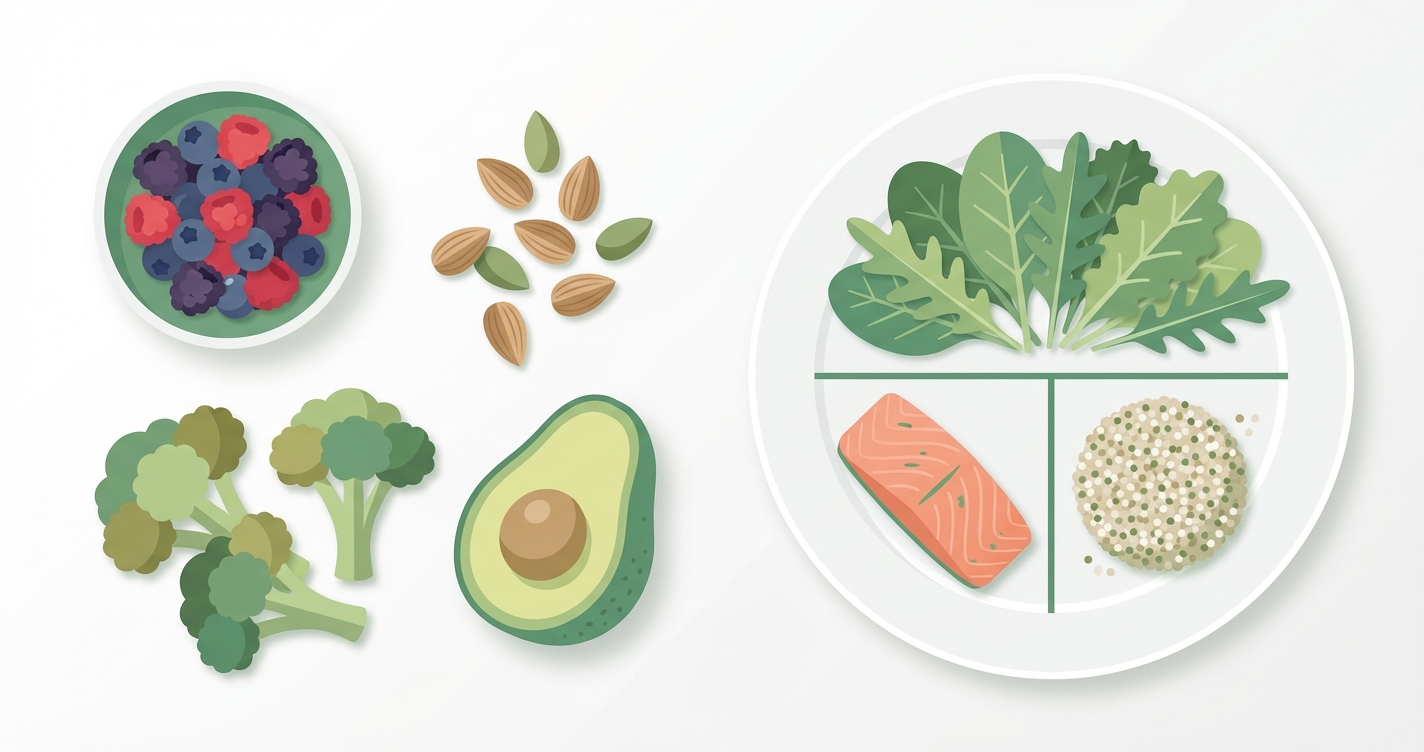
The Plate Method for Insulin Resistance
A practical framework for every meal:
- Half your plate: Non-starchy vegetables
- Quarter plate: Protein
- Quarter plate: Low-GL carbs (sweet potato, quinoa, legumes)
- Add: A thumb-sized portion of healthy fat (olive oil, avocado, nuts)
Meal Order Matters
Research published in Diabetes Care (Weill Cornell Medicine, 2015) showed that eating vegetables and protein before carbohydrates in the same meal reduced post-meal glucose by approximately 29–37% at the 30- and 60-minute marks in patients with type 2 diabetes. Follow-up studies in people with prediabetes have confirmed similar effects. This works because fiber and protein slow gastric emptying, so carbs hit the bloodstream more gradually.
Practical application: Start with your salad or vegetables, eat your protein, then finish with your starch.
Timing and Frequency
- Avoid eating carb-heavy meals late at night — insulin sensitivity follows a circadian pattern and is measurably lower in the evening
- Don’t skip meals — long fasting periods followed by large meals cause bigger spikes
- If you snack, combine protein or fat with any carb (apple + almond butter, not apple alone)
Tracking What Actually Works for You
General guidelines are starting points, but individual glycemic responses vary substantially between people. Factors include gut microbiome composition, sleep quality, stress levels, and physical activity. Research confirms that two people eating identical meals can show meaningfully different blood sugar responses.
This is where tracking becomes valuable. Recording what you eat and monitoring how your body responds — through symptoms, energy levels, or glucose measurements — helps you identify your personal trigger foods and safe choices.
Apps like Logi can predict the glycemic load of your meals from a photo, showing you the estimated blood sugar impact before you eat. This turns meal planning from guesswork into data-driven decisions — which is especially useful when you’re still learning which foods work for your body.
A Sample Day
Breakfast: Greek yogurt (unsweetened) with a handful of berries, 1 tbsp chia seeds, and a few walnuts. GL: ~6.
Lunch: Large mixed green salad with grilled chicken, avocado, cherry tomatoes, olive oil and lemon dressing. Side of lentil soup. GL: ~9.
Snack: Apple slices with 2 tbsp almond butter. GL: ~5.
Dinner: Baked salmon with roasted broccoli and cauliflower, small portion of quinoa (80g cooked). GL: ~8.
Total estimated GL for the day: ~28 — well within the recommended range for insulin resistance management (target: under 80 daily GL).
The Bottom Line
Managing insulin resistance through diet isn’t about deprivation. It’s about understanding which foods cause rapid blood sugar spikes and replacing them with alternatives that provide the same satisfaction with lower glycemic impact.
The shift from white rice to cauliflower rice. From orange juice to whole oranges. From a granola bar to a handful of almonds. These substitutions compound over time.
Start with one meal. Track how you feel after eating. Adjust based on data, not trends. That’s the approach that actually works.
This article is for informational purposes only and does not constitute medical advice. Consult your healthcare provider before making significant dietary changes, especially if you take medication for diabetes or insulin resistance.
Take control of your blood sugar
Scan your meals, track glycemic load, and see your patterns — all in one app.
Start Free Trial →