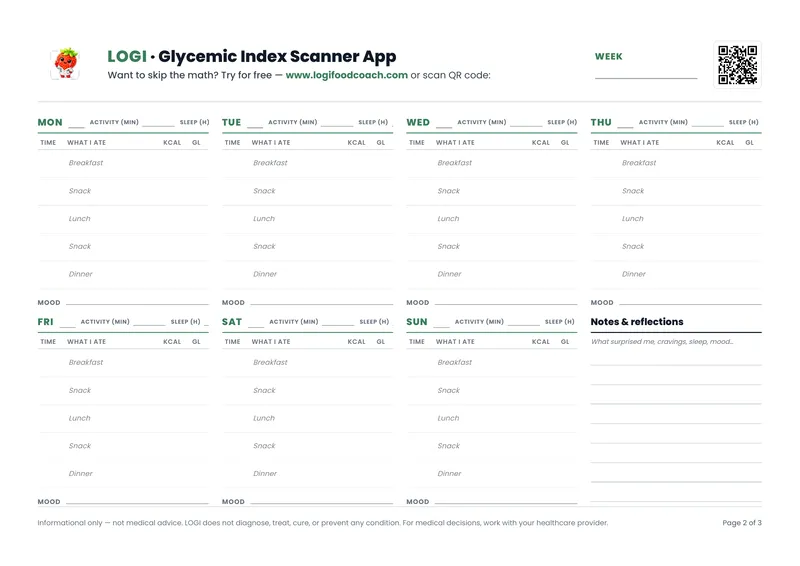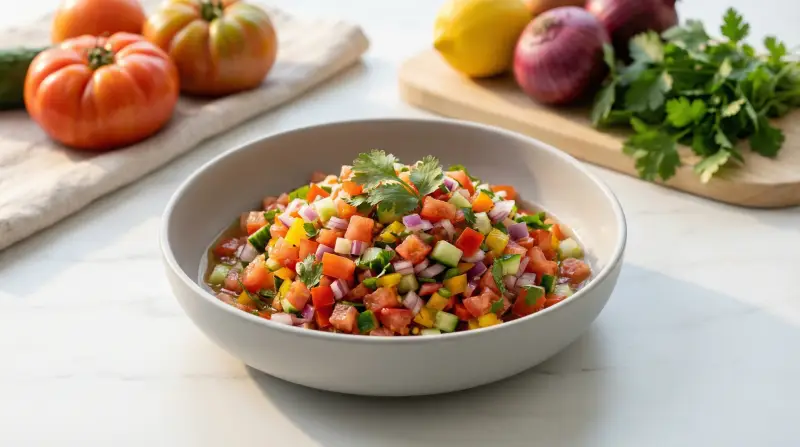
Afrikanischer Kachumbari-Salat mit niedrigem glykämischen Index
Ein farbenfroher ostafrikanischer Tomaten-Gurken-Salat mit minimaler Auswirkung auf den Blutzucker. Frisches Gemüse, spritzige Zitrone und aromatischer Koriander ergeben eine perfekte Beilage mit niedrigem GI.
Dieser erfrischende Kachumbari-Salat ist ein wahres Kraftpaket für die Blutzuckerkontrolle und besteht ausschließlich aus Zutaten mit niedrigem glykämischen Index, die deinen Glukosespiegel nicht in die Höhe treiben. Dieses farbenfrohe Gericht stammt aus der ostafrikanischen Küche mit indischen Einflüssen und kombiniert frische Tomaten, knackige Gurken und knusprige Paprika – alles Gemüsesorten mit einem glykämischen Index unter 15.
Was diesen Salat für die Blutzuckerkontrolle so besonders macht, ist sein hoher Ballaststoffgehalt und Wasseranteil. Das rohe Gemüse liefert lösliche Ballaststoffe, die die Glukoseaufnahme verlangsamen, während der Zitronensaft Säure hinzufügt, die die Blutzuckerreaktion zusätzlich moderiert. Rote Zwiebeln enthalten Quercetin, ein Flavonoid, das die Insulinempfindlichkeit regulieren kann. Der Koriander verbessert nicht nur den Geschmack, sondern liefert auch Antioxidantien, die die Stoffwechselgesundheit unterstützen.
Serviere diesen Salat als Vorspeise vor der Hauptmahlzeit, um den "Food-Sequencing-Effekt" zu nutzen – wenn du zuerst Gemüse isst, können die Blutzuckerspitzen nach dem Essen um bis zu 73 % reduziert werden. Er passt hervorragend zu gegrillten Proteinen oder Gerichten auf Hülsenfruchtbasis und ergibt so eine vollständige Mahlzeit mit niedrigem GI. Der Cayennepfeffer gibt einen stoffwechselanregenden Kick, während die frischen Zutaten maximale Nährstofferhaltung gewährleisten. Dies ist ein ideales Rezept für alle, die Diabetes oder Prädiabetes managen oder einfach den ganzen Tag über stabile Energie suchen.
Blutzucker-Auswirkung
Minimale Auswirkung auf den Blutzucker zu erwarten aufgrund der sehr niedrigen glykämischen Last von 3,5 und des niedrigen GI von 32. Dieser frische Gemüsesalat sollte stabile Energie liefern, ohne signifikante Glukosespitzen zu verursachen, was ihn ideal für die Blutzuckerkontrolle macht.
Blutzucker-Tipps
- ✓ Kombiniere diesen Salat mit einer Proteinquelle wie gegrilltem Hähnchen, Fisch oder Hülsenfrüchten, um die Verdauung weiter zu verlangsamen und die Sättigung zu erhöhen
- ✓ Iss dies als Vorspeise vor kohlenhydratreicheren Speisen, um die Ballaststoffe und den Wassergehalt für eine bessere Blutzuckerkontrolle zu nutzen
- ✓ Füge gesunde Fette wie Avocado oder Olivenöl hinzu, um die Nährstoffaufnahme zu verlangsamen und das Sättigungsgefühl zu verlängern
🥗 Zutaten
- 3 pcs mittelgroße reife Tomaten, gewürfelt
- 0.5 pcs mittelgroße rote Zwiebel, fein gewürfelt
- 0.5 pcs mittelgroße Gurke, gewürfelt
- 0.5 pcs mittelgroße gelbe Paprika, gewürfelt
- 30 ml frischer Zitronensaft
- 1 tsp Meersalz
- 0.25 tsp Cayennepfeffer
- 60 ml frische Korianderblätter, gehackt
- 3 pcs mittelgroße reife Tomaten, gewürfelt
- 0.5 pcs mittelgroße rote Zwiebel, fein gewürfelt
- 0.5 pcs mittelgroße Gurke, gewürfelt
- 0.5 pcs mittelgroße gelbe Paprika, gewürfelt
- 2 tbsp frischer Zitronensaft
- 1 tsp Meersalz
- 0.25 tsp Cayennepfeffer
- 4 tbsp frische Korianderblätter, gehackt
👨🍳 Anleitung
- 1
Bereite deinen Arbeitsplatz vor, indem du alle Gemüsesorten gründlich unter kaltem fließendem Wasser wäschst. Tupfe die Tomaten, Gurke und Paprika mit einem sauberen Küchentuch trocken. So bleibt dein Salat knackig und du entfernst eventuelle Verunreinigungen von der Oberfläche.
- 2
Schneide die rote Zwiebel in kleine, gleichmäßige Würfel von etwa 0,5 cm Größe. Gib die gehackte Zwiebel in eine Schüssel mit kaltem Wasser und lass sie 10-15 Minuten einweichen. Dieser Schritt entfernt die scharfen Schwefelverbindungen, die deinen Gaumen reizen können, während die wertvollen Quercetin-Verbindungen und die knackige Textur der Zwiebel erhalten bleiben.
- 3
Während die Zwiebeln einweichen, schneide die Tomaten in etwa 1 cm große Würfel und entferne die Stielansätze. Schneide die Gurke in ähnlich große Stücke und lass die Schale für zusätzliche Ballaststoffe dran. Entferne die Kerne und die weißen Häutchen aus der Paprika und schneide sie dann in kleine Stücke, die zu den anderen Gemüsesorten passen.
- 4
Zupfe die Korianderblätter von den Stielen und hacke sie grob. Die Stiele kannst du kompostieren oder für Brühe aufheben, aber die zarten Blätter liefern den besten Geschmack und die meisten Nährstoffe für diesen Salat.
- 5
Gieß die eingeweichten Zwiebeln gründlich ab und tupfe sie trocken. Gib die gewürfelten Tomaten, abgetropften Zwiebeln, Gurke und Paprika in eine große Schüssel. Vermische alles vorsichtig, damit sich das Gemüse gleichmäßig verteilt, ohne dass die Tomaten zerdrückt werden.
- 6
Füge das Meersalz und den Cayennepfeffer zur Gemüsemischung hinzu. Vermische wieder alles, damit die Gewürze alle Zutaten umhüllen. Das Salz beginnt, den natürlichen Saft aus den Tomaten zu ziehen und bildet so ein leichtes Dressing.
- 7
Presse den frischen Zitronensaft über den Salat und gib den gehackten Koriander dazu. Vermische alles ein letztes Mal. Der Zitronensaft sorgt nicht nur für frische Aromen, sondern hilft auch, das Gemüse zu konservieren und senkt die glykämische Reaktion deiner Mahlzeit insgesamt. Serviere den Salat am besten sofort für die beste Konsistenz oder stelle ihn bis zu 2 Stunden in den Kühlschrank. Für eine optimale Blutzuckerkontrolle iss diesen Salat vor deinen Protein- und Getreideanteilen.
📊 Nährwerte pro Portion
| Pro Portion | Gesamtes Gericht | |
|---|---|---|
| Kalorien | 79 | 157 |
| Kohlenhydrate | 18g | 35g |
| Zucker | 10g | 19g |
| Natürlicher Zucker | 10g | 19g |
| Protein | 4g | 7g |
| Fett | 1g | 2g |
| Gesättigtes Fett | 0g | 0g |
| Ungesättigtes Fett | 1g | 1g |
| Ballaststoffe | 5g | 10g |
| Lösliche Ballaststoffe | 1g | 2g |
| Unlösliche Ballaststoffe | 2g | 5g |
| Natrium | 1189mg | 2379mg |
Vorhergesagte Glukosereaktion
Was wäre, wenn du...
Geschätztes Modell — individuelle Reaktionen variieren. Keine medizinische Beratung.
🔄 Niedrigere GI-Alternativen
Kirschtomaten haben einen etwas niedrigeren glykämischen Index als normale Tomaten, da sie ein höheres Verhältnis von Schale zu Fruchtfleisch und konzentrierte Nährstoffe aufweisen. Grüne Tomaten enthalten weniger natürlichen Zucker und haben eine geringere glykämische Wirkung als reife rote Tomaten.
Frühlingszwiebeln und Schnittlauch enthalten nur minimal Kohlenhydrate und haben praktisch keine Auswirkung auf den Blutzucker im Vergleich zu normalen Zwiebeln. Schalotten enthalten pro Portion etwas weniger Zucker und liefern einen ähnlichen Geschmack bei niedrigerer glykämischer Last.
Grüne Paprika haben einen niedrigeren Zuckergehalt als rote oder gelbe Sorten, was zu einer niedrigeren glykämischen Last führt. Radieschen und Staudensellerie enthalten extrem wenig Kohlenhydrate mit vernachlässigbarer Auswirkung auf den Blutzucker und sorgen gleichzeitig für einen angenehmen Biss.
Limettensaft hat einen etwas niedrigeren glykämischen Index als Zitronensaft und enthält Stoffe, die helfen können, die Blutzuckerreaktion zu regulieren. Apfelessig verbessert nachweislich die Insulinempfindlichkeit und reduziert Blutzuckerspitzen nach dem Essen.
Koriander ist bereits hervorragend, aber Petersilie, Rucola und Brunnenkresse haben keinen glykämischen Einfluss und enthalten Verbindungen, die einen gesunden Blutzuckerstoffwechsel unterstützen können. Rucola und Brunnenkresse bringen eine pfeffrige Note mit zusätzlichen blutzuckerunterstützenden Pflanzenstoffen.
🔬 Die Wissenschaft hinter diesem Rezept
Warum dieser Salat deinen Blutzucker stabil hält
Dieser lebendige afrikanische Kachumbari-Salat ist ein Champion für den Blutzucker, mit einer beeindruckend niedrigen glykämischen Last von nur 3,5 und einem GI von 32. Das Geheimnis liegt in seiner Zusammensetzung: Er besteht fast vollständig aus nicht-stärkehaltigem Gemüse, das nur minimale Kohlenhydrate enthält. Tomaten, Gurken und Paprika sind voller Wasser und Ballaststoffe, liefern aber sehr wenig Glukose an deinen Blutkreislauf. Das bedeutet, dass deine Bauchspeicheldrüse nicht viel Insulin freisetzen muss, wodurch dein Blutzucker bemerkenswert stabil bleibt. Die kleine Menge natürlicher Zucker in diesem Gemüse wird langsam freigesetzt, dank des Ballaststoffgehalts, der wie ein Retardmechanismus wirkt und plötzliche Spitzen verhindert.
Die Ballaststoffe in diesem Salat erfüllen eine doppelte Aufgabe für deine Stoffwechselgesundheit. Erstens verlangsamen sie die Verdauung in Magen und Dünndarm und erzeugen ein allmähliches Rinnsal von Glukose statt einer Flut. Zweitens ernähren sie nützliche Darmbakterien, die Verbindungen produzieren, die helfen, die Insulinreaktion deines Körpers zu regulieren. Das rohe Gemüse erfordert auch mehr Kau- und Verdauungszeit, was auf natürliche Weise das Tempo bestimmt, mit dem Nährstoffe in deinen Blutkreislauf gelangen. Der Zitronensaft fügt Säure hinzu, die laut Forschung die Kohlenhydrataufnahme weiter verlangsamen kann – eine einfache, aber effektive Strategie.
Für maximale Blutzuckervorteile genieße diesen Salat zu Beginn deiner Mahlzeit. Wenn du zuerst Gemüse isst, entsteht eine schützende Ballaststoffbarriere in deinem Verdauungstrakt, bevor andere Lebensmittel ankommen. Wenn du ihn mit kohlenhydratreicheren Gerichten wie Ugali oder Reis kombinierst, hilft dieser Salat, deren glykämische Wirkung abzumildern. Du kannst seine Sättigungskraft auch steigern, indem du proteinreiche Zutaten wie gegrilltes Hähnchen, Kichererbsen oder Avocado hinzufügst, die durch anhaltende Energiefreisetzung zusätzliche Blutzuckerstabilität bieten.
Ähnliche Rezepte
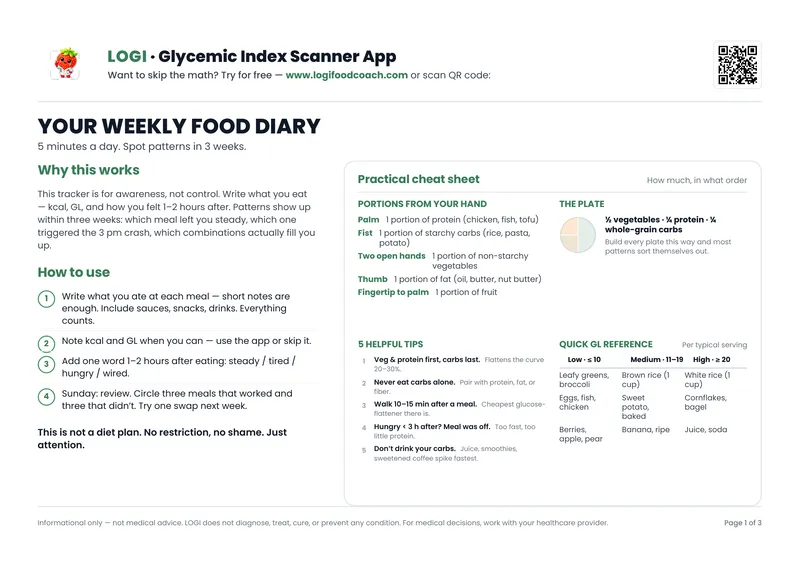
Kostenloses PDF — 3 Seiten
Dein Wochen-Ernährungstagebuch
Mahlzeiten, glykämische Last & Stimmung erfassen. Muster in 3 Wochen erkennen.
Kein Spam. Jederzeit abmeldbar.