Alcohol and Blood Sugar — Why the Same Drink Can Push Your Glucose Two Different Ways
Alcohol and Blood Sugar — Why the Same Drink Can Push Your Glucose Two Different Ways
Alcohol is one of the strangest entries in the blood sugar conversation. It behaves nothing like other foods, and it behaves nothing like other drinks. A glass of wine can lower your fasting glucose overnight and still leave you groggy in a way that reads like a blood sugar problem in the morning. A can of beer can spike you the way a slice of bread would, but the second beer might not spike you at all. A vodka soda has zero carbohydrates and can still get you into a low-glucose event several hours later.
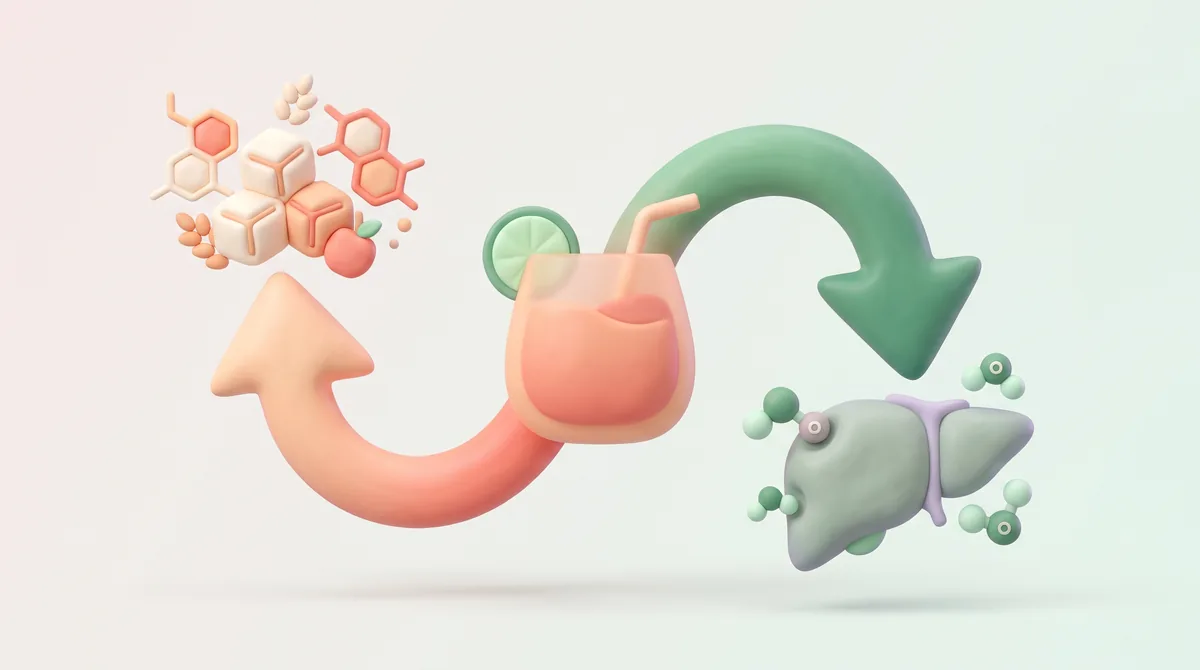
The confusion clears up once you separate two different mechanisms working in opposite directions. The sugar in the drink pushes glucose up, the way any other carb would. The alcohol itself pushes glucose down, by temporarily switching off the liver’s ability to release stored sugar. Depending on the drink, one of these dominates — or, more often, they take turns across the hours after you drink. This piece walks through wine, beer, cocktails, and straight spirits, what each one does to blood sugar, and how to keep alcohol in your life without wrecking your curve or landing in a hypo.
The mechanism — two opposing effects that don’t cancel
To understand any alcoholic drink, you have to hold two things at once.
First, whatever carbohydrate is in the drink acts like any other carbohydrate. A beer contains the residual carbs from the grain (usually 10–15 grams per standard beer). A sweet cocktail contains added sugar from syrups and juice mixers. A dessert wine contains the residual grape sugar. These carbs raise blood sugar on their normal schedule — fast if the drink is sweet, slower if it’s a fuller beer with more body.
Second, ethanol itself does something no ordinary food does: it interferes with the liver. Your liver is the body’s glucose backup generator; between meals, it releases stored glucose to keep your blood sugar in a safe range. Ethanol takes priority in the liver’s queue — it is metabolized as a mild toxin — and while the liver is dealing with it, gluconeogenesis (making new glucose) is suppressed. In practice this means that for several hours after drinking, especially if you are drinking on an empty stomach or drinking a lot, the liver stops topping up your blood sugar.
The consequence: alcohol tends to lower your baseline glucose over the next several hours, sometimes dramatically. Fasting glucose the morning after a moderate evening of wine is often noticeably lower than usual, not higher. This is not a healthy signal — it just reflects a temporarily disabled liver. In people taking insulin or certain diabetes medications, this effect is dangerous: it can produce hypoglycemia overnight or hours into the next day, when the meal that “went with” the drink has long since been digested.
Third, chronic heavy drinking damages the liver over time, and a damaged liver handles glucose worse in every direction. That is a separate, slower story from the acute effect of any single drink.
The short version: sweet drinks push glucose up now; alcohol itself pushes glucose down a few hours later. What you see on a monitor depends on which is winning at which minute.
Beer — carbs first, alcohol effect later
A standard beer contains roughly 10–15 grams of carbohydrate from residual maltose and dextrins, sometimes more for heavy craft styles and sweeter lagers, less for “light” or low-carb brews. The alcohol content adds nothing to the immediate glucose curve.
What you typically see after one beer is a modest rise, similar to a small piece of bread, over 30–60 minutes. It’s not a large spike, but it is a real one. The second and third beer stack on top: three beers is roughly the carb load of a bagel, and the curve reflects that.
The alcohol effect then kicks in over the following hours. If you had beer with a full dinner, the food is doing most of the work of keeping blood sugar stable and the alcohol effect is mostly invisible. If you had beer instead of dinner, the liver quietly stops releasing stored glucose, and by two or three in the morning you can be sitting at a low fasting number — and if you take glucose-lowering medication, this is where risk lives.
Practical read: one or two beers with a real meal is glycemically a modest carbohydrate event and nothing more. Multiple beers on an empty stomach load carbs first and set up a low several hours later. Light beers (3–6 g carb) shift the balance toward the alcohol side of the equation; higher-carb craft styles (20–30 g) shift it toward the carb side.
Wine — the drink where the alcohol effect usually wins
Dry wine — red, white, or rosé — contains almost no residual sugar. A standard glass carries only 1–3 grams of carbohydrate. So the immediate glucose response to a glass of dry wine is negligible.
What you get is mostly the alcohol effect. A glass or two of dry wine with dinner tends to flatten the post-meal curve slightly (the food side is normal; the liver contribution goes quiet), and fasting glucose the next morning is often mildly lower than usual. Two full-body reds during a long dinner can leave you at 80–85 mg/dL in the morning when your usual baseline is 95.
Sweet wines — dessert wines, off-dry Rieslings, port, sherry — are a different category. They can carry 15–20 grams of sugar per small glass, and they behave like a small sugary drink first, with the alcohol effect layered on afterward.
The oft-repeated “red wine is good for blood sugar” story is real but small. Some of it is the resveratrol and polyphenol content (interesting, but the effect size is modest). Most of it is that a glass of dry wine adds almost no carbs and shifts a bit of the meal’s post-prandial energy handling toward the liver. It is not a treatment; it is a small nudge, and it comes with the same alcohol-lowers-glucose-later story every other drink has.
Practical read: one glass of dry wine with dinner is close to a glycemic non-event and often gently helpful for the immediate curve. Two or three shift you into the alcohol-effect zone for the overnight hours. Sweet wines are a small dessert with alcohol attached.
Spirits — no carbs at all, most alcohol effect
Straight vodka, gin, whiskey, tequila, rum, and other distilled spirits contain no carbohydrate. A shot of any of them contributes zero to the immediate glucose response.
What you get is pure alcohol effect. A shot or two with dinner is glycemically invisible in the short term. A shot or two on an empty stomach starts the liver-suppression clock immediately, and the low-glucose window opens over the next few hours.
The trouble almost always comes from the mixer, not the spirit. Vodka in soda water is close to zero carbohydrate. Vodka in cranberry juice is a small sugary drink. A rum and coke is a full soda plus alcohol; the coke does exactly what a coke does, and the alcohol then extends the tail. Whiskey neat is zero carbs; whiskey with a sweet mixer is a dessert drink.
Practical read: the spirit itself is glycemically neutral. Chose calorie-free mixers — soda water, tonic (check for zero-sugar), diet soda, or citrus juice as a splash rather than as a main component — and you get the alcohol effect without stacking sugar on top.
Cocktails — mostly the mixer, not the alcohol
Modern cocktails vary wildly in what they contain. A negroni or a dry martini is close to a spirit-only drink from a glucose perspective. A margarita made with the classic sugary triple-sec and sweet-and-sour mix, or a mojito with muddled sugar and mint, is a small dessert served in a glass. A frozen daiquiri or a piña colada is closer to a milkshake, glycemically speaking.
The rule of thumb: the more the drink tastes sweet, the more sugar is in it, and the closer its immediate glucose response is to a soft drink. The alcohol dose is roughly the same across a bar’s menu; the sugar dose is where the range lives.
For people watching a curve, the highest-impact move is not to drink less but to drink dry. A vodka soda with lime, a whiskey neat or on the rocks, a dry martini, a paloma made with real grapefruit and no syrup, a spirit-forward negroni — all of these are close to zero on the immediate curve, and then you still have the alcohol effect to manage over the coming hours.
Timing, food, and hypoglycemia risk
The single most important pattern is: drink with food, not instead of it.
Food during the drink means the meal is doing the normal work of keeping blood sugar in range, which buys hours of margin for the liver to eventually clear the alcohol and go back to its usual job. Drinking on an empty stomach shortens the runway; the liver-suppression effect starts immediately and there is no food-driven glucose to buffer it.
For people on insulin or sulfonylureas, the overnight hypoglycemia risk is not theoretical. Alcohol reliably lowers overnight and next-morning glucose in this group, sometimes by clinically significant amounts, and the usual “cover a low with a snack” reflex is exactly right after drinking. A small carbohydrate snack before bed (a piece of fruit, a small handful of crackers, a glass of milk) blunts the low.
For people without diabetes, the effect exists but is smaller and less dangerous. What is more common is a next-morning “hangover glucose” pattern: normal-to-low fasting glucose but a body that feels foggy — that is dehydration and the alcohol metabolism itself doing most of the work, not a glucose problem you can eat your way out of.
Practical patterns that keep alcohol working for you
- Drink with a meal, not instead of one. The food does the buffering work; the alcohol just adds a small hormonal side-effect on top.
- Prefer dry over sweet. Dry wine, spirit-forward cocktails, unsweetened mixers. This removes the carbohydrate side of the equation and leaves only the (usually mild) alcohol effect.
- Watch beer as a carbohydrate, not just a drink. One beer is roughly a slice of bread. Two or three beers is a small meal, without the protein and fat that would slow it down.
- Skip sugary mixers. The rum, gin, or vodka is not what’s spiking you — the coke, juice, or syrup is. Soda water, tonic-zero, and a splash of citrus keep the drink dry.
- If you take glucose-lowering medication, snack before bed after drinking. A small carbohydrate portion protects against the overnight low the liver-suppression effect can cause.
- Fasting glucose the morning after alcohol is not a fasting glucose reading. Expect it to be a bit low and a bit unreliable; don’t over-read it as a trend.
The bigger picture
Alcohol is one of the clearest examples of why blood sugar thinking needs more than a food label. A glass of dry wine has almost no carbs, adds almost nothing to the immediate curve, and can still lower your fasting glucose the next morning. A can of beer has moderate carbs, mimics a small piece of bread on the curve, and then extends its influence for hours through a completely separate hormonal mechanism. A vodka soda is glycemically nothing and pharmacologically identical to any other spirit.
For most people without diabetes, moderate drinking within a full meal is a small event on a glucose curve — dry wine especially fits into a low-glycemic pattern without much friction. The versions that get people in trouble are the same ones that get them in trouble in every other way: sweet drinks in large volumes on an empty stomach. Order dry, drink with food, and the sugar side of the equation goes away — leaving only the alcohol side, which is smaller than most people think but not zero.
Curious what your favorite drink actually does to your glucose? With Logi you photograph the meal (or the glass beside it) and see the estimated glycemic load in about sixty seconds. Two weeks free. Download Logi.
This article is general nutrition education, not medical advice. If you are managing diabetes, insulin resistance, or another condition — especially if you take insulin or sulfonylureas — discuss alcohol use with your doctor or a registered dietitian.
Take control of your blood sugar
Scan your meals, track glycemic load, and see your patterns — all in one app.
เริ่มทดลองฟรี →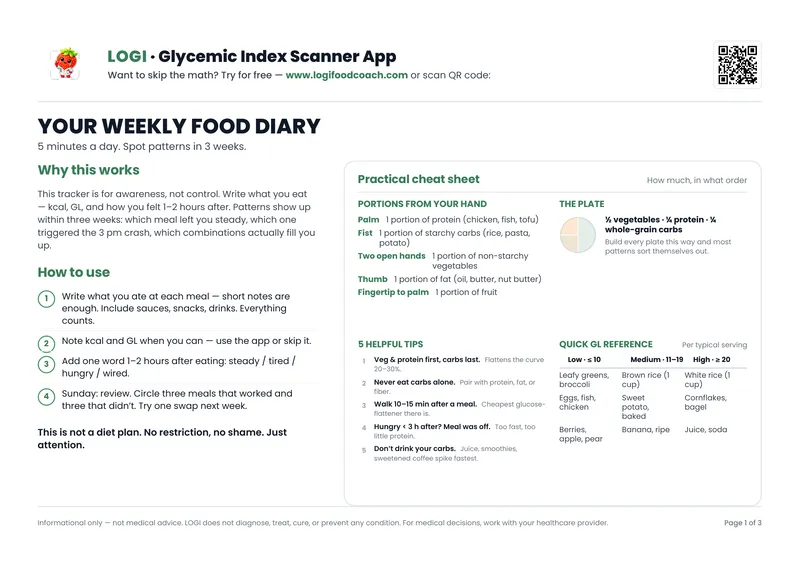
PDF ฟรี — 3 หน้า
สมุดบันทึกอาหารประจำสัปดาห์
บันทึกมื้ออาหาร ค่า GL และอารมณ์ พบรูปแบบใน 3 สัปดาห์
ไม่มีสแปม ยกเลิกได้ทุกเมื่อ