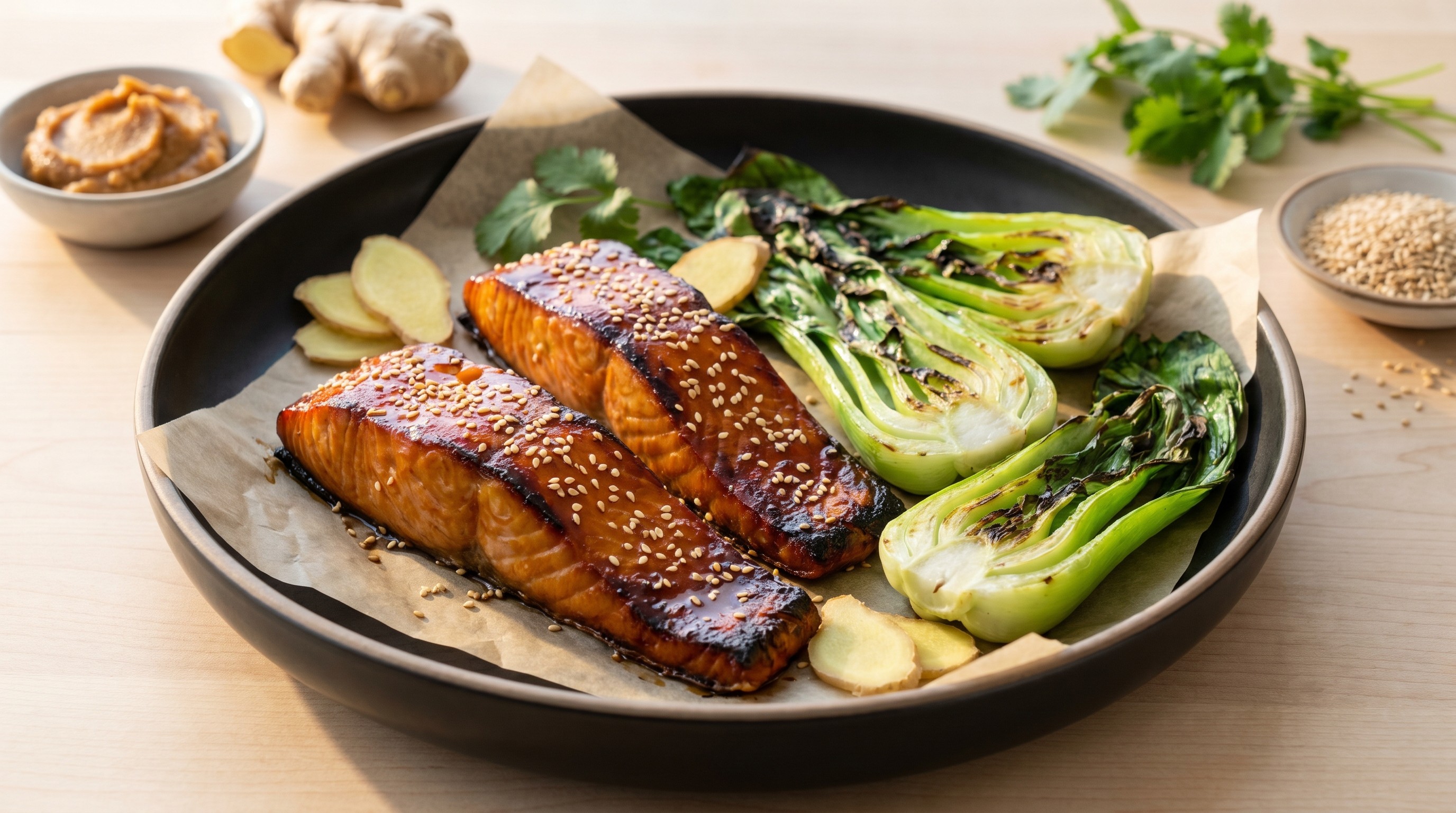
Salmão glaseado com missô e bok choy assado
Salmão com missô e bok choy levemente queimado numa assadeira só — naturalmente de baixo IG, rico em ômega-3 e proteína para manter o açúcar no sangue estável e saciedade prolongada.
Este salmão glaseado com missô feito numa assadeira só é uma potência naturalmente de baixo índice glicêmico. Um glaceado espesso e cheio de umami feito com missô branco, molho shoyu, e gengibre fresco ralado carameliza em fogo alto, formando uma crosta brilhante sobre filés de salmão macios e ricos em ômega-3. O bok choy baby assa junto, suas bordas ficando levemente queimadas, o que adiciona um amargor agradável para equilibrar o glaceado salgado-adocicado. A refeição inteira é praticamente sem carboidratos, sendo uma escolha ideal para quem controla o açúcar no sangue.
Do ponto de vista glicêmico, cada ingrediente aqui trabalha a seu favor. O salmão fornece proteína de alta qualidade e ácidos graxos ômega-3 anti-inflamatórios, ambos retardam o esvaziamento gástrico e amenizam os picos de glicose após as refeições. O bok choy é um vegetal crucífero excepcionalmente baixo em calorias, rico em fibras e nas vitaminas A, C e K. O missô branco, embora fermentado a partir de soja e grãos, é usado em quantidades tão pequenas que sua contribuição de carboidratos é insignificante — e a fermentação em si pode apoiar a saúde intestinal e melhorar a sensibilidade à insulina.
Para um controle ideal do açúcar no sangue, coma o bok choy primeiro antes de passar para o salmão. A fibra do vegetal cria uma barreira no estômago que retarda a absorção de qualquer açúcar do glaceado. Combine este prato com uma pequena porção de arroz basmati resfriado e reaquecido ou arroz de couve-flor para um prato ainda mais satisfatório sem comprometer seus objetivos glicêmicos.
Impacto no açúcar
Impacto muito baixo no açúcar no sangue esperado. A alta proteína e gorduras saudáveis do salmão combinadas com o bok choy rico em fibras promoverão níveis estáveis de açúcar no sangue por 3 a 4 horas, com uma carga glicêmica de apenas 3,1 indicando resposta de glicose insignificante.
Dicas de açúcar
- ✓ Coma o bok choy primeiro antes do salmão para priorizar a fibra e amenizar ainda mais qualquer resposta glicêmica menor.
- ✓ Faça uma caminhada de 10 a 15 minutos após a refeição para melhorar a sensibilidade à insulina e a absorção de glicose.
- ✓ Evite adicionar molhos adoçados ou acompanhamentos açucarados; o glaceado de missô e shoyu já fornece um sabor umami rico sem elevar o açúcar no sangue.
🥗 Ingredientes
- 2 pcs Filé de salmão
- 2 tbsp Missô branco
- 1 tbsp Molho shoyu
- 1 tsp Óleo de gergelim
- 10 pcs Gengibre
- 300 g Couve chinesa (bok choy)
- 1 tbsp Óleo de girassol
- 1 tbsp Sementes de gergelim
- 2 pcs Filé de salmão
- 2 tbsp Missô branco
- 1 tbsp Molho shoyu
- 1 tsp Óleo de gergelim
- 10 pcs Gengibre
- 10.6 oz Couve chinesa (bok choy)
- 1 tbsp Óleo de girassol
- 1 tbsp Sementes de gergelim
👨🍳 Instruções
- 1
Preaqueça o forno a 200 °C com o ventilador ligado. Forre uma assadeira grande com papel manteiga e reserve.
- 2
Misture o missô branco, o molho shoyu, o óleo de gergelim e o gengibre ralado na hora em uma tigela pequena. Bata até formar um glaceado liso e espesso, sem grumos.
- 3
Seque bem os filés de salmão por todos os lados com papel toalha — esse passo é essencial para o glaceado aderir e caramelizar direito, em vez de evaporar.
- 4
Coloque os filés de salmão com a pele para baixo na assadeira preparada. Coloque metade do glaceado de missô sobre a parte sem pele de cada filé e espalhe em uma camada uniforme usando as costas da colher, cobrindo o topo e as laterais.
- 5
Disponha a couve chinesa cortada ao meio com o lado do corte para cima ao redor do salmão, deixando um pouco de espaço entre os pedaços para circular o ar. Regue o óleo neutro uniformemente sobre a couve chinesa e tempere com uma pitada leve de sal.
- 6
Asse no centro do forno por 15 a 18 minutos. O salmão está pronto quando o glaceado de missô tiver caramelizado formando uma crosta dourada levemente bolhada e a carne desfia facilmente quando pressionada de leve com um garfo. Os talos da couve chinesa devem estar macios e as pontas das folhas levemente queimadas.
- 7
Retire a assadeira do forno e espalhe as sementes de gergelim sobre os filés de salmão glaceados enquanto ainda estão quentes para que as sementes grudem na superfície.
- 8
Sirva imediatamente, colocando a couve chinesa no prato primeiro — comer os vegetais ricos em fibras antes da proteína ajuda a retardar a absorção de glicose. Para uma refeição mais completa, acompanhe com uma pequena porção de arroz basmati resfriado e reaquecido ou arroz de couve-flor.
📊 Nutrição por porção
| Por porção | Prato inteiro | |
|---|---|---|
| Calorias | 484 | 968 |
| Carboidratos | 10g | 19g |
| Açúcares | 3g | 6g |
| Açúcares naturais | 3g | 6g |
| Proteína | 39g | 77g |
| Gordura | 33g | 66g |
| Gordura saturada | 6g | 13g |
| Gorduras insaturadas | 27g | 54g |
| Fibra | 3g | 6g |
| Fibra solúvel | 1g | 1g |
| Fibra insolúvel | 2g | 3g |
| Sódio | 1165mg | 2331mg |
Resposta glicêmica prevista
E se você...
Modelo estimado — respostas individuais variam. Não é conselho médico.
🔄 Alternativas de baixo IG
O missô vermelho e o hatcho são fermentados por mais tempo, resultando em maior teor de proteína e um índice glicêmico mais baixo em comparação ao missô branco, que contém mais koji de arroz e, portanto, mais carboidratos simples.
O amino de coco e o amino líquido contêm um pouco menos de açúcar residual do que algumas marcas de shoyu, ajudando a manter a carga glicêmica geral o mais baixa possível.
O azeite de oliva extravirgem e o óleo de abacate são ricos em gorduras monoinsaturadas e polifenóis que demonstraram melhorar a sensibilidade à insulina e retardar a absorção de glicose, contribuindo para uma resposta glicêmica mais estável.
🔬 A ciência por trás desta receita
Aqui está a explicação científica desta receita:
---
Por que esta receita funciona para o açúcar no sangue
Este salmão glaseado com missô e bok choy assado é uma refeição excepcional para manter o açúcar no sangue estável, e os números contam a história: uma carga glicêmica de apenas 3,1 por porção e um IG estimado de 32. Mas o que esses números realmente significam? O Índice Glicêmico (IG) mede a rapidez com que um alimento eleva o açúcar no sangue, enquanto a Carga Glicêmica (CG) leva em conta *quanto* carboidrato você está realmente comendo. Uma CG abaixo de 10 é considerada baixa — e com 3,1, este prato mal aparece no radar. Isso porque a receita é construída em torno de proteína, gorduras saudáveis e vegetais não amiláceos, em vez de carboidratos refinados.
O salmão é o herói aqui. Ele é rico tanto em proteína quanto em ácidos graxos ômega-3, que trabalham juntos para retardar a digestão e criar uma liberação gradual e suave de energia, em vez de um pico acentuado seguido de queda. Quando você come proteína e gordura junto com qualquer carboidrato — mesmo a pequena quantidade de açúcar natural na pasta de missô — eles agem como uma barreira, retardando a velocidade com que a glicose entra na corrente sanguínea. O óleo de gergelim no glaceado adiciona outra camada de gordura saudável que reforça esse efeito. Enquanto isso, o bok choy traz fibra e volume com quase nenhuma carga de carboidratos, ajudando você a se sentir satisfeito sem impactar o açúcar no sangue.
Para aproveitar ao máximo esta refeição, tente comer o bok choy primeiro antes de passar para o salmão — pesquisas sugerem que comer vegetais antes de proteína e carboidratos pode achatar ainda mais sua resposta glicêmica. Uma caminhada curta de 10 a 15 minutos após o jantar também pode ajudar seus músculos a absorver glicose com mais eficiência. Esta receita é um ótimo exemplo de como comida deliciosa e satisfatória e alimentação amigável ao açúcar no sangue não são opostos — são parceiros naturais.
Receitas relacionadas
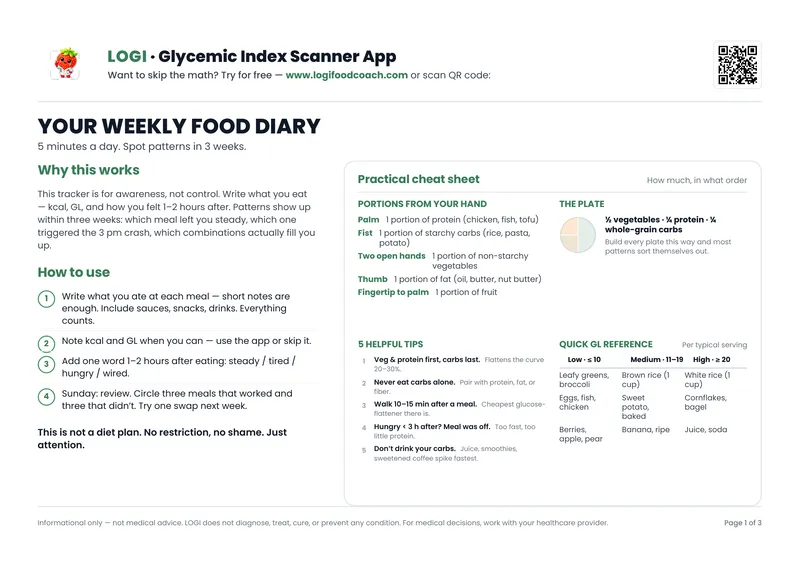
PDF grátis — 3 páginas
Seu diário alimentar semanal
Registre refeições, carga glicêmica e humor. Identifique padrões em 3 semanas.
Sem spam. Cancele quando quiser.