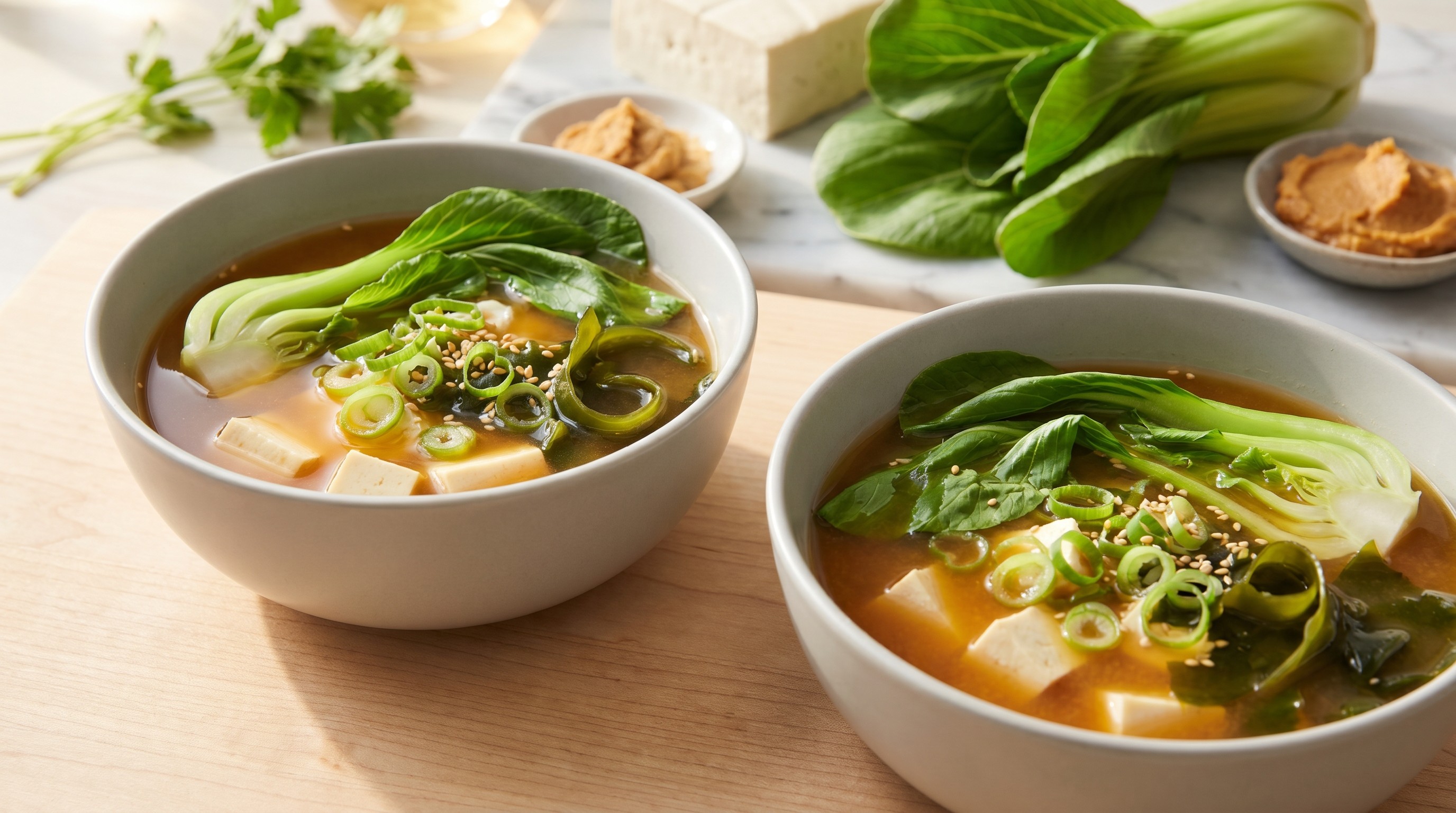
Miso Soup with Silken Tofu and Bok Choy
A probiotic-rich miso soup with silken tofu and tender bok choy — ultra-low glycemic load of just 2-3, ready in 15 minutes.
This is not the thin, forgettable miso soup served as a restaurant starter — it's a deeply nourishing, protein-rich bowl that genuinely supports stable blood sugar. Built around cubes of silken tofu, wilted baby bok choy, and a fragrant white miso broth enriched with ginger and sesame, every ingredient here earns its place on a low-glycemic plate. The entire bowl clocks in at a glycemic load of roughly 2-3, making it one of the most blood-sugar-friendly hot meals you can prepare.
Miso paste is a fermented soybean product with a negligible glycemic index, and fermentation actually produces beneficial probiotics that support gut health — a factor increasingly linked to improved insulin sensitivity. Silken tofu delivers complete plant protein with essentially zero glycemic load, helping to blunt any glucose response from the meal. Wakame seaweed contributes soluble fibre and minerals without adding carbohydrates, while bok choy provides vitamin C and folate at a GI of virtually zero.
For optimal blood sugar management, enjoy this soup as a first course before a larger meal — the protein and liquid volume help slow gastric emptying and reduce the glucose spike from subsequent courses. Pair it with a small portion of soba noodles (GI 46) rather than white rice if you want a more substantial meal. The key technique here is to never boil the broth after adding miso: high heat destroys the live probiotics and flattens the complex umami flavour you want in every spoonful.
Bloedsuikerimpact
Very low blood sugar impact expected. With a glycemic load of 5.5 and GI of 37, this broth-based soup will cause only a gentle, minimal rise in blood glucose, providing stable energy for 2-3 hours.
Bloedsuikertips
- ✓ Add extra silken tofu or a side of edamame to increase protein content, which further blunts any glucose response.
- ✓ Eat the solid ingredients (tofu, bok choy, wakame) before drinking the broth to slow gastric emptying and reduce absorption speed.
- ✓ Pair with a small serving of brown rice or soba noodles on the side rather than mixed in, so you can control the carbohydrate portion separately.
🥗 Ingrediënten
- 750 ml Water
- 3 tbsp White miso paste
- 300 g Silken tofu
- 2 pcs Bok choy
- 3 pcs Spring onion
- 10 g Dried wakame seaweed
- 1 tsp Toasted sesame oil
- 1 tsp Low-sodium soy sauce
- 1 tsp Ginger
- 3.2 cups Water
- 3 tbsp White miso paste
- 10.6 oz Silken tofu
- 2 pcs Bok choy
- 3 pcs Spring onion
- 0.4 oz Dried wakame seaweed
- 1 tsp Toasted sesame oil
- 1 tsp Low-sodium soy sauce
- 1 tsp Ginger
👨🍳 Instructies
- 1
Place the dried wakame in a small bowl, cover with cold water, and leave to rehydrate for 5 minutes. Once softened, drain well and set aside. If using nori instead, simply tear it into small pieces and set aside — no soaking required.
- 2
Pour 750ml of water or broth into a medium pot and bring to a gentle simmer over medium heat. Add the grated ginger and let it infuse for about 2 minutes, stirring once.
- 3
Add the bok choy stalks to the simmering broth and cook for 2 minutes until they begin to soften. Follow with the bok choy leaves and cook for 1 minute more — they should be just wilted and still vibrant green.
- 4
Turn the heat to its lowest setting. Gently lower the silken tofu cubes into the broth using a spoon. Handle them carefully as silken tofu is very delicate and breaks apart easily. Let the tofu warm through for about 1 minute without stirring.
- 5
Ladle 3-4 tablespoons of the hot broth into a small separate bowl. Add the white miso paste and whisk vigorously until completely dissolved and smooth — this prevents lumps and ensures even distribution.
- 6
Pour the dissolved miso mixture back into the pot and stir very gently to combine. Do not allow the soup to boil from this point forward — boiling destroys the live probiotic cultures in the miso and dulls its complex umami flavour.
- 7
Stir in the toasted sesame oil, drained wakame, and half of the sliced spring onions. Taste the broth and add soy sauce if you feel it needs a touch more salinity.
- 8
Ladle the soup into two deep bowls, dividing the tofu, bok choy, and wakame evenly. Scatter the remaining spring onions over the top and serve immediately while the broth is still hot.
📊 Voeding per portie
| Per portie | Hele gerecht | |
|---|---|---|
| Calorieën | 185 | 369 |
| Koolhydraten | 15g | 30g |
| Suikers | 4g | 9g |
| Natuurlijke suikers | 4g | 9g |
| Eiwitten | 14g | 27g |
| Vet | 9g | 17g |
| Verzadigd vet | 1g | 3g |
| Onverzadigd vet | 7g | 14g |
| Vezels | 4g | 7g |
| Oplosbare vezels | 0g | 1g |
| Onoplosbare vezels | 1g | 2g |
| Natrium | 1288mg | 2576mg |
Voorspelde glucoserespons
Wat als je...
Geschat model — individuele reacties variëren. Geen medisch advies.
🔄 Lager GI alternatieven
White miso is fermented for a shorter period and contains more rice koji, resulting in higher residual sugars. Darker, longer-fermented misos like red or hatcho miso have lower sugar content and a lower glycemic impact due to extended fermentation breaking down more carbohydrates.
Firm and extra-firm tofu have less water and more protein per serving than silken tofu, which helps slow glucose absorption further and improves the overall glycemic load of the meal.
While sesame oil has negligible GI, extra virgin olive oil and avocado oil are richer in monounsaturated fats and polyphenols that have been shown to improve postprandial blood sugar response and insulin sensitivity when consumed with a meal.
Replacing plain water with protein-rich bone broth or vegetable broth adds protein and gelatin that slow gastric emptying, reducing the glycemic response of the overall meal and helping maintain more stable blood sugar levels.
🔬 De wetenschap achter dit recept
Here's the science explainer section:
---
Why This Soup Loves Your Blood Sugar
This miso soup is a gentle friend to your blood sugar, and the numbers tell the story. With a glycemic index (GI) of just 37 and a glycemic load (GL) of 5.5 per serving, it falls squarely in the "low" category on both scales. But what do those numbers actually mean? The glycemic index measures how quickly a food raises blood sugar, while glycemic load factors in how *much* carbohydrate you're actually eating. Think of GI as the speed of the rise and GL as the total impact. A food might have a moderate GI, but if the portion contains very few carbs, the glycemic load stays low — and that's what really matters for your day-to-day blood sugar balance.
The star players here are silken tofu and bok choy. Tofu brings plant-based protein and healthy fats, both of which slow down digestion and help your body absorb glucose more gradually rather than in one big rush. Bok choy, like most leafy greens, is rich in fiber and extremely low in carbohydrates, meaning it adds volume and nutrition without meaningfully raising blood sugar at all. Together, they create a meal where protein, fat, and fiber naturally buffer any glucose response from the small amount of carbs in the miso paste.
Want to maximize the benefit? If you're pairing this soup with a larger meal, try eating it first — starting with broth-based soups and vegetables before starchy foods is a well-studied strategy for flattening your post-meal glucose curve. A short 10–15 minute walk after eating can also help your muscles soak up circulating blood sugar more efficiently. Small habits, big difference over time.
Gerelateerde recepten
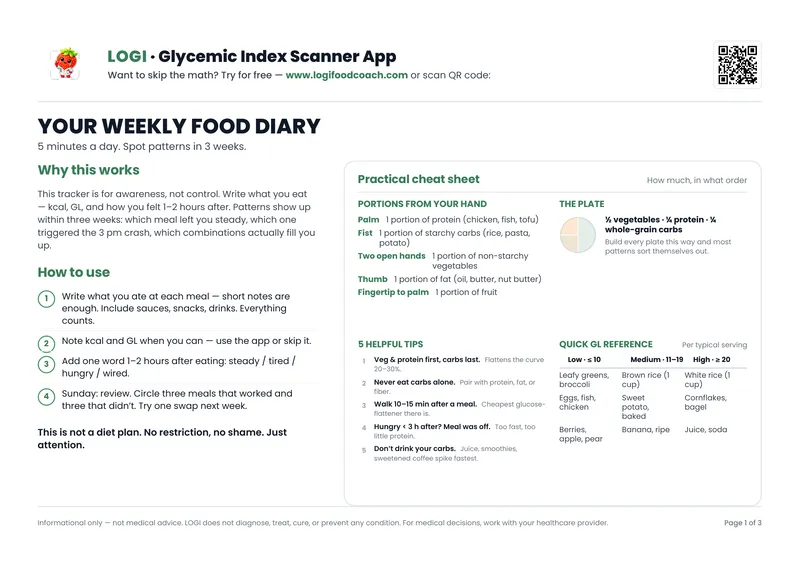
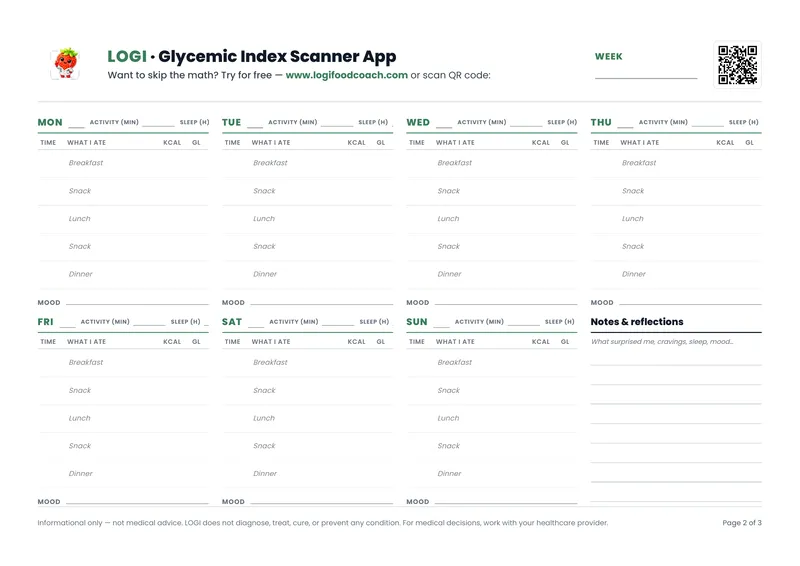
Gratis PDF — 3 pagina's
Je wekelijks voedingsdagboek
Noteer maaltijden, glycemische lading & stemming. Ontdek patronen in 3 weken.
Geen spam. Altijd opzegbaar.