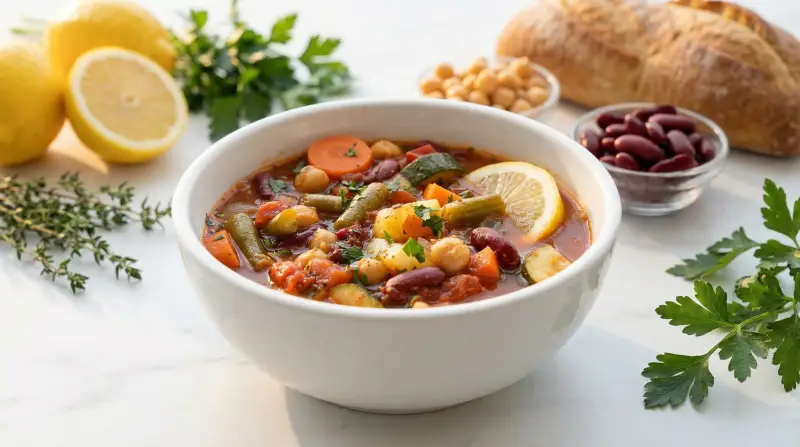
Bloedsuikervriendelijke minestrone met citroen en kruiden
Een voedzame soep vol groenten voor stabiele energie. Vezelrijke peulvruchten en niet-zetmeelhoudende groenten maken dit een verzadigend laag-GI gerecht voor elk moment van de dag.
Deze vernieuwde minestrone is een meesterklasse in bloedsuikerbeheer met natuurlijke ingrediënten. In tegenstelling tot traditionele versies die pasta of witte rijst bevatten, maakt dit recept gebruik van vezelrijke peulvruchten en kleurrijke niet-zetmeelhoudende groenten om je glucosewaarden urenlang stabiel te houden. De combinatie van kidneybonen en kikkererwten levert zowel oplosbare als onoplosbare vezels, wat de opname van koolhydraten vertraagt en plantaardig eiwitten biedt dat je glycemische respons verder matigt.
Elk ingrediënt is gekozen met metabole gezondheid in gedachten. Wortels bevatten weliswaar natuurlijke suikers, maar worden gebalanceerd door hun vezelgehalte en gecombineerd met laag-GI courgette en sperziebonen. De tomatenbasis voegt lycopeen en zuur toe, wat volgens onderzoek de insulinegevoeligheid kan verbeteren. Een finishing touch van citroensap maakt de smaken niet alleen helderder, maar levert ook citroenzuur dat glucosepieken kan afvlakken.
Voor optimale bloedsuikercontrole kun je deze soep het beste als voorgerecht eten vóór voedsel met meer koolhydraten, of combineren met een portie gegrilde kip of vis voor een complete laag-GI maaltijd. Het hoge groente- en peulvruchtengehalte betekent dat je langer verzadigd blijft, wat trek vermindert en gezonde eetpatronen gedurende de dag ondersteunt.
Bloedsuikerimpact
Deze minestrone heeft een lage tot gematigde impact op de bloedsuiker door de lage GI van 23 en gematigde GL van 15. De combinatie van vezelrijke bonen, groenten en de vloeibare bouillonbasis zou 3-4 uur stabiele energie moeten geven zonder significante pieken.
Bloedsuikertips
- ✓ Voeg een eetlepel extra vierge olijfolie toe voordat je gaat eten om de opname van koolhydraten verder te vertragen
- ✓ Eet eerst de groenten en bonen voordat je de bouillon drinkt om de vezelinname vroeg in de maaltijd te maximaliseren
- ✓ Combineer met een wandeling van 10-15 minuten na het eten om spieren te helpen glucose op te nemen en stabiele bloedsuikerwaarden te behouden
🥗 Ingrediënten
- 1 pcs gele ui, in blokjes
- 2 pcs teentjes knoflook, fijngehakt
- 4 pcs wortels, in plakjes
- 2 tbsp extra vierge olijfolie
- 2 tbsp tomatenpuree
- 28 oz tomatenblokjes uit blik met vocht
- 15 oz kidneybonen, afgespoeld en uitgelekt
- 15 oz kikkererwten, afgespoeld en uitgelekt
- 1 tbsp Italiaanse kruidenmix
- 4 cup natriumarme groentebouillon
- 1 pcs courgette, in kwartrondes
- 1 cup diepvries sperziebonen
- 1 tbsp vers citroensap
- 1 tbsp verse peterselie, gehakt
- 1 pcs gele ui, in blokjes
- 2 pcs teentjes knoflook, fijngehakt
- 4 pcs wortels, in plakjes
- 2 tbsp extra vierge olijfolie
- 2 tbsp tomatenpuree
- 28 oz tomatenblokjes uit blik met vocht
- 15 oz kidneybonen, afgespoeld en uitgelekt
- 15 oz kikkererwten, afgespoeld en uitgelekt
- 1 tbsp Italiaanse kruidenmix
- 4 cup natriumarme groentebouillon
- 1 pcs courgette, in kwartrondes
- 1 cup diepvries sperziebonen
- 1 tbsp vers citroensap
- 1 tbsp verse peterselie, gehakt
👨🍳 Instructies
- 1
Bereid je groenten voor door de gele ui in kleine blokjes te snijden, de knoflookteentjes fijn te hakken en de wortels in plakjes van ongeveer 0,5 cm dik te snijden. Zet opzij terwijl je de soeppan verwarmt.
- 2
Verhit de olijfolie in een grote pan met dikke bodem op middelhoog vuur. Voeg de ui, knoflook en wortels toe. Bak onder af en toe roeren ongeveer 5 minuten tot de ui glazig wordt en zacht is. Deze aromatische basis bouwt smaak op terwijl de glycemische impact laag blijft.
- 3
Roer de tomatenpuree erdoor en blijf 2-3 minuten bakken, zodat deze licht kan karamelliseren en de groenten bedekt. Dit verdiept de umamismaak. Let goed op om verbranden te voorkomen en roer regelmatig terwijl de puree donkerder wordt.
- 4
Laat de kidneybonen en kikkererwten goed uitlekken en spoel ze grondig af onder koud water. Voeg ze toe aan de pan samen met het hele blik tomatenblokjes met het vocht, de Italiaanse kruiden en de groentebouillon. Roer alles goed door elkaar, doe het deksel erop en breng aan de kook op laag vuur.
- 5
Verlaag het vuur om een gestage prutteling te behouden en laat afgedekt 20 minuten sudderen, roer elke 5-7 minuten. Hierdoor kunnen de smaken samensmelten terwijl de wortels zacht worden en de peulvruchten hun zetmeel afgeven, wat een natuurlijk ingedikt, verzadigend bouillon creëert.
- 6
Snijd ondertussen de courgette in de lengte in vieren en snijd vervolgens dwars in hapklare stukjes. Voeg na de 20 minuten sudderen de courgettestukjes en bevroren sperziebonen direct toe aan de pan zonder te ontdooien. Roer goed door en laat nog 5-10 minuten onafgedekt sudderen tot de courgette mals is maar nog zijn vorm behoudt.
- 7
Haal van het vuur en roer het verse citroensap en gehakte peterselie erdoor. Proef en pas de smaak aan met extra zout indien nodig, hoewel de bouillon en groenten meestal voldoende natrium bevatten. Serveer heet in diepe kommen en eet eerst de groenten om de bloedsuikervoordelen te maximaliseren. Bewaar restjes tot 5 dagen in luchtdichte bakjes.
📊 Voeding per portie
| Per portie | Hele gerecht | |
|---|---|---|
| Calorieën | 332 | 1993 |
| Koolhydraten | 53g | 320g |
| Suikers | 13g | 80g |
| Natuurlijke suikers | 13g | 80g |
| Eiwitten | 16g | 97g |
| Vet | 7g | 44g |
| Verzadigd vet | 1g | 6g |
| Onverzadigd vet | 6g | 37g |
| Vezels | 15g | 89g |
| Oplosbare vezels | 3g | 17g |
| Onoplosbare vezels | 6g | 38g |
| Natrium | 774mg | 4646mg |
Voorspelde glucoserespons
Wat als je...
Geschat model — individuele reacties variëren. Geen medisch advies.
🔄 Lager GI alternatieven
Zwarte sojabonen hebben een GI van 15 vergeleken met de GI van 24 van kidneybonen, wat resulteert in een aanzienlijk lagere impact op de bloedsuiker. Lupinebonen en edamame hebben ook lagere glycemische ladingen en hogere eiwit-koolhydraatverhoudingen.
Witte bonen en bruine bonen hebben een lagere glycemische index (rond de 35) vergeleken met kikkererwten (GI 28-36 afhankelijk van bereiding), en hun hogere resistente zetmeelgehalte vertraagt glucoseopname nog verder.
Wortels hebben een gematigde GI van 35-92 afhankelijk van de bereidingswijze. Bleekselderij, bloemkool en radijs zijn niet-zetmeelhoudende groenten met verwaarloosbare glycemische impact, waardoor de totale GL lager blijft.
Verse tomaten hebben een iets lagere glycemische lading dan tomaten uit blik door minder verwerking en geen toegevoegde suikers. Verse tomaten gebruiken zorgt voor betere bloedsuikercontrole met behoud van smaak.
Commerciële groentebouillons bevatten vaak verborgen suikers en maltodextrine (GI 85-105). Bottenbouillon of suikervrije zelfgemaakte versies elimineren deze hoge-GI toevoegingen en voegen eiwitten toe om de bloedsuikerrespons verder te stabiliseren.
🔬 De wetenschap achter dit recept
Waarom deze minestrone je bloedsuiker stabiel houdt
Deze stevige minestrone is een meesterklasse in bloedsuikerbeheer, met een opmerkelijk lage glycemische index van 23 en een gematigde glycemische lading van 15,0 per portie. Het geheim ligt in hoe de ingrediënten samenwerken om glucoseopname te vertragen. De royale hoeveelheid vezels uit groenten zoals wortels, uien en tomaten creëert een gelachtige matrix in je spijsverteringsstelsel die letterlijk de afgifte van suikers in je bloedbaan vertraagt. Ondertussen voegt de olijfolie gezonde vetten toe die de maaglediging verder vertragen, waardoor je lichaam meer tijd krijgt om koolhydraten geleidelijk te verwerken in plaats van allemaal tegelijk.
Wat deze soep bijzonder effectief maakt, is de synergie tussen de componenten. Tomatenpuree blijft ondanks de concentratie laag-glycemisch omdat tomaten van nature zuur zijn—en zuurgraad verlaagt aangetoond de glycemische respons van een maaltijd door de afbraak van koolhydraten te vertragen. De aromatische groenten (ui en knoflook) leveren zwavelverbindingen en extra vezels, terwijl hun natuurlijke zoetheid betekent dat je geen toegevoegde suikers nodig hebt. Deze combinatie creëert wat voedingsdeskundigen een "zachte glucosecurve" noemen in plaats van een scherpe piek en dip.
Om de bloedsuikervoordelen te maximaliseren, kun je deze minestrone het beste als voorgerecht eten vóór voedsel met meer koolhydraten in je maaltijd—groenten eerst eten kan glucosepieken na de maaltijd met wel 30% verminderen. Het hoge watergehalte bevordert ook het verzadigingsgevoel zonder calorieën toe te voegen, waardoor je je voldaan voelt terwijl je de porties van meer koolhydraatrijke voedingsmiddelen in toom houdt. Een korte wandeling van 10 minuten na het eten kan de glucoseopname van je lichaam verder verbeteren, waardoor deze soep onderdeel wordt van een complete bloedsuikervriendelijke eetstrategie.
Gerelateerde recepten
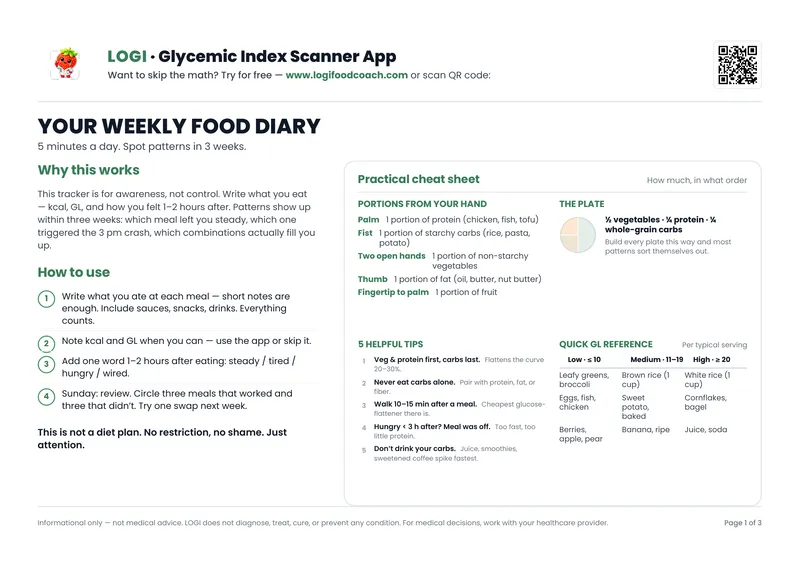
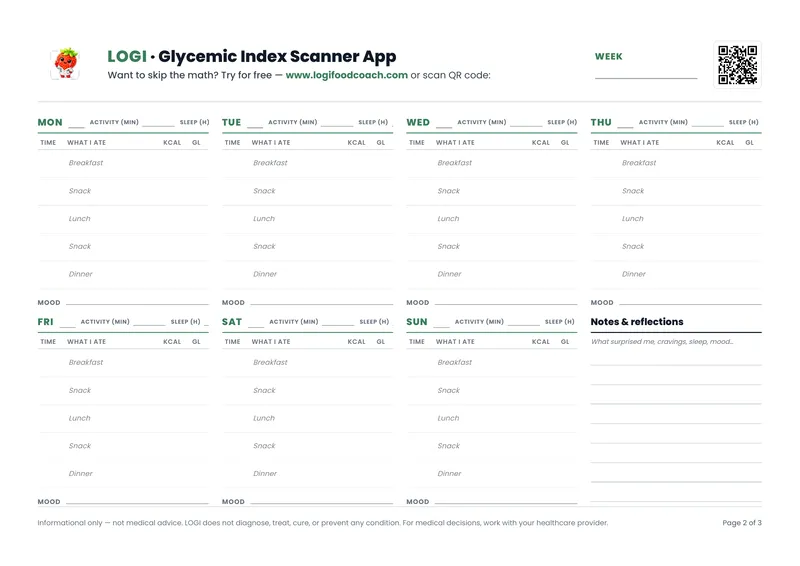
Gratis PDF — 3 pagina's
Je wekelijks voedingsdagboek
Noteer maaltijden, glycemische lading & stemming. Ontdek patronen in 3 weken.
Geen spam. Altijd opzegbaar.