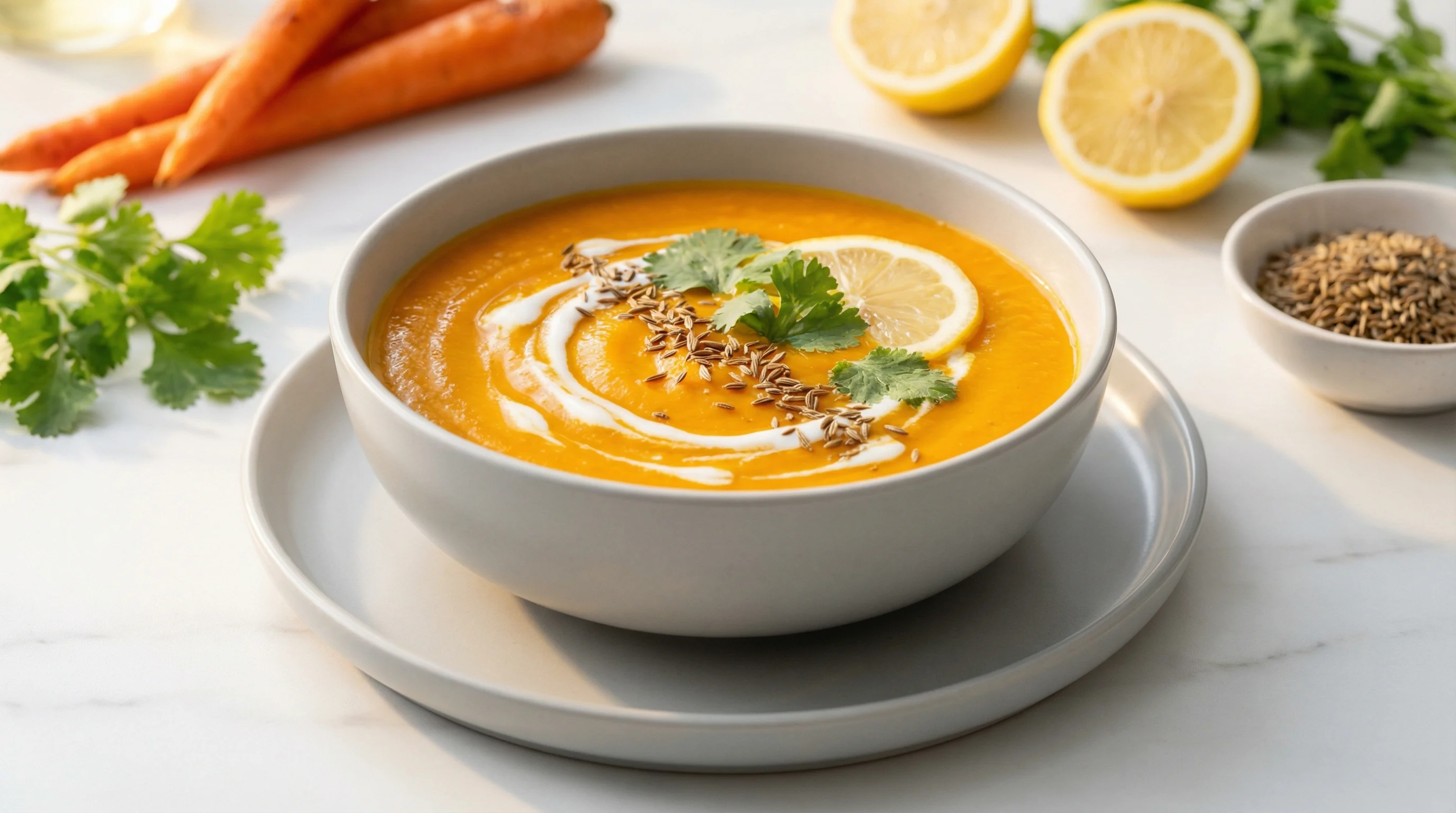
Blood Sugar-Friendly Roasted Carrot Soup with Cumin
Velvety roasted carrot soup designed for stable blood sugar. Fiber-rich carrots paired with healthy fats create a satisfying, low-glycemic meal that won't spike glucose.
This nourishing carrot soup transforms a naturally sweet vegetable into a blood sugar-friendly masterpiece through careful preparation and smart ingredient pairing. While carrots contain natural sugars, roasting them whole with olive oil slows glucose absorption, and the addition of healthy fats from olive oil and butter further moderates the glycemic response. The fiber content remains intact, providing sustained energy without the rapid blood sugar spike associated with processed soups.
The aromatic blend of coriander and cumin not only enhances flavor but may support healthy glucose metabolism. By blending the soup to a creamy consistency while keeping all the vegetable fiber, you're creating a meal that digests slowly and steadily. The lemon juice adds brightness while potentially supporting insulin sensitivity.
For optimal blood sugar management, enjoy this soup as part of a balanced meal. Start with a small green salad dressed with vinegar, then have the soup alongside a protein source like grilled chicken, baked fish, or a handful of nuts. This "vegetables first, protein second" approach can reduce post-meal glucose spikes by up to 40%. The soup stores beautifully for meal prep, making it easy to maintain consistent, blood sugar-friendly eating throughout your week.
Bloedsuikerimpact
This soup should have a gentle, gradual impact on blood sugar due to its low glycemic load of 7.5 and low GI of 27. The fiber from carrots and the fat from olive oil and butter will help slow glucose absorption, providing steady energy for 3-4 hours without significant spikes.
Bloedsuikertips
- ✓ Add a protein source like grilled chicken, white beans, or a dollop of Greek yogurt to further slow carbohydrate absorption and increase satiety
- ✓ Eat the soup with a small handful of nuts or seeds on the side to add healthy fats and protein that will blunt the glycemic response
- ✓ Consider having this soup as part of a meal rather than alone, and take a 10-15 minute walk after eating to help muscles absorb glucose and reduce blood sugar elevation
🥗 Ingrediënten
- 2 oz carrots, peeled and cut diagonally
- 3 tbsp extra-virgin olive oil, divided
- 0.75 tsp fine sea salt, divided
- 1 pcs yellow onion, chopped
- 2 pcs garlic cloves, pressed or minced
- 0.5 tsp ground coriander
- 0.25 tsp ground cumin
- 4 cup vegetable broth, low-sodium preferred
- 2 cup water
- 1.5 tbsp unsalted butter
- 1.5 tsp fresh lemon juice
- 0.25 tsp freshly ground black pepper
- 2 oz carrots, peeled and cut diagonally
- 3 tbsp extra-virgin olive oil, divided
- 0.75 tsp fine sea salt, divided
- 1 pcs yellow onion, chopped
- 2 pcs garlic cloves, pressed or minced
- 0.5 tsp ground coriander
- 0.25 tsp ground cumin
- 4 cup vegetable broth, low-sodium preferred
- 2 cup water
- 1.5 tbsp unsalted butter
- 1.5 tsp fresh lemon juice
- 0.25 tsp freshly ground black pepper
👨🍳 Instructies
- 1
Set your oven to 400°F and prepare a large rimmed baking sheet with parchment paper. Peel the carrots and slice them diagonally into half-inch thick pieces to maximize caramelization surface area while maintaining fiber structure.
- 2
Arrange carrot pieces on the prepared baking sheet, drizzle with 2 tablespoons olive oil and sprinkle with half the salt. Toss gently to coat evenly, then spread in a single layer without crowding. Roast for 30-40 minutes, flipping halfway through, until edges are golden and carrots pierce easily with a fork.
- 3
While carrots roast, heat the remaining tablespoon of olive oil in a large soup pot or Dutch oven over medium heat. Add the chopped onion with a pinch of salt and sauté for 6-8 minutes, stirring occasionally, until softened and translucent but not browned.
- 4
Stir in the minced garlic, ground coriander, and cumin, cooking for about 45 seconds while stirring constantly until wonderfully fragrant. Pour in the vegetable broth and water, scraping any flavorful bits from the bottom of the pot with a wooden spoon.
- 5
Transfer the roasted carrots directly into the pot with the broth mixture. Bring everything to a boil over high heat, then reduce to a gentle simmer. Let the soup cook uncovered for 15 minutes, allowing the flavors to meld and develop complexity.
- 6
Remove the pot from heat and allow to cool for 5 minutes for safe blending. Working in batches if needed, carefully transfer the soup to a high-speed blender, filling no more than halfway to prevent overflow. Add the butter, lemon juice, and black pepper.
- 7
Blend on high speed until completely smooth and velvety, about 60-90 seconds. Taste and adjust seasoning with additional salt, pepper, or lemon juice as desired. For extra richness that further stabilizes blood sugar response, you can add an additional half tablespoon of butter if preferred.
- 8
Serve the soup warm, ideally after eating a small portion of non-starchy vegetables or protein to optimize glucose response. Store leftovers in airtight containers in the refrigerator for up to 4 days, or freeze in individual portions for up to 3 months for convenient blood sugar-friendly meals.
📊 Voeding per portie
| Per portie | Hele gerecht | |
|---|---|---|
| Calorieën | 628 | 2513 |
| Koolhydraten | 43g | 172g |
| Suikers | 4g | 17g |
| Natuurlijke suikers | 4g | 17g |
| Eiwitten | 10g | 41g |
| Vet | 52g | 208g |
| Verzadigd vet | 18g | 73g |
| Onverzadigd vet | 34g | 135g |
| Vezels | 12g | 47g |
| Oplosbare vezels | 4g | 14g |
| Onoplosbare vezels | 8g | 33g |
| Natrium | 9862mg | 39446mg |
Voorspelde glucoserespons
Wat als je...
Geschat model — individuele reacties variëren. Geen medisch advies.
🔄 Lager GI alternatieven
While carrots have a moderate glycemic index (39), butternut squash (51) has more fiber per serving which slows digestion, celery root (35) has a lower GI, and cauliflower (15) has minimal impact on blood sugar while maintaining a creamy soup texture.
Leeks and fennel bulb have slightly lower glycemic loads than onions due to higher fiber content and lower carbohydrate density, while shallots provide similar flavor with less volume needed, reducing overall carbohydrate content.
Replacing butter with these plant-based fats increases the ratio of unsaturated fats, which helps slow gastric emptying and reduces the overall glycemic response of the meal without adding carbohydrates.
Bone broth and chicken broth contain protein and collagen which help moderate blood sugar spikes, while mushroom broth adds umami depth with virtually zero carbohydrates compared to some vegetable broths that may contain added sugars or starches.
🔬 De wetenschap achter dit recept
Why This Soup Keeps Your Blood Sugar Steady
Despite carrots' reputation as a higher-glycemic vegetable, this soup achieves a remarkably low glycemic load of 7.5 through smart preparation and ingredient pairing. The secret lies in how cooking method and fat content work together. When you roast carrots with olive oil, the healthy fats slow down digestion significantly, creating a gradual release of glucose rather than a sharp spike. The fiber in carrots remains intact during roasting, further moderating the absorption rate. Think of olive oil as a "speed bump" for sugar—it literally coats the carrot fibers and slows their journey through your digestive system, giving your body time to process the natural sugars without overwhelming your insulin response.
The supporting cast of onions and garlic adds more than just flavor—they contribute additional fiber and compounds that may improve insulin sensitivity. Onions contain quercetin, an antioxidant that research suggests helps regulate glucose metabolism. The soup format itself is beneficial because blending doesn't break down fiber the way juicing does, meaning you still get the blood sugar-buffering benefits. The warm liquid also promotes slower eating, which naturally helps prevent overeating and the subsequent glucose surge that comes from consuming too much too quickly.
For maximum blood sugar stability, enjoy this soup as a starter before your main meal. Eating vegetables first creates a "fiber shield" in your stomach that slows the absorption of any carbohydrates that follow. Pair it with a protein-rich main course, and consider a 10-minute walk afterward—light movement helps your muscles absorb glucose without requiring extra insulin.