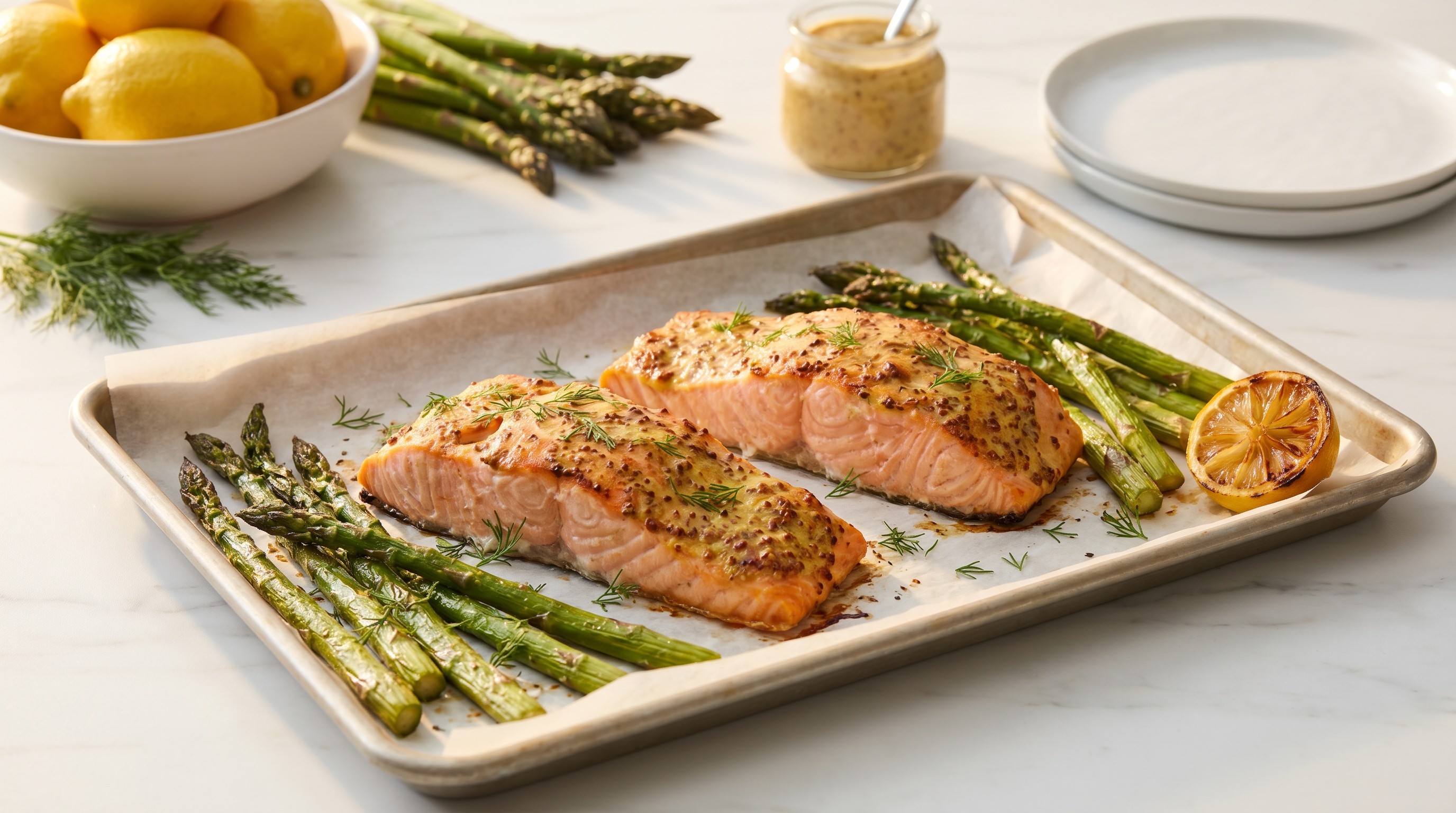
Salmone al forno con asparagi e salsa al limone e senape
Salmone ricco di omega-3 e asparagi pieni di fibre cotti in una sola teglia con una crosticina saporita al limone e senape — naturalmente a basso indice glicemico e pronti in 30 minuti.
Questo salmone al forno in teglia è un pasto naturalmente a basso indice glicemico che richiede quasi nessuno sforzo. Il salmone, sia selvaggio che d'allevamento, fornisce una generosa dose di acidi grassi omega-3, che la ricerca collega costantemente a una migliore sensibilità all'insulina e a una riduzione dei marcatori infiammatori — entrambi fondamentali per una gestione stabile della glicemia. Abbinato agli asparagi, una delle verdure con il più basso indice glicemico disponibili, il piatto è costruito su ingredienti che supportano la regolazione del glucosio fin dalle fondamenta. Gli asparagi sono anche ricchi di inulina, una fibra prebiotica che nutre i batteri intestinali associati a una migliore salute metabolica.
La salsa al limone e senape è l'arma segreta qui. Preparata a freddo con senape di Digione, succo di limone fresco, aglio e aneto, viene versata direttamente sui filetti prima della cottura. Mentre il salmone cuoce, la salsa forma una crosticina leggera e dorata che si caramella leggermente ai bordi, aggiungendo strati di sapore senza zuccheri o ingredienti trasformati. Ogni componente di questo piatto ha un indice glicemico ben al di sotto di 55, rendendolo uno dei secondi piatti più "puliti" che si possano servire.
Per una risposta glicemica ottimale, considera di iniziare con una piccola insalata condita con aceto cinque-dieci minuti prima di mangiare — l'acido acetico ha dimostrato di attenuare i picchi di glucosio post-pasto. Se vuoi aggiungere un contorno amidaceo, scegli quinoa raffreddata o una piccola porzione di pasta integrale al dente, entrambi con un impatto glicemico inferiore rispetto al riso bianco o alle patate. Questo piatto si abbina splendidamente con una spruzzata di limone extra e una manciata di aneto fresco a tavola.
Impatto sulla glicemia
Impatto minimo sulla glicemia previsto. Con un carico glicemico di soli 2.6 e un IG stimato di 25, questo pasto ad alto contenuto proteico e di grassi con verdure non amidacee dovrebbe produrre una risposta glicemica molto piatta e fornire energia stabile per 3-4 ore.
Consigli glicemia
- ✓ Mangia prima gli asparagi, poi il salmone, per massimizzare l'effetto delle fibre e attenuare ulteriormente qualsiasi minima risposta glicemica.
- ✓ Abbina questo pasto a una passeggiata di 15 minuti dopo per migliorare la sensibilità all'insulina e l'assorbimento del glucosio da parte dei muscoli.
- ✓ Considera di aggiungere un piccolo contorno di verdure a foglia verde o un condimento a base di aceto per rallentare ulteriormente la digestione e stabilizzare la glicemia.
🥗 Ingredienti
- 2 pcs filetto di salmone
- 400 g asparagi
- 2 tbsp senape di Digione
- 1 tbsp succo di limone
- 1 tsp scorza di limone
- 1 tbsp olio d'oliva
- 1 pcs aglio
- 1 tsp aneto secco
- 1 pcs sale e pepe nero
- 2 pcs filetto di salmone
- 14.1 oz asparagi
- 2 tbsp senape di Digione
- 1 tbsp succo di limone
- 1 tsp scorza di limone
- 1 tbsp olio d'oliva
- 1 pcs aglio
- 1 tsp aneto secco
- 1 pcs sale e pepe nero
👨🍳 Istruzioni
- 1
Scalda il forno a 200 °C (390 °F), o a 180 °C (355 °F) se usi un forno ventilato. Rivesti una teglia grande con carta forno per facilitare la pulizia.
- 2
Prepara la salsa al limone e senape mescolando in una ciotolina la senape di Digione, il succo di limone, la scorza di limone grattugiata, l'aglio grattugiato e l'aneto secco. Mescola fino a ottenere un composto liscio e metti da parte.
- 3
Disponi gli asparagi sulla teglia. Condisci con un filo d'olio d'oliva, sala e pepa leggermente, e mescola per ricoprirli uniformemente. Distribuiscili in un unico strato lungo i bordi della teglia, lasciando il centro libero per il salmone.
- 4
Metti i filetti di salmone con la pelle rivolta verso il basso al centro della teglia, tra gli asparagi. Condisci la parte superiore con un pizzico di sale e qualche macinata di pepe nero.
- 5
Distribuisci generosamente la salsa alla senape su ogni filetto, usando il dorso del cucchiaio per stenderla su tutta la superficie. Uno strato completo e uniforme formerà una crosticina leggera durante la cottura.
- 6
Inforna la teglia e cuoci per 18-20 minuti. Il salmone è pronto quando si sfalda facilmente con una leggera pressione nella parte più spessa, ma rimane leggermente traslucido al centro — questo assicura che rimanga morbido. Le punte degli asparagi dovrebbero essere leggermente dorate e tenere.
- 7
Togli la teglia dal forno e lasciala riposare per uno o due minuti. Questo breve riposo permette al salmone di finire di cuocere dolcemente con il calore residuo e lo rende più facile da sollevare dalla carta forno.
- 8
Servi direttamente dalla teglia con uno spicchio di limone fresco a parte. Per una migliore risposta glicemica, mangia prima gli asparagi — le fibre e i grassi sani rallentano l'assorbimento del glucosio — poi goditi il salmone.
📊 Nutrizione per porzione
| Per porzione | Piatto intero | |
|---|---|---|
| Calorie | 490 | 979 |
| Carboidrati | 10g | 21g |
| Zuccheri | 4g | 9g |
| Zuccheri naturali | 4g | 9g |
| Proteine | 45g | 90g |
| Grassi | 31g | 63g |
| Grassi saturi | 7g | 13g |
| Grassi insaturi | 25g | 49g |
| Fibre | 5g | 10g |
| Fibra solubile | 1g | 2g |
| Fibra insolubile | 3g | 6g |
| Sodio | 467mg | 934mg |
Risposta glicemica prevista
E se tu...
Modello stimato — le risposte individuali variano. Non è un consiglio medico.
🔄 Alternative a basso IG
Le senapi in grani e macinate a pietra conservano più semi di senape intatti, fornendo fibre aggiuntive e un impatto glicemico leggermente inferiore rispetto alla senape di Digione liscia, aggiungendo anche un'acidità a base di aceto che può aiutare a rallentare lo svuotamento gastrico e moderare la risposta glicemica.
L'olio extra vergine d'oliva ha un contenuto di polifenoli più elevato rispetto all'olio d'oliva raffinato, e gli studi dimostrano che questi polifenoli possono migliorare la sensibilità all'insulina e aiutare ad attenuare i picchi di glucosio post-prandiali. L'olio di avocado offre grassi monoinsaturi sani simili che rallentano la digestione e l'assorbimento del glucosio.
Le erbe fresche contengono più composti bioattivi e antiossidanti rispetto a quelle essiccate. L'aneto e il prezzemolo freschi sono ricchi di flavonoidi come la miricetina e l'apigenina, che hanno dimostrato di supportare il metabolismo del glucosio e migliorare la sensibilità all'insulina, contribuendo a un migliore controllo glicemico generale.
Aggiungere aceto di mele al succo di limone aumenta il contenuto di acido acetico nella salsa. La ricerca mostra che l'acido acetico consumato con un pasto può ridurre la risposta glicemica del 20-30% rallentando la digestione dell'amido e migliorando la sensibilità all'insulina dopo il pasto.
Mentre l'aglio supporta già la regolazione della glicemia, combinarlo con la curcuma (che contiene curcumina) e il pepe nero (che ne migliora l'assorbimento fino al 2000%) amplifica gli effetti antinfiammatori e ipoglicemizzanti. La curcumina ha dimostrato di migliorare la funzione delle cellule beta e ridurre la resistenza all'insulina.
🔬 La scienza dietro questa ricetta
Ecco la spiegazione scientifica:
---
Perché questo pasto è un alleato della glicemia
Questo piatto di salmone al forno è un fantastico esempio di come la giusta combinazione di ingredienti possa mantenere la glicemia notevolmente stabile. Il salmone è ricco sia di proteine che di grassi sani omega-3 — due nutrienti che rallentano significativamente la digestione e il rilascio di glucosio nel flusso sanguigno. Quando mangi proteine e grassi insieme, lo stomaco si svuota più gradualmente, il che significa che eventuali carboidrati nel pasto vengono assorbiti a un ritmo dolce e uniforme, piuttosto che tutti in una volta. Con un carico glicemico di soli 2.6 per porzione, questa ricetta si registra a malapena sul "radar" della glicemia. Ricorda, il carico glicemico tiene conto sia del *tipo* che della *quantità* di carboidrati — e poiché salmone e asparagi sono naturalmente molto poveri di carboidrati, l'impatto complessivo è minimo.
Gli asparagi sono l'eroe silenzioso qui. Sono ricchi di fibre, che agiscono come un "dosso" naturale per l'assorbimento dello zucchero. La fibra forma una matrice gelatinosa nell'intestino che rallenta fisicamente la scomposizione dei carboidrati, e gli asparagi la forniscono insieme al cromo — un oligoelemento che supporta la capacità del corpo di utilizzare l'insulina in modo efficiente. La combinazione di verdure ricche di fibre con un piatto principale ricco di proteine crea quello che i nutrizionisti a volte chiamano un "tampone di glucosio", dove ogni componente rafforza l'effetto stabilizzante dell'altro.
Vuoi massimizzare i benefici? Prova a mangiare gli asparagi per primi, prima del resto del pasto — la ricerca suggerisce che iniziare con verdure e proteine prima di qualsiasi carboidrato può ridurre i picchi di glucosio post-pasto fino al 30-40%. Una breve passeggiata di 10-15 minuti dopo aver mangiato aiuta anche i muscoli ad assorbire il glucosio circolante. La senape di Digione e il limone aggiungono un sapore vivace senza zuccheri aggiunti, dimostrando che un'alimentazione amica della glicemia non significa sacrificare il gusto. Con un IG stimato di soli 25, questo piatto rientra saldamente nella categoria a basso indice glicemico — il che significa che è progettato per nutrirti senza i cali di energia.
Ricette correlate
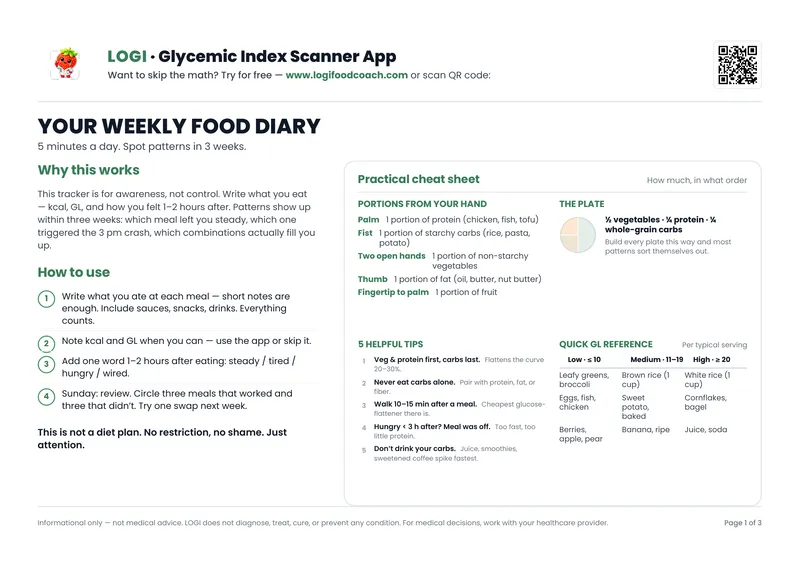
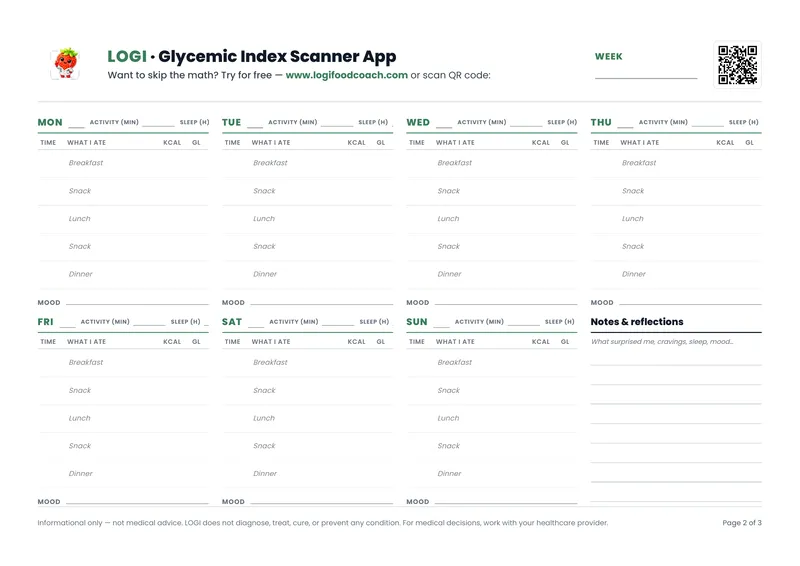
PDF gratuito — 3 pagine
Il tuo diario alimentare settimanale
Registra pasti, carico glicemico e umore. Individua schemi in 3 settimane.
Niente spam. Cancellati quando vuoi.