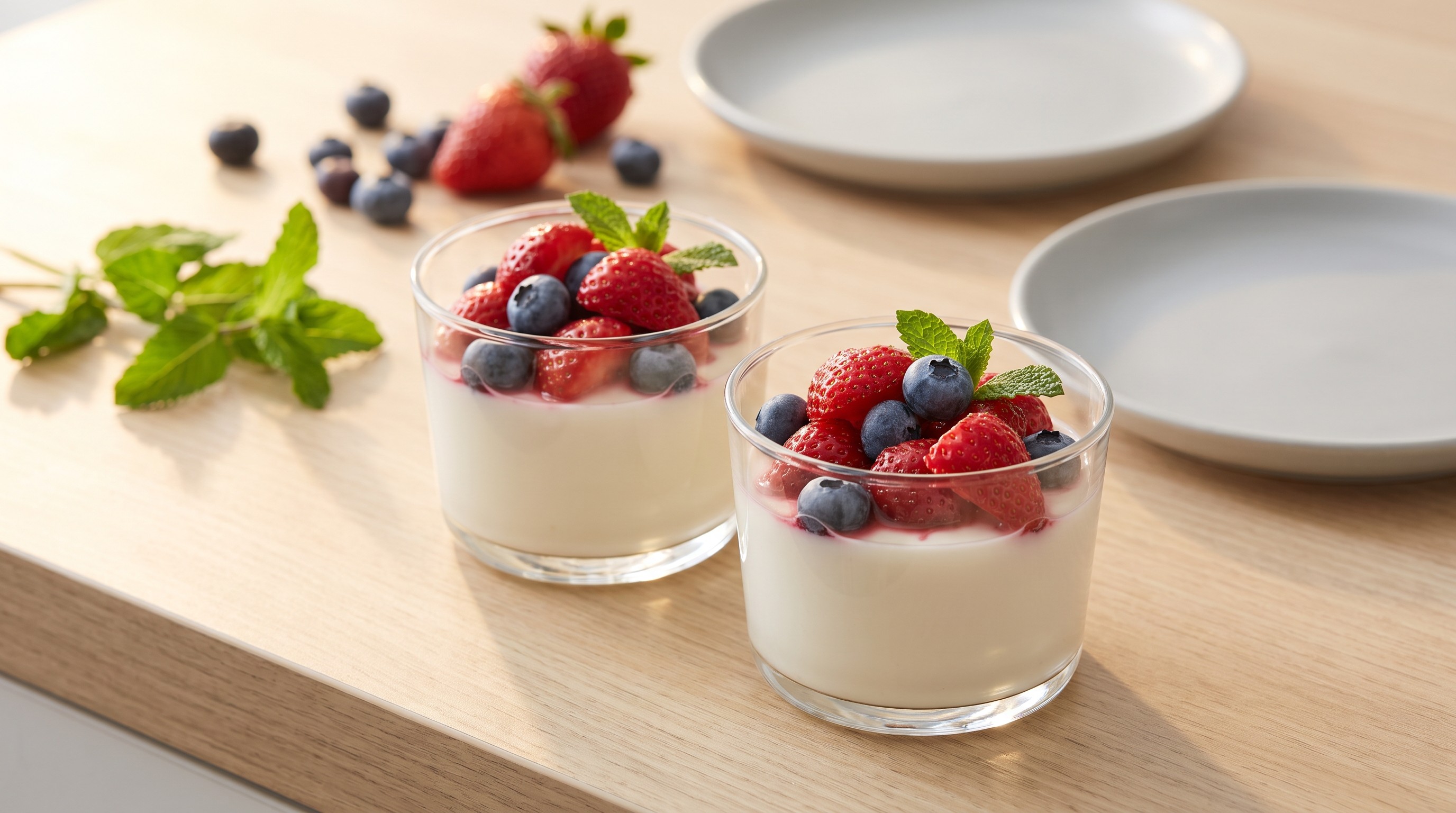
Yogurt Panna Cotta with Strawberries and Blueberries
Silky Greek yogurt panna cotta sweetened with just a touch of honey and crowned with fresh berries — a blood-sugar-friendly dessert that feels indulgent.
This elegant panna cotta replaces most of the traditional heavy cream base with protein-rich Greek yogurt, dramatically lowering the glycemic impact while delivering a luxuriously creamy texture. A small amount of cream is retained to bloom the gelatin and round out the mouthfeel, but yogurt is the star. With only a single tablespoon of honey providing added sweetness, the dessert relies on the natural tang of yogurt and the bright flavour of ripe strawberries and blueberries to create a satisfying finish to any meal. The result is a dessert you can enjoy without the sharp blood-sugar spike that conventional sugar-laden versions deliver.
Greek yogurt is a powerhouse for blood-sugar management: its high protein content (around 10 g per 100 g) and generous fat slow gastric emptying, which blunts the glucose response from the small amount of honey. The berries add fibre, anthocyanins, and vitamin C while sitting firmly in the low-GI category — strawberries clock in around GI 40 and blueberries around GI 53. Together, the fat-protein-fibre combination means this dessert produces a gentle, sustained energy curve rather than a rapid spike and crash.
For optimal blood-sugar results, serve this panna cotta at the end of a meal that includes vegetables and lean protein — the prior fibre and protein further cushion the glycemic response. Preparing it the night before makes it an effortless weeknight treat or an impressive dinner-party closer. Each half-cup serving contains roughly 250 kcal with a balanced macro profile that supports steady glucose levels well into the evening.
Blood Sugar Impact
With a low glycemic index of 42 and a glycemic load of 8.4, this dessert will cause a mild, gradual rise in blood sugar. The combination of protein from Greek yogurt, fat from heavy cream, and gelatin slows gastric emptying, resulting in a blunted and sustained glucose response.
Blood Sugar Tips
- ✓ Enjoy this as a dessert after a fiber- and protein-rich meal rather than on an empty stomach, so the preceding food further slows sugar absorption.
- ✓ Take a 10-15 minute walk after eating to help your muscles absorb glucose and keep blood sugar stable.
- ✓ If you want to lower the impact further, reduce or replace the honey with a small amount of stevia or monk fruit sweetener, as honey is the primary driver of the glycemic load.
🥗 Ingredients
- 5 g Gelatin powder
- 80 ml Heavy cream
- 1 tbsp Honey
- 1 g Fine salt
- 1 tsp Vanilla extract
- 250 g Greek yogurt
- 100 g Strawberry
- 60 g Blueberry
- 0.2 oz Gelatin powder
- 5 tbsp Heavy cream
- 1 tbsp Honey
- 0.0 oz Fine salt
- 1 tsp Vanilla extract
- 8.8 oz Greek yogurt
- 3.5 oz Strawberry
- 2.1 oz Blueberry
👨🍳 Instructions
- 1
Measure 2 tablespoons of cold water into a small bowl, sprinkle the gelatin powder evenly over the surface, and set aside for 5 minutes so the granules absorb the water and bloom into a soft gel.
- 2
Place the heavy cream, honey, and salt in a small saucepan over low heat. Stir gently until the mixture is just steaming and the honey has dissolved — keep the heat low and do not allow it to boil, as overheating can affect the gelatin's setting power.
- 3
Remove the saucepan from the heat. Scrape the bloomed gelatin into the warm cream and add the vanilla extract. Stir steadily for about 30 seconds until every trace of gelatin has melted into the liquid.
- 4
Allow the cream mixture to cool at room temperature for 2 minutes — this prevents the heat from splitting the yogurt in the next step.
- 5
Spoon the Greek yogurt into a mixing bowl. Pour the warm cream mixture in a thin, steady stream while whisking constantly until the two are fully combined and the texture is perfectly smooth with no lumps.
- 6
Divide the mixture evenly between two glasses or ramekins (about 200 ml each). Press a piece of cling film directly onto the surface of each to prevent a skin from forming, then transfer to the refrigerator.
- 7
Chill for a minimum of 4 hours, or overnight, until the panna cotta is firmly set with a gentle wobble when tapped.
- 8
When ready to serve, hull and halve the strawberries and toss them together with the blueberries. Spoon the mixed berries generously over each panna cotta and serve immediately.
📊 Nutrition Per Serving
| Per Serving | Whole Dish | |
|---|---|---|
| Calories | 279 | 557 |
| Carbs | 20g | 40g |
| Sugars | 17g | 34g |
| Added Sugars | 0g | 0g |
| Natural Sugars | 17g | 34g |
| Protein | 16g | 32g |
| Fat | 15g | 30g |
| Saturated Fat | 9g | 19g |
| Unsaturated Fat | 6g | 11g |
| Fiber | 2g | 3g |
| Soluble Fiber | 1g | 1g |
| Insoluble Fiber | 1g | 2g |
| Sodium | 261mg | 522mg |
Predicted Glucose Response
What if you...
Estimated model — individual responses vary. Not medical advice.
🔄 Lower GI Swaps
Honey has a moderate GI of approximately 58. While the small quantity (1 tbsp) keeps the glycemic load manageable in this recipe, swapping to monk fruit, allulose, or an erythritol-stevia blend reduces the sweetener's glycemic contribution to near zero, further flattening the blood-sugar curve — especially beneficial for those with insulin resistance or type 2 diabetes.
Heavy cream is already low-GI due to its high fat and negligible carbohydrate content, so this swap is not glycemic-driven. However, coconut cream or cashew cream offer dairy-free alternatives with comparable fat levels that maintain the recipe's blood-sugar-blunting effect, while light cream reduces overall saturated fat for those managing cardiovascular risk alongside blood sugar.
🔬 The Science Behind This Recipe
Greek yogurt's high protein content (roughly 10 g per 100 g) and fat slow gastric emptying — the rate at which food leaves the stomach — which directly blunts the speed and height of the blood-glucose rise from the tablespoon of honey. The small amount of heavy cream adds further fat, reinforcing this brake on digestion. Gelatin contributes additional protein, compounding the slowing effect. Meanwhile, the berries deliver soluble fibre that forms a viscous gel in the small intestine, physically slowing glucose absorption. Strawberries (GI ≈ 40) and blueberries (GI ≈ 53) are among the lowest-GI fruits available, and their anthocyanin pigments have been shown in clinical studies to improve insulin sensitivity. The net result is a dessert with an estimated GI of 42 and a glycemic load of just 8.4 per half-cup serving — well within the low-GI and low-GL thresholds, producing a gentle, sustained glucose curve rather than a sharp spike and crash.
Related recipes
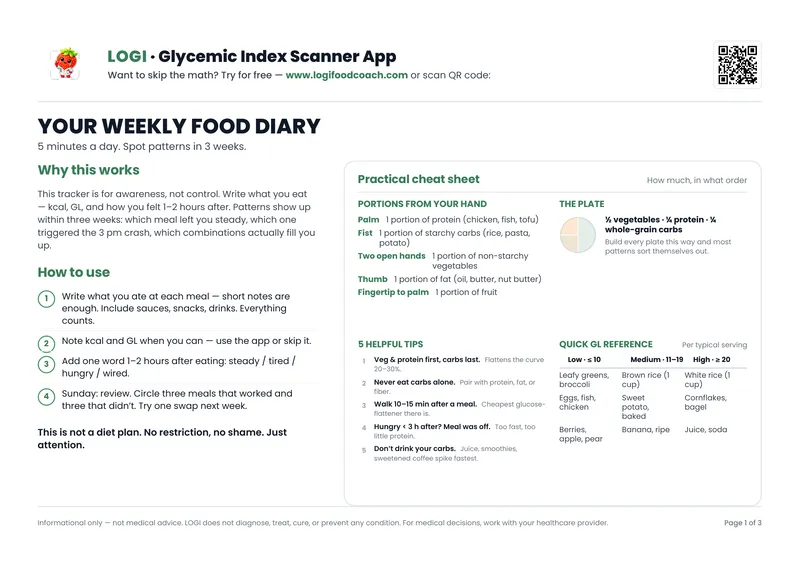
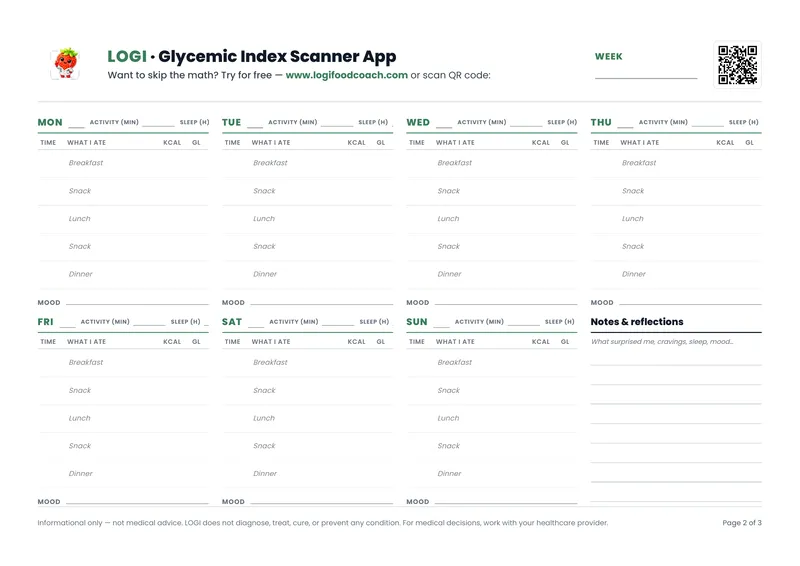
Free PDF — 3 pages
Your Weekly Food Journal
Track meals, glycemic load & mood. Spot patterns in 3 weeks.
No spam. Unsubscribe anytime.