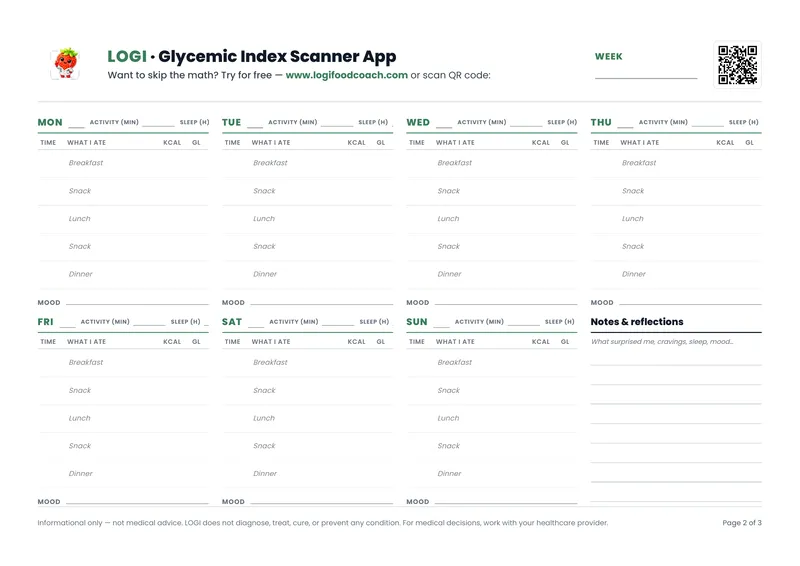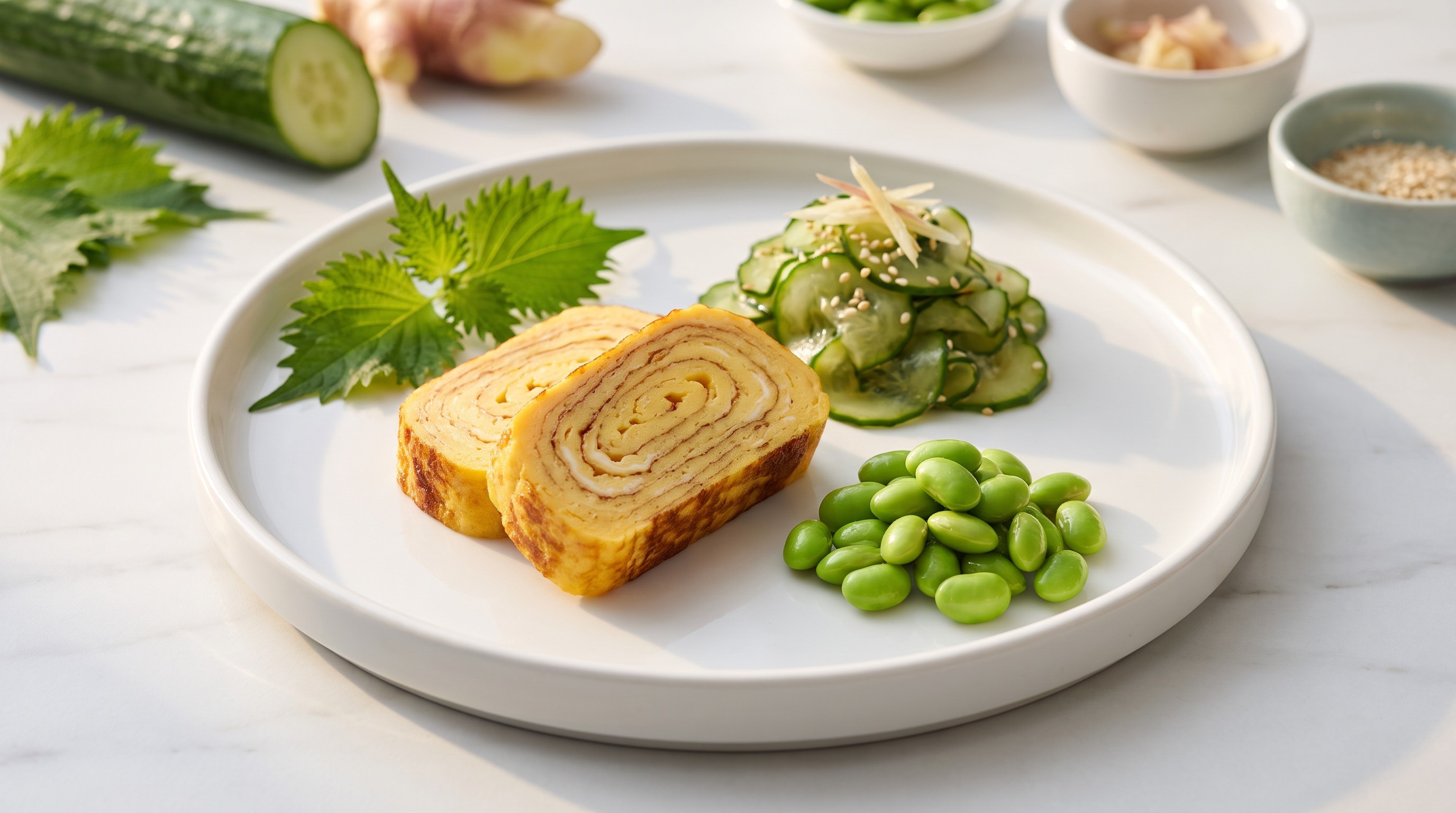
Tamagoyaki Lunch Plate with Cucumber Sunomono
A sugar-free Japanese tamagoyaki plate with vinegared cucumber and protein-rich edamame — naturally low-glycemic, steady energy, and ready in 25 minutes.
Traditional tamagoyaki folds sugar into the egg mixture for sweetness, but this version proves you don't need it. Dashi stock alone gives the layered omelette a savoury depth and keeps each roll silky-tender, while the complete absence of added sugar means virtually zero glycemic impact from the centrepiece of the plate. Paired with edamame — one of the lowest-GI legumes at around 18 on the index — you get a lunch built almost entirely on protein and healthy fat, the two macronutrients that slow gastric emptying and blunt any post-meal glucose rise.
The cucumber sunomono is more than a refreshing side dish; it is a genuine blood-sugar ally. Rice vinegar has been shown to improve insulin sensitivity when consumed with a meal, and the acetic acid in the dressing can reduce the glycemic response of anything eaten alongside it. Ginger adds another layer of metabolic support, as studies link gingerol compounds to improved fasting blood glucose levels. Together, these ingredients turn a simple cucumber salad into a functional component of the plate.
For the best blood-sugar outcome, start by eating the sunomono and a few bites of edamame before slicing into the tamagoyaki — fibre and vinegar first, protein second. This plate contains no refined carbohydrates at all, making it an ideal midday meal when you need sustained focus without the afternoon energy dip. If you want to add a small portion of grain, a quarter-cup of cooked brown rice or soba noodles pairs well without pushing the meal's overall glycemic load out of the low range.
Blood Sugar Impact
Very low blood sugar impact expected. With a glycemic load of only 3.3 and an estimated GI of 20, this protein-and-vegetable-focused plate will produce a minimal, gradual rise in blood glucose, providing stable energy for 3-4 hours.
Blood Sugar Tips
- ✓ Eat the cucumber sunomono and edamame first before the tamagoyaki — the fiber and vinegar from the sunomono will further blunt any glucose response.
- ✓ The rice vinegar in the sunomono naturally helps moderate blood sugar; consider adding an extra splash if you enjoy the tang.
- ✓ If serving with rice on the side, keep the portion small (under ½ cup cooked) and eat the protein-rich tamagoyaki and vegetables before the rice to slow digestion.
🥗 Ingredients
- 1 pcs Cucumber
- 0.5 tsp Fine salt
- 2 tbsp Rice vinegar
- 1 tbsp Soy sauce
- 1 tsp Ginger
- 150 g Edamame
- 6 pcs Egg
- 2 tbsp Dashi stock
- 2 tsp Neutral oil
- 1 tsp Toasted sesame seeds
- 1 pcs Cucumber
- 0.5 tsp Fine salt
- 2 tbsp Rice vinegar
- 1 tbsp Soy sauce
- 1 tsp Ginger
- 5.3 oz Edamame
- 6 pcs Egg
- 2 tbsp Dashi stock
- 2 tsp Neutral oil
- 1 tsp Toasted sesame seeds
👨🍳 Instructions
- 1
Cut the cucumber in half lengthwise, then slice each half crosswise into thin half-moon shapes. Place the slices in a bowl, sprinkle with the fine salt, toss gently to coat, and leave to rest for 10 minutes so the salt draws out excess moisture.
- 2
While the cucumber rests, prepare the sunomono dressing. In a small bowl, stir together the rice vinegar, half the soy sauce (roughly 1½ teaspoons), and the freshly grated ginger until evenly combined. Set the dressing aside.
- 3
Bring a small pot of water to a rolling boil, add the frozen edamame, and cook for 3 minutes until bright green and heated through. Drain in a colander and set aside.
- 4
Crack the eggs into a bowl and add the dashi stock along with the remaining soy sauce. Beat gently with chopsticks or a fork just until the yolks and whites are blended — avoid whisking vigorously, as you want a smooth, dense mixture rather than a frothy one. This gives the tamagoyaki its characteristic tight, layered texture.
- 5
Place a non-stick or tamagoyaki pan over medium-low heat and brush the surface lightly with a thin film of oil. Pour in just enough egg mixture to cover the base in a thin, even layer. Let it cook until the surface is barely set but still slightly moist on top.
- 6
Using chopsticks or a spatula, carefully roll the set egg layer toward you into a tight log. Push the roll to the far end of the pan, brush the empty surface with a little more oil, and pour another thin layer of egg mixture. Lift the existing roll slightly so the new egg flows underneath to bond the layers. Once the fresh layer is just set, roll the log back over it. Repeat this process until all the egg mixture is used — you should get 4 to 5 layers over roughly 8 to 10 minutes.
- 7
Transfer the finished tamagoyaki to a cutting board and let it rest for a minute so it holds its shape. Meanwhile, take handfuls of the salted cucumber and squeeze firmly to wring out as much liquid as possible, then toss the pressed cucumber with the sunomono dressing.
- 8
Slice the tamagoyaki crosswise into rounds about 2 cm thick. Arrange the slices on plates alongside a mound of the dressed cucumber sunomono and a portion of edamame. Scatter the toasted sesame seeds over the cucumber and serve immediately.
📊 Nutrition Per Serving
| Per Serving | Whole Dish | |
|---|---|---|
| Calories | 401 | 802 |
| Carbs | 17g | 33g |
| Sugars | 5g | 11g |
| Natural Sugars | 5g | 11g |
| Protein | 30g | 61g |
| Fat | 25g | 50g |
| Saturated Fat | 6g | 12g |
| Unsaturated Fat | 19g | 38g |
| Fiber | 5g | 10g |
| Soluble Fiber | 2g | 3g |
| Insoluble Fiber | 3g | 7g |
| Sodium | 1529mg | 3059mg |
Predicted Glucose Response
What if you...
Estimated model — individual responses vary. Not medical advice.
🔄 Lower GI Swaps
Rice vinegar can contain added sugars that contribute to glycemic load. Apple cider vinegar has demonstrated ability to improve postprandial glucose response and insulin sensitivity, actively lowering the GL of the overall meal. White wine vinegar is similarly sugar-free and provides acidity without added carbohydrates.
Generic vegetable oils (soybean, canola) lack the polyphenols and monounsaturated fats that actively support blood sugar regulation. Extra virgin olive oil contains oleocanthal and oleic acid, which have been shown to improve insulin sensitivity and slow gastric emptying, reducing the glycemic impact of the entire meal. Avocado oil offers a similar monounsaturated fat profile with a high smoke point suitable for cooking tamagoyaki.
While sesame seeds are low-GI, chia seeds provide substantially more soluble fiber, forming a gel that slows carbohydrate absorption and blunts glucose spikes. Hemp seeds add more protein per gram, further moderating blood sugar response. Ground flaxseed offers both soluble fiber and lignans that have been associated with improved glycemic control.
🔬 The Science Behind This Recipe
The Science Behind This Plate
With a glycemic load of just 3.3 per serving and an estimated glycemic index of 20, this Tamagoyaki Lunch Plate is remarkably gentle on your blood sugar — and the ingredients tell the story of why. Cucumber, the star of the sunomono, is mostly water and fiber with very few digestible carbohydrates. That means your body has very little glucose to process in the first place. This is a perfect example of why glycemic load matters more than glycemic index alone: it's not just about how fast a food raises blood sugar, but how much sugar it actually delivers. A food can only spike what it carries, and cucumber carries almost nothing.
Rice vinegar adds more than tangy flavor — research suggests that vinegar consumed with a meal can slow the rate at which your stomach empties, giving your body more time to process glucose gradually rather than in a sudden rush. Pairing that with ginger, which has been studied for its potential to support healthy insulin sensitivity, means this dish brings two complementary allies to the table. Together, they help create a slower, flatter blood sugar curve after eating.
The protein-rich tamagoyaki eggs round out the plate beautifully. Protein and fat naturally slow digestion, acting as a buffer that prevents carbohydrates from hitting your bloodstream all at once. For an even smoother response, try eating the cucumber sunomono first before the egg — starting with vegetables and vinegar-dressed sides primes your digestion. A short 10-to-15-minute walk after your meal can also help your muscles absorb circulating glucose more efficiently. Small habits, big difference.
Related recipes
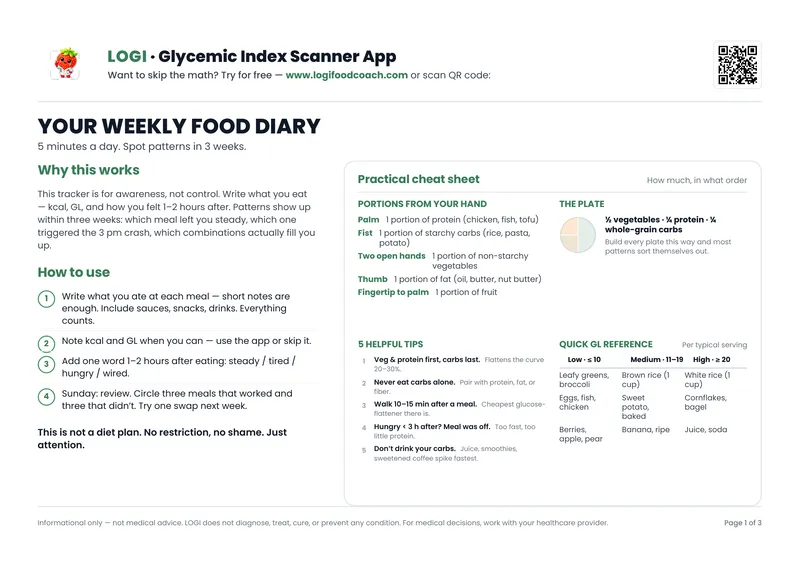
Free PDF — 3 pages
Your Weekly Food Journal
Track meals, glycemic load & mood. Spot patterns in 3 weeks.
No spam. Unsubscribe anytime.