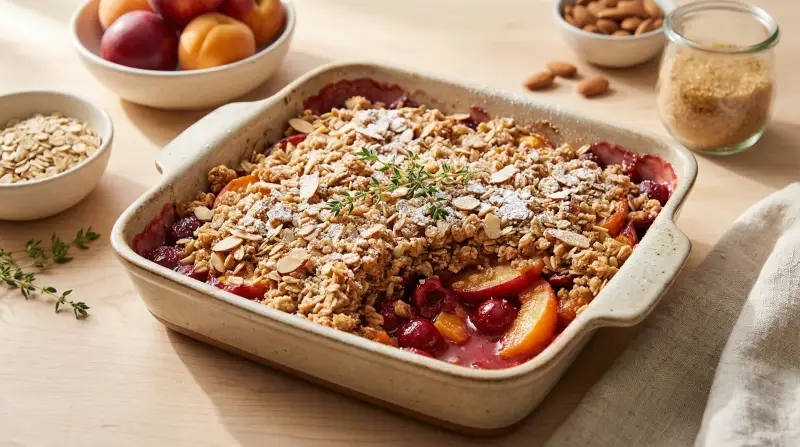
Low-Glycemic Summer Stone Fruit Crisp with Oat-Almond Topping
A blood sugar-friendly dessert showcasing fresh stone fruits beneath a crunchy whole grain topping. Natural sweetness meets fiber-rich ingredients for balanced indulgence.
This thoughtfully crafted stone fruit crisp transforms summer's bounty into a dessert that won't spike your blood sugar. By combining fiber-rich cherries, peaches, nectarines, and apricots with a whole grain oat-almond topping, we've created a treat that delivers natural sweetness while maintaining glycemic control. The soluble fiber in oats slows glucose absorption, while the healthy fats from almonds and walnut oil further moderate the glycemic response.
Unlike traditional fruit crisps loaded with refined sugar, this recipe uses minimal turbinado sugar and relies on the natural sweetness of ripe summer fruits. Stone fruits have a moderate glycemic index (35-45), and their fiber content helps prevent blood sugar spikes. The addition of cinnamon not only enhances flavor but may also improve insulin sensitivity. Whole-wheat flour provides additional fiber and nutrients compared to refined alternatives.
IMPORTANT: While this recipe uses turbinado sugar as the default sweetener, it has a high glycemic index (68-70). For optimal blood sugar management, substitute with allulose, erythritol, monk fruit sweetener, or yacon syrup. The moderate glycemic load of 16.3 per serving means this dessert should be enjoyed after a protein-rich meal, which further slows carbohydrate absorption. The combination of fiber, healthy fats, and whole grains makes this crisp a satisfying option that keeps you feeling full longer. Serve warm with a dollop of Greek yogurt for added protein, or enjoy at room temperature as a mindful afternoon treat that nourishes without compromising your metabolic health. Limit portions to one serving and avoid consuming on an empty stomach for best blood sugar control.
Blood Sugar Impact
This dessert will cause a moderate, gradual rise in blood sugar due to its medium glycemic load and low-to-medium GI. The fiber from whole wheat flour, oats, and almonds helps slow sugar absorption, providing steadier energy over 2-3 hours compared to traditional fruit crisps.
Blood Sugar Tips
- ✓ Eat this as a post-meal dessert rather than on an empty stomach to minimize blood sugar spikes, as the protein and fat from your main meal will further slow glucose absorption
- ✓ Keep portion sizes modest (stick to one serving) and pair with a small handful of nuts or a dollop of Greek yogurt to add protein and healthy fats
- ✓ Take a 10-15 minute walk after eating to help your muscles utilize the glucose and reduce the overall blood sugar spike
🥗 Ingredients
- 1 oz cherries, pitted and halved
- 4 cup mixed summer stone fruits (nectarines, peaches, apricots), peeled, pitted and sliced
- 1 tbsp whole-wheat flour
- 1 tbsp turbinado sugar or light brown sugar
- 0.5 cup old-fashioned rolled oats
- 0.25 cup sliced almonds
- 3 tbsp whole-wheat flour
- 2 tbsp turbinado sugar or light brown sugar
- 0.25 tsp ground cinnamon
- 0.125 tsp ground nutmeg
- 0.125 tsp salt
- 2 tbsp walnut oil or canola oil
- 1 tbsp dark honey
- 1 oz cherries, pitted and halved
- 4 cup mixed summer stone fruits (nectarines, peaches, apricots), peeled, pitted and sliced
- 1 tbsp whole-wheat flour
- 1 tbsp turbinado sugar or light brown sugar
- 0.5 cup old-fashioned rolled oats
- 0.25 cup sliced almonds
- 3 tbsp whole-wheat flour
- 2 tbsp turbinado sugar or light brown sugar
- 0.25 tsp ground cinnamon
- 0.125 tsp ground nutmeg
- 0.125 tsp salt
- 2 tbsp walnut oil or canola oil
- 1 tbsp dark honey
👨🍳 Instructions
- 1
Position your oven rack in the center and preheat to 350°F (175°C). Prepare a 9-inch square baking dish by lightly coating it with cooking spray or brushing with a thin layer of oil to prevent sticking.
- 2
In a large mixing bowl, combine the halved cherries with the sliced stone fruits (peaches, nectarines, and apricots). Sprinkle 1 tablespoon whole-wheat flour and 1 tablespoon turbinado sugar (or your chosen low-GI sweetener such as allulose, erythritol, or monk fruit) over the fruit, then gently toss with a spatula until the fruit is evenly coated. This light coating helps absorb excess juices during baking. For optimal blood sugar control, use allulose, erythritol, or monk fruit sweetener instead of turbinado sugar.
- 3
Prepare the crisp topping by whisking together the rolled oats, sliced almonds, 3 tablespoons whole-wheat flour, 2 tablespoons turbinado sugar (or low-GI sweetener such as allulose, erythritol, or monk fruit), 1 teaspoon ground cinnamon, 1/4 teaspoon ground nutmeg, and 1/4 teaspoon salt in a separate medium bowl. Mix thoroughly to ensure the spices are evenly distributed throughout the dry ingredients.
- 4
Drizzle 2 tablespoons walnut oil and 1 tablespoon dark honey (or yacon syrup or sugar-free syrup for better glycemic control) over the oat mixture. Using a fork or your fingertips, work the wet ingredients into the dry mixture until everything is well combined and the topping has a crumbly, cohesive texture. The mixture should hold together slightly when pressed but still maintain a crumbly appearance.
- 5
Transfer the prepared fruit mixture to your baking dish, spreading it evenly across the bottom. Sprinkle the oat-almond topping uniformly over the fruit layer, ensuring complete coverage for a golden, crunchy finish. Press down very gently to help the topping adhere.
- 6
Place the dish in the preheated oven and bake for 45 to 55 minutes, until the fruit is bubbling vigorously around the edges and the topping has turned golden brown. The aroma of cinnamon and caramelized fruit will fill your kitchen. If the topping browns too quickly, tent loosely with aluminum foil for the final 10-15 minutes of baking.
- 7
Remove from the oven and allow to cool for at least 10 minutes before serving. This dessert is delicious served warm or at room temperature. For better blood sugar control, pair with a dollop of plain Greek yogurt (adds protein to further slow glucose absorption) or enjoy after a protein-rich meal. Each serving is approximately 1 cup, providing a moderate glycemic load of 16.3. Store leftovers covered in the refrigerator for up to 3 days and reheat gently before serving.
📊 Nutrition Per Serving
| Per Serving | Whole Dish | |
|---|---|---|
| Calories | 229 | 1376 |
| Carbs | 38g | 230g |
| Sugars | 24g | 145g |
| Added Sugars | 6g | 36g |
| Natural Sugars | 18g | 109g |
| Protein | 4g | 26g |
| Fat | 8g | 47g |
| Saturated Fat | 1g | 5g |
| Unsaturated Fat | 7g | 42g |
| Fiber | 5g | 28g |
| Soluble Fiber | 1g | 6g |
| Insoluble Fiber | 2g | 13g |
| Sodium | 43mg | 256mg |
Predicted Glucose Response
What if you...
Estimated model — individual responses vary. Not medical advice.
🔄 Lower GI Swaps
Turbinado sugar has a high glycemic index (68-70) and will significantly raise blood sugar levels. Replacing it with zero or low-glycemic sweeteners reduces the overall glycemic load from 16.3 to approximately 12-14 per serving, making this dessert much more blood sugar-friendly. These alternatives provide sweetness without the glucose spike, allowing you to enjoy dessert while maintaining better metabolic control.
While dark honey has some beneficial antioxidants, it still has a glycemic index of 55-58 and contributes to the overall glycemic load. Yacon syrup provides sweetness with minimal blood sugar impact and adds prebiotic fiber that feeds beneficial gut bacteria. Sugar-free syrups eliminate glucose impact entirely, while extra walnut oil removes sweetness but adds blood sugar-stabilizing healthy fats.
While rolled oats are already a good choice with moderate GI, steel-cut oats have a lower glycemic index due to less processing and more intact grain structure. Almond flour dramatically reduces glycemic impact while adding protein and healthy fats that further stabilize blood sugar. A combination approach provides the familiar crisp texture while lowering overall glycemic load.
Whole-wheat flour, while better than white flour, still has a moderate glycemic index (around 55-60). Almond flour and coconut flour have minimal impact on blood sugar while providing additional protein, healthy fats, and fiber. These nut and seed flours create a similar binding effect in the topping while dramatically reducing the glycemic load of the dessert. Coconut flour is particularly high in fiber and requires less volume due to its absorbency.
🔬 The Science Behind This Recipe
This stone fruit crisp achieves blood sugar balance through strategic ingredient combinations. Stone fruits like cherries, peaches, nectarines, and apricots have a moderate glycemic index (35-55), meaning they raise blood sugar more slowly than high-GI fruits like watermelon or pineapple. Their natural fiber content, especially when skins are left on, further slows glucose absorption. The whole grain oat-almond topping adds significant soluble fiber (beta-glucan from oats) which forms a gel-like substance in your digestive tract, physically slowing the movement of food and the release of glucose into your bloodstream. Almonds contribute healthy monounsaturated fats and additional fiber, both of which moderate the glycemic response. Cinnamon contains bioactive compounds that may improve insulin sensitivity by mimicking insulin's effects and increasing glucose uptake by cells. The glycemic load of 16.3 per serving falls into the moderate range (10-20 is considered moderate), which means this dessert will cause a gradual, sustained rise in blood sugar rather than a sharp spike. This is significantly better than traditional fruit crisps with refined sugar and white flour, which can have glycemic loads exceeding 25-30. For optimal blood sugar management, the turbinado sugar should be replaced with zero-glycemic sweeteners like allulose, erythritol, or monk fruit, which would reduce the glycemic load to approximately 12-14. Always consume this dessert after a balanced meal containing protein and healthy fats, never on an empty stomach, to further minimize blood sugar impact. The combination of fiber, healthy fats, and moderate-GI carbohydrates makes this a metabolically friendly dessert option when consumed mindfully and in appropriate portions.
Related recipes
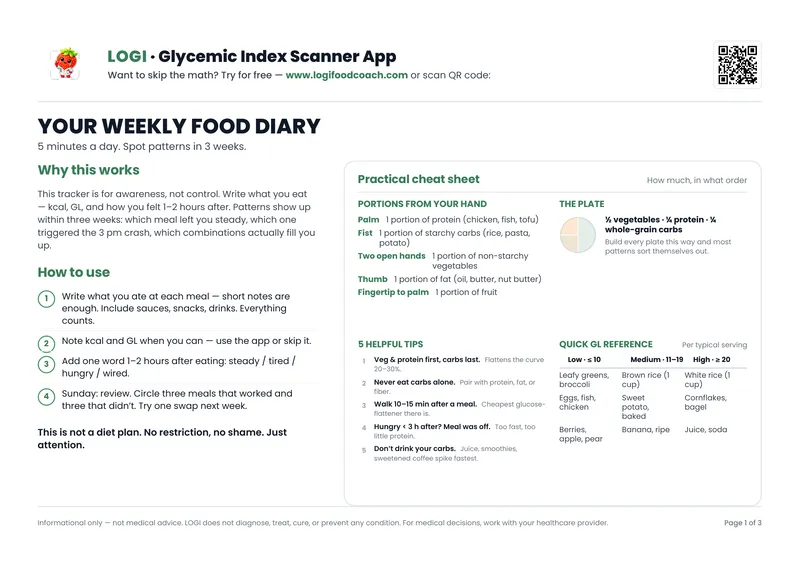
Free PDF — 3 pages
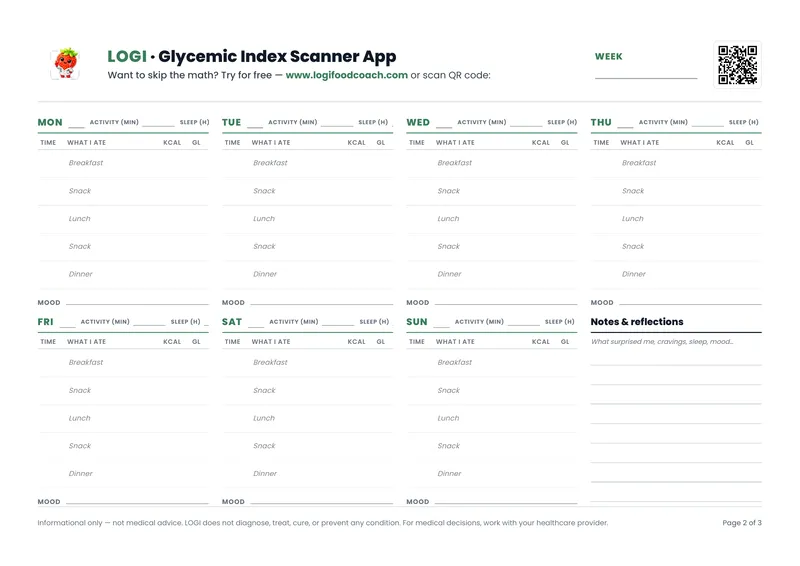
Your Weekly Food Journal
Track meals, glycemic load & mood. Spot patterns in 3 weeks.
No spam. Unsubscribe anytime.