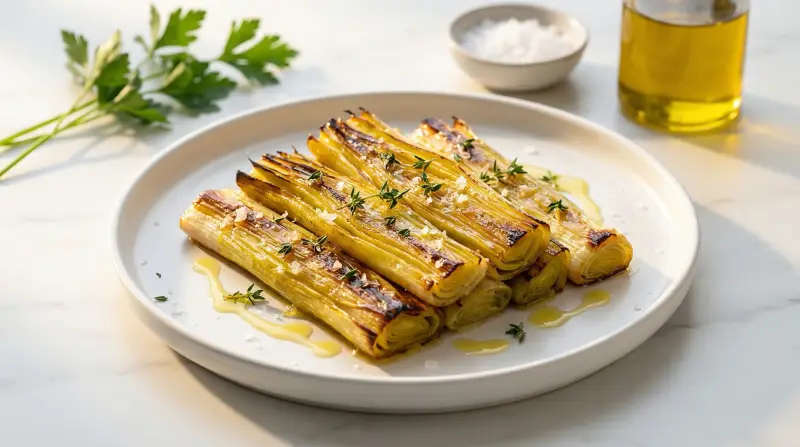
Slow-Roasted Caramelized Leeks with Olive Oil
Tender, golden leeks roasted to buttery perfection—a low-glycemic side dish that won't spike blood sugar while delivering rich, caramelized flavor.
This elegant low-glycemic side dish transforms humble leeks into a sophisticated accompaniment that supports stable blood sugar levels. Leeks belong to the allium family and have a remarkably low glycemic index, making them an excellent choice for anyone managing glucose levels. The slow-roasting process caramelizes their natural sugars gradually, creating deep, complex flavors without adding any refined carbohydrates.
The high-quality olive oil in this recipe provides heart-healthy monounsaturated fats that further slow glucose absorption and enhance the bioavailability of fat-soluble nutrients in the leeks. Unlike starchy vegetables, leeks are rich in prebiotic fiber that feeds beneficial gut bacteria, supporting metabolic health and insulin sensitivity. Their mild, sweet flavor intensifies during the extended roasting time, developing crispy, golden edges while maintaining a silky interior.
This dish pairs beautifully with protein-rich main courses like grilled fish, roasted chicken, or grass-fed beef. For optimal blood sugar management, enjoy these leeks as part of a balanced meal, eating them alongside or after your protein source. The combination of fiber, healthy fats, and minimal carbohydrates makes this recipe ideal for lunch or dinner without causing the glucose spikes associated with traditional starchy sides.
Blood Sugar Impact
Minimal blood sugar impact due to very low glycemic load (1.0) and low GI (16). This dish will provide stable energy without causing significant glucose spikes, making it excellent for blood sugar management.
Blood Sugar Tips
- ✓ Pair with a protein source like grilled chicken or fish to create a balanced meal that further stabilizes blood sugar
- ✓ Eat this as a side dish before consuming any higher-carb components of your meal to benefit from the fiber in leeks
- ✓ The healthy fats from olive oil will slow digestion and help maintain steady glucose levels throughout your meal
🥗 Ingredients
- 4 pcs 4 medium leeks, white and light green parts
- 60 ml 1/4 cup extra virgin olive oil
- 1 tbsp 1 tablespoon sea salt
- 4 pcs 4 medium leeks, white and light green parts
- 4 tbsp 1/4 cup extra virgin olive oil
- 1 tbsp 1 tablespoon sea salt
👨🍳 Instructions
- 1
Begin by thoroughly cleaning the leeks under cold running water, separating the layers to remove any trapped dirt or sand. Trim away the dark green leafy tops and slice off approximately half an inch from the root end of each leek.
- 2
Cut each leek in half lengthwise from top to bottom, creating two long pieces that will lie flat for roasting. Set aside while you prepare the oven.
- 3
Place a large rimmed baking sheet in your oven and preheat to 400°F (200°C). Heating the pan ensures immediate contact heat for better caramelization.
- 4
In a large mixing bowl, combine the halved leeks with the olive oil and sea salt. Toss gently but thoroughly, ensuring each piece is evenly coated with the oil and seasoning.
- 5
Carefully remove the hot baking sheet from the oven and arrange the leeks cut-side down in a single layer. Tightly cover the entire baking sheet with aluminum foil, creating a sealed environment. Reduce oven temperature to 300°F (150°C) and return the covered sheet to the oven.
- 6
Roast the covered leeks for 75 to 90 minutes, until they become very tender and can be easily pierced with a fork. The low, slow cooking breaks down their fibers while concentrating their natural sweetness.
- 7
Remove the baking sheet from the oven and carefully remove the foil. Flip each leek half so the cut side faces up. Increase the oven temperature to 400°F (200°C).
- 8
Return the uncovered leeks to the hot oven and roast for an additional 15 to 20 minutes, until the edges turn crispy and deep golden brown with caramelized spots. Serve immediately while hot, or at room temperature as part of a blood-sugar-friendly meal.
📊 Nutrition Per Serving
| Per Serving | Whole Dish | |
|---|---|---|
| Calories | 164 | 654 |
| Carbs | 8g | 30g |
| Sugars | 4g | 16g |
| Natural Sugars | 4g | 16g |
| Protein | 2g | 6g |
| Fat | 15g | 61g |
| Saturated Fat | 2g | 8g |
| Unsaturated Fat | 13g | 52g |
| Fiber | 2g | 7g |
| Soluble Fiber | 1g | 2g |
| Insoluble Fiber | 1g | 5g |
| Sodium | 1730mg | 6921mg |
Predicted Glucose Response
What if you...
Estimated model — individual responses vary. Not medical advice.
🔄 Lower GI Swaps
While leeks already have a low glycemic impact, zucchini and bell peppers have even lower carbohydrate content (2-3g per 100g vs 14g in leeks), resulting in virtually zero glycemic load and more stable blood sugar levels
These oils have identical zero glycemic impact as olive oil but contain higher amounts of monounsaturated fats which studies show may improve insulin sensitivity and post-meal blood sugar control
Adding nutritional yeast provides chromium and B-vitamins that support glucose metabolism, while herb blends with cinnamon, turmeric, or rosemary contain compounds that may help moderate blood sugar spikes without adding any glycemic load
🔬 The Science Behind This Recipe
# The Science Behind Slow-Roasted Caramelized Leeks
This humble dish is a masterclass in blood sugar-friendly cooking, with an impressively low glycemic index of 16 and a glycemic load of just 1.0 per serving. Leeks belong to the allium family and contain significantly fewer digestible carbohydrates than you might expect—only about 12 grams per cup, with nearly 2 grams coming from fiber. This fiber content is crucial because it slows down the digestion and absorption of the remaining carbohydrates, preventing the rapid blood sugar spikes associated with high-GI foods. The slow-roasting process actually works in your favor here: while caramelization concentrates the natural sugars, the overall glycemic impact remains minimal because you're dealing with such small amounts of total carbohydrates to begin with.
The generous use of extra virgin olive oil transforms this dish from a simple side to a metabolic ally. Healthy fats like those in olive oil dramatically slow gastric emptying, meaning food moves more gradually from your stomach into your small intestine where glucose absorption occurs. This creates a gentle, sustained release of energy rather than a sharp spike. Studies show that consuming fat alongside carbohydrates can reduce the glycemic response by 20-40%. The olive oil also enhances absorption of fat-soluble nutrients and provides anti-inflammatory compounds that support overall metabolic health.
For maximum blood sugar stability, enjoy these leeks as a starter before your main course, or pair them with protein-rich foods like grilled fish or chicken. The fiber and fat combination will help moderate the glycemic impact of any higher-carb foods you eat afterward. This is a perfect example of how glycemic load matters more than glycemic index alone—even though leeks contain some natural sugars, the small serving size and beneficial preparation method make this an excellent choice for anyone managing their glucose levels.
Related recipes
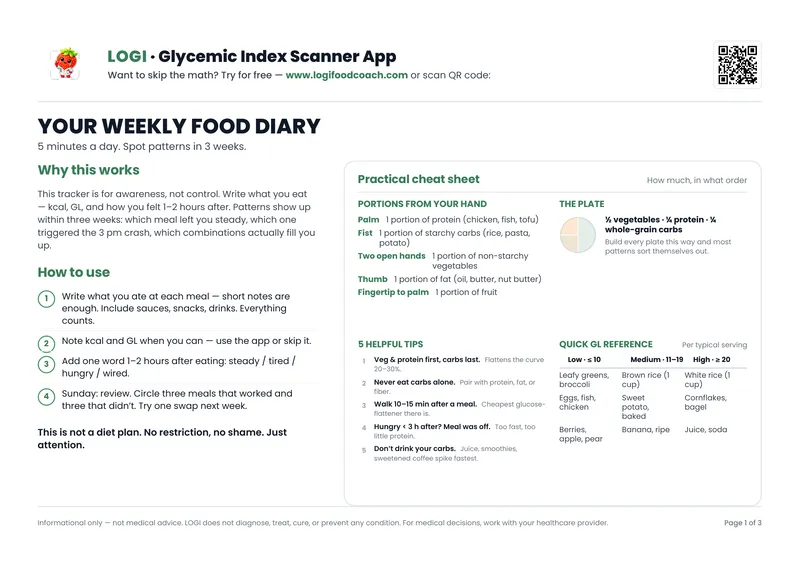
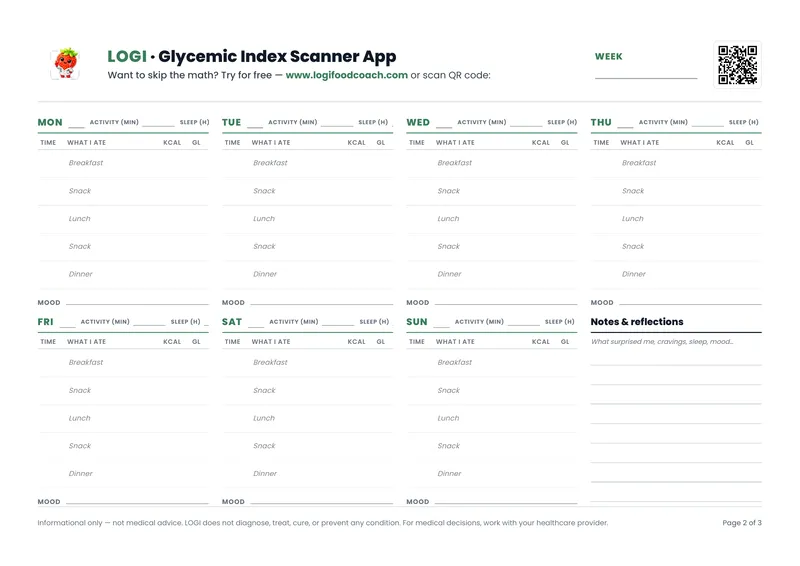
Free PDF — 3 pages
Your Weekly Food Journal
Track meals, glycemic load & mood. Spot patterns in 3 weeks.
No spam. Unsubscribe anytime.