Simple Scrambled Eggs
Perfectly soft scrambled eggs cooked low and slow in butter — a high-protein, low-GI breakfast that keeps blood sugar steady all morning.
Scrambled eggs are one of the most blood-sugar-friendly breakfasts you can make. With virtually zero carbohydrates and a generous dose of protein and healthy fats, this simple two-ingredient dish produces a minimal glycemic response, making it an ideal anchor for any low-GI meal plan. The key is patience — cooking over low heat with gentle stirring yields pillowy, custard-like curds that are leagues beyond the rubbery results of high-heat scrambling.
Eggs are a nutritional powerhouse for glycemic health. Each large egg delivers around 6 grams of complete protein and 5 grams of fat, both of which slow gastric emptying and blunt any glucose spike from foods eaten alongside them. The choline in egg yolks also supports healthy insulin signaling. Butter adds richness and fat-soluble vitamins A, D, and K2, while contributing zero sugar.
For the best blood sugar strategy, eat these eggs as part of a meal sequence: start with non-starchy vegetables or a small salad, then enjoy the eggs, and save any carbohydrate-containing sides — such as a slice of sourdough or a piece of fruit — for last. This simple ordering trick has been shown to reduce post-meal glucose spikes by up to 30%. Pair with avocado, sautéed spinach, or smoked salmon for an even more satisfying and metabolically balanced plate.
Blood Sugar Impact
Virtually no blood sugar impact. Eggs and butter contain negligible carbohydrates, resulting in a glycemic load of 0 and stable blood glucose levels for several hours.
Blood Sugar Tips
- ✓ Add non-starchy vegetables like spinach, tomatoes, or mushrooms to increase fiber and micronutrient content without raising blood sugar.
- ✓ Pair with a slice of whole-grain sourdough bread rather than white toast if you want carbs — the fermentation lowers glycemic response.
- ✓ This is an ideal base meal — if adding sides, eat the eggs and vegetables before any carbohydrate-containing foods to blunt glucose spikes.
🥗 Ingredients
- 3 pcs Egg
- 5 pcs Butter
- 3 pcs Egg
- 5 pcs Butter
👨🍳 Instructions
- 1
Crack all three eggs into a mixing bowl. Season with a small pinch of salt if desired.
- 2
Whisk the eggs briskly with a fork until the yolks and whites are fully combined and the mixture is an even pale yellow — about 30 seconds of vigorous whisking.
- 3
Place a non-stick pan over low heat and add the butter. Let it melt gently, swirling the pan so it coats the entire surface evenly. Do not let the butter brown.
- 4
Once the butter is melted and foaming, pour in the whisked eggs. Resist the urge to stir immediately — let the eggs sit undisturbed for about 20 seconds until you see the edges just beginning to set.
- 5
Using a silicone spatula, gently push the set edges toward the center of the pan, tilting the pan to let the uncooked egg flow into the cleared space. Repeat this motion every 15–20 seconds.
- 6
Continue folding and pushing the curds gently. The eggs should form large, soft, pillowy folds rather than small dry pieces. Keep the heat low throughout — patience is the secret to creamy scrambled eggs.
- 7
When the eggs are about 80% set — still slightly glossy and wet on top — remove the pan from the heat. The residual heat will finish cooking them to a perfect, just-set consistency.
- 8
Slide the scrambled eggs onto a warmed plate and serve immediately. For optimal blood sugar management, enjoy alongside non-starchy vegetables such as sautéed spinach, sliced avocado, or a handful of cherry tomatoes.
📊 Nutrition Per Serving
| Per Serving | Whole Dish | |
|---|---|---|
| Calories | 250 | 250 |
| Carbs | 1g | 1g |
| Sugars | 1g | 1g |
| Natural Sugars | 1g | 1g |
| Protein | 19g | 19g |
| Fat | 19g | 19g |
| Saturated Fat | 7g | 7g |
| Unsaturated Fat | 12g | 12g |
| Fiber | 0g | 0g |
| Sodium | 214mg | 214mg |
Predicted Glucose Response
What if you...
Estimated model — individual responses vary. Not medical advice.
🔄 Lower GI Swaps
Nutritional upgrade rather than a glycemic swap — omega-3 enriched and pasture-raised eggs offer higher levels of anti-inflammatory omega-3 fatty acids and fat-soluble vitamins, which support overall metabolic health. The glycemic impact remains identical at zero.
All three fats have a GI of 0, so this is a lipid-quality swap rather than a glycemic one. Extra-virgin olive oil provides polyphenols and monounsaturated fats linked to improved insulin sensitivity. Ghee is suitable for those avoiding casein or lactose while retaining the buttery flavor.
🔬 The Science Behind This Recipe
Eggs and butter are essentially zero-carbohydrate foods, which means this dish has a glycemic load of 0 and virtually no impact on blood sugar. Each large egg provides about 6 g of complete protein and 5 g of fat — both macronutrients that slow gastric emptying and moderate the glucose response when eaten alongside carbohydrate-containing foods. The choline found in egg yolks plays a role in healthy lipid metabolism and insulin signaling. Butter contributes additional fat-soluble vitamins (A, D, and K2) without adding any sugar. Eating a protein-and-fat-rich dish like scrambled eggs before or alongside carbohydrates has been shown to reduce post-meal glucose spikes by up to 30%, making this recipe an excellent anchor for a blood-sugar-friendly breakfast.
Related recipes
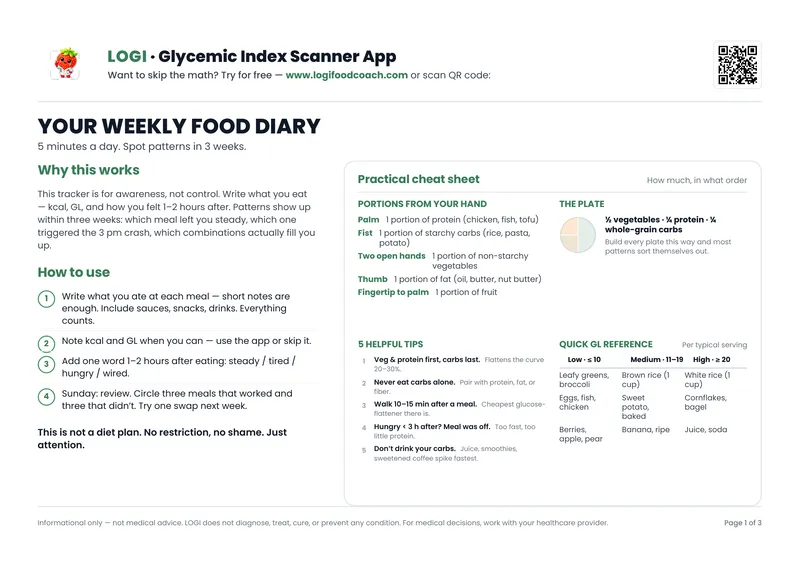
Free PDF — 3 pages
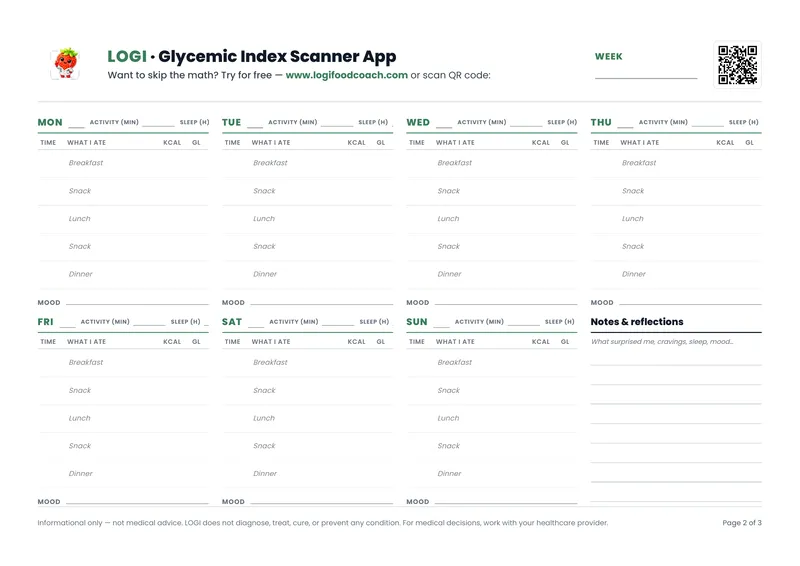
Your Weekly Food Journal
Track meals, glycemic load & mood. Spot patterns in 3 weeks.
No spam. Unsubscribe anytime.