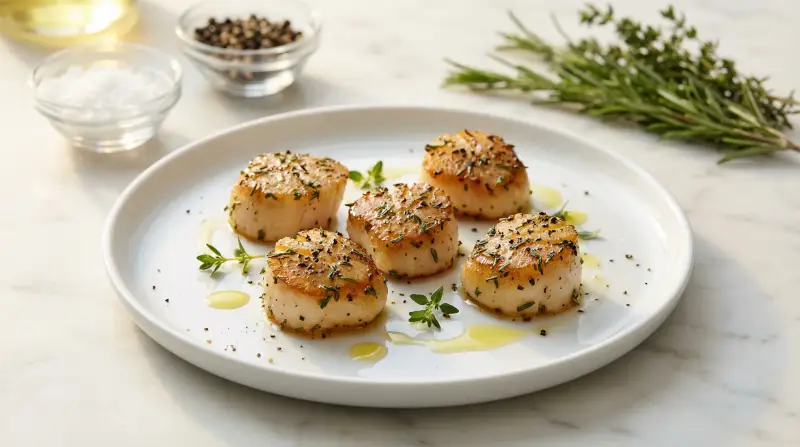
Herb-Crusted Seared Scallops with Mediterranean Aromatics
Perfectly seared sea scallops with a fragrant rosemary-thyme crust deliver lean protein with minimal impact on blood sugar—a sophisticated low-GI entrée.
These elegant herb-crusted scallops showcase how simple, whole-food ingredients create restaurant-quality dishes that support stable blood sugar levels. Sea scallops are an exceptional choice for glycemic management, providing high-quality protein with virtually zero carbohydrates and a glycemic index of zero. The protein content helps slow digestion and promotes satiety, preventing blood sugar spikes that often follow carb-heavy meals.
The aromatic herb coating of fresh rosemary and thyme not only adds sophisticated Mediterranean flavor but also contributes beneficial compounds. Rosemary contains carnosic acid, which research suggests may help improve insulin sensitivity, while thyme provides antioxidants that support metabolic health. The minimal olive oil adds heart-healthy monounsaturated fats that further moderate glucose absorption.
This recipe exemplifies the principles of low-glycemic eating: emphasizing lean proteins, healthy fats, and fresh herbs while avoiding refined carbohydrates and sugars. Pair these scallops with non-starchy vegetables like sautéed spinach, roasted asparagus, or a crisp green salad to create a complete meal that keeps blood sugar stable. For optimal glycemic control, start your meal with the vegetables, then enjoy the protein-rich scallops. This eating sequence has been shown to reduce post-meal glucose spikes by up to 40% compared to eating carbohydrates first.
Blood Sugar Impact
Minimal to negligible blood sugar impact. This protein-rich meal with virtually no carbohydrates will provide stable energy for 4-5 hours without causing any significant glucose spike.
Blood Sugar Tips
- ✓ Pair with fiber-rich vegetables like roasted asparagus or a leafy green salad to create a complete, blood-sugar-friendly meal
- ✓ Add a small portion of complex carbohydrates like quinoa or wild rice if needed for satiety, eating them last after the protein
- ✓ Enjoy this meal earlier in the day when insulin sensitivity is typically higher, though the low glycemic load makes timing less critical
🥗 Ingredients
- 1 tsp olive oil
- 8 pcs sea scallops, side muscle removed
- 1 tbsp fresh rosemary, finely chopped
- 1 tbsp fresh thyme leaves, chopped
- 0.25 tsp sea salt
- 0.25 tsp freshly ground black pepper
- 1 tsp olive oil
- 8 pcs sea scallops, side muscle removed
- 1 tbsp fresh rosemary, finely chopped
- 1 tbsp fresh thyme leaves, chopped
- 0.25 tsp sea salt
- 0.25 tsp freshly ground black pepper
👨🍳 Instructions
- 1
Remove scallops from refrigerator and pat completely dry with paper towels, removing any remaining side muscles. Moisture is the enemy of a good sear, so ensure scallops are thoroughly dried. Let them rest at room temperature for 5 minutes.
- 2
Combine the finely chopped rosemary, thyme leaves, sea salt, and black pepper in a small bowl, mixing thoroughly to create an aromatic herb blend.
- 3
Gently press the herb mixture onto both flat sides of each scallop, creating an even coating. The herbs should adhere to the surface without being too thick.
- 4
Heat a large heavy-bottomed skillet (cast iron or stainless steel works best) over medium-high heat for 2-3 minutes until very hot. Add the olive oil and swirl to coat the pan bottom evenly.
- 5
Carefully place scallops in the hot skillet, leaving space between each one to ensure proper searing. Do not move or disturb them once placed—this allows a golden crust to form.
- 6
Sear scallops undisturbed for 2-3 minutes until a deep golden-brown crust develops on the bottom. The scallops should release easily from the pan when ready to flip.
- 7
Using tongs, flip each scallop gently and sear the second side for another 2-3 minutes. The scallops should feel slightly firm but still have a tender center when pressed gently.
- 8
Remove scallops immediately from the heat when they reach medium doneness—opaque around the edges with a slightly translucent center. Serve immediately while hot, optionally garnished with fresh herb sprigs and a squeeze of lemon.
📊 Nutrition Per Serving
| Per Serving | Whole Dish | |
|---|---|---|
| Calories | 128 | 256 |
| Carbs | 5g | 10g |
| Sugars | 0g | 0g |
| Natural Sugars | 0g | 0g |
| Protein | 19g | 39g |
| Fat | 4g | 7g |
| Saturated Fat | 1g | 1g |
| Unsaturated Fat | 2g | 5g |
| Fiber | 1g | 1g |
| Soluble Fiber | 0g | 0g |
| Insoluble Fiber | 0g | 1g |
| Sodium | 952mg | 1904mg |
Predicted Glucose Response
What if you...
Estimated model — individual responses vary. Not medical advice.
🔄 Lower GI Swaps
These oils have higher smoke points which prevents oxidation during high-heat searing, and they contain more stable fats that don't interfere with insulin sensitivity like degraded oils can
These spices contain compounds that actively improve insulin sensitivity and glucose metabolism - cayenne has capsaicin, turmeric has curcumin, and cinnamon helps cells respond better to insulin
These alternatives add flavor while providing minerals like chromium and magnesium that support healthy blood sugar regulation, unlike plain salt which can contribute to insulin resistance when used in excess
While rosemary is excellent, oregano and sage contain higher concentrations of polyphenols that have been shown to slow carbohydrate digestion and improve post-meal glucose response
🔬 The Science Behind This Recipe
The Science Behind This Blood Sugar-Friendly Dish
This herb-crusted scallop recipe is a masterclass in blood sugar management, with a near-zero glycemic load of 0.1 and an impressively low GI of 7. The secret lies in its protein-rich foundation: scallops are pure lean protein with virtually no carbohydrates, meaning they won't trigger any significant glucose response. When you eat protein without accompanying starches or sugars, your blood sugar remains stable because there's simply nothing to convert into glucose. The healthy fats in olive oil further slow digestion and promote satiety, helping you feel satisfied without the energy crashes that come from high-carb meals.
The aromatic herbs—rosemary and thyme—aren't just flavor enhancers; they contain compounds that may support metabolic health. Research suggests that rosemary contains carnosic acid, which has been studied for its potential to improve insulin sensitivity. While herbs alone won't dramatically change your blood sugar, they're part of a broader pattern: building meals around protein and healthy fats, with herbs and vegetables providing flavor, nutrients, and beneficial plant compounds. This approach naturally crowds out the refined carbohydrates that cause glucose spikes.
To maximize the blood sugar benefits of this meal, pair these scallops with non-starchy vegetables like sautéed spinach, roasted asparagus, or a crisp Mediterranean salad. If you want to add a small portion of carbohydrates, eat them last—after the protein and vegetables. This "food sequencing" strategy can reduce the glucose spike by up to 73% compared to eating carbs first. The combination of protein-first eating and mindful portions creates a satisfying meal that keeps your energy steady for hours.
Related recipes
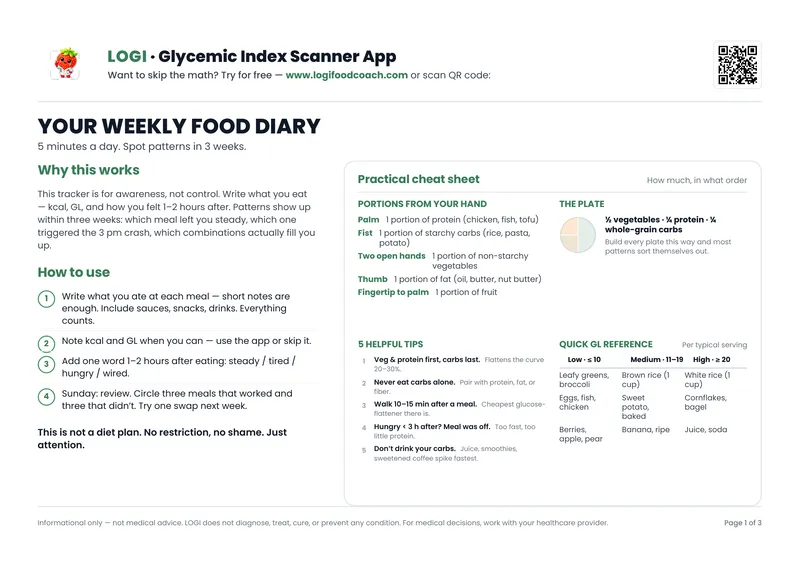
Free PDF — 3 pages
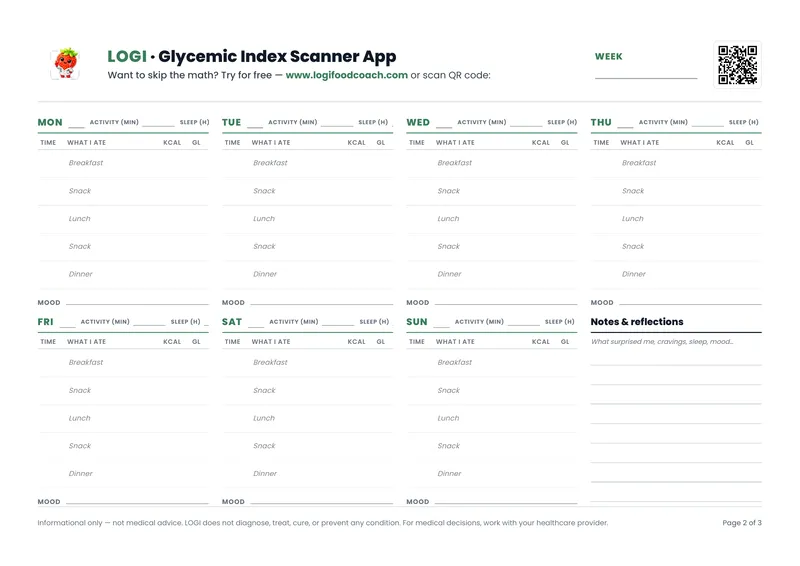
Your Weekly Food Journal
Track meals, glycemic load & mood. Spot patterns in 3 weeks.
No spam. Unsubscribe anytime.