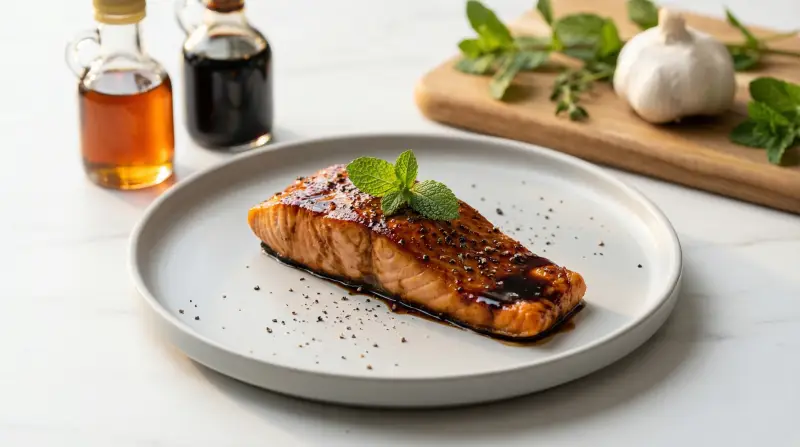
Balsamic-Glazed Salmon with Reduced Maple Syrup
Omega-3 rich salmon with a carefully balanced glaze that minimizes blood sugar impact while delivering bold, caramelized flavor in under 30 minutes.
This blood sugar-friendly salmon recipe transforms a classic maple glaze into a low-glycemic masterpiece. By significantly reducing the maple syrup to just 2 teaspoons per serving and balancing it with balsamic vinegar's acidity, we slow glucose absorption while creating a beautifully caramelized crust. The garlic adds depth and contains compounds that may improve insulin sensitivity.
Salmon is an exceptional choice for glycemic control, providing high-quality protein and omega-3 fatty acids that help reduce inflammation and improve metabolic health. The healthy fats in salmon slow digestion, preventing blood sugar spikes. This recipe uses a basting technique that creates maximum flavor with minimal sweetener, allowing the natural richness of the fish to shine through.
For optimal blood sugar management, pair this salmon with non-starchy vegetables like roasted broccoli or a large mixed green salad dressed with olive oil. The fiber and additional healthy fats will further stabilize your glucose response. Consider eating your vegetables first, then the salmon, to maximize the benefits of sequential eating for blood sugar control. Each serving contains only 8 grams of carbohydrates, with the protein and fat content ensuring a gradual, controlled glucose response that supports stable energy levels throughout your day.
Blood Sugar Impact
Low to moderate impact with a gradual, controlled rise in blood sugar. The high protein and fat content from salmon will slow glucose absorption from the maple syrup glaze, providing stable energy for 3-4 hours.
Blood Sugar Tips
- ✓ Eat a small salad or non-starchy vegetables before the salmon to further slow glucose absorption through added fiber
- ✓ Keep portion size of the maple glaze modest - the balsamic vinegar's acidity helps moderate the glycemic response
- ✓ Pair this meal with a 10-15 minute walk after eating to help muscles utilize glucose and prevent post-meal spikes
🥗 Ingredients
- 4 tbsp maple syrup
- 1 pcs garlic clove, minced
- 4 tbsp balsamic vinegar
- 2 oz salmon fillets, skin-on
- 0.25 tsp kosher salt
- 0.125 tsp fresh cracked black pepper
- 2 tbsp fresh mint or parsley for garnish
- 4 tbsp maple syrup
- 1 pcs garlic clove, minced
- 4 tbsp balsamic vinegar
- 2 oz salmon fillets, skin-on
- 0.25 tsp kosher salt
- 0.125 tsp fresh cracked black pepper
- 2 tbsp fresh mint or parsley for garnish
👨🍳 Instructions
- 1
Position oven rack in the center and preheat to 450°F (232°C). Line a rimmed baking sheet with parchment paper or lightly coat with cooking spray to prevent sticking.
- 2
Combine 4 teaspoons maple syrup, minced garlic, and balsamic vinegar in a small saucepan. Warm over low heat for 2-3 minutes, stirring occasionally, until the mixture is hot and fragrant but not boiling. This gentle heating melds the flavors while the vinegar's acidity helps moderate the glycemic impact of the maple syrup. Remove from heat immediately.
- 3
Pour half of the warm glaze into a separate small bowl for basting during cooking. Reserve the remaining half in the saucepan, keeping it covered to maintain temperature for serving.
- 4
Pat salmon fillets completely dry with paper towels to ensure proper browning. Arrange skin-side down on the prepared baking sheet, spacing them evenly. Brush the tops generously with the basting glaze using a pastry brush, ensuring even coverage.
- 5
Roast salmon for 10 minutes, then remove from oven and baste again with the glaze from the bowl using a clean brush. Return to oven and continue roasting for 5 more minutes.
- 6
Check salmon for doneness by gently pressing the thickest part with a fork - it should flake easily and reach an internal temperature of 145°F (63°C). If needed, baste once more and roast an additional 3-5 minutes until just cooked through. Total cooking time will be 18-22 minutes depending on fillet thickness. Avoid overcooking to maintain moisture and omega-3 content.
- 7
Transfer salmon fillets to individual serving plates using a wide spatula. Season lightly with kosher salt and freshly cracked black pepper. Drizzle each fillet with approximately 1 teaspoon of the reserved warm glaze from the saucepan, garnish with fresh mint or parsley leaves, and serve immediately alongside non-starchy vegetables like roasted broccoli, asparagus, or a large mixed green salad.
📊 Nutrition Per Serving
| Per Serving | Whole Dish | |
|---|---|---|
| Calories | 348 | 2089 |
| Carbs | 9g | 53g |
| Sugars | 8g | 45g |
| Natural Sugars | 8g | 45g |
| Protein | 30g | 182g |
| Fat | 20g | 118g |
| Saturated Fat | 5g | 28g |
| Unsaturated Fat | 15g | 90g |
| Fiber | 0g | 1g |
| Sodium | 191mg | 1143mg |
Predicted Glucose Response
What if you...
Estimated model — individual responses vary. Not medical advice.
🔄 Lower GI Swaps
These zero-calorie sweeteners have no impact on blood sugar (GI of 0) compared to maple syrup's GI of 54, eliminating the primary glycemic load in this recipe
Standard balsamic vinegar contains concentrated sugars (GI ~50); these alternatives provide acidity without added sugars, reducing overall glycemic impact
While salmon already has zero glycemic impact, wild-caught varieties and fatty fish like mackerel contain higher omega-3 levels that improve insulin sensitivity and glucose metabolism
Cinnamon and fenugreek have been shown to improve insulin sensitivity and lower post-meal blood sugar spikes, while rosemary adds flavor without affecting the glycemic response
🔬 The Science Behind This Recipe
Why This Works for Your Blood Sugar
This balsamic-glazed salmon is a masterclass in blood sugar management, with a remarkably low glycemic load of just 6.9. The star here is the salmon itself—rich in omega-3 fatty acids and high-quality protein, which significantly slow down digestion and glucose absorption. When you eat protein and fat together with carbohydrates (like the small amount of maple syrup in the glaze), your body processes everything more gradually. This is why the estimated GI sits at a moderate 38 despite containing a natural sweetener. The protein in salmon also triggers the release of hormones that help regulate insulin response, making your blood sugar curve much gentler than it would be if you ate those carbs alone.
The balsamic vinegar adds another layer of glucose control through its acetic acid content. Research shows that vinegar consumed with meals can improve insulin sensitivity and reduce post-meal blood sugar spikes by up to 20%. It works by slowing stomach emptying and improving how your muscles take up glucose from your bloodstream. The garlic contributes trace amounts of compounds that may support healthy insulin function, though its main role here is flavor enhancement.
Here's a pro tip: eat your salmon and any vegetables first, saving any starchy sides for last. This "food sequencing" strategy can reduce glucose spikes by 40% or more. Also, consider taking a 10-15 minute walk after this meal—even gentle movement helps your muscles absorb glucose without requiring as much insulin, keeping your blood sugar stable and your energy consistent throughout the afternoon.
Related recipes
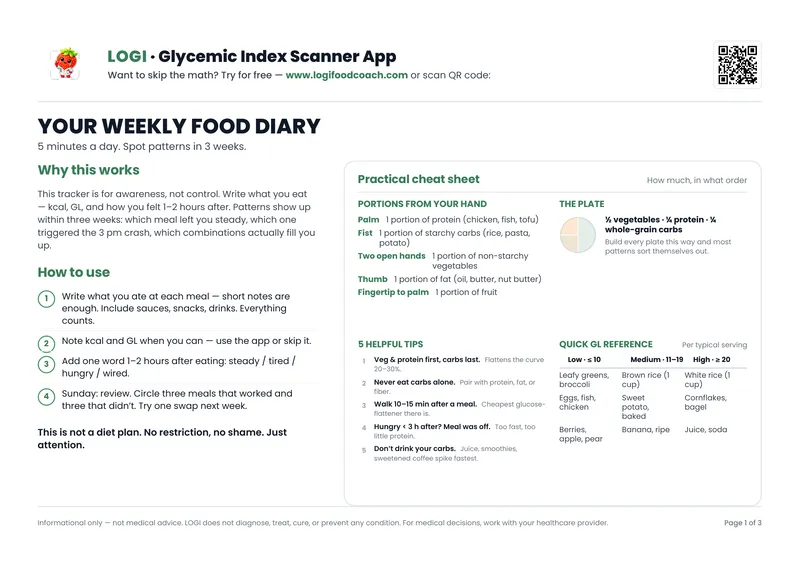
Free PDF — 3 pages
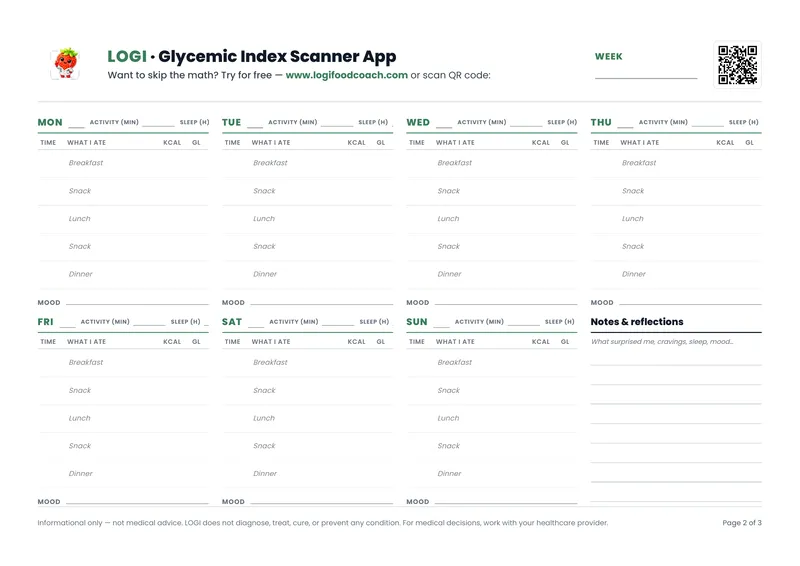
Your Weekly Food Journal
Track meals, glycemic load & mood. Spot patterns in 3 weeks.
No spam. Unsubscribe anytime.