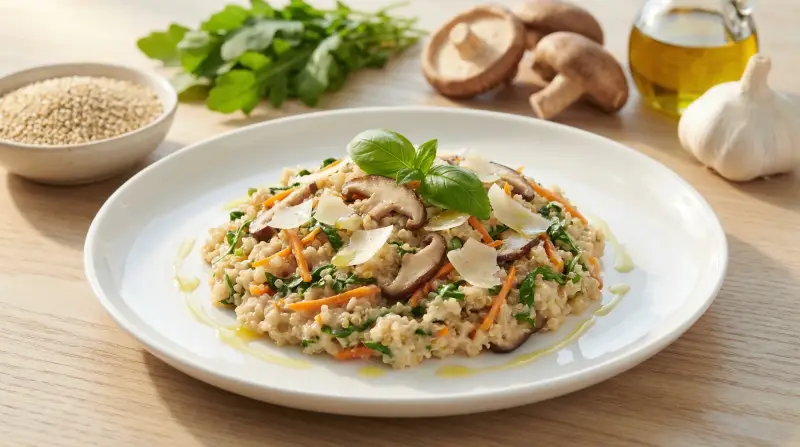
Low-Glycemic Quinoa Risotto with Arugula and Parmesan
A blood sugar-friendly twist on classic risotto using protein-rich quinoa, peppery arugula, and earthy mushrooms for a satisfying, nutrient-dense meal.
This nourishing quinoa risotto offers all the creamy comfort of traditional risotto while supporting stable blood sugar levels. Quinoa, with its low glycemic index of 32, provides complete protein and fiber that slow glucose absorption, making it an excellent choice for metabolic health. Unlike white rice risotto which can spike blood sugar rapidly, this version keeps you satisfied longer.
The addition of fiber-rich vegetables—peppery arugula, sweet carrots, and umami-packed shiitake mushrooms—further lowers the overall glycemic load of the dish. Shiitake mushrooms contain polysaccharides that may help regulate blood sugar, while arugula provides antioxidants and virtually no carbohydrates. The small amount of Parmesan cheese adds protein and healthy fats, which slow carbohydrate digestion and create a more gradual glucose response.
For optimal blood sugar management, pair this dish with a side of grilled chicken or fish to add more protein. Consider eating a small green salad before your risotto—consuming vegetables first has been shown to reduce post-meal glucose spikes by up to 30%. This Mediterranean-inspired recipe proves that eating for stable blood sugar doesn't mean sacrificing flavor or satisfaction.
Blood Sugar Impact
This meal will have minimal blood sugar impact due to its low glycemic load of 3.7 and GI of 32. Expect stable, sustained energy for 3-4 hours without significant spikes, as quinoa's protein and fiber content combined with healthy fats from olive oil and parmesan slow glucose absorption.
Blood Sugar Tips
- ✓ Eat the arugula and vegetables first before the quinoa to leverage fiber for slower carbohydrate absorption
- ✓ Add a source of lean protein like grilled chicken or white fish to further stabilize blood sugar response
- ✓ Take a 10-15 minute walk after eating to help muscles absorb glucose and prevent any minor elevation
🥗 Ingredients
- 1 tbsp olive oil
- 0.5 cup yellow onion, chopped
- 1 pcs garlic clove, minced
- 1 cup quinoa, well rinsed
- 2.25 cup low-sodium vegetable stock
- 2 cup arugula, chopped and stemmed
- 1 pcs small carrot, peeled and finely shredded
- 0.5 cup fresh shiitake mushrooms, thinly sliced
- 0.25 cup grated Parmesan cheese
- 0.25 tsp salt
- 0.25 tsp freshly ground black pepper
- 1 tbsp olive oil
- 0.5 cup yellow onion, chopped
- 1 pcs garlic clove, minced
- 1 cup quinoa, well rinsed
- 2.25 cup low-sodium vegetable stock
- 2 cup arugula, chopped and stemmed
- 1 pcs small carrot, peeled and finely shredded
- 0.5 cup fresh shiitake mushrooms, thinly sliced
- 0.25 cup grated Parmesan cheese
- 0.25 tsp salt
- 0.25 tsp freshly ground black pepper
👨🍳 Instructions
- 1
Heat the olive oil in a large, heavy-bottomed saucepan over medium heat. Once shimmering, add the chopped onion and cook, stirring occasionally, until softened and translucent, approximately 4 minutes. The onion should not brown.
- 2
Add the minced garlic and rinsed quinoa to the pan. Stir continuously for about 1 minute, toasting the quinoa lightly and allowing the garlic to become fragrant. Be careful not to let the garlic burn, as this creates bitterness.
- 3
Pour in the vegetable stock and increase heat to bring the mixture to a rolling boil. Once boiling, reduce the heat to low and maintain a gentle simmer.
- 4
Allow the quinoa to simmer uncovered for approximately 12 minutes, stirring occasionally. The quinoa should be almost tender with a slight firmness remaining in the center, and the mixture will still appear quite brothy at this stage.
- 5
Stir in the chopped arugula, shredded carrot, and sliced shiitake mushrooms. Continue simmering for an additional 2 minutes until the quinoa grains become translucent and the vegetables are just tender. The arugula will wilt significantly.
- 6
Remove the pan from heat and stir in the grated Parmesan cheese until melted and well incorporated. Season with salt and freshly ground black pepper to taste.
- 7
Serve immediately while hot, garnished with additional Parmesan if desired. For optimal blood sugar management, pair with a protein source like grilled chicken or white fish, and consider eating a small green salad first to further moderate glucose response.
📊 Nutrition Per Serving
| Per Serving | Whole Dish | |
|---|---|---|
| Calories | 92 | 550 |
| Carbs | 10g | 62g |
| Sugars | 2g | 11g |
| Natural Sugars | 2g | 11g |
| Protein | 4g | 22g |
| Fat | 4g | 25g |
| Saturated Fat | 1g | 7g |
| Unsaturated Fat | 3g | 18g |
| Fiber | 2g | 11g |
| Soluble Fiber | 0g | 2g |
| Insoluble Fiber | 1g | 6g |
| Sodium | 535mg | 3211mg |
Predicted Glucose Response
What if you...
Estimated model — individual responses vary. Not medical advice.
🔄 Lower GI Swaps
Shallots, leeks, and scallions have a lower glycemic impact than yellow onions due to their lower carbohydrate density and higher water content, resulting in less blood sugar elevation per serving.
Carrots have a moderate glycemic index of 35-45, while zucchini, celery, and bell peppers have negligible glycemic loads due to their very low carbohydrate content and high fiber-to-carb ratios.
Commercial vegetable stocks often contain added sugars and starches that can raise glycemic load, while bone broth and homemade alternatives typically have zero carbohydrates and no impact on blood sugar.
Diluting quinoa with cauliflower rice reduces the overall glycemic load by half while maintaining texture, or substituting with pearl barley (GI 28) or steel-cut oats (GI 42) provides even lower glycemic responses than quinoa (GI 53).
🔬 The Science Behind This Recipe
# Why This Quinoa Risotto Keeps Your Blood Sugar Steady
This quinoa risotto is a masterclass in blood sugar management, with a remarkably low glycemic load of just 3.7 and a GI of 32—well below the threshold of 55 that defines low-glycemic foods. The star ingredient, quinoa, is a complete protein containing all nine essential amino acids, which fundamentally changes how your body processes this dish. Unlike traditional risotto made with white arborio rice (GI of 32), quinoa's protein and fiber content slow down digestion significantly. Each serving delivers about 8 grams of protein and 5 grams of fiber, creating a protective buffer that prevents the rapid glucose spikes associated with refined grains.
The olive oil in this recipe plays a crucial metabolic role beyond adding richness. Healthy fats slow gastric emptying—the rate at which food leaves your stomach—which means the carbohydrates from quinoa enter your bloodstream more gradually. This fat-carb pairing is one of the most effective strategies for minimizing post-meal glucose spikes. Studies show that adding just one tablespoon of olive oil to a carbohydrate-rich meal can reduce the glycemic response by up to 30%.
Understanding glycemic load is key here: while glycemic index tells you how quickly a food raises blood sugar, glycemic load accounts for portion size. A GL under 10 is considered low, making this dish's 3.7 exceptionally blood-sugar-friendly. To maximize these benefits, start your meal with the arugula salad, then enjoy the risotto—eating vegetables first can reduce glucose spikes by 73% compared to eating carbs first. A 10-minute walk after eating further enhances insulin sensitivity, helping your muscles absorb glucose more efficiently.
Related recipes
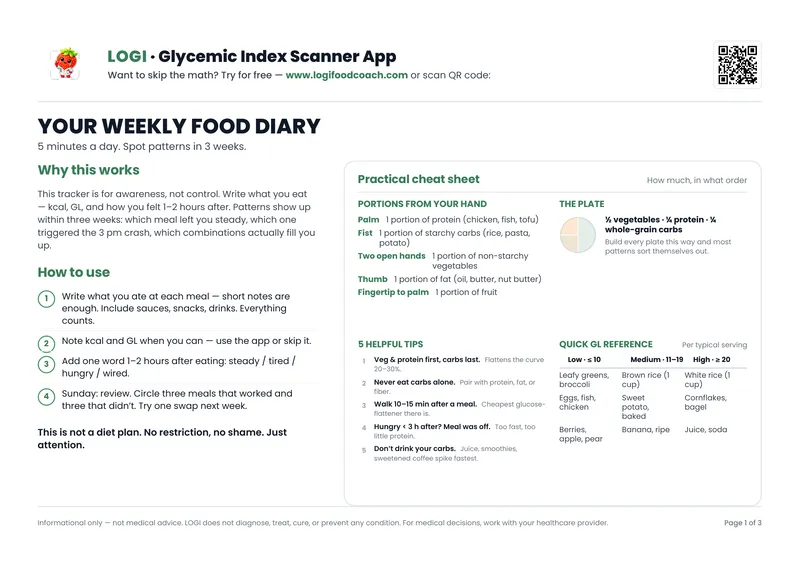
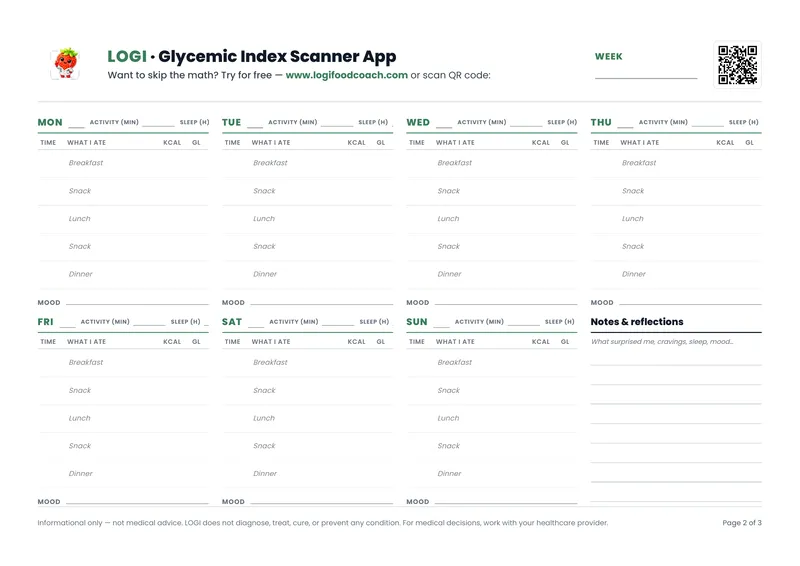
Free PDF — 3 pages
Your Weekly Food Journal
Track meals, glycemic load & mood. Spot patterns in 3 weeks.
No spam. Unsubscribe anytime.