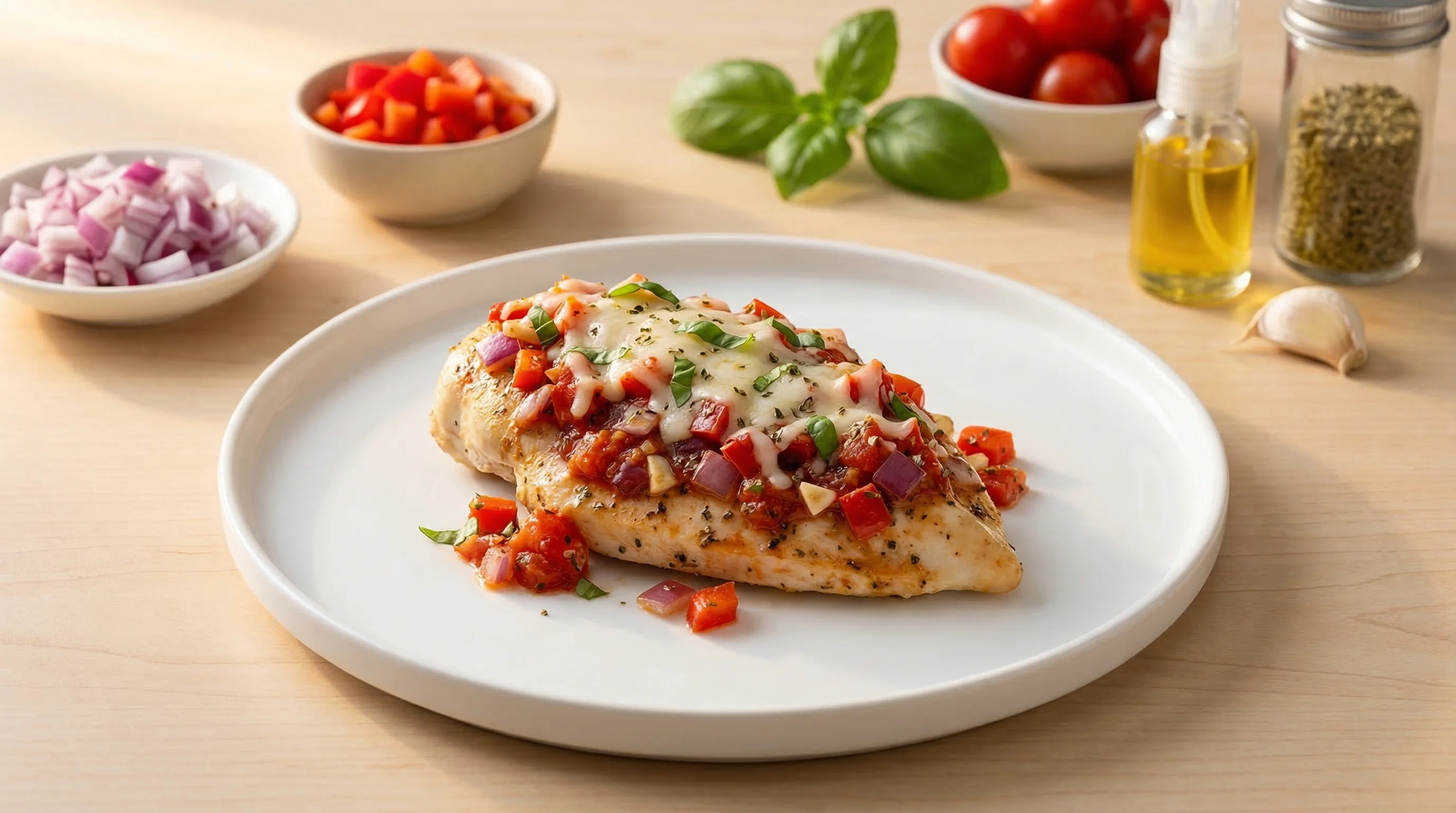
Low-Glycemic Pizza-Topped Chicken Breast
Succulent butterflied chicken breast crowned with a rich tomato-herb sauce and melted cheese—all the pizza flavors you love without the blood sugar spike.
This Italian-inspired dish delivers all the satisfaction of pizza night while keeping your blood sugar stable. By focusing on lean protein and fiber-rich vegetables instead of refined flour crust, you'll enjoy sustained energy without the post-meal crash.
The recipe features a butterflied chicken breast that cooks evenly and quickly, topped with a homemade tomato sauce rich in lycopene and oregano's natural anti-inflammatory compounds. The reduced-fat cheese provides protein and calcium while keeping saturated fat in check. Fresh vegetables like bell peppers and tomatoes add fiber that slows glucose absorption, while garlic and basil contribute flavor and beneficial plant compounds.
For optimal blood sugar management, pair this dish with non-starchy vegetables first—start your meal with the recommended green salad to activate digestive enzymes and slow carbohydrate absorption. If including potato wedges, keep portions modest (about 100g) and eat them last, after the protein and vegetables. The combination of protein, healthy fats from cheese, and fiber creates a balanced meal that won't spike your glucose levels, making this perfect for lunch or dinner when you want comfort food that supports your metabolic health.
Blood Sugar Impact
Minimal blood sugar impact expected due to the very low glycemic load of 3.8 and GI of 20. The high protein from chicken breast combined with cheese and fiber-rich vegetables should provide stable energy for 3-4 hours without significant glucose spikes.
Blood Sugar Tips
- ✓ Eat the vegetables (bell pepper and onion) first before the chicken to further slow glucose absorption through increased fiber intake
- ✓ Pair this meal with a 10-15 minute walk after eating to help muscles utilize any glucose released into the bloodstream
- ✓ Add a side of leafy greens or a small salad with olive oil dressing to increase fiber content and healthy fats, which will further stabilize blood sugar
🥗 Ingredients
- 0.5 pcs ½ small red onion, finely chopped
- 0.5 pcs ½ red pepper, deseeded and chopped
- 1 pcs 1 small garlic clove, crushed
- 4 pcs Low-calorie cooking spray
- 2 pcs 2 on-the-vine tomatoes, chopped
- 1 tbsp 1 tbsp canned chopped tomatoes
- 1 tsp 1 tsp tomato purée
- 1 tsp 1 tsp dried oregano
- 1 pcs 1 skinless and boneless chicken breast
- 40 g 40g reduced-fat Cheddar, grated
- 1 pcs 1 cherry tomato, halved
- 1 tsp 1 tsp finely chopped fresh basil
- 0.5 pcs ½ small red onion, finely chopped
- 0.5 pcs ½ red pepper, deseeded and chopped
- 1 pcs 1 small garlic clove, crushed
- 4 pcs Low-calorie cooking spray
- 2 pcs 2 on-the-vine tomatoes, chopped
- 1 tbsp 1 tbsp canned chopped tomatoes
- 1 tsp 1 tsp tomato purée
- 1 tsp 1 tsp dried oregano
- 1 pcs 1 skinless and boneless chicken breast
- 1.4 oz 40g reduced-fat Cheddar, grated
- 1 pcs 1 cherry tomato, halved
- 1 tsp 1 tsp finely chopped fresh basil
👨🍳 Instructions
- 1
Heat a small non-stick saucepan over medium heat and lightly coat with cooking spray. Add the finely chopped red onion, red pepper, and crushed garlic. Sauté for 4-5 minutes, stirring occasionally, until the vegetables soften and become fragrant.
- 2
Stir in the chopped fresh tomatoes, canned tomatoes, tomato purée, and dried oregano. Reduce heat to low and let the sauce simmer gently for 5 minutes, allowing the flavors to meld. Remove from heat and set aside.
- 3
Preheat your oven to 220°C (200°C fan/gas mark 7). Place the chicken breast on a clean cutting board and carefully slice it horizontally through the middle, stopping just before cutting all the way through. Open the chicken like a book to create a butterfly shape, which ensures even cooking.
- 4
Spray a non-stick frying pan with cooking spray and place over medium heat. Once hot, add the butterflied chicken breast and cook for 3-4 minutes per side until golden brown. This searing step locks in moisture and adds flavor.
- 5
Transfer the browned chicken to a non-stick baking tray and place in the preheated oven. Bake for 15-20 minutes until the chicken is cooked through with no pink remaining. To test doneness, insert a skewer into the thickest part—the juices should run clear.
- 6
Remove the chicken from the oven and generously spread the prepared tomato-vegetable sauce over the top. Sprinkle the grated reduced-fat Cheddar evenly across the surface, then place the halved cherry tomato on top as a garnish.
- 7
Return the topped chicken to the oven for an additional 5 minutes, just until the cheese melts and begins to bubble. Watch carefully to prevent over-browning.
- 8
Remove from the oven, sprinkle with freshly chopped basil, and serve immediately. For optimal blood sugar control, pair with a large green salad eaten first, followed by the chicken, and if desired, a small portion (100g) of oven-baked potato wedges with skin on eaten last.
📊 Nutrition Per Serving
| Per Serving | Whole Dish | |
|---|---|---|
| Calories | 426 | 426 |
| Carbs | 20g | 20g |
| Sugars | 11g | 11g |
| Natural Sugars | 11g | 11g |
| Protein | 48g | 48g |
| Fat | 17g | 17g |
| Saturated Fat | 9g | 9g |
| Unsaturated Fat | 9g | 9g |
| Fiber | 6g | 6g |
| Soluble Fiber | 1g | 1g |
| Insoluble Fiber | 2g | 2g |
| Sodium | 351mg | 351mg |
Predicted Glucose Response
What if you...
Estimated model — individual responses vary. Not medical advice.
🔄 Lower GI Swaps
While onions have a moderate glycemic index of 10-15, zucchini, mushrooms, and spinach have virtually zero glycemic impact and add volume and nutrients without affecting blood sugar levels.
Green bell peppers have a slightly lower sugar content than red peppers (which are sweeter and more mature), while broccoli and cauliflower have negligible carbohydrate content and near-zero glycemic load.
While cheddar is already low-glycemic, mozzarella has slightly less lactose (milk sugar), and parmesan and feta are aged cheeses with virtually no carbohydrates, making them even more blood-sugar neutral options.
Cherry tomatoes are already low-glycemic, but using smaller amounts of concentrated flavors like sun-dried tomatoes, roasted peppers, or artichoke hearts provides intense flavor with minimal carbohydrate content and lower overall glycemic load.
🔬 The Science Behind This Recipe
The Science Behind This Blood Sugar-Friendly Recipe
This Pizza-Topped Chicken Breast is a masterclass in blood sugar management, with an impressively low glycemic load of just 3.8 and a GI of 20. The secret lies in its protein-forward design combined with fiber-rich vegetables. Chicken breast serves as the foundation, providing high-quality protein that significantly slows digestion and glucose absorption. When you eat protein alongside other foods, it triggers the release of hormones that moderate insulin response, preventing the sharp blood sugar spikes associated with carb-heavy meals. The lean protein also promotes satiety, helping you feel fuller longer without adding any glycemic burden.
The vegetable toppings—red bell peppers, onions, and tomatoes—contribute crucial fiber and water content while adding minimal carbohydrates. Bell peppers are particularly beneficial, containing only about 6 grams of carbs per cup, most of which come with fiber that slows sugar absorption. The tomatoes provide lycopene and additional fiber, while garlic and onions contain compounds that may actually improve insulin sensitivity over time. Together, these vegetables create volume and satisfaction without significantly impacting blood glucose.
To maximize the blood sugar benefits of this meal, consider pairing it with a side salad eaten first—the "veggie-first" approach primes your digestive system and further blunts glucose response. A 10-15 minute walk after eating can also help your muscles absorb glucose more efficiently. Remember, glycemic load accounts for both the quality and quantity of carbohydrates, which is why this recipe scores so well: it's not just low-GI ingredients, but also a modest total carb amount that keeps your blood sugar stable and steady.
Related recipes
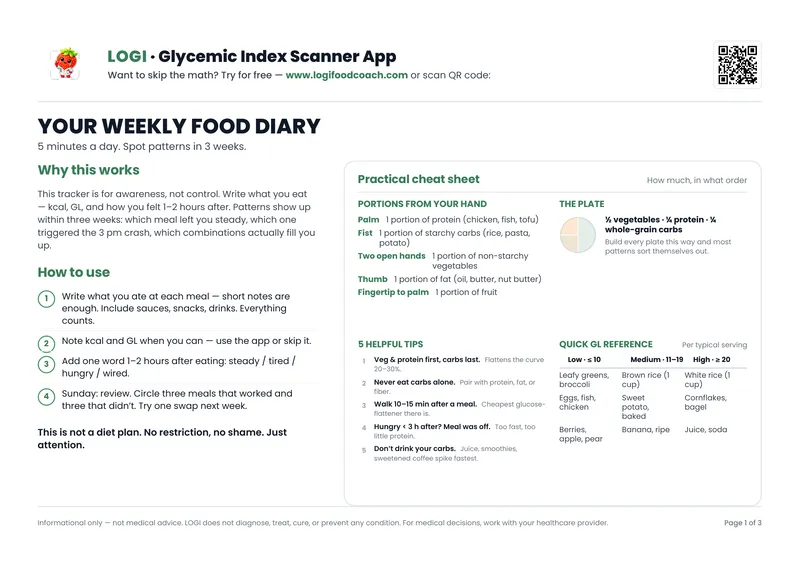
Free PDF — 3 pages
Your Weekly Food Journal
Track meals, glycemic load & mood. Spot patterns in 3 weeks.
No spam. Unsubscribe anytime.