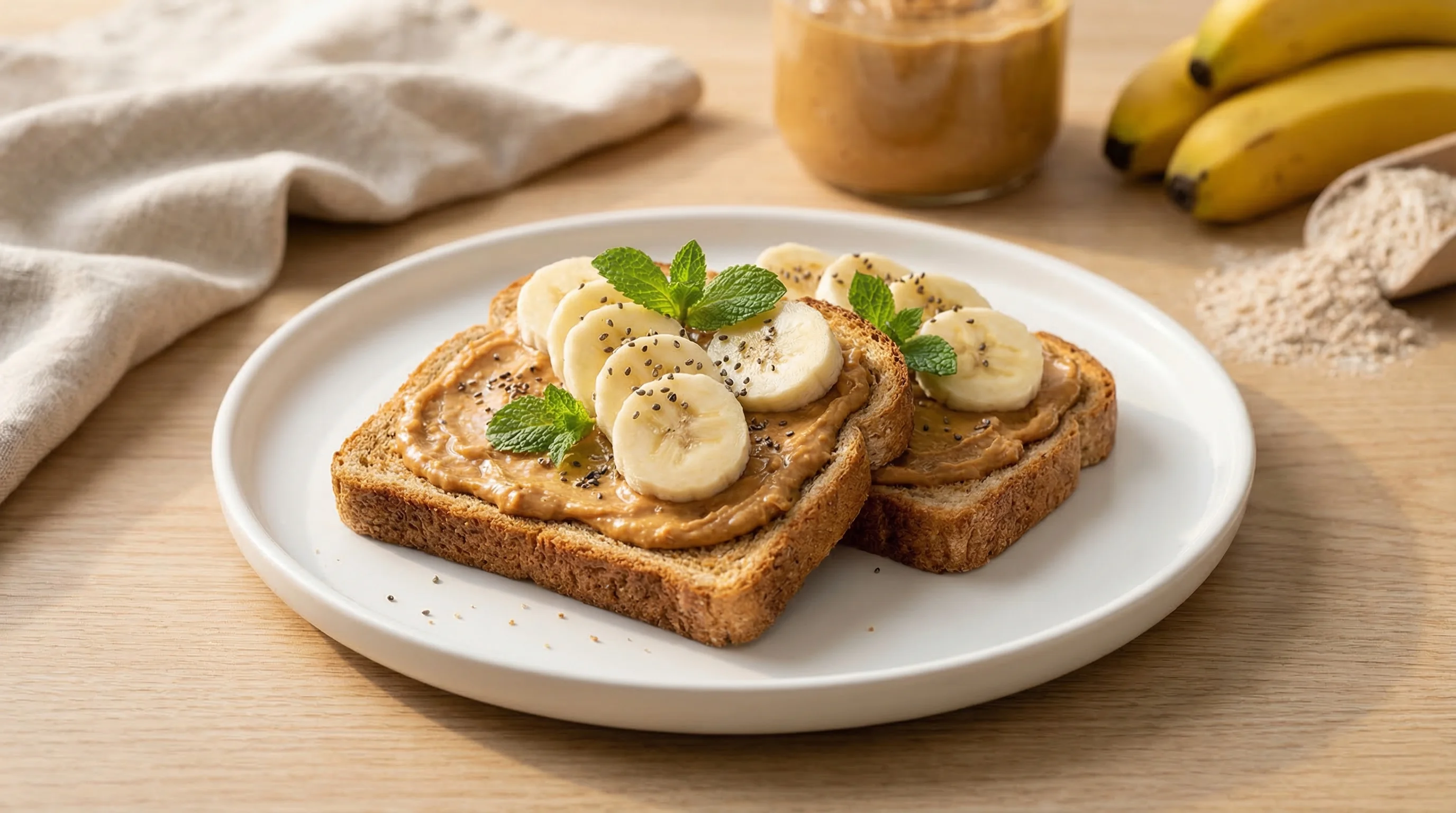
Low-Glycemic Peanut Butter Banana Toast
A blood sugar-friendly breakfast combining whole grain bread, natural peanut butter, and perfectly portioned banana for sustained morning energy.
This thoughtfully balanced breakfast transforms a classic favorite into a low-glycemic powerhouse that keeps your blood sugar stable throughout the morning. By pairing fiber-rich whole wheat bread with protein and healthy fats from natural peanut butter, we create a meal that slows glucose absorption and prevents the energy crashes associated with typical breakfast choices.
The key to this recipe's glycemic success lies in portion control and strategic pairing. While bananas have a moderate glycemic index, combining them with protein-rich peanut butter and whole grain bread significantly reduces the overall glycemic load. The soluble fiber in whole wheat bread, combined with the healthy fats in peanut butter, creates a protective barrier that slows carbohydrate digestion. This means steady energy release rather than a blood sugar spike.
For optimal glycemic control, eat the peanut butter-topped toast first, then finish with the banana slices. This "protein and fat first" approach primes your digestive system to handle carbohydrates more efficiently. Choose natural peanut butter without added sugars, and opt for a slightly green-tipped banana which contains more resistant starch and less simple sugar than fully ripe bananas. This simple breakfast provides sustained energy, keeps you satisfied until lunch, and supports healthy blood sugar management throughout your day.
Blood Sugar Impact
This meal has a low-moderate glycemic impact with steady energy release over 2-3 hours. The combination of protein and fat from peanut butter helps slow the absorption of carbohydrates from the bread and banana, preventing sharp blood sugar spikes.
Blood Sugar Tips
- ✓ Add a handful of nuts or seeds on top to further increase protein and healthy fats, which will slow carbohydrate absorption
- ✓ Eat this meal after light physical activity or pair it with a 10-15 minute walk afterward to help muscles absorb glucose more efficiently
- ✓ Choose a slightly green banana instead of a fully ripe one, as it contains more resistant starch and will have a lower glycemic impact
🥗 Ingredients
- 2 pcs whole wheat bread with bran and germ
- 2 tbsp natural peanut butter
- 0.5 pcs small banana, slightly underripe
- 2 pcs whole wheat bread with bran and germ
- 2 tbsp natural peanut butter
- 0.5 pcs small banana, slightly underripe
👨🍳 Instructions
- 1
Select two slices of whole wheat bread with visible bran and germ. Check the label to ensure it contains at least 3 grams of fiber per slice for optimal blood sugar control.
- 2
Place the bread slices in a toaster and toast on medium setting until golden brown and crispy. Toasting slightly increases resistant starch content, which helps moderate glucose absorption.
- 3
While the bread is toasting, measure out 2 tablespoons of natural peanut butter. Ensure you're using peanut butter with only peanuts and salt in the ingredients—no added sugars or hydrogenated oils.
- 4
Remove the toasted bread from the toaster and immediately spread 1 tablespoon of peanut butter evenly on each slice while still warm. The warmth helps the peanut butter spread smoothly and creates a delicious melted texture.
- 5
Peel half of a small banana, preferably one that's slightly underripe with a green-tinged tip. Slice it into thin rounds, approximately 1/4-inch thick, to distribute evenly across the toast.
- 6
Arrange the banana slices on top of the peanut butter-covered toast, pressing them gently into the peanut butter so they adhere. You can overlap them slightly or arrange them in a single layer.
- 7
For enhanced blood sugar control, eat the toast in this order: take several bites of the peanut butter toast first to get protein and fat into your system, then finish with the banana-topped portions. This eating sequence helps minimize glucose spikes.
- 8
Serve immediately while the toast is still warm and crispy. Pair with a glass of water or unsweetened green tea for optimal digestion and blood sugar management.
📊 Nutrition Per Serving
| Per Serving | Whole Dish | |
|---|---|---|
| Calories | 390 | 390 |
| Carbs | 45g | 45g |
| Sugars | 13g | 13g |
| Added Sugars | 2g | 2g |
| Natural Sugars | 11g | 11g |
| Protein | 16g | 16g |
| Fat | 18g | 18g |
| Saturated Fat | 4g | 4g |
| Unsaturated Fat | 14g | 14g |
| Fiber | 7g | 7g |
| Soluble Fiber | 1g | 1g |
| Insoluble Fiber | 1g | 1g |
| Sodium | 369mg | 369mg |
Predicted Glucose Response
What if you...
Estimated model — individual responses vary. Not medical advice.
🔄 Lower GI Swaps
These breads have a lower glycemic index (GI 40-55) compared to whole wheat bread (GI 69-74), resulting in a slower, more gradual rise in blood sugar levels due to their higher resistant starch content and fermentation process.
Berries have a much lower glycemic index (GI 25-40) and glycemic load compared to bananas (GI 51-62), providing natural sweetness with significantly less impact on blood sugar while offering more fiber per serving.
While peanut butter is already low-glycemic, choosing unsweetened nut butters ensures no hidden sugars that could raise the glycemic load, and almond butter provides slightly more fiber and healthy fats to further slow glucose absorption.
🔬 The Science Behind This Recipe
Why This Works for Your Blood Sugar
This peanut butter banana toast might seem like a simple breakfast, but it's actually a masterclass in blood sugar management. The magic lies in how these three ingredients work together to slow glucose absorption. Whole wheat bread provides fiber that acts like a speed bump in your digestive system, slowing down how quickly carbohydrates break down into sugar. But here's where it gets interesting: the peanut butter adds healthy fats and protein that further delay digestion, meaning the natural sugars from the banana enter your bloodstream gradually rather than all at once. Think of it like releasing energy through a drip rather than dumping it all in at once.
The glycemic load of 15.9 tells us something important—it's not just about what you eat, but how much. While bananas have natural sugars, the portion size here keeps things in check, and the combination with fat and protein brings the overall glycemic index down to 36, which is firmly in the low range. This is the power of food pairing: eaten alone, that banana would cause a faster glucose rise, but wrapped in this trio, your body processes it completely differently.
To maximize the benefits, try eating this toast after a handful of nuts or a few bites of Greek yogurt, or take a 10-minute walk after your meal. These simple strategies can reduce glucose spikes by up to 30%. The beauty of this recipe is that it proves blood sugar-friendly eating doesn't mean deprivation—it means being smart about combinations and portions.
Related recipes
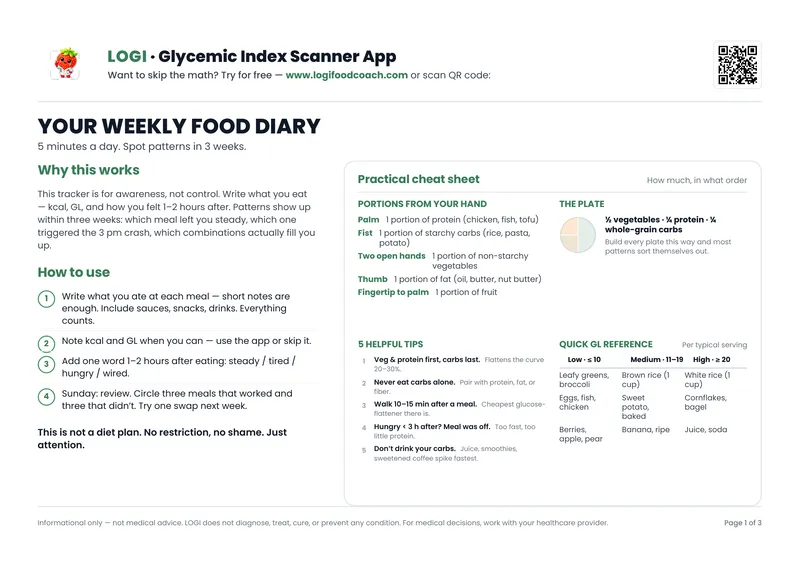
Free PDF — 3 pages
Your Weekly Food Journal
Track meals, glycemic load & mood. Spot patterns in 3 weeks.
No spam. Unsubscribe anytime.