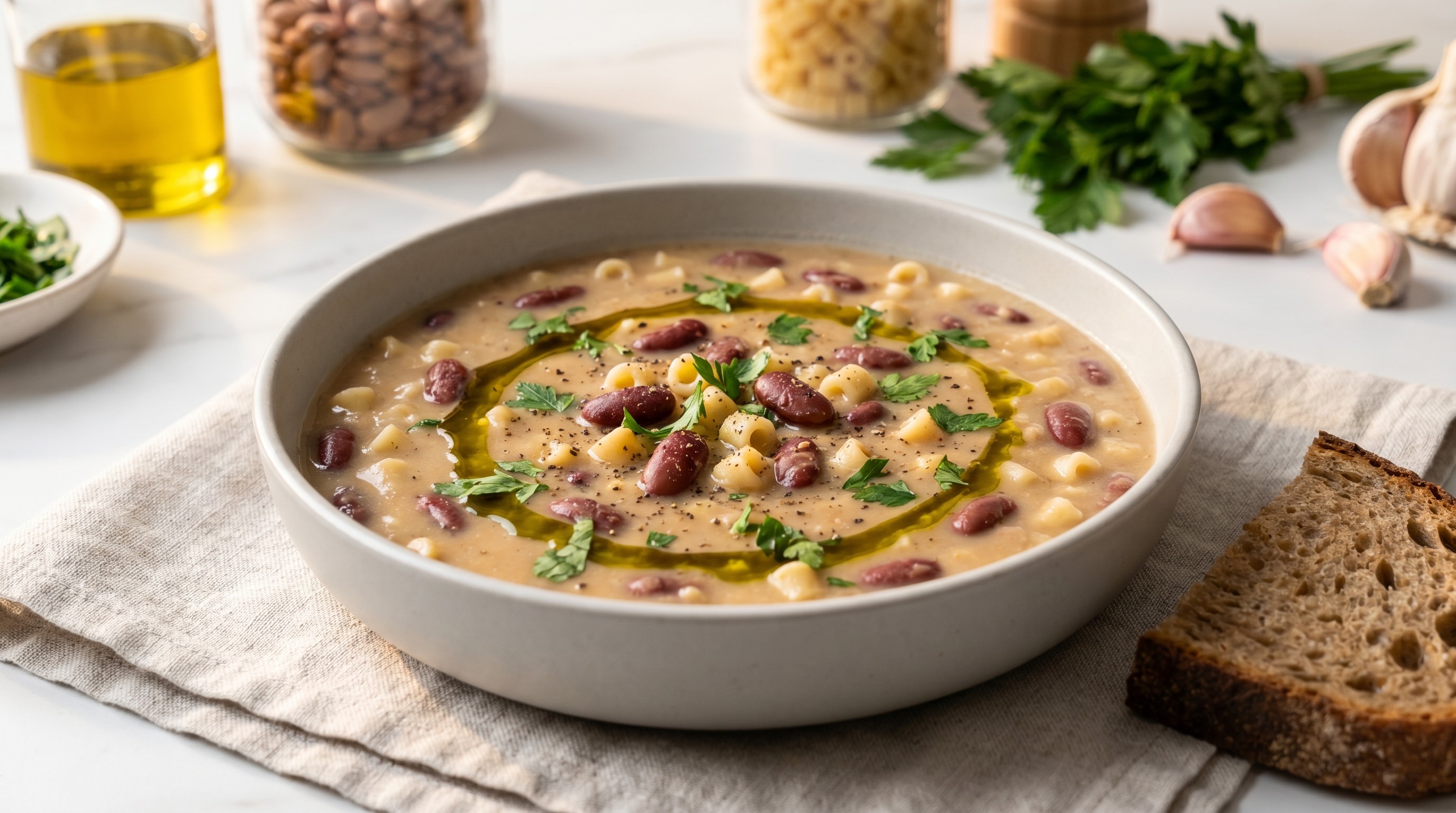
Pasta e Fagioli — Classic Italian Bean Soup
A hearty Italian bean soup where fibre-rich borlotti beans buffer the glucose impact of a small portion of pasta, keeping blood sugar remarkably steady.
Pasta e Fagioli is Italian comfort food at its finest — a thick, nourishing soup that proves low-glycemic eating never means sacrificing tradition. The star here is the borlotti bean: packed with soluble fibre and resistant starch, these legumes create a natural glucose buffer that slows carbohydrate absorption from the small amount of ditalini pasta. By mashing a third of the beans into the broth, you get a luxuriously creamy texture without any flour or thickener.
The glycemic strategy is simple but effective. Beans have a GI of around 35, and when combined with vegetables cooked in olive oil, they form a matrix that delays gastric emptying. The pasta portion is deliberately modest — just 30g dry weight shared between two servings — meaning each bowl delivers satisfying starch without a significant glucose spike. The olive oil adds healthy monounsaturated fats that further moderate the postprandial response.
For optimal blood sugar management, eat this soup slowly and consider starting with a small side salad dressed in vinegar. The acetic acid in vinegar has been shown to reduce post-meal glucose by up to 30%. This dish pairs beautifully with a protein-rich appetizer like a few slices of aged cheese, which adds another layer of glucose buffering while staying true to the Italian table.
Blood Sugar Impact
Low to moderate impact due to the combination of fiber-rich borlotti beans and moderate-GI pasta. The high fiber and protein from beans slows glucose absorption, likely producing a gentle, sustained rise over 2-3 hours.
Blood Sugar Tips
- ✓ Ensure a generous bean-to-pasta ratio — the more beans relative to pasta, the lower and slower the glucose response.
- ✓ Allow the soup to cool slightly before eating, as cooled pasta forms resistant starch which lowers its effective glycemic impact.
- ✓ Pair with a short 10-15 minute walk after eating to enhance glucose uptake by muscles and blunt any post-meal spike.
🥗 Ingredients
- 100 g Borlotti bean
- 30 g Ditalini pasta
- 1 pcs Carrot
- 1 pcs Celery stalk
- 1 pcs White onion
- 2 pcs Garlic clove
- 200 g Canned whole peeled tomato
- 700 ml Vegetable stock
- 1 tbsp Extra-virgin olive oil
- 1 pcs Rosemary
- 1 tsp Salt
- 5 g Flat-leaf parsley
- 3.5 oz Borlotti bean
- 1.1 oz Ditalini pasta
- 1 pcs Carrot
- 1 pcs Celery stalk
- 1 pcs White onion
- 2 pcs Garlic clove
- 7.1 oz Canned whole peeled tomato
- 3.0 cups Vegetable stock
- 1 tbsp Extra-virgin olive oil
- 1 pcs Rosemary
- 1 tsp Salt
- 0.2 oz Flat-leaf parsley
👨🍳 Instructions
- 1
If starting with dried borlotti beans, soak them overnight in plenty of cold water. The next day, drain and cook in fresh unsalted water at a gentle simmer for 45–50 minutes until completely tender. Drain and set aside. If using canned beans, simply drain and rinse them well.
- 2
Warm the olive oil in a heavy-bottomed pot over medium heat. Add the diced onion, carrot, and celery, stirring occasionally for 7–8 minutes until the vegetables have softened and taken on a light golden colour. This soffritto base builds deep savoury flavour.
- 3
Stir in the minced garlic and the rosemary sprig. Cook for about 1 minute, just until the garlic becomes fragrant, being careful not to let it brown.
- 4
Add the crushed tomatoes to the pot and cook for 3 minutes, stirring frequently, until the mixture reduces slightly and the raw tomato flavour mellows.
- 5
Tip in the cooked beans and pour in the vegetable stock. Bring everything to a gentle boil, then lower the heat and let the soup simmer uncovered for 10 minutes to allow the flavours to meld together.
- 6
Remove and discard the rosemary sprig. Ladle out roughly one-third of the beans into a bowl and crush them with the back of a fork until roughly mashed. Stir the mashed beans back into the pot — this naturally thickens the broth without any flour or starch.
- 7
Drop the ditalini pasta directly into the simmering soup. Cook for 8–9 minutes, stirring occasionally to prevent sticking, until the pasta is al dente. The soup will thicken as the pasta releases starch.
- 8
Season with salt and freshly ground black pepper to taste. Ladle into warm bowls and finish each serving with a drizzle of extra-virgin olive oil and a scattering of chopped parsley. Serve immediately while the pasta retains its texture.
📊 Nutrition Per Serving
| Per Serving | Whole Dish | |
|---|---|---|
| Calories | 267 | 534 |
| Carbs | 41g | 82g |
| Sugars | 9g | 19g |
| Natural Sugars | 9g | 19g |
| Protein | 10g | 19g |
| Fat | 8g | 17g |
| Saturated Fat | 1g | 2g |
| Unsaturated Fat | 7g | 14g |
| Fiber | 8g | 17g |
| Soluble Fiber | 2g | 3g |
| Insoluble Fiber | 4g | 8g |
| Sodium | 2371mg | 4742mg |
Predicted Glucose Response
What if you...
Estimated model — individual responses vary. Not medical advice.
🔄 Lower GI Swaps
Standard white pasta has a moderate GI (~50-55). Legume-based pastas (chickpea, red lentil) have a significantly lower GI (~25-35) due to higher protein and fiber content, which slows glucose absorption. Whole wheat pasta also scores lower on the GI scale.
Cooked carrots have a moderate-to-high GI (~40-50 when boiled), which can contribute to blood sugar spikes. Zucchini and green beans have very low GI values (~15) and add bulk and texture without raising glycemic load.
Canned tomatoes can contain added sugars that slightly raise glycemic load. Fresh tomatoes have a very low GI (~15) and no hidden sugars, giving you better blood sugar control while maintaining the soup's tomato flavor.
White onions have a slightly higher sugar content compared to shallots or red onion. Red onion and shallots have marginally lower GI values and contain more quercetin, which some studies associate with improved blood sugar regulation.
🔬 The Science Behind This Recipe
Here's the science explainer section for the Pasta e Fagioli recipe:
---
Why This Soup Loves Your Blood Sugar
Pasta e Fagioli is a beautiful example of how traditional cooking wisdom aligns with modern nutrition science. The star here is the borlotti beans — they're packed with soluble fiber and plant protein, both of which dramatically slow down the rate at which glucose enters your bloodstream. When you eat beans alongside pasta, the fiber forms a gel-like barrier in your digestive tract, acting as a natural speed bump for carbohydrate absorption. This is why the estimated GI of this dish sits at just 31 — well within the low-glycemic range — despite containing pasta, which on its own would score much higher.
The glycemic load of 12.8 per serving tells an important story about *amount* versus *type*. Glycemic load accounts for how much carbohydrate you're actually eating, not just how quickly it raises blood sugar. Because this soup distributes a modest portion of ditalini pasta across a generous bowl of beans, vegetables, and broth, the total glucose impact stays remarkably low. Think of it this way: a small amount of pasta swimming in a sea of fiber-rich beans and vegetables behaves very differently in your body than a large plate of plain pasta.
The carrots, celery, and onion aren't just there for flavor — they contribute additional fiber and volume without adding significant carbohydrates. To get the most from this dish, try eating a few spoonfuls of the brothy vegetables first before diving into the pasta-heavy bites. A short 10-15 minute walk after your meal can further smooth out your glucose response, helping your muscles absorb that energy efficiently. This is comfort food that works *with* your metabolism, not against it.
Related recipes
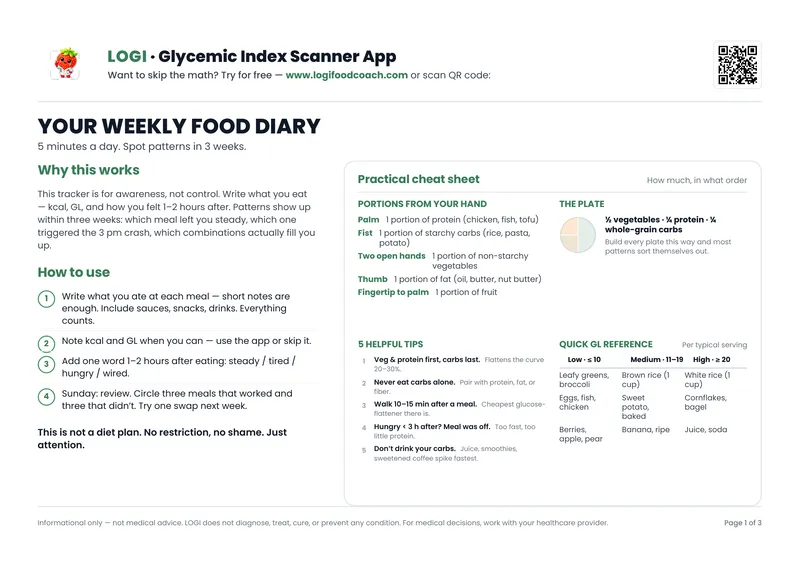
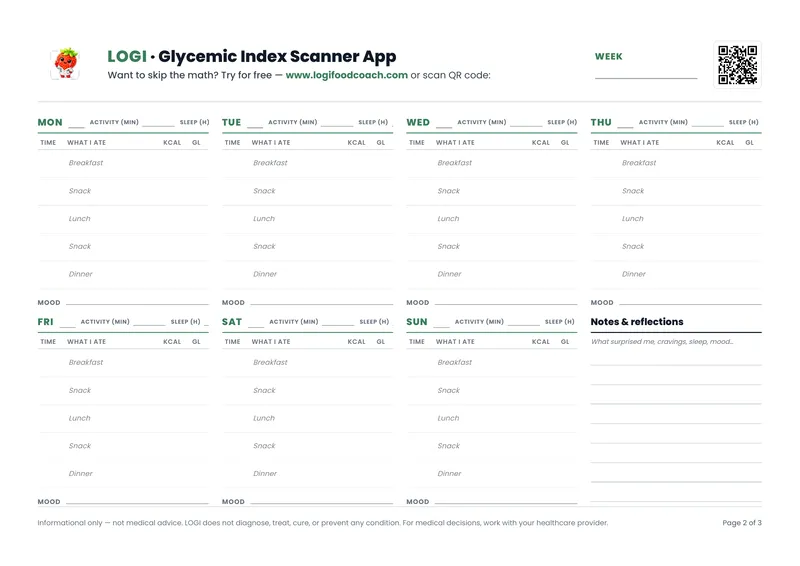
Free PDF — 3 pages
Your Weekly Food Journal
Track meals, glycemic load & mood. Spot patterns in 3 weeks.
No spam. Unsubscribe anytime.