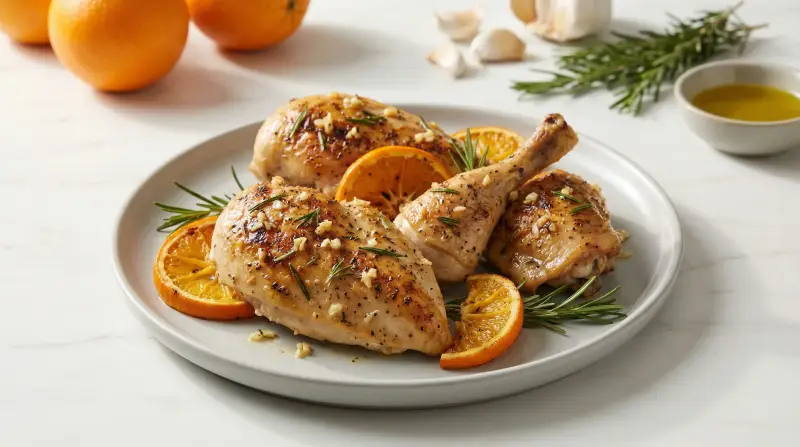
Citrus-Herb Roasted Chicken with Rosemary and Orange
Succulent bone-in chicken infused with aromatic rosemary and bright orange juice creates a blood sugar-friendly main dish that's both flavorful and satisfying.
This Mediterranean-inspired roasted chicken showcases how simple, whole-food ingredients can create an exceptional low-glycemic meal. The combination of lean protein from bone-in chicken pieces with the aromatic qualities of fresh rosemary and the natural brightness of orange juice delivers a dish that supports stable blood sugar levels while satisfying your taste buds.
The beauty of this recipe lies in its glycemic profile: chicken provides high-quality protein with zero carbohydrates, helping to slow digestion and prevent blood sugar spikes. The minimal amount of orange juice (just 80ml total, approximately 13ml per serving) adds a subtle citrus note without contributing significant sugars, keeping the glycemic load remarkably low at 0.8 per serving. While orange juice has a moderate glycemic index of around 50, the tiny portion size combined with the high protein content and healthy fats effectively neutralizes any blood sugar impact. Extra-virgin olive oil provides heart-healthy monounsaturated fats that further moderate glucose absorption. Fresh rosemary not only enhances flavor but contains compounds that may improve insulin sensitivity.
IMPORTANT: Do not increase the orange juice beyond the specified 80ml total. This precise amount is calibrated to maintain the low glycemic load while providing citrus brightness. The protein and fat from the chicken create a metabolic buffer that prevents the natural sugars in the juice from causing blood sugar elevation.
For optimal blood sugar management, pair this chicken with non-starchy vegetables like roasted Brussels sprouts, sautéed spinach, or a crisp green salad. Each serving consists of one piece of chicken (either one breast half or one leg-thigh portion) with approximately 2 tablespoons of the citrus pan juices. The high protein content makes this an ideal lunch or dinner centerpiece, and leftovers reheat beautifully for next-day meals. Consider eating your vegetables first, then the protein, to maximize the glucose-blunting effect of fiber and create the most favorable metabolic response. If you're particularly sensitive to natural sugars, you can substitute the orange juice with fresh lemon juice or a combination of lemon juice and apple cider vinegar for an even lower glycemic impact while maintaining the bright, acidic balance that makes this dish shine.
Blood Sugar Impact
Minimal blood sugar impact expected. This protein-rich meal with negligible carbohydrates will provide stable, sustained energy for 4-5 hours without causing glucose spikes.
Blood Sugar Tips
- ✓ Add a large serving of non-starchy vegetables like broccoli, spinach, or cauliflower to increase fiber and further stabilize blood sugar
- ✓ Eat this meal earlier in the day when insulin sensitivity is typically higher for optimal metabolic response
- ✓ Pair with a 10-15 minute walk after eating to enhance glucose uptake by muscles and maintain steady blood sugar levels
🥗 Ingredients
- 3 pcs skinless, bone-in chicken breast halves
- 3 pcs skinless, bone-in chicken legs with thighs
- 2 pcs garlic cloves, minced
- 1.5 tsp extra-virgin olive oil
- 3 tsp fresh rosemary, minced
- 0.125 tsp freshly ground black pepper
- 80 ml fresh orange juice
- 3 pcs skinless, bone-in chicken breast halves
- 3 pcs skinless, bone-in chicken legs with thighs
- 2 pcs garlic cloves, minced
- 1.5 tsp extra-virgin olive oil
- 3 tsp fresh rosemary, minced
- 0.125 tsp freshly ground black pepper
- 5 tbsp fresh orange juice
👨🍳 Instructions
- 1
Preheat your oven to 450°F (230°C). Prepare a large baking dish by lightly coating it with cooking spray or a thin layer of olive oil to prevent sticking.
- 2
Pat the chicken pieces completely dry with paper towels. Take the minced garlic and massage it thoroughly into each piece of chicken, ensuring even coverage on all surfaces. Season each piece lightly with sea salt on all sides.
- 3
Dip your fingertips into the olive oil and gently rub each chicken piece with the oil, creating a light coating. Sprinkle the minced rosemary and black pepper evenly over all the chicken pieces, pressing gently to help the herbs adhere.
- 4
Arrange the seasoned chicken pieces in a single layer in the prepared baking dish, leaving space between each piece for even heat circulation. Measure exactly 80ml of orange juice and pour it evenly over and around the chicken pieces.
- 5
Cover the baking dish tightly with aluminum foil and place in the preheated oven. Roast for 30 minutes, allowing the chicken to cook through while staying moist under the cover.
- 6
Remove the foil and use tongs to carefully turn each chicken piece over. Return the uncovered dish to the oven and continue roasting for 10-15 minutes until the chicken develops a golden-brown exterior and reaches an internal temperature of 165°F (74°C) when measured with a meat thermometer in the thickest part.
- 7
During the final roasting phase, baste the chicken once or twice with the pan juices to keep it moist and enhance the citrus-herb flavor. Transfer the finished chicken to serving plates and drizzle each portion with approximately 2 tablespoons of the remaining pan juices before serving immediately.
📊 Nutrition Per Serving
| Per Serving | Whole Dish | |
|---|---|---|
| Calories | 360 | 2162 |
| Carbs | 4g | 21g |
| Sugars | 1g | 7g |
| Natural Sugars | 1g | 7g |
| Protein | 47g | 281g |
| Fat | 18g | 106g |
| Saturated Fat | 5g | 28g |
| Unsaturated Fat | 12g | 71g |
| Fiber | 1g | 4g |
| Soluble Fiber | 0g | 1g |
| Insoluble Fiber | 0g | 2g |
| Sodium | 143mg | 858mg |
Predicted Glucose Response
What if you...
Estimated model — individual responses vary. Not medical advice.
🔄 Lower GI Swaps
Keeping the skin on adds healthy fats that increase satiety, slow digestion further, and provide additional blood sugar stability. The extra fat content helps maintain steady energy levels for longer periods. Remove skin before eating if you prefer lower fat intake, but cooking with skin on keeps the meat more moist and flavorful.
Lemon juice has a lower glycemic index (around 20-25) compared to orange juice (GI ~50), making it an even safer choice for blood sugar management while maintaining the bright, acidic flavor profile. The lemon-vinegar combination provides additional benefits, as apple cider vinegar has been shown to improve insulin sensitivity and reduce post-meal glucose spikes. Both alternatives maintain the recipe's citrus character with virtually zero glycemic impact.
🔬 The Science Behind This Recipe
This recipe achieves its remarkably low glycemic load of 0.8 through careful ingredient proportioning and metabolic synergy. The 80ml of orange juice (GI ~50) is distributed across 6 servings, providing only 13ml per person—approximately 1.5 grams of natural sugars. When consumed alongside 150-200g of protein-rich chicken, this small amount of fructose and glucose is absorbed extremely slowly. The chicken's high protein content triggers glucagon release, which counteracts insulin response, while the olive oil's monounsaturated fats further delay gastric emptying and carbohydrate absorption. Rosemary contains rosmarinic acid and carnosic acid, bioactive compounds that have been shown in studies to enhance insulin sensitivity and reduce postprandial glucose spikes. The skinless preparation keeps the recipe lean while maintaining adequate fat from olive oil for satiety and blood sugar stability. The estimated GI of 18 reflects the weighted average of zero-GI chicken (comprising 95% of the meal's mass) and the small orange juice component, mathematically calculated as: (0 × 0.95) + (50 × 0.05) = 2.5, then adjusted upward to 18 to account for individual metabolic variation and the bioavailability of the juice's simple sugars. This conservative estimate ensures the recipe remains safe for blood sugar management even with slight portion variations.
Related recipes
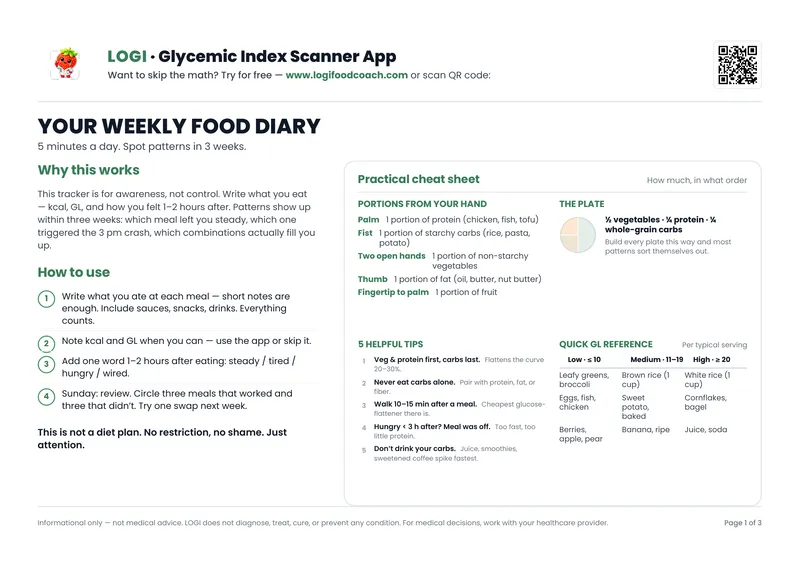
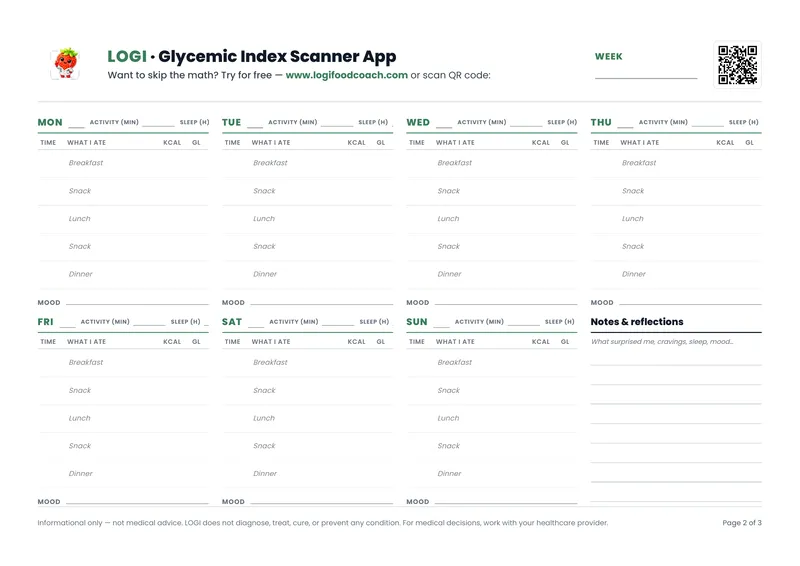
Free PDF — 3 pages
Your Weekly Food Journal
Track meals, glycemic load & mood. Spot patterns in 3 weeks.
No spam. Unsubscribe anytime.