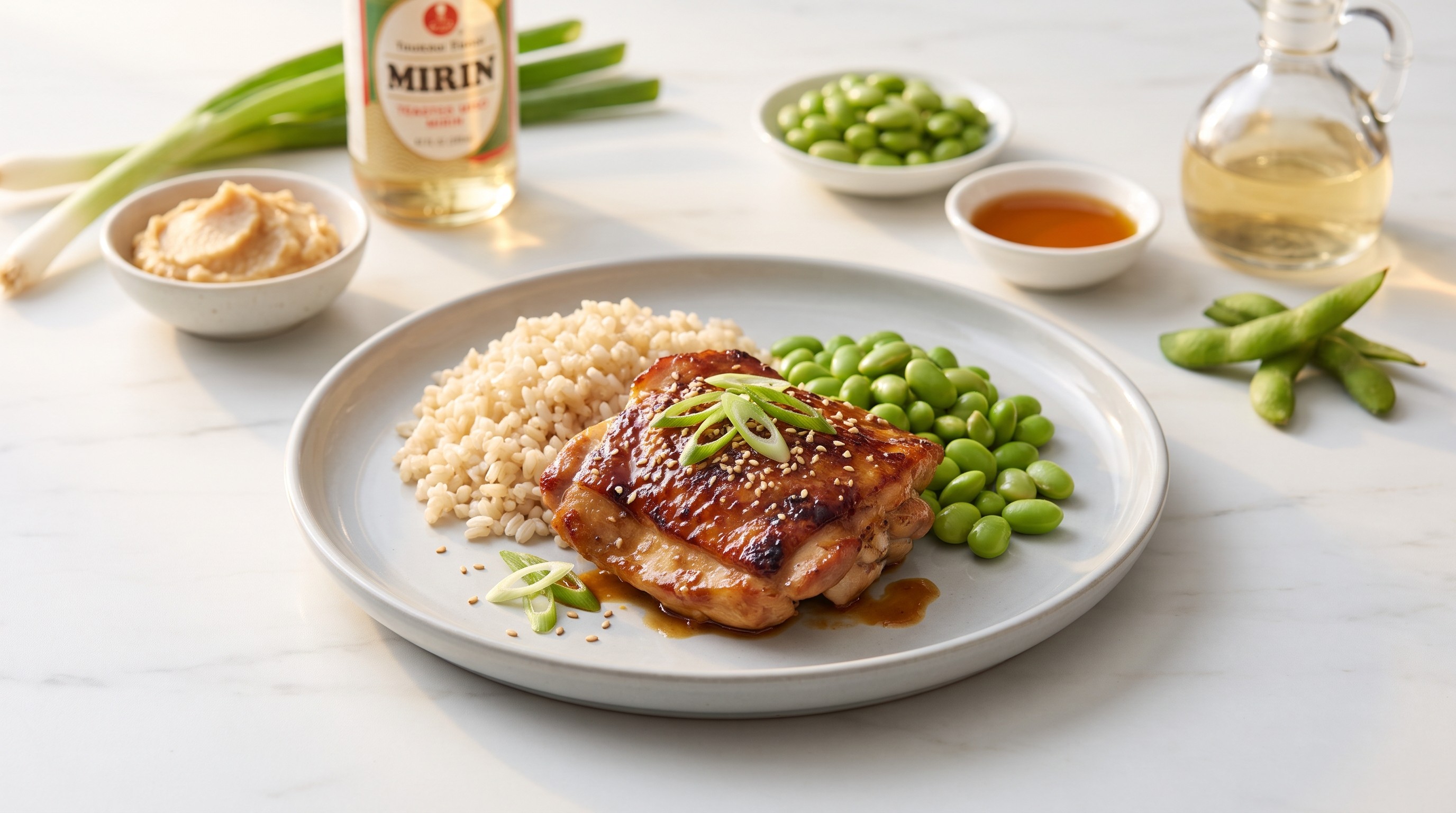
Miso-Glazed Chicken with Brown Rice and Edamame
Tender miso-glazed chicken thighs served over nutty brown rice with protein-rich edamame — a blood-sugar-friendly Japanese-inspired bowl.
This Japanese-inspired bowl brings together the deep umami of white miso with juicy chicken thighs, nutty short-grain brown rice, and vibrant edamame. Every component works in harmony to deliver a satisfying meal that supports steady blood sugar levels. Brown rice has a glycemic index of around 50, significantly lower than its white counterpart, and its intact bran layer slows glucose absorption. Paired with protein-rich chicken and fiber-packed edamame, this bowl creates the ideal trifecta for glycemic control.
The miso glaze caramelizes beautifully on the chicken, creating a lacquered crust that locks in moisture without any added sugar beyond the small amount of mirin used for balance. Mirin contributes just a touch of sweetness — roughly 3 grams of sugar per tablespoon — which is negligible when spread across two servings. Edamame adds 8 grams of plant protein per serving and has a very low GI of around 15, making it one of the best legume choices for blood sugar management.
For optimal glucose response, eat the edamame and vegetables first before moving to the rice and chicken. This simple sequencing strategy has been shown to reduce post-meal blood sugar spikes by up to 30 percent. The sesame oil and seeds contribute healthy fats that further slow digestion, while the spring onions and optional nori add micronutrients and fiber with virtually no glycemic impact.
Blood Sugar Impact
With a low GI of 41 and moderate glycemic load of 13.5, this meal should produce a gentle, gradual rise in blood sugar. The combination of protein from chicken and edamame, healthy fats from sesame oil, and fiber from brown rice will promote stable energy for 3-4 hours.
Blood Sugar Tips
- ✓ Eat the chicken and edamame first before the brown rice to slow gastric emptying and blunt the glucose response.
- ✓ Take a 10-15 minute walk after the meal to enhance glucose uptake by muscles and further flatten the blood sugar curve.
- ✓ Avoid drinking sweetened beverages alongside this meal — stick with water, unsweetened tea, or miso soup to preserve its naturally low glycemic impact.
🥗 Ingredients
- 300 g Chicken thigh
- 1.5 tbsp White miso paste
- 1 tbsp Mirin
- 1 tsp Toasted sesame oil
- 1 tsp Rice vinegar
- 120 g Short-grain brown rice
- 200 g Edamame
- 2 pcs Spring onion
- 1 tsp Toasted sesame seeds
- 1 pcs Nori
- 10.6 oz Chicken thigh
- 1.5 tbsp White miso paste
- 1 tbsp Mirin
- 1 tsp Toasted sesame oil
- 1 tsp Rice vinegar
- 4.2 oz Short-grain brown rice
- 7.1 oz Edamame
- 2 pcs Spring onion
- 1 tsp Toasted sesame seeds
- 1 pcs Nori
👨🍳 Instructions
- 1
Rinse the brown rice under cold running water in a fine-mesh sieve until the water runs nearly clear. Place the rice in a small saucepan with 280 ml (about 1¼ cups) of cold water and a pinch of salt. Bring to a boil over medium-high heat, then reduce to the lowest simmer, cover tightly, and cook for 22 to 25 minutes until the water is fully absorbed.
- 2
Once the rice is done, remove the pan from the heat and keep it covered for 10 minutes. This resting period allows the starches to set and gives the rice a pleasantly sticky yet distinct texture — resist the urge to peek.
- 3
While the rice cooks, prepare the miso glaze. Whisk together the white miso paste, mirin, sesame oil, and rice vinegar in a small bowl until completely smooth. The consistency should resemble thick yogurt. If the mixture feels too stiff, stir in 1 teaspoon of warm water to loosen it.
- 4
Pat the chicken thighs thoroughly dry with paper towel. Set aside about 1 tablespoon of the miso glaze for finishing. Coat the chicken evenly with the remaining glaze and let it rest at room temperature for 10 minutes while the rice simmers.
- 5
Heat a non-stick or cast-iron pan over medium heat. Place the chicken thighs presentation-side down and cook undisturbed for 6 to 7 minutes until a deep golden-brown crust develops. Flip the thighs, reduce the heat slightly, and cook for another 5 to 6 minutes until the internal temperature reaches 74°C (165°F). Watch the glaze carefully — miso sugars burn quickly, so lower the heat if it darkens past a rich amber.
- 6
While the chicken finishes cooking, bring a small pot of water to a rolling boil. Add the frozen edamame and cook for 4 minutes until tender but still bright green. Drain and set aside.
- 7
Transfer the cooked chicken to a cutting board and let it rest for 3 minutes. Slice against the grain into 1 cm (½-inch) strips and brush with the reserved tablespoon of miso glaze.
- 8
Divide the brown rice between two shallow bowls. Arrange the sliced chicken alongside the edamame. Scatter the spring onions and sesame seeds over the top and finish with nori strips if using. Serve warm — for the best blood sugar response, start with the edamame and spring onions before moving to the rice.
📊 Nutrition Per Serving
| Per Serving | Whole Dish | |
|---|---|---|
| Calories | 535 | 1070 |
| Carbs | 33g | 66g |
| Sugars | 7g | 13g |
| Added Sugars | 2g | 3g |
| Natural Sugars | 5g | 10g |
| Protein | 45g | 89g |
| Fat | 26g | 52g |
| Saturated Fat | 6g | 11g |
| Unsaturated Fat | 20g | 41g |
| Fiber | 8g | 15g |
| Soluble Fiber | 2g | 4g |
| Insoluble Fiber | 5g | 11g |
| Sodium | 883mg | 1766mg |
Predicted Glucose Response
What if you...
Estimated model — individual responses vary. Not medical advice.
🔄 Lower GI Swaps
Brown rice has a moderate GI (around 68). Cauliflower rice has a negligible glycemic impact (GI ~0), quinoa has a lower GI (~53) with more protein and fiber to slow glucose absorption, and konjac rice is virtually zero-carb, dramatically reducing the dish's overall glycemic load.
Mirin is a sweet rice wine with significant sugar content (GI ~73), which contributes to blood sugar spikes. These alternatives provide similar umami depth or mild sweetness with far less sugar and a much lower glycemic impact.
White miso contains more rice koji and residual sugars than darker varieties, giving it a slightly higher glycemic impact. Red miso and hatcho miso are fermented longer with less rice, resulting in lower sugar content and a reduced effect on blood sugar.
🔬 The Science Behind This Recipe
Here's the science explainer:
---
Why This Meal Works for Your Blood Sugar
This dish is a great example of how smart ingredient pairing can keep your energy steady and your blood sugar happy. Let's start with the star protein: chicken thighs. Unlike a carb-heavy meal eaten alone, the protein and healthy fats in chicken thighs significantly slow down how quickly sugar enters your bloodstream. Think of protein as a "speed bump" for digestion — it keeps your body from absorbing glucose all at once, resulting in a gentler, more gradual rise. The toasted sesame oil adds another layer of protection here, since dietary fats further slow gastric emptying, giving your body more time to process incoming carbohydrates.
Now let's talk about brown rice. While white rice is notorious for causing rapid blood sugar spikes, brown rice still has its bran and fiber intact. That fiber acts like a wrapper around the starchy carbohydrates, forcing your digestive system to work harder and slower to break them down. Paired with edamame — which brings both plant protein and additional fiber — you've got a powerful combination that blunts the glucose response. This is why the glycemic load of this meal lands at a moderate 13.5 per serving, well within the range considered favorable for blood sugar management. Remember, glycemic load accounts for how *much* carbohydrate you're actually eating, not just how fast a food raises blood sugar. A moderate portion of brown rice in the context of this protein-rich meal behaves very differently than a large bowl eaten on its own.
To get the most out of this meal, try a simple strategy: eat your edamame and chicken first, saving the rice for last. Research suggests that eating vegetables and protein before carbohydrates can reduce post-meal glucose spikes by up to 30%. A 10-15 minute walk after dinner can also help your muscles absorb blood sugar more efficiently. Small habits, big difference.
Related recipes
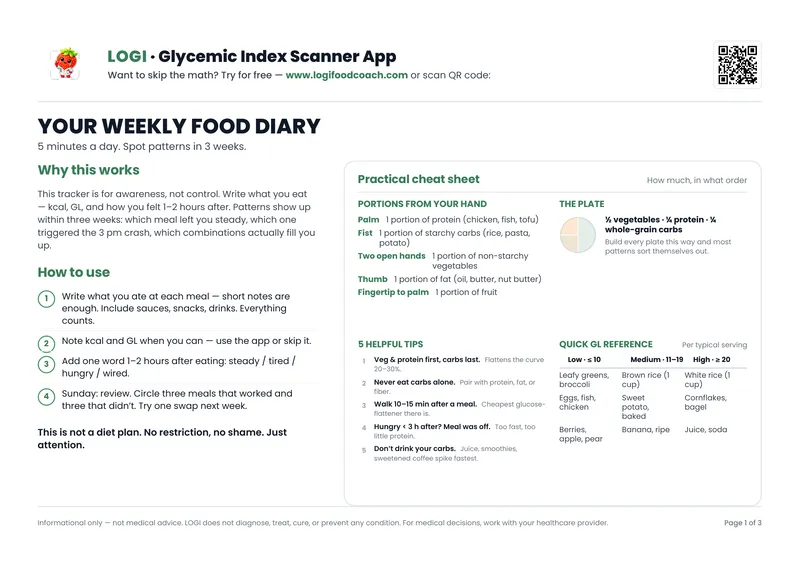
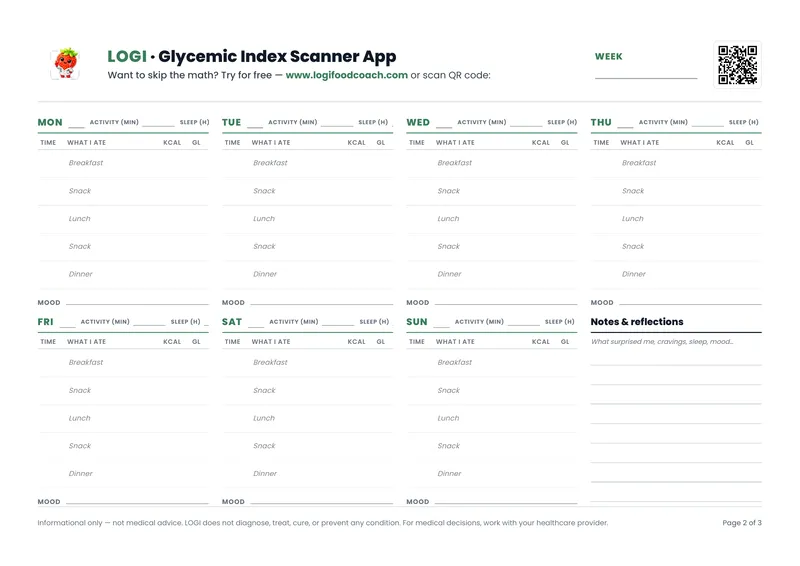
Free PDF — 3 pages
Your Weekly Food Journal
Track meals, glycemic load & mood. Spot patterns in 3 weeks.
No spam. Unsubscribe anytime.