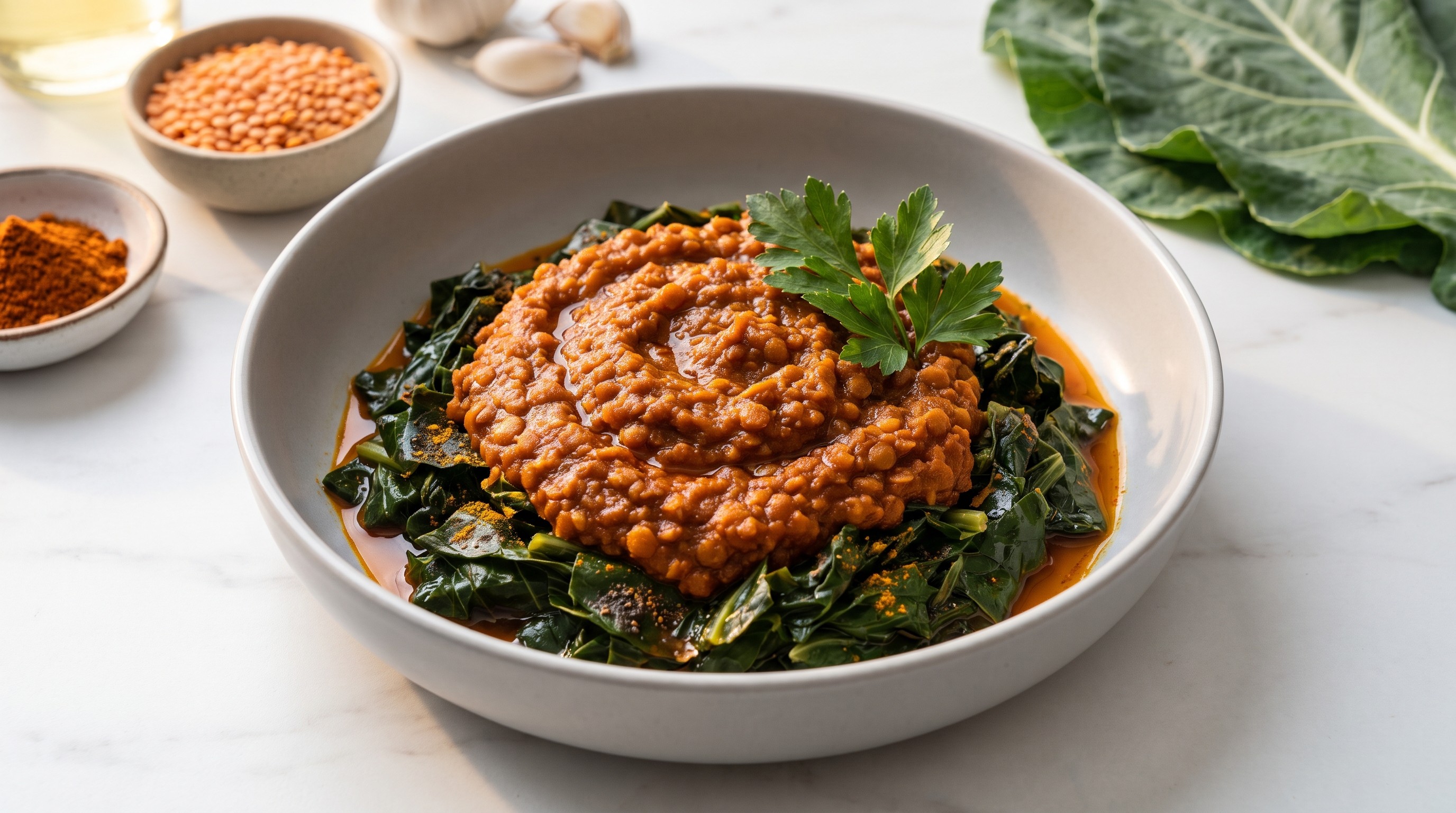
Misir Wot with Wilted Collard Greens
Slow-simmered Ethiopian red lentil stew rich in soluble fiber, spooned over wilted collard greens for a naturally low-glycemic, protein-packed plant-based meal.
Misir wot is one of Ethiopia's most comforting everyday dishes — red lentils simmered low and slow with warm berbere spice until they melt into a thick, rust-coloured purée. Red lentils have a glycemic index of just 26, making them one of the most blood-sugar-friendly staples you can cook with. Their high soluble fiber content forms a gel during digestion that physically slows the rate at which glucose enters your bloodstream, resulting in a gentle, sustained energy curve rather than a sharp spike.
Serving the stew over a bed of quickly wilted collard greens — instead of traditional injera flatbread — keeps the meal's overall glycemic load remarkably low while adding a satisfying, slightly bitter contrast. Collard greens are rich in magnesium and chromium, two minerals that play a direct role in insulin sensitivity. Eating the greens first, before the lentils, is a simple sequencing strategy that research suggests can reduce post-meal glucose by up to 30 percent.
The slow-cooked onion base provides deep, caramelised sweetness without any added sugar, while fresh ginger and turmeric contribute anti-inflammatory compounds that support long-term metabolic health. This is a high-protein, high-fiber bowl that keeps you full for hours — ideal as a standalone dinner or paired with a small portion of intact whole grains like barley or black rice for an even more sustained release.
Blood Sugar Impact
Low to moderate impact — the GI of 25 is low, though the glycemic load of 18.3 is medium. Red lentils provide slow-digesting protein and soluble fiber, while olive oil and collard greens further blunt glucose absorption, promoting steady energy over 3-4 hours.
Blood Sugar Tips
- ✓ Eat the wilted collard greens first before the lentil stew — the fiber creates a gel-like barrier in the gut that slows carbohydrate absorption from the lentils.
- ✓ Allow the cooked lentils to cool slightly before eating; cooling increases resistant starch content, which lowers the effective glycemic response.
- ✓ Take a 10-15 minute walk after the meal to enhance glucose uptake by muscles and further flatten any post-meal blood sugar rise.
🥗 Ingredients
- 2 tbsp Olive oil
- 1 pcs Onion
- 3 pcs Garlic
- 1 pcs Ginger
- 1.5 tbsp Berbere spice blend
- 2 tbsp Tomato paste
- 180 g Red lentils
- 450 ml Water
- 0.5 tsp Turmeric
- 0.75 tsp Salt
- 200 g Collard greens
- 2 tbsp Olive oil
- 1 pcs Onion
- 3 pcs Garlic
- 1 pcs Ginger
- 1.5 tbsp Berbere spice blend
- 2 tbsp Tomato paste
- 6.3 oz Red lentils
- 1.9 cups Water
- 0.5 tsp Turmeric
- 0.75 tsp Salt
- 7.1 oz Collard greens
👨🍳 Instructions
- 1
Prepare all the vegetables before you start cooking. Cut the onion into a fine dice, mince the garlic, and grate the ginger on a microplane or the small holes of a box grater. Pull the tough central stems from the collard greens and slice the leaves into wide ribbons.
- 2
Warm the olive oil in a heavy-bottomed pot or Dutch oven over medium heat. Add the diced onion and cook, stirring frequently, for about 10 minutes. Let the onion soften completely and develop deep golden edges — this slow caramelisation builds natural sweetness without any added sugar.
- 3
Drop in the garlic, grated ginger, and berbere spice blend. Stir continuously for 2 minutes, allowing the spices to toast in the oil and deepen in colour. The kitchen should smell intensely fragrant and warm.
- 4
Add the tomato paste and stir it through the spice mixture for about 1 minute until it darkens slightly and clings to the onions. This brief toasting concentrates the tomato flavour and removes any raw, tinny taste.
- 5
Tip in the rinsed red lentils, ground turmeric, and water. Raise the heat to bring the pot to a boil, then immediately lower to a gentle simmer. Cook uncovered for 20 minutes, stirring every few minutes to prevent sticking, until the lentils have completely broken down into a thick, creamy purée.
- 6
While the lentils simmer, set a wide skillet or pan over medium-high heat. Toss in the collard green ribbons with a small splash of water and a pinch of salt. Cook for about 3 minutes, turning the greens with tongs, until they wilt and turn vivid green but still have a slight bite.
- 7
Taste the finished lentil stew and season with the remaining salt. If the purée has thickened too much, stir in a splash of water to reach a consistency that flows gently off a spoon.
- 8
Divide the wilted collard greens between two bowls, spreading them across the base. Spoon the misir wot generously over the greens. For the best blood sugar response, eat a few bites of the collard greens first before mixing them with the lentil stew.
📊 Nutrition Per Serving
| Per Serving | Whole Dish | |
|---|---|---|
| Calories | 535 | 1069 |
| Carbs | 74g | 149g |
| Sugars | 8g | 16g |
| Natural Sugars | 8g | 16g |
| Protein | 27g | 55g |
| Fat | 15g | 31g |
| Saturated Fat | 2g | 4g |
| Unsaturated Fat | 13g | 26g |
| Fiber | 16g | 32g |
| Soluble Fiber | 5g | 10g |
| Insoluble Fiber | 11g | 23g |
| Sodium | 930mg | 1860mg |
Predicted Glucose Response
What if you...
Estimated model — individual responses vary. Not medical advice.
🔄 Lower GI Swaps
Red lentils break down completely when cooked, forming a starchy paste that is more rapidly digested and raises blood sugar faster. Green, brown, beluga, and Puy lentils hold their structure during cooking, which slows enzymatic access to starch and results in a lower glycemic index (GI ~20-22 vs ~26-30 for red lentils) and a meaningfully lower glycemic load per serving.
Tomato paste is a concentrated form with roughly 3-4× the natural sugar density of fresh tomatoes per volume used. Switching to fresh or diced tomatoes delivers similar flavor and acidity with more water and fiber content, reducing the glycemic load contribution of this ingredient.
Replacing plain water with a protein-containing broth adds a small but meaningful amount of protein and gelatin to the cooking liquid, which slows gastric emptying and blunts the post-meal blood sugar spike. This is a zero-carb swap that improves the overall glycemic response of the dish without changing its flavor profile significantly.
🔬 The Science Behind This Recipe
Here's the science explainer section:
---
Why This Meal Is a Blood Sugar Win
Red lentils — the star of any misir wot — are one of nature's best slow-burn fuel sources. They're packed with both plant protein and soluble fiber, which form a gel-like barrier in your digestive system that slows the rate at which sugars enter your bloodstream. Instead of a sharp spike and crash, you get a gentle, steady rise in energy. Paired with collard greens, which add even more fiber along with important minerals, this dish creates a one-two punch that keeps your blood sugar remarkably stable. The olive oil in the base brings healthy fats into the mix, and fat is another powerful brake on glucose absorption — it literally slows down how fast your stomach empties, giving your body more time to process each bite.
Here's where the numbers tell the story. While Glycemic Index (GI) measures *how fast* a food raises blood sugar, Glycemic Load (GL) tells you how much it actually raises it based on a real-world serving size. This recipe scores a GI of just 25 and a GL of 18.3 — both solidly in the low-to-moderate range. That means not only does this meal release its energy slowly, but the total glucose impact per serving stays modest. It's a great example of how portion context matters just as much as food choice.
Want to maximize the benefit? Try eating your collard greens first before diving into the lentils — research suggests that eating vegetables and fiber before starches can reduce post-meal glucose spikes by up to 30%. Adding a short 10–15 minute walk after your meal helps too, as your muscles actively pull sugar from your bloodstream for energy. And because this dish already combines protein, fat, and fiber in every bite, you're naturally set up for one of the smoothest blood sugar responses a meal can offer.
Related recipes
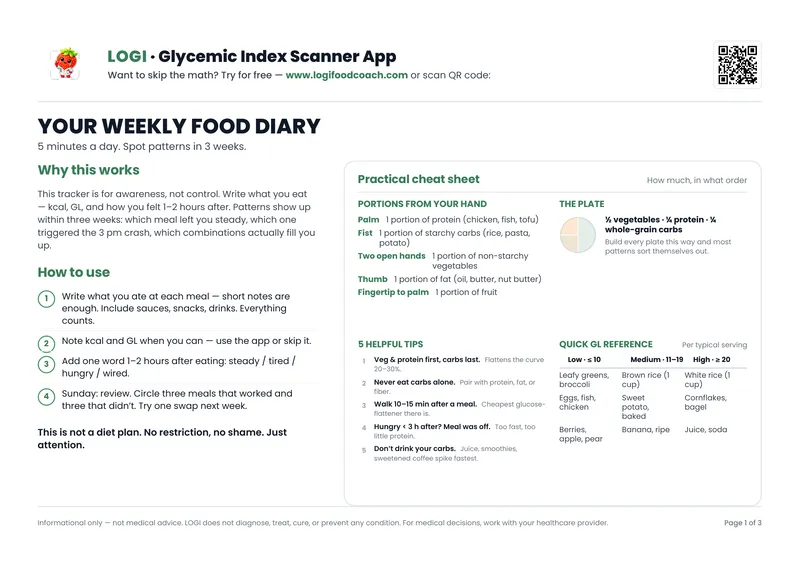
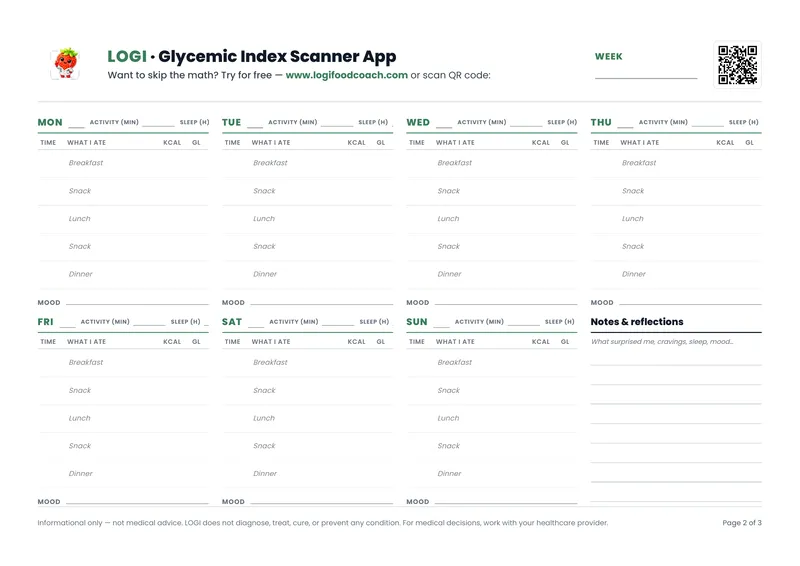
Free PDF — 3 pages
Your Weekly Food Journal
Track meals, glycemic load & mood. Spot patterns in 3 weeks.
No spam. Unsubscribe anytime.