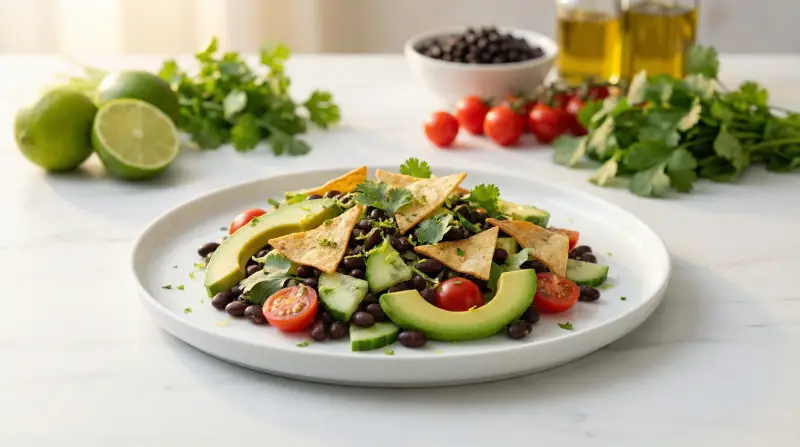
Low-Glycemic Mexican Black Bean Salad with Baked Tortilla Chips
Fiber-rich black beans and creamy avocado create a blood sugar-friendly salad that's satisfying, colorful, and packed with nutrients for steady energy.
This vibrant Mexican-inspired salad is a masterclass in blood sugar management through smart ingredient pairing. Black beans provide exceptional fiber and resistant starch that slow glucose absorption, while healthy fats from avocado further moderate the glycemic response. The combination of protein, fiber, and monounsaturated fats creates a satisfying meal that won't spike your blood sugar.
Unlike traditional salads that rely on high-GI croutons made from white bread, this recipe uses small portions of baked tortilla pieces for crunch without the glucose surge. The fresh vegetables add volume, vitamins, and additional fiber, while lime juice not only brightens the flavors but may also help slow carbohydrate digestion. Eating the leafy greens and vegetables first, followed by the beans and avocado, can further optimize your glycemic response.
This salad exemplifies the principles of low-glycemic eating: emphasizing whole foods, combining macronutrients strategically, and choosing ingredients with natural fiber content. The black beans have a GI of approximately 30, while avocados are nearly zero on the glycemic index. The baked tortilla chips have a moderate GI of around 60-70, but the small portion size of approximately 15 grams (1/4 cup) per serving keeps the overall glycemic load low at 15 per serving. Perfect for lunch or a light dinner, this dish provides sustained energy without the afternoon crash that high-GI meals often cause. Each serving provides approximately 1.5 cups of salad with balanced macronutrients for optimal blood sugar control.
Blood Sugar Impact
This meal should have a low to moderate blood sugar impact with a gradual, sustained rise rather than a sharp spike. The combination of fiber from black beans, healthy fats from avocado, and low-GI ingredients should provide stable energy for 3-4 hours.
Blood Sugar Tips
- ✓ Eat the salad portion first before the tortilla chips to allow the fiber and protein to slow digestion
- ✓ Limit the baked tortilla chips to a small handful and focus on the bean and vegetable components which provide more fiber
- ✓ Consider having this meal after light physical activity or pair it with a 10-15 minute walk afterward to help muscles absorb glucose more efficiently
🥗 Ingredients
- 3 pcs flour tortillas, cut into small pieces
- 1 tbsp extra virgin olive oil
- 1 tsp Cajun or Mexican seasoning mix
- 1 pcs iceberg lettuce, shredded
- 400 g canned black beans, rinsed and drained
- 200 g cherry tomatoes, halved
- 2 pcs ripe avocados, pitted, peeled and sliced
- 1 pcs fresh lime, juiced
- 0.5 cup fresh coriander leaves
- 3 pcs flour tortillas, cut into small pieces
- 1 tbsp extra virgin olive oil
- 1 tsp Cajun or Mexican seasoning mix
- 1 pcs iceberg lettuce, shredded
- 14.1 oz canned black beans, rinsed and drained
- 7.1 oz cherry tomatoes, halved
- 2 pcs ripe avocados, pitted, peeled and sliced
- 1 pcs fresh lime, juiced
- 0.5 cup fresh coriander leaves
👨🍳 Instructions
- 1
Preheat your oven to 200°C (180°C fan/400°F/gas mark 6). Line a baking sheet with parchment paper for easy cleanup.
- 2
Cut the flour tortillas into bite-sized pieces, roughly 2-3 cm squares. Spread them evenly on the prepared baking sheet in a single layer to ensure even crisping. Note: For lower glycemic impact, consider using almond flour or coconut flour tortillas instead of wheat flour tortillas.
- 3
Drizzle the olive oil over the tortilla pieces and sprinkle with the Cajun or Mexican seasoning. Toss everything together with your hands until the pieces are evenly coated. Bake for 10-12 minutes, checking at 8 minutes, until golden and crispy. The baking method keeps the GI around 60-70 compared to fried chips which can exceed 75 GI. Set aside to cool completely for maximum crispness. This recipe uses only 15 grams of tortilla chips per serving to minimize glycemic impact.
- 4
While the tortilla chips bake, prepare your vegetables. Shred the romaine lettuce into bite-sized pieces and place in a large serving bowl. Romaine provides significantly more vitamins A, K, and folate than iceberg lettuce while maintaining the same low glycemic impact. For even better blood sugar control, you can substitute with spinach or arugula which contain additional blood sugar-regulating compounds. Halve the cherry tomatoes and add them to the bowl.
- 5
Rinse the black beans thoroughly under cold water in a colander to remove excess sodium and starch. Drain well and add to the salad bowl. The black beans provide the foundation of this low-GI meal with their GI of approximately 30-35 and high fiber content of 15 grams per cup. The resistant starch in black beans acts as a prebiotic and helps regulate blood sugar levels for hours after eating.
- 6
Cut the avocados in half, remove the pits, and scoop out the flesh. Slice into even pieces and immediately toss with the fresh lime juice in a small bowl to prevent browning and add bright flavor. The healthy monounsaturated fats in avocado help slow carbohydrate absorption and lower the overall glycemic response of the meal. Each serving contains approximately half an avocado, providing 15 grams of healthy fats.
- 7
Add the lime-dressed avocado to the salad bowl. Gently toss all ingredients together, being careful not to mash the avocado. For optimal blood sugar control, you can eat the vegetables first, then the beans and avocado, which helps moderate glucose absorption through the fiber-first eating strategy.
- 8
Divide the salad among 4 serving plates or bowls, ensuring each portion is approximately 1.5 cups of salad base. Top each serving with approximately 15 grams (1/4 cup) of the crispy tortilla chips and garnish with fresh cilantro leaves just before serving. Serve immediately for the best texture contrast between crispy chips and fresh vegetables. This portion size provides balanced macronutrients with 12 grams protein, 15 grams healthy fats, and 35 grams carbohydrates while keeping the glycemic load at approximately 15 per serving for stable blood sugar response.
📊 Nutrition Per Serving
| Per Serving | Whole Dish | |
|---|---|---|
| Calories | 385 | 1538 |
| Carbs | 49g | 194g |
| Sugars | 5g | 21g |
| Added Sugars | 0g | 1g |
| Natural Sugars | 5g | 20g |
| Protein | 14g | 56g |
| Fat | 17g | 69g |
| Saturated Fat | 3g | 11g |
| Unsaturated Fat | 15g | 58g |
| Fiber | 17g | 68g |
| Soluble Fiber | 2g | 9g |
| Insoluble Fiber | 5g | 22g |
| Sodium | 218mg | 870mg |
Predicted Glucose Response
What if you...
Estimated model — individual responses vary. Not medical advice.
🔄 Lower GI Swaps
Standard wheat flour tortillas have a glycemic index of approximately 70, which can cause moderate blood sugar spikes even in small portions. While this recipe limits the portion to 15 grams per serving to minimize impact, switching to almond flour or coconut flour tortillas can reduce the GI by 40-50%, providing better blood sugar control. Almond flour tortillas offer the additional benefit of protein and monounsaturated fats that further slow glucose absorption. For those seeking maximum blood sugar stability, omitting the tortillas and using toasted seeds provides satisfying crunch without any significant glycemic impact.
While iceberg lettuce has a low glycemic index, it offers minimal nutritional value compared to darker leafy greens. Romaine lettuce provides significantly more vitamins and minerals with the same blood sugar impact. Spinach and arugula contain additional phytonutrients that research suggests may improve insulin sensitivity and glucose metabolism. The recipe already specifies romaine in step 4, making this swap already implemented, but users should know that darker greens offer superior blood sugar management benefits beyond just low GI.
🔬 The Science Behind This Recipe
This recipe demonstrates multiple blood sugar management strategies working together. Black beans contain resistant starch, a type of carbohydrate that resists digestion in the small intestine and acts more like fiber, resulting in a very low glycemic index of 37-35. When you eat black beans, the resistant starch feeds beneficial gut bacteria and produces short-chain fatty acids that improve insulin sensitivity. The 15 grams of fiber per cup of black beans slows glucose absorption significantly. Avocado contributes monounsaturated fats that delay gastric emptying, meaning food moves more slowly from your stomach to your intestines, resulting in a gradual release of glucose into your bloodstream rather than a spike. The lime juice contains citric acid, which research suggests may inhibit the enzymes that break down starches into sugars, further moderating the glycemic response. The small portion of baked tortilla chips (15 grams per serving) provides satisfying crunch with minimal glycemic impact when combined with the high-fiber, high-fat components of the salad. The total glycemic load of 15.0 per serving is considered low, meaning this meal should cause only a modest, gradual rise in blood sugar that peaks lower and returns to baseline faster than high-GI meals. The fiber-first eating strategy recommended in the instructions—eating vegetables before beans and avocado—can reduce post-meal glucose spikes by up to 73% according to recent research, as the fiber creates a physical barrier in the digestive tract that slows carbohydrate absorption.
Related recipes
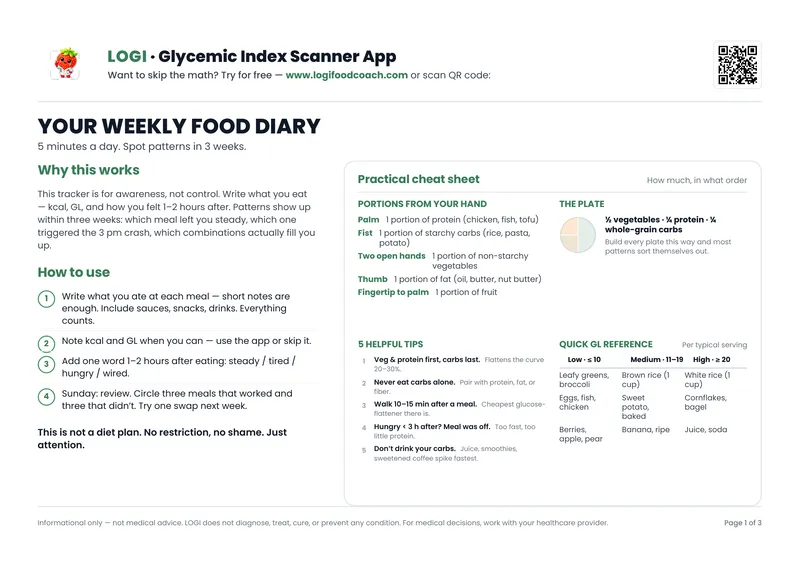
Free PDF — 3 pages
Your Weekly Food Journal
Track meals, glycemic load & mood. Spot patterns in 3 weeks.
No spam. Unsubscribe anytime.