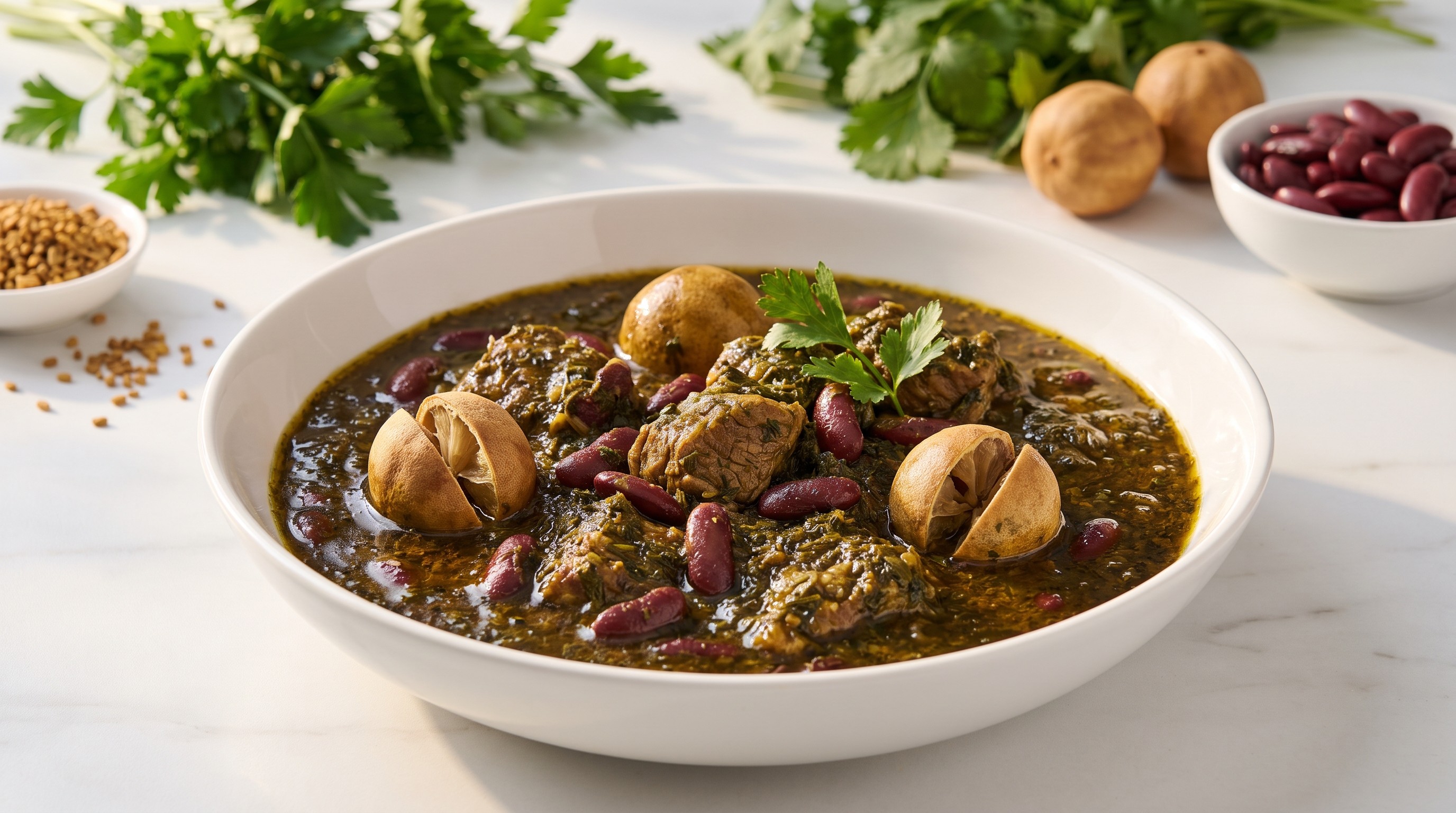
Low-GI Ghormeh Sabzi (Persian Herb & Kidney Bean Stew)
A blood-sugar-friendly Persian classic packed with fresh herbs, tender lamb, and low-GI kidney beans — no rice needed for a deeply satisfying meal.
Ghormeh Sabzi is often called the national dish of Iran, and for good reason — its layered flavors of darkened herbs, tart dried limes, and slow-braised lamb are utterly unique. This low-glycemic version embraces the stew as a complete meal, skipping the traditional mound of white rice and letting the kidney beans provide all the satisfying starch your bowl needs. Home-cooked from dried, kidney beans have a glycemic index of roughly 29, releasing glucose slowly and steadily, making them one of the best legume choices for blood sugar management. If using canned kidney beans instead, note that their GI rises to around 52 — still moderate, but worth factoring into your meal plan.
The real star here is the sheer volume of fresh herbs. Over 240 grams of parsley, cilantro, and spring onions deliver a wall of fiber, chlorophyll, and micronutrients that further blunt any postprandial glucose spike. Dried fenugreek leaves — known as shanbalileh in Persian cooking — are the stew's signature aromatic backbone, and they carry a bonus: fenugreek has been studied for its ability to improve insulin sensitivity and slow carbohydrate digestion. Combined with the protein and healthy fats from lamb shoulder and olive oil, every element of this dish works together to keep your blood sugar on an even keel.
For the best glycemic outcome, aim for roughly 1 to 1.5 cups of stew per serving and eat the herb-and-bean portion of each spoonful before the meat. The soluble fiber in the beans and herbs forms a gel-like barrier in the gut that slows absorption of all nutrients that follow. A small side salad dressed with lemon juice before the stew can lower the overall glycemic response of the meal even further. This is comfort food you can feel genuinely good about.
Blood Sugar Impact
With an estimated GI of 32 and a moderate glycemic load of 19.3, this herb-rich stew will produce a gentle, sustained rise in blood sugar. The combination of protein from lamb, fiber from kidney beans and fresh herbs, and healthy fats from olive oil significantly slows glucose absorption, providing stable energy for 3-4 hours.
Blood Sugar Tips
- ✓ Serve over a modest portion of basmati rice (or substitute with cauliflower rice) to keep the overall glycemic load of the meal in check, since the stew itself already contributes a moderate GL of 19.
- ✓ Eat the stew's beans and herb-rich broth first before any starchy side — the fiber and protein will prime your gut to slow carbohydrate absorption.
- ✓ Take a 10-15 minute walk after the meal to help your muscles absorb circulating glucose and further flatten any post-meal blood sugar rise.
🥗 Ingredients
- 100 g Flat-leaf parsley
- 60 g Cilantro
- 80 g Spring onion
- 300 g Lamb shoulder
- 150 g Onion
- 30 g Olive oil
- 3 g Ground turmeric
- 15 g Dried fenugreek leaves
- 240 g Kidney beans
- 3 pcs Dried lime
- 4 g Salt
- 400 ml Water
- 3.5 oz Flat-leaf parsley
- 2.1 oz Cilantro
- 2.8 oz Spring onion
- 10.6 oz Lamb shoulder
- 5.3 oz Onion
- 1.1 oz Olive oil
- 0.1 oz Ground turmeric
- 0.5 oz Dried fenugreek leaves
- 8.5 oz Kidney beans
- 3 pcs Dried lime
- 0.1 oz Salt
- 1.7 cups Water
👨🍳 Instructions
- 1
If using dried kidney beans, soak them in plenty of cold water for at least 8 hours or overnight, then drain and boil in fresh water for 45 to 60 minutes until tender but not mushy. Drain and set aside. If using canned kidney beans, simply drain and rinse them well.
- 2
Prepare the remaining ingredients: roughly chop the parsley, cilantro, and spring onions into coarse pieces. Dice the onion. Cut the lamb shoulder into 2 cm cubes, patting the pieces dry with a paper towel for better browning. Pierce each dried lime through its center with the tip of a sharp knife to allow the braising liquid to penetrate.
- 3
Heat the olive oil in a heavy-based pot or Dutch oven over high heat until the oil shimmers. Add the lamb cubes in a single layer without crowding and sear until deep golden brown on two sides, about 5 minutes total. Transfer the browned lamb to a clean plate and set aside.
- 4
Lower the heat to medium. Add the diced onion and ground turmeric to the pot, stirring to coat in the residual fat. Cook, stirring occasionally, until the onion turns soft and golden, about 5 minutes.
- 5
Add the chopped parsley, cilantro, spring onions, and dried fenugreek leaves to the pot. Stir frequently and cook until the herbs darken significantly, collapse in volume, and release a deep, intensely aromatic fragrance, about 5 minutes. This step is essential — properly fried herbs give the stew its distinctive dark color and concentrated flavor.
- 6
Return the seared lamb and any resting juices to the pot. Add the drained kidney beans, pierced dried limes, and salt. Pour in the water and stir everything together.
- 7
Bring the stew to a boil over high heat, then immediately reduce to a low, gentle simmer. Cover with a lid and cook for 30 minutes, stirring once or twice, until the lamb is fork-tender and the braising liquid has thickened into a rich, dark sauce.
- 8
Remove the lid and taste the stew, adjusting salt as needed. If the sauce is thinner than you prefer, simmer uncovered for an additional 3 to 5 minutes to concentrate it.
- 9
Ladle the stew into deep bowls and serve immediately. For optimal blood sugar management, consider starting the meal with a small green salad dressed with lemon juice, and eat the bean-and-herb portions of each spoonful before the meat.
📊 Nutrition Per Serving
| Per Serving | Whole Dish | |
|---|---|---|
| Calories | 822 | 1644 |
| Carbs | 60g | 120g |
| Sugars | 8g | 15g |
| Added Sugars | 1g | 2g |
| Natural Sugars | 6g | 13g |
| Protein | 41g | 83g |
| Fat | 47g | 94g |
| Saturated Fat | 16g | 32g |
| Unsaturated Fat | 31g | 62g |
| Fiber | 13g | 26g |
| Soluble Fiber | 4g | 8g |
| Insoluble Fiber | 9g | 18g |
| Sodium | 1928mg | 3857mg |
Predicted Glucose Response
What if you...
Estimated model — individual responses vary. Not medical advice.
🔄 Lower GI Swaps
White basmati rice has a GI of 58–69 and would significantly raise the meal's glycemic load. The kidney beans already deliver slow-release carbohydrates with a GI of 29, making additional starch unnecessary.
Canned kidney beans have a GI of around 52 due to the high-heat commercial canning process, which gelatinizes more of the starch. Home-cooked dried kidney beans retain more resistant starch with a GI of approximately 29, nearly halving the glycemic impact.
Both alternatives provide comparable protein to slow glucose absorption. Chicken thighs are leaner but still rich enough for a satisfying braise; reduce cooking time to prevent them from drying out.
🔬 The Science Behind This Recipe
This stew is a textbook example of how to build a low-glycemic meal from whole-food components. Kidney beans cooked from dried have a GI of approximately 29 thanks to their high amylose starch content, which resists rapid enzymatic breakdown in the gut. The massive quantity of fresh herbs — over 240 grams — contributes both insoluble and soluble fiber that further slows gastric emptying and glucose absorption. Dried fenugreek leaves (shanbalileh) contain galactomannan, a soluble fiber shown in clinical studies to reduce postprandial blood glucose by delaying carbohydrate digestion and enhancing peripheral glucose uptake. The lamb provides roughly 25 grams of protein per serving, which stimulates a moderate insulin response without raising blood glucose, and the olive oil adds monounsaturated fat that slows the overall rate of nutrient absorption. Together, these elements produce an estimated GI of 32 and a glycemic load of 19 per serving — comfortably in the low-GI category and moderate GL range, meaning a gentle, sustained energy release over 3 to 4 hours rather than a sharp spike and crash.
Related recipes
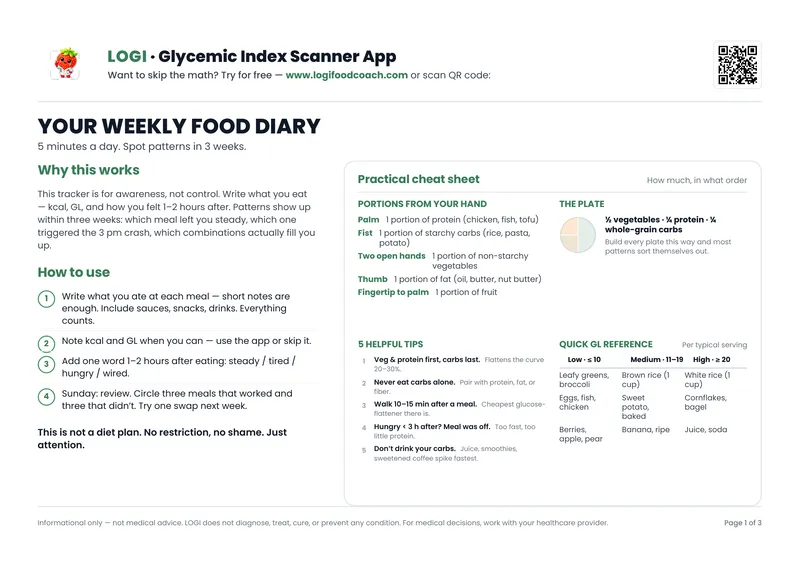
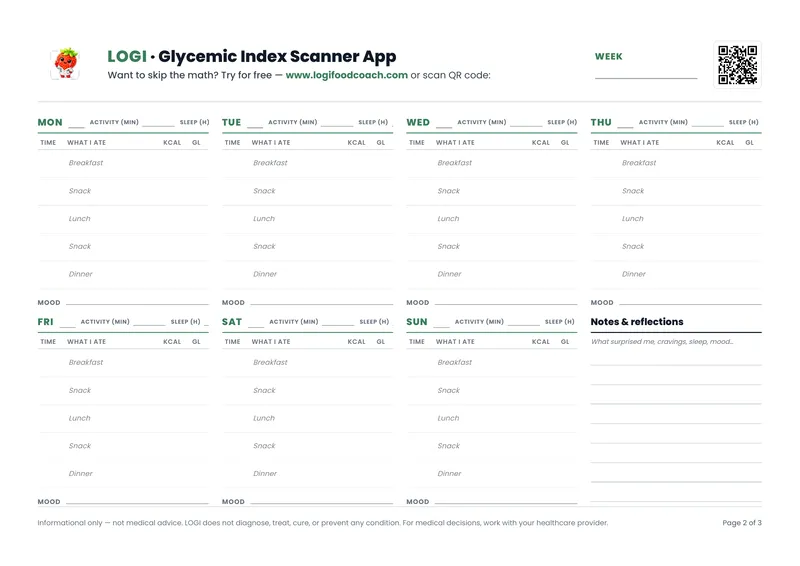
Free PDF — 3 pages
Your Weekly Food Journal
Track meals, glycemic load & mood. Spot patterns in 3 weeks.
No spam. Unsubscribe anytime.