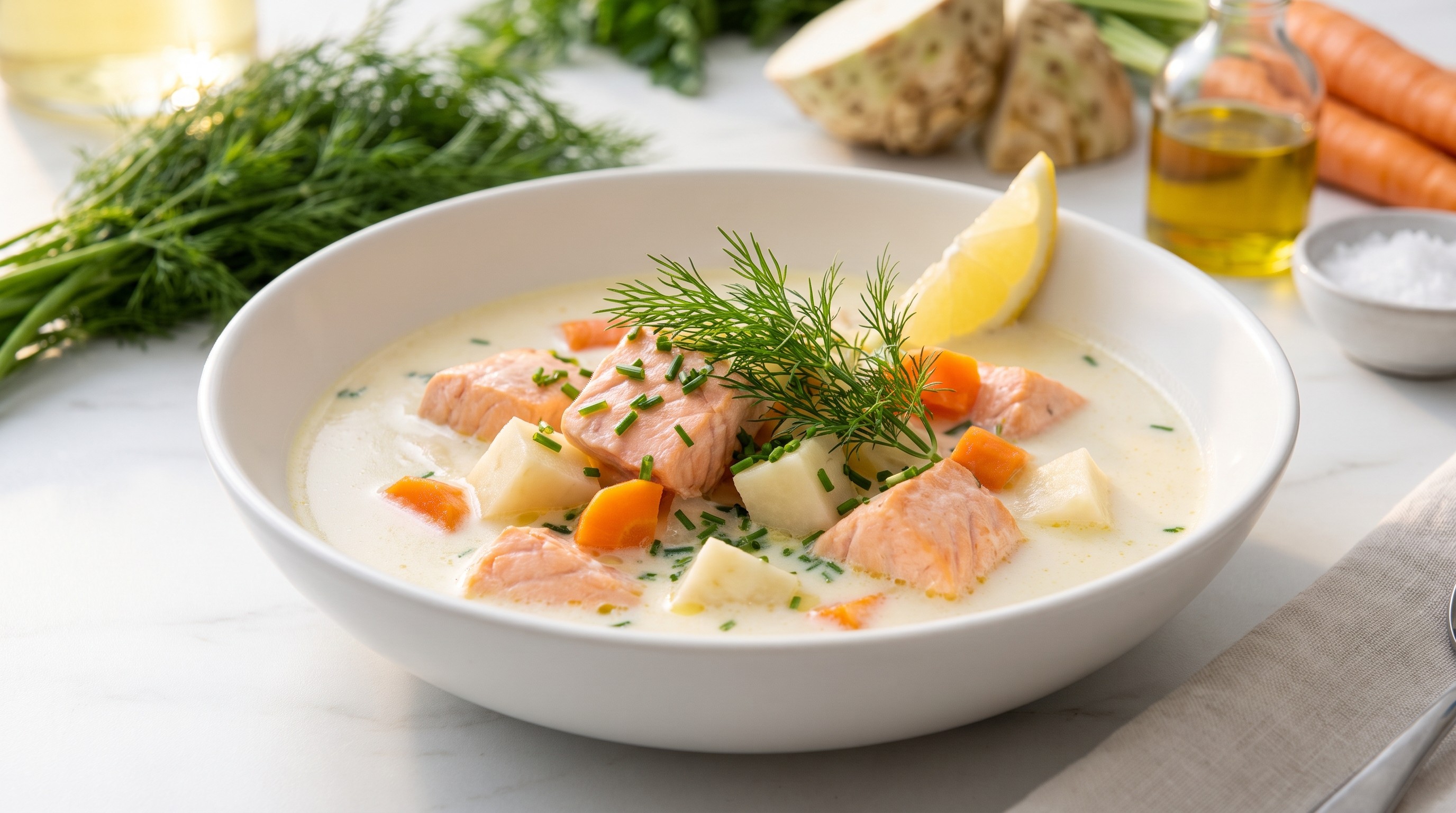
Low-GI Fiskesuppe — Salmon and Celeriac Cream Soup
A velvety Norwegian salmon soup swapping potato for low-GI celeriac, delivering creamy richness with steady blood sugar — ready in just 40 minutes.
This gentle adaptation of Norway's beloved fiskesuppe proves that blood-sugar-friendly eating never means sacrificing comfort. Celeriac, with a glycemic index around 35 compared to potato's 78, provides the same silky body and subtle sweetness without the glucose spike. Combined with omega-3-rich salmon, butter, and a swirl of heavy cream, the generous fat content naturally slows gastric emptying and glucose absorption — making this one of the smartest ways to enjoy a rich, warming bowl.
The aromatics are deliberately simple: leek sweated until soft, carrot cut into small dice for even cooking, and a bright finish of lemon juice and fresh dill. Carrots contribute a modest glycemic load when cooked in chunks rather than puréed, and the surrounding fats and proteins further blunt any rise. Every ingredient here pulls double duty — flavour and metabolic kindness.
For the best blood sugar response, consider starting the meal with a small green salad dressed in vinegar — the acetic acid has been shown to reduce post-meal glucose by up to 30 percent. Eat the vegetables from the soup first, then the salmon, and sip the creamy broth last. This simple sequencing lets fibre and protein arrive before the carbohydrates, flattening the glucose curve even further. Pair with a slice of dense sourdough rye bread (GI ~48) rather than white bread if you want something to dip. This soup also reheats beautifully the next day; the flavours deepen overnight and the celeriac holds its texture without turning starchy.
Blood Sugar Impact
With a GI of 38 and a glycemic load of 9.6, this soup will have a gentle, gradual effect on blood sugar. The combination of salmon protein, healthy fats from cream and butter, and low-GI celeriac instead of potato ensures stable energy for 3-4 hours without a significant spike.
Blood Sugar Tips
- ✓ Include chunky pieces of salmon and vegetables rather than blending smooth — larger pieces slow gastric emptying and further blunt the glucose response.
- ✓ Pair the soup with a side of dark rye bread or a small mixed green salad with vinegar dressing; the acetic acid and extra fiber will further lower the meal's overall glycemic impact.
- ✓ Enjoy the soup as a starter before a protein-rich main course, or add extra dill and a squeeze of lemon at serving — the acidity helps moderate postprandial blood sugar rise.
🥗 Ingredients
- 300 g Salmon fillet
- 150 g Celeriac
- 100 g Carrot
- 100 g Leek
- 20 g Butter
- 400 ml Fish stock
- 100 ml Heavy cream
- 1 tbsp Lemon juice
- 5 g Dill
- 0.5 tsp Salt
- 0.25 tsp White pepper
- 10.6 oz Salmon fillet
- 5.3 oz Celeriac
- 3.5 oz Carrot
- 3.5 oz Leek
- 0.7 oz Butter
- 1.7 cups Fish stock
- 7 tbsp Heavy cream
- 1 tbsp Lemon juice
- 0.2 oz Dill
- 0.5 tsp Salt
- 0.25 tsp White pepper
👨🍳 Instructions
- 1
Peel the celeriac and cut it into 1 cm cubes. Peel the carrot and dice it to a similar size so both cook evenly. Split the leek in half lengthwise, wash thoroughly under cold water to remove any grit, and slice into thin half-moons.
- 2
Place a heavy-bottomed pot over medium heat and melt the butter. Add the sliced leek and cook gently for about 3 minutes, stirring now and then, until softened and translucent — avoid browning, as you want a clean, light-coloured broth.
- 3
Tip the diced celeriac and carrot into the pot and stir to coat in the buttery leek. Pour in the fish stock and bring the liquid to a boil. Lower the heat and let the soup simmer uncovered for 15 minutes, or until the celeriac is completely tender when pierced with the tip of a knife.
- 4
While the vegetables simmer, cut the salmon fillet into generous 3 cm chunks. Season the pieces lightly with salt and white pepper and set aside on a plate.
- 5
Once the celeriac is tender, pour the heavy cream into the pot and stir gently to combine. Let the creamy broth return to a gentle simmer — do not let it boil vigorously, as this can cause the cream to separate.
- 6
Carefully lower the seasoned salmon pieces into the broth, nestling them among the vegetables so they are mostly submerged. Cover the pot, reduce the heat to low, and cook undisturbed for 5 minutes until the salmon is just opaque all the way through but still moist.
- 7
Remove the pot from the heat. Squeeze the lemon juice evenly over the surface — the acidity brightens the rich broth and helps moderate the glycemic response of the meal.
- 8
Tear or snip the fresh dill generously over the soup. Ladle into warm bowls, dividing the salmon and vegetables evenly, and serve immediately. For the best blood sugar response, eat the vegetable pieces first, then the salmon, and finish with the broth.
📊 Nutrition Per Serving
| Per Serving | Whole Dish | |
|---|---|---|
| Calories | 661 | 1323 |
| Carbs | 25g | 51g |
| Sugars | 9g | 19g |
| Natural Sugars | 9g | 19g |
| Protein | 39g | 79g |
| Fat | 46g | 92g |
| Saturated Fat | 21g | 42g |
| Unsaturated Fat | 25g | 49g |
| Fiber | 6g | 12g |
| Soluble Fiber | 2g | 4g |
| Insoluble Fiber | 4g | 9g |
| Sodium | 1544mg | 3088mg |
Predicted Glucose Response
What if you...
Estimated model — individual responses vary. Not medical advice.
🔄 Lower GI Swaps
Cooked celeriac has a high GI (around 85). Cauliflower (GI ~15), kohlrabi (GI ~20), and broccoli stems (GI ~15) all provide a similar creamy, mild base when blended into soup but with a dramatically lower glycemic impact, significantly reducing the recipe's overall glycemic load.
Cooked carrots have a moderate GI (around 39–49) that rises with longer cooking. Zucchini (GI ~15), celery stalks (GI ~15), and fennel bulb (GI ~15) contribute body and subtle sweetness to the soup while keeping the glycemic load minimal.
While heavy cream is already low-GI, full-fat coconut cream contains medium-chain triglycerides (MCTs) that may support more stable blood sugar response, and crème fraîche has a slightly higher protein-to-carb ratio—both help blunt any residual glucose spike from the starchy vegetables in the soup.
🔬 The Science Behind This Recipe
Why This Soup Loves Your Blood Sugar
This fiskesuppe is a textbook example of how the right ingredients can work together to keep your blood sugar steady. Let's start with the star: salmon. It's packed with protein and healthy omega-3 fats, both of which slow down the rate at which your stomach empties food into your bloodstream. That means glucose arrives gradually rather than in a sudden rush — think of it as the difference between a gentle hill and a steep cliff. The generous amount of butter in this recipe adds to that effect, since fat naturally acts as a brake on digestion speed.
Then there's the clever swap at the heart of this recipe: celeriac instead of potato. Traditional fiskesuppe relies on potatoes for creaminess, but potatoes can send blood sugar climbing quickly. Celeriac delivers a similar velvety texture with roughly a third of the carbohydrates and significantly more fiber. That fiber forms a gel-like barrier in your gut, slowing sugar absorption even further. The leeks and carrots contribute additional fiber and bulk without adding much in the way of fast-acting carbs.
The result? A glycemic load of just 9.6 per serving, which falls comfortably in the "low" category (anything under 10 is considered low). Remember, glycemic load accounts for both the *type* and *amount* of carbohydrates in a portion — it's a much more useful real-world measure than glycemic index alone. To get even more out of this meal, try having a small side salad before your soup — eating vegetables first gives your digestive system a head start on slowing glucose absorption. A short 10–15 minute walk after eating can also help your muscles soak up blood sugar more efficiently, turning a great meal into an even smarter one.
Related recipes
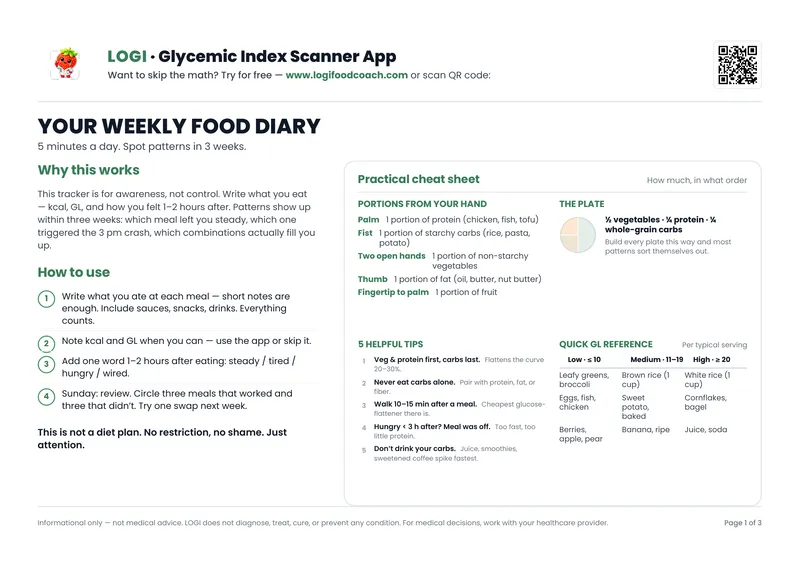
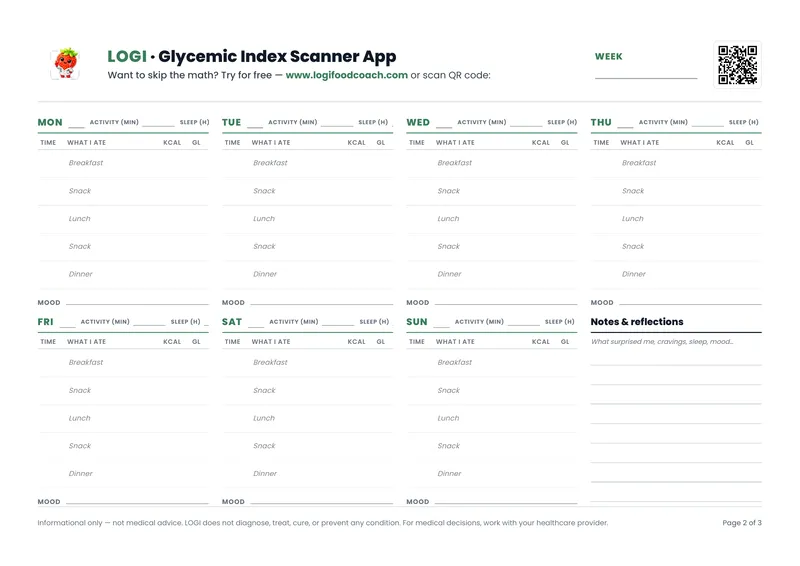
Free PDF — 3 pages
Your Weekly Food Journal
Track meals, glycemic load & mood. Spot patterns in 3 weeks.
No spam. Unsubscribe anytime.