Low-GI Chili con Carne with Two-Bean Base
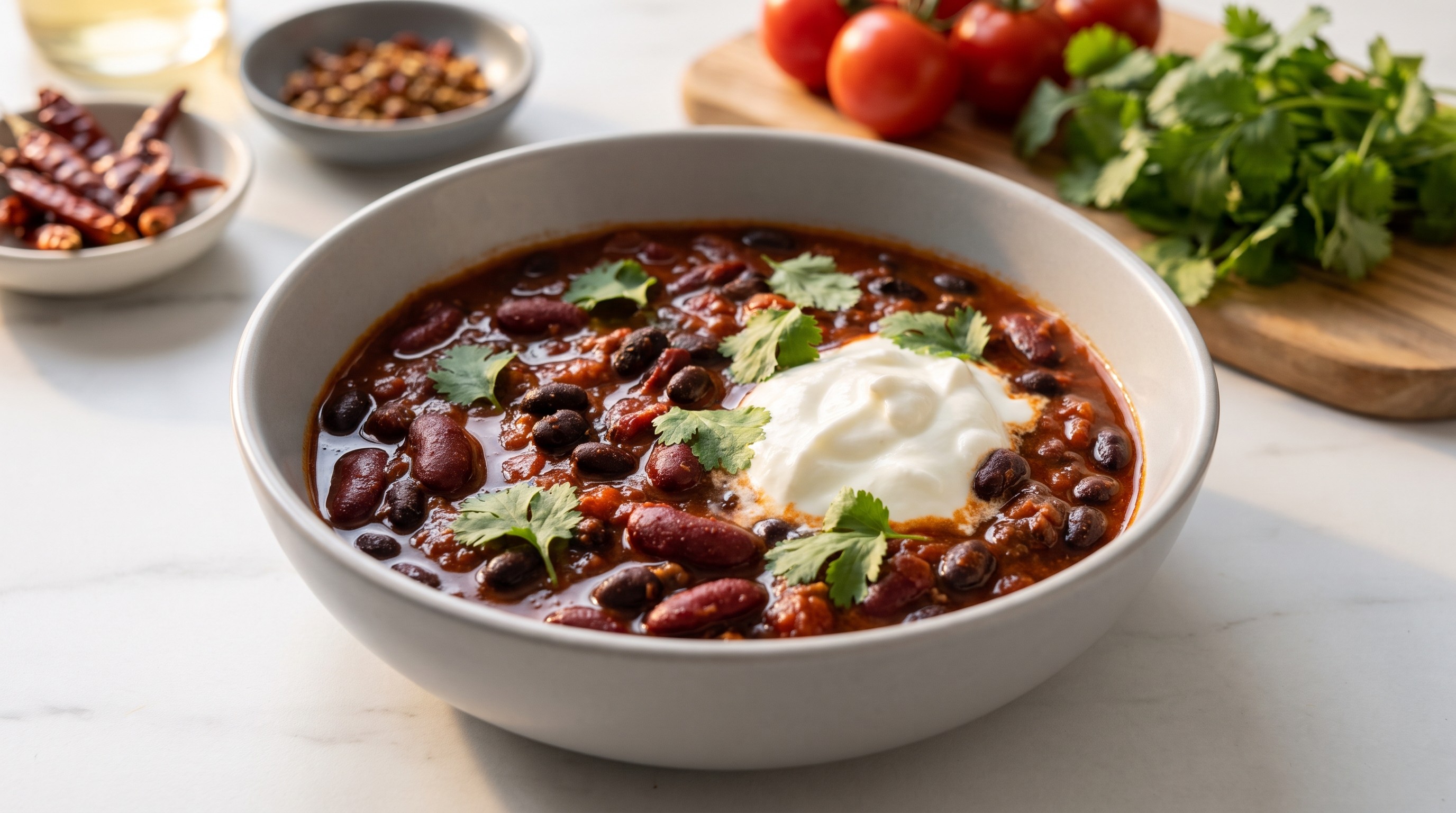
Two-bean chili con carne built for steady blood sugar — black beans and kidney beans replace rice, delivering fiber-rich protein with every spoonful.
This chili con carne is engineered around one smart principle: let the beans be the starch. By building the dish on a foundation of black beans and red kidney beans — both with a glycemic index under 35 — you get all the hearty, filling satisfaction of a classic chili without the glucose spike that comes from serving it over white rice. The soluble fiber in both bean varieties forms a gel-like matrix during digestion, physically slowing the rate at which glucose enters the bloodstream. Paired with protein-rich ground beef and healthy fats from olive oil, this combination triggers a minimal insulin response while keeping you satiated for hours.
The cooking method matters as much as the ingredients. Browning the beef hard over high heat before anything else goes in builds deep umami flavor — the Maillard reaction creates hundreds of savory compounds that give this chili complexity without needing sugar or processed sauces. Blooming the cumin and chili powder in the rendered fat unlocks their volatile oils, giving you more flavor from less. The twenty-minute uncovered simmer concentrates the tomato sauce and lets the beans absorb seasoning while maintaining their low-GI structure.
Greek yogurt finishes each bowl with a cool, tangy contrast that also contributes protein and probiotics — a metabolically smarter swap for sour cream. For optimal blood sugar management, eat slowly and consider pairing with a small side salad dressed in vinegar, which has been shown to further blunt postprandial glucose. This is a weeknight-fast, one-pan meal that proves low-glycemic eating can be bold, deeply flavored, and completely satisfying.
Blood Sugar Impact
Very low blood sugar impact expected. The combination of high-fiber kidney beans, lean protein from beef, and healthy fats from olive oil will produce a slow, gentle rise in blood glucose with stable energy lasting 4-5 hours.
Blood Sugar Tips
- ✓ Serve over cauliflower rice instead of white rice or pasta to keep the glycemic load low.
- ✓ Add a side salad with vinegar-based dressing and eat it before the chili — the fiber and acetic acid further blunt glucose absorption.
- ✓ Take a 10-15 minute walk after eating to enhance glucose uptake by your muscles and flatten any residual spike.
🥗 Ingredients
- 1 tbsp Olive oil
- 250 g Lean ground beef
- 1 pcs Onion
- 2 pcs Garlic
- 1 tsp Chili powder
- 1 tsp Ground cumin
- 400 g Canned chopped tomatoes
- 120 g Black beans
- 120 g Red kidney beans
- 0.5 tsp Salt
- 2 tbsp Greek yogurt
- 5 g Fresh coriander
- 1 tbsp Olive oil
- 8.8 oz Lean ground beef
- 1 pcs Onion
- 2 pcs Garlic
- 1 tsp Chili powder
- 1 tsp Ground cumin
- 14.1 oz Canned chopped tomatoes
- 4.2 oz Black beans
- 4.2 oz Red kidney beans
- 0.5 tsp Salt
- 2 tbsp Greek yogurt
- 0.2 oz Fresh coriander
👨🍳 Instructions
- 1
Prepare all your ingredients before you start cooking. Peel and finely dice the onion into small, even pieces. Peel the garlic cloves and mince them finely. Open both cans of beans, drain them in a colander, and rinse thoroughly under cold running water to remove excess sodium and starchy liquid.
- 2
Set a heavy-bottomed pan or Dutch oven over high heat and add the olive oil. Once the oil is shimmering and just beginning to smoke, add the ground beef. Spread it out in an even layer and let it cook undisturbed for about 2 minutes to develop a deep brown crust on the bottom. Break the meat apart with a wooden spoon and continue cooking for another 3 minutes, allowing fond to build on the pan between stirs.
- 3
Lower the heat to medium. Add the diced onion and minced garlic to the pan with the browned beef. Cook for about 3 minutes, stirring occasionally and scraping up any caramelized bits stuck to the bottom of the pan. The onion should turn soft and translucent.
- 4
Sprinkle the chili powder and ground cumin over the meat and onion mixture. Stir continuously for 1 minute to bloom the spices in the rendered fat — this releases their aromatic oils and deepens the overall flavor of the chili.
- 5
Pour in the entire can of chopped tomatoes, then add the drained black beans and red kidney beans. Season with salt and stir everything together gently until well combined. Bring the mixture to a steady simmer.
- 6
Reduce the heat to low and let the chili cook uncovered for 20 minutes, stirring every few minutes to prevent sticking. The sauce should thicken noticeably and cling to the beans and meat rather than pooling at the bottom of the pan. If it reduces too quickly, lower the heat slightly.
- 7
Taste the chili and adjust the seasoning if needed — a pinch more salt or cumin can round out the flavor. Remove the pan from the heat.
- 8
Divide the chili evenly between two warmed bowls. Top each serving with a generous spoonful of Greek yogurt and scatter fresh coriander leaves over the top. Serve immediately.
📊 Nutrition Per Serving
| Per Serving | Whole Dish | |
|---|---|---|
| Calories | 426 | 853 |
| Carbs | 34g | 68g |
| Sugars | 10g | 20g |
| Natural Sugars | 10g | 20g |
| Protein | 37g | 75g |
| Fat | 14g | 29g |
| Saturated Fat | 4g | 7g |
| Unsaturated Fat | 10g | 20g |
| Fiber | 10g | 20g |
| Soluble Fiber | 3g | 6g |
| Insoluble Fiber | 7g | 14g |
| Sodium | 1191mg | 2382mg |
Predicted Glucose Response
What if you...
Estimated model — individual responses vary. Not medical advice.
🔄 Lower GI Swaps
Canned beans undergo high-heat processing that can slightly raise their glycemic index compared to home-cooked. Cooking dried black beans yourself preserves more resistant starch, resulting in a lower blood sugar response. Black soybeans are an ultra-low-GI alternative with higher protein content.
Like black beans, home-cooked kidney beans retain more resistant starch than their canned counterparts, yielding a gentler blood sugar curve. Always boil dried kidney beans vigorously for at least 10 minutes to destroy phytohaemagglutinin before simmering until tender.
All three alternatives provide high-quality protein that slows glucose absorption equally well. Ground turkey and chicken breast are leaner, while tofu adds plant-based protein with virtually no impact on blood sugar.
Greek yogurt and skyr deliver significantly more protein per serving than sour cream, which helps further blunt the postprandial glucose response. Their tangy flavor complements the chili just as well, while their lower fat-to-protein ratio makes them a metabolically smarter finish.
🔬 The Science Behind This Recipe
Why This Chili Loves Your Blood Sugar
The two-bean base is the metabolic engine of this dish. Black beans and red kidney beans both rank below 35 on the glycemic index, making them among the slowest-digesting starches available. Their secret is soluble fiber — particularly the galactooligosaccharides and resistant starch that survive cooking. During digestion, this soluble fiber forms a viscous gel in the small intestine that physically slows the enzymatic breakdown of carbohydrates into glucose. The result is a low, gradual rise in blood sugar rather than a sharp spike.
Protein and fat further flatten the glucose curve. The lean ground beef contributes roughly 25 grams of protein per serving, which stimulates glucagon-like peptide-1 (GLP-1), a hormone that slows gastric emptying and enhances insulin sensitivity. Meanwhile, the monounsaturated fat in olive oil delays stomach emptying independently of GLP-1, adding a second brake on the rate at which nutrients reach the bloodstream.
The capsaicin in chili powder offers a modest additional benefit. Research suggests that capsaicin can improve postprandial glucose metabolism by enhancing insulin secretion and increasing glucose uptake in muscle tissue, though the effect from culinary amounts is mild compared to the fiber and protein contributions.
Greek yogurt as a topping is a deliberate metabolic choice. Its high protein content (roughly 10 grams per 100 grams) adds to the meal's overall protein load, further blunting the glucose response. The fermentation-derived lactic acid may also contribute to a lower glycemic response, similar to the well-documented vinegar effect where acetic acid inhibits the enzyme alpha-amylase, slowing starch digestion.
With an estimated glycemic index of 31 and a glycemic load of approximately 10.5 per serving, this chili sits firmly in the low-impact category — meaning it delivers sustained energy without taxing your insulin response.
Related recipes
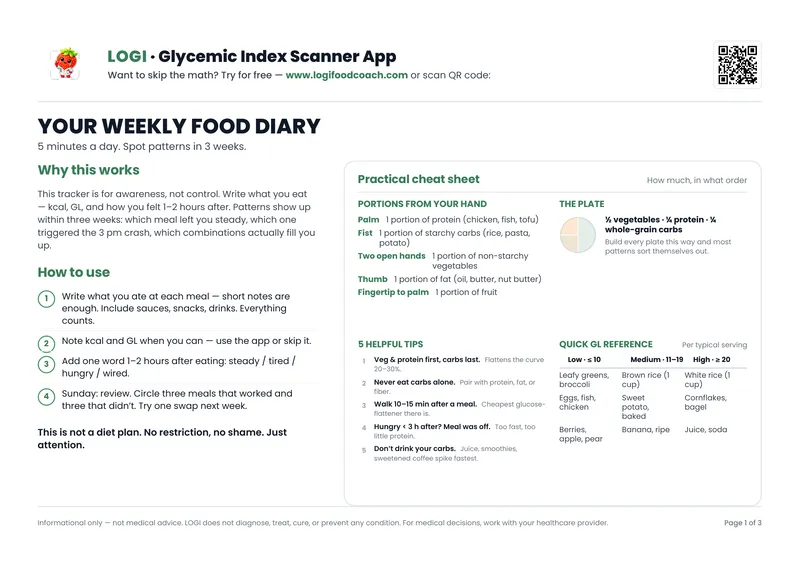
Free PDF — 3 pages
Your Weekly Food Journal
Track meals, glycemic load & mood. Spot patterns in 3 weeks.
No spam. Unsubscribe anytime.