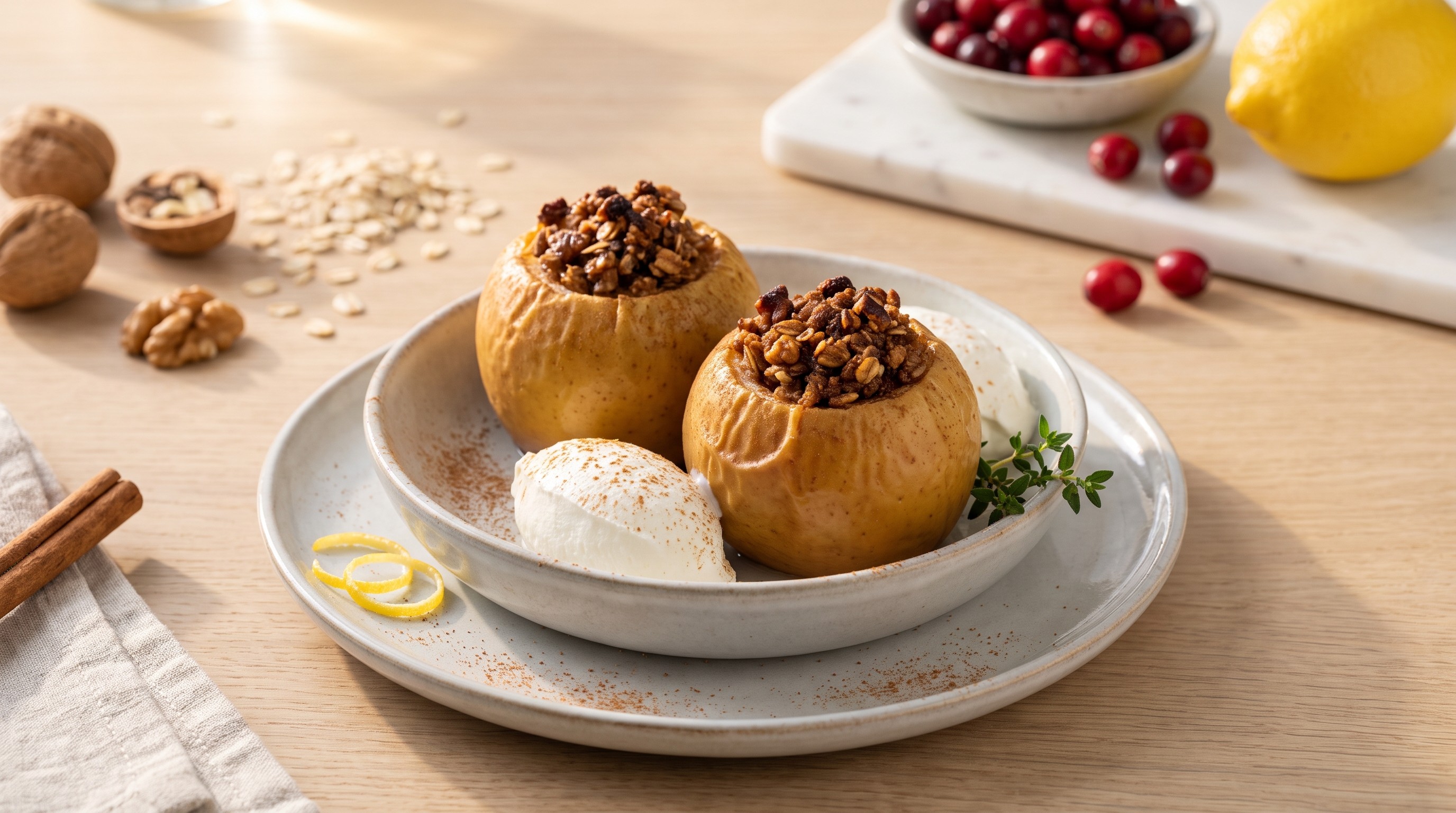
Low-GI Bratapfel — Baked Apples with Walnut-Oat Filling
Whole apples baked with a cinnamon-spiced walnut-oat filling, served with cool vanilla quark — naturally sweet, fiber-rich, and gentle on blood sugar.
Bratapfel — baked apple — is one of Germany's most beloved winter desserts, traditionally loaded with sugar syrup, marzipan, and sometimes raisins. This low-glycemic version strips away the added sugars entirely, relying instead on the natural fructose within the apple itself, which concentrates beautifully as the fruit softens in the oven. The filling of walnuts and rolled oats adds a satisfying crunch while the warm spices — cinnamon and cloves — fill the kitchen with that unmistakable holiday aroma.
From a blood sugar perspective, this dessert is remarkably well-constructed. Whole baked apples retain all their fiber, which slows the release of their natural sugars into the bloodstream. Walnuts contribute heart-healthy omega-3 fatty acids and protein, both of which further blunt the glycemic response. Rolled oats bring soluble beta-glucan fiber, shown in research to flatten post-meal glucose curves. Cinnamon is more than just flavor here — studies suggest it may improve insulin sensitivity when consumed regularly. The quark topping adds a generous dose of protein, making this dessert more satiating and further moderating the glucose impact.
For the best blood sugar outcome, enjoy this as an after-dinner dessert rather than on an empty stomach, and eat the protein-rich vanilla quark first before cutting into the warm apple. Each serving delivers a deeply satisfying end to a meal without the sharp glucose spike that traditional baked apples with sugar and marzipan would cause. Leftovers reheat beautifully in the oven at 150 °C for ten minutes — the filling stays crisp if you leave them uncovered.
Blood Sugar Impact
With a low GI of 35 and a moderate glycemic load of 13.7, this baked apple dessert should produce a gentle, gradual rise in blood sugar rather than a sharp spike. The combination of fiber from oats and apples, healthy fats from walnuts and butter, and protein from quark work synergistically to slow glucose absorption.
Blood Sugar Tips
- ✓ Eat the quark first or alongside each bite — its protein and fat content slows gastric emptying and blunts the glucose response from the baked apple.
- ✓ Enjoy this as a dessert after a protein-rich main course rather than on an empty stomach, so the prior meal's nutrients buffer sugar absorption.
- ✓ Take a 10-15 minute walk after eating to help your muscles absorb circulating glucose and further flatten the blood sugar curve.
🥗 Ingredients
- 2 pcs Baking apple
- 40 g Walnut
- 20 g Rolled oats
- 15 g Unsalted butter
- 1 tsp Ground cinnamon
- 0.25 tsp Ground cloves
- 1 tsp Lemon zest
- 1 g Fine salt
- 150 g Quark
- 0.5 tsp Vanilla extract
- 2 pcs Baking apple
- 1.4 oz Walnut
- 0.7 oz Rolled oats
- 0.5 oz Unsalted butter
- 1 tsp Ground cinnamon
- 0.25 tsp Ground cloves
- 1 tsp Lemon zest
- 0.0 oz Fine salt
- 5.3 oz Quark
- 0.5 tsp Vanilla extract
👨🍳 Instructions
- 1
Set the oven to 180 °C (350 °F) and let it preheat while you prepare the apples.
- 2
Using a paring knife or apple corer, hollow out each apple from the top to remove the seeds and a small amount of flesh, creating a well roughly 3 cm across. Leave at least 1 cm of flesh at the base so the filling cannot leak through. Chop any scooped-out apple flesh finely and set it aside.
- 3
In a small bowl, toss together the chopped walnuts, rolled oats, melted butter, cinnamon, cloves, lemon zest, salt, and any reserved apple flesh. Stir until every piece is evenly coated with the spiced butter.
- 4
Spoon the filling into each apple cavity, pressing it down firmly with the back of the spoon and mounding it slightly above the rim so it toasts during baking.
- 5
Place the stuffed apples upright in a small oven-safe dish. Pour 2 tablespoons of water into the bottom of the dish — this creates a little steam that keeps the apple skins from splitting too early.
- 6
Bake for 30 to 35 minutes until the skins are wrinkled, the walnut-oat topping is golden and fragrant, and a knife slides easily into the thickest part of the flesh.
- 7
While the apples are in the oven, stir the vanilla extract into the quark until completely smooth. Keep it chilled until serving.
- 8
Let each baked apple rest for 2 to 3 minutes, then transfer to a plate and serve with a generous dollop of vanilla quark alongside. For the best blood sugar response, take a few spoonfuls of the protein-rich quark before cutting into the warm apple.
📊 Nutrition Per Serving
| Per Serving | Whole Dish | |
|---|---|---|
| Calories | 376 | 752 |
| Carbs | 39g | 78g |
| Sugars | 22g | 44g |
| Added Sugars | 0g | 0g |
| Natural Sugars | 22g | 44g |
| Protein | 14g | 28g |
| Fat | 20g | 41g |
| Saturated Fat | 5g | 11g |
| Unsaturated Fat | 15g | 29g |
| Fiber | 8g | 15g |
| Soluble Fiber | 3g | 5g |
| Insoluble Fiber | 5g | 10g |
| Sodium | 228mg | 457mg |
Predicted Glucose Response
What if you...
Estimated model — individual responses vary. Not medical advice.
🔄 Lower GI Swaps
Traditional baked apple fillings rely on refined sugar and marzipan (almond paste with sugar), which spike blood glucose rapidly. The walnut-oat filling provides natural sweetness from the apple itself, while the nuts and oats add fiber, protein, and healthy fats that slow glucose absorption significantly.
Traditional accompaniments like whipped cream or custard-style vanilla sauce are high in sugar and saturated fat with minimal protein. Quark, Greek yogurt, and skyr are all high-protein, low-sugar alternatives that help moderate the post-meal glucose response. Eating the protein-rich topping before the apple further blunts the blood sugar rise.
Raisins have a GI of around 64 and are very concentrated in sugar. Using the scooped-out apple flesh keeps the filling naturally sweet without adding high-GI dried fruit. If a chewy dried-fruit element is desired, a small amount of unsweetened dried cranberries has a lower GI and adds tartness rather than pure sweetness.
Quark may be difficult to find outside Central Europe. Greek yogurt and skyr offer a similar high-protein, thick, tangy profile that moderates blood sugar equally well. Coconut yogurt provides a dairy-free alternative, though it has less protein — pair it with a few extra walnuts to compensate.
🔬 The Science Behind This Recipe
Baked apples might sound like a sugary dessert, but this version is engineered to keep blood sugar steady. The key lies in how several ingredients work together to slow glucose absorption.
Whole baked apples retain their pectin fiber intact, unlike peeled or pureed preparations. Pectin forms a gel-like matrix in the gut that physically slows the rate at which sugars reach the bloodstream, resulting in a more gradual glucose curve rather than a sharp spike.
Walnuts play a dual role. Their fat content — particularly the polyunsaturated omega-3 fatty acid alpha-linolenic acid — delays gastric emptying, which means the sugars from the apple enter the small intestine more slowly. Their protein further contributes to satiety and a moderated insulin response.
Rolled oats contain beta-glucan, a soluble fiber that has been extensively studied for its ability to lower post-meal blood glucose. Beta-glucan increases the viscosity of the food bolus in the digestive tract, creating a physical barrier that slows carbohydrate digestion and glucose uptake.
Cinnamon contains bioactive compounds, particularly cinnamaldehyde and polyphenols, that research suggests may enhance insulin sensitivity by improving the ability of cells to respond to insulin and clear glucose from the blood.
The quark topping is not just a garnish — its high protein content triggers a meaningful insulin co-response that helps muscle cells absorb circulating glucose more efficiently. Eating the protein-rich quark before the carbohydrate-containing apple, as the recipe suggests, is a well-supported strategy for reducing the post-meal glucose peak by up to 20–30 percent compared to eating the carbohydrate first.
With an estimated GI of 35 and a glycemic load of about 14 per serving, this dessert falls comfortably in the low-GI, low-GL category — comparable to eating a handful of nuts with a piece of fresh fruit.
Related recipes
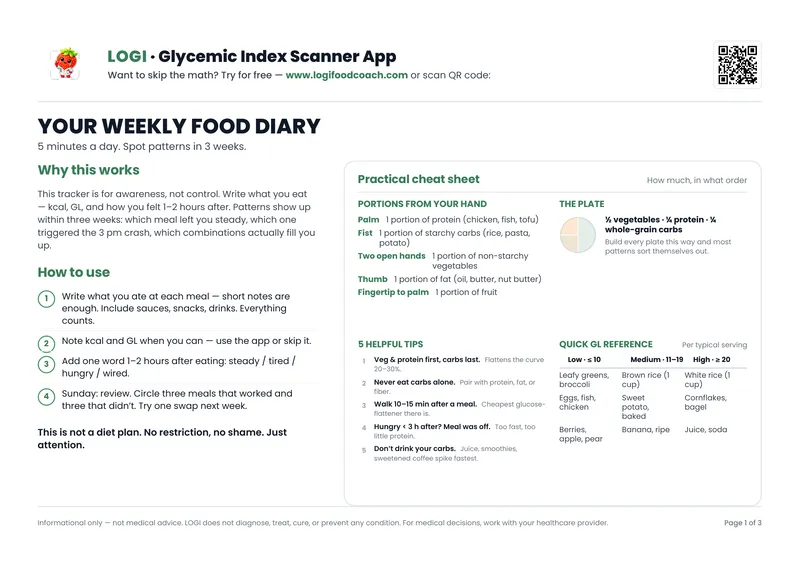
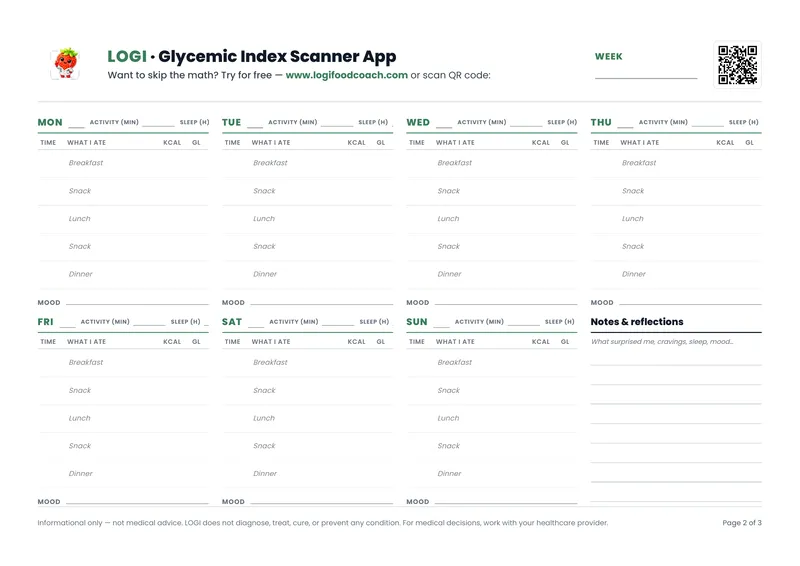
Free PDF — 3 pages
Your Weekly Food Journal
Track meals, glycemic load & mood. Spot patterns in 3 weeks.
No spam. Unsubscribe anytime.