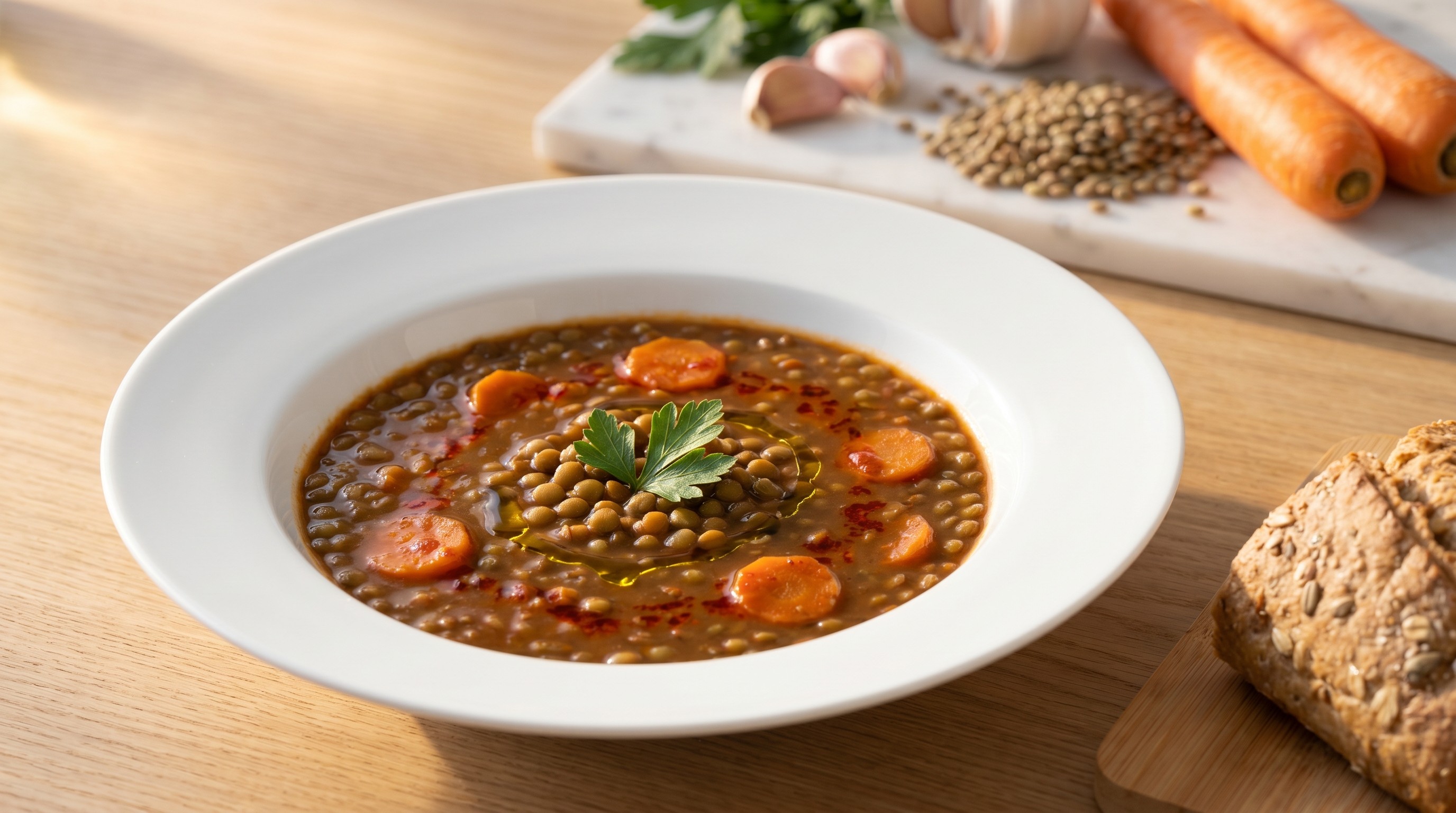
Lentejas Estofadas (Spanish Braised Lentils with Vegetables)
A hearty Spanish lentil stew simmered with smoked paprika, carrots, and tomato — naturally low-GI, fiber-rich, and ideal for steady blood sugar.
Lentejas estofadas is one of Spain's great comfort foods, and it happens to be a near-perfect meal for blood sugar management. Green lentils are among the lowest-GI legumes available (GI ~22), packed with soluble fiber that slows glucose absorption and keeps you feeling full for hours. Combined with non-starchy vegetables like carrots, onion, and fresh tomato, this stew delivers a powerhouse of nutrients without any refined carbohydrates or hidden sugars.
The secret to depth of flavor here is pimentón de la Vera — Spain's iconic smoked paprika — which blooms in olive oil alongside cumin to create a deeply savory, slightly smoky base. Grating the tomato directly into the pot concentrates its sweetness naturally, eliminating any need for added sugar or processed sauces. Extra virgin olive oil provides heart-healthy monounsaturated fats that further moderate the glycemic response of the entire meal.
For optimal blood sugar control, serve the lentils as the centerpiece of your meal and eat the vegetable-rich portions first before the denser lentil base. Pairing with a simple green salad dressed in vinegar adds an extra glucose-blunting effect. This stew actually improves overnight as the flavors meld, making it an excellent meal-prep option — and reheated lentils develop more resistant starch, which further lowers their glycemic impact.
Blood Sugar Impact
Very low blood sugar impact expected. Lentils are rich in soluble fiber and plant protein, resulting in a very slow, gentle glucose rise with stable energy lasting 3-4 hours.
Blood Sugar Tips
- ✓ Start with the vegetable-rich broth portion before eating the denser lentils to further slow digestion.
- ✓ Add a drizzle of extra virgin olive oil at serving time — the added fat slows gastric emptying and blunts any glucose response.
- ✓ Pair with a 10-15 minute walk after eating to enhance glucose uptake by muscles and keep blood sugar flat.
🥗 Ingredients
- 300 g Green lentil
- 1 pcs Yellow onion
- 2 pcs Carrot
- 3 pcs Garlic clove
- 1 pcs Tomato
- 1.5 tsp Smoked paprika
- 0.5 tsp Ground cumin
- 2 tbsp Extra virgin olive oil
- 1000 ml Water
- 1 tsp Salt
- 0.5 tsp Black pepper
- 10.6 oz Green lentil
- 1 pcs Yellow onion
- 2 pcs Carrot
- 3 pcs Garlic clove
- 1 pcs Tomato
- 1.5 tsp Smoked paprika
- 0.5 tsp Ground cumin
- 2 tbsp Extra virgin olive oil
- 4.2 cups Water
- 1 tsp Salt
- 0.5 tsp Black pepper
👨🍳 Instructions
- 1
Rinse the lentils under cold running water in a fine-mesh sieve, picking out any debris. Set aside to drain.
- 2
Warm the olive oil in a large, heavy-bottomed pot over medium heat. Add the diced onion and sauté for about 5 minutes, stirring now and then, until it turns soft and translucent.
- 3
Toss in the minced garlic and sliced carrots. Cook for 3 minutes, stirring frequently, until the garlic is fragrant and the carrots begin to soften at the edges.
- 4
Sprinkle the smoked paprika and ground cumin over the vegetables. Stir constantly for about 1 minute to bloom the spices in the oil — this releases their essential oils and deepens the smoky flavor.
- 5
Add the grated or finely chopped tomato to the pot. Cook for 4 to 5 minutes, stirring occasionally, until the liquid has mostly evaporated and the mixture takes on a deeper, richer color.
- 6
Pour in the drained lentils and the water or vegetable broth. Raise the heat to bring everything to a boil, then immediately lower the heat to a gentle simmer. Cook uncovered for 25 to 30 minutes.
- 7
Check the lentils periodically as they simmer. They should be tender but still hold their shape — not mushy. If the stew thickens too much before the lentils are done, add a small splash of water and continue cooking.
- 8
Season generously with salt and freshly ground black pepper. Ladle into bowls and finish each serving with a drizzle of extra virgin olive oil and a scattering of fresh parsley leaves.
📊 Nutrition Per Serving
| Per Serving | Whole Dish | |
|---|---|---|
| Calories | 373 | 1491 |
| Carbs | 56g | 225g |
| Sugars | 6g | 25g |
| Natural Sugars | 6g | 25g |
| Protein | 21g | 83g |
| Fat | 8g | 32g |
| Saturated Fat | 1g | 5g |
| Unsaturated Fat | 7g | 27g |
| Fiber | 26g | 104g |
| Soluble Fiber | 7g | 30g |
| Insoluble Fiber | 17g | 70g |
| Sodium | 622mg | 2486mg |
Predicted Glucose Response
What if you...
Estimated model — individual responses vary. Not medical advice.
🔄 Lower GI Swaps
Standard brown lentils have a GI around 29-30. Black beluga and French green (Puy) lentils have a firmer texture that holds up better during cooking, resulting in a lower GI of approximately 22-25 due to slower starch digestion. Their intact structure slows glucose release.
Carrots have a moderate GI (around 39 raw, up to 49 when cooked and softened in a stew). Zucchini (GI ~15), celery (GI ~15), and turnip (GI ~30) all produce a lower glycemic response, especially in a long-braised dish where carrots break down and release sugars more quickly.
If the recipe uses canned tomatoes, some brands contain added sugars that raise glycemic load. Fresh Roma tomatoes have a very low GI (~15) and lower natural sugar content. Green tomatoes have even less sugar. Choosing no-sugar-added crushed tomatoes keeps the GL minimal.
Yellow onions have a GI of around 10, which is already low, but they caramelize during long braising, concentrating their sugars and increasing the effective glycemic impact. Leeks and spring onions contain less fermentable sugar per volume and hold up with less caramelization, keeping the glucose response flatter.
🔬 The Science Behind This Recipe
Why This Recipe Works for Blood Sugar
Lentils are one of nature's best foods for steady blood sugar. Unlike refined grains or starchy vegetables, lentils are packed with both soluble fiber and plant-based protein — a powerful combination that dramatically slows the rate at which glucose enters your bloodstream. The soluble fiber forms a gel-like substance during digestion, creating a physical barrier that makes your body work harder (and longer) to break down carbohydrates. Meanwhile, the protein triggers satiety signals that help you feel full without the energy crash that follows a high-sugar meal. This is why lentils consistently rank among the lowest-GI legumes, and why this dish clocks in at an estimated GI of just 14 — well below the "low" threshold of 55.
The supporting vegetables here aren't just for flavor — they're doing real metabolic work. Carrots and onions contribute additional fiber that further buffers glucose absorption, while tomatoes add lycopene and organic acids that some research suggests may improve insulin sensitivity over time. Garlic, beyond its aromatic magic, contains compounds linked to improved glucose metabolism. When these ingredients braise together slowly, their fibers and nutrients become highly bioavailable, meaning your body can absorb the good stuff efficiently while still processing the carbohydrates at a gentle pace.
With a glycemic load of just 7.7 per serving, this dish is a great example of why *amount* matters as much as *type*. Glycemic load accounts for both the quality and quantity of carbohydrates on your plate — and anything under 10 is considered low. To get even more from this meal, try eating the vegetable-rich broth first before the lentils, pair it with a drizzle of extra virgin olive oil for healthy fat, and consider a 10–15 minute walk after eating. These simple habits can reduce post-meal glucose responses significantly, turning an already blood-sugar-friendly dish into a true metabolic ally.
Related recipes
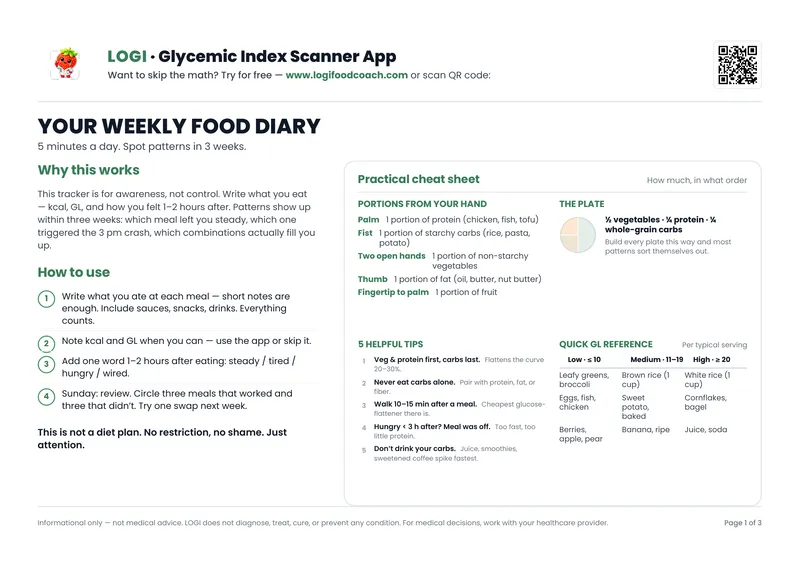
Free PDF — 3 pages
Your Weekly Food Journal
Track meals, glycemic load & mood. Spot patterns in 3 weeks.
No spam. Unsubscribe anytime.